




Modern Motherhood: Just Making Sure the Child Still Experiences Tenderness Within a Fractured World

- There is another layer modern mothers carry that previous generations never had to experience, i.e., constant visibility. Motherhood now unfolds partly online, inside an endless stream of opinions, comparisons, advice, and performance.
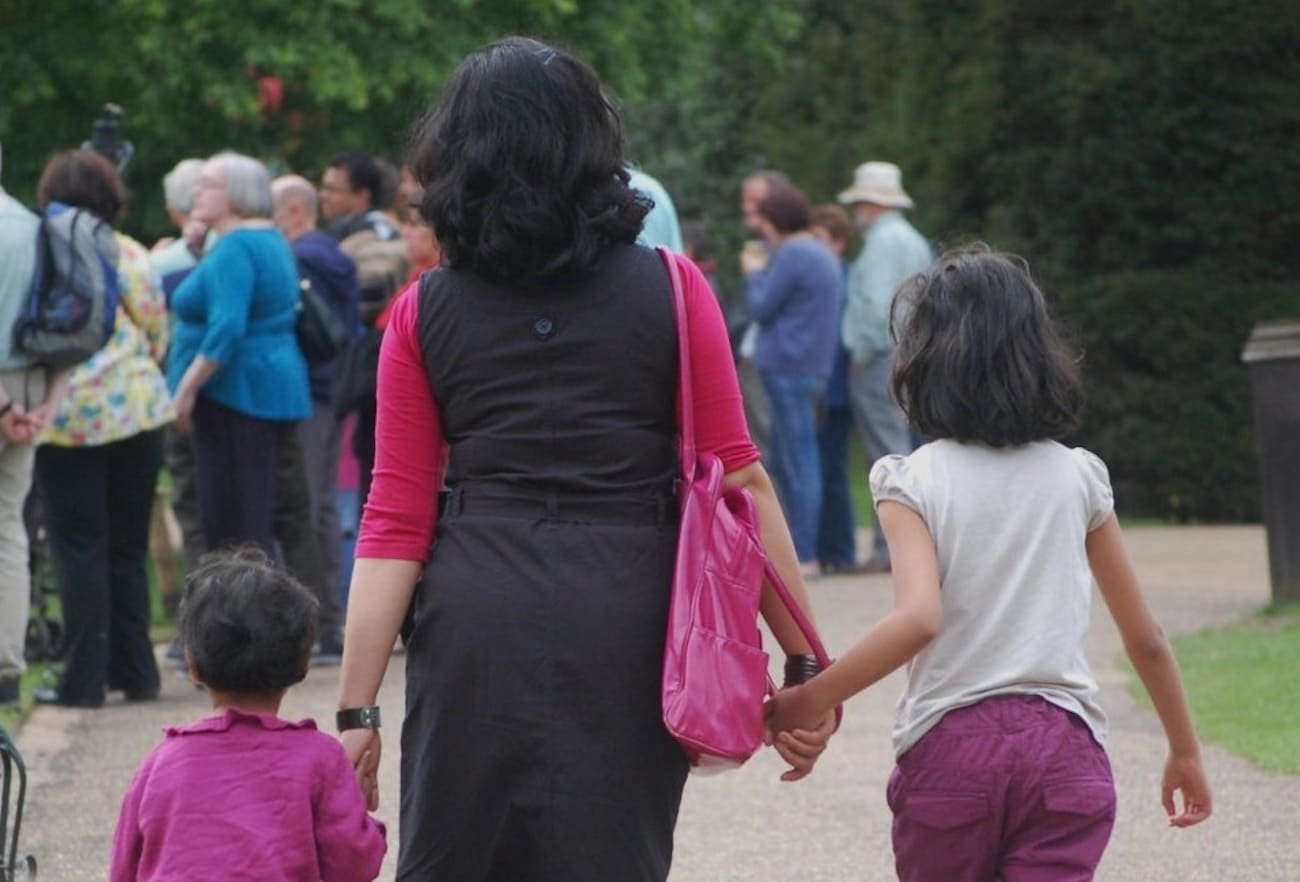

There was a time when motherhood seemed to belong to a different world, at least a somewhat predictable world, though not a perfect one. Children grew up and stepped into futures that still bore some resemblance to the worlds their parents knew, different in detail, but familiar in shape. There was ease in that continuity. There was the feeling that even if life changed, it would change slowly enough for people to adapt together. That feeling is harder to find now.
Motherhood today exists inside a world that rarely feels settled. Everything seems to move faster. Economies wobble. Jobs feel uncertain. Climate disasters arrive with alarming regularity. Phones bring the weight of the entire world into our hands before we even have coffee. Tragedy is live-streamed. Opinions are endless, and attention is exhausted.
And somewhere in the middle of all this noise, mothers are still doing what mothers have always done: trying to create a better world and a sense of safety for their children. Not a certain or perfect one, but just with enough steadiness that a child can fall asleep with the feeling that the world is still reliable.
Doing that alone has become harder than most people realize. A lot has been written about modern motherhood. About empowerment, balance, choice, and even “having it all”. However, much of the real experience lives underneath those phrases, in the secluded places people don’t always see. That is because most mothers today are carrying far more than their usual tasks.
They absorb the emotional temperature of a household. Mothers notice tension before anyone says it out loud. They soften hard realities before they reach their children. They translate frightening headlines into language small hearts can survive. Whether it is news about war, inflation, or a school casualty, a mother always worries whether the kid overheard it, and whether the kid’s perception of the outside world would be negative.
Motherhood is not exhausting only because of what mothers do. It’s exhausting because of what they are constantly holding in their minds. The recollection, anticipation, emotional buffering, and the endless quiet calculations. And unlike most forms of work, there’s no real moment when it fully stops. Even rest is often incomplete, and silence carries a mental checklist underneath it.
Raising Children While the Ground Keeps Moving
Earlier generations raised children with the basic assumption that the future, though imperfect, was still reasonably decipherable. Study hard, build a career, and make a life was the usual mantra. The details might vary, but the path itself felt visible. Now, even adults are unsure what the future will look like.
Technology changes faster than people can emotionally adapt to it. Entire industries evolve overnight. Climate anxiety hangs in the background of ordinary conversations. Children grow up online before they fully understand themselves in the real world. Stability is a transient word now, not guaranteed.
And therefore, parenting changes too. Modern mothers are no longer simply preparing children for adulthood. They are preparing them for uncertainty itself. That is a very different emotional task. It means teaching resilience before safety is fully established. It means answering questions no one yet knows how to answer.
What will work look like in twenty years? What kind of planet are we handing over to our future generation? How do we teach hope without sounding dishonest? These questions crop up silently beneath most ordinary lives now. And mothers carry them every day, even when nobody asks, if they are overloaded.
The Village didn’t evolve. It Vanished.
It is said that “it takes a village to raise a child”. But for many mothers today, the village feels more like folklore than reality. There was a time when childcare was shared more naturally. Grandparents lived nearby. Neighbors knew each other. Children belonged not just to households but to communities. Care moved between people more fluidly. Now, families are scattered across cities, countries, and even continents.
People at present move frequently for jobs. Housing grows expensive. Time grows faster and tighter. Communities become more digital than physical. And slowly, motherhood becomes more isolated, though not always visibly so. A mother can be surrounded by people and still feel profoundly alone in the actual work of raising children. Being connected is not the same as being supported. A text message is not the same thing as someone showing up at your door to hold the baby while you sleep.
And this loneliness changes motherhood in subtle ways. Every decision feels heavier when there is no one nearby to share it with. Every hard day echoes louder when there is no built-in relief. The village did not modernize. Rather, it dissolved completely, and mothers adapted because they had to.
A mother can be surrounded by people and still feel profoundly alone in the actual work of raising children. Being connected is not the same as being supported. A text message is not the same thing as someone showing up at your door to hold the baby while you sleep.
Motherhood Under Constant Observation
There is another layer modern mothers carry that previous generations never had to experience, i.e., constant visibility. Motherhood now unfolds partly online, inside an endless stream of opinions, comparisons, advice, and performance. Everywhere you look, another mother seems to be doing it better. Healthier meals, more organized homes, calmer children, better routines, better patience, and even better balance are the new social norms.
Even when people know social media is curated, it still seeps into the nervous system. It still creates the feeling that motherhood should somehow look more graceful than it actually feels. And underneath all of that, there is another noiseless pressure; the fear of getting it wrong publicly. Because modern motherhood is not only experienced. It is being watched.
At the same time, children themselves are growing up in digital environments; no generation has yet fully learned how to navigate them. Screens compete with attention. Algorithms shape behavior. Childhood itself is being filtered through technology in ways adults are still trying to understand. Therefore, mothers are now protecting not only bodies and emotions, but attention spans, mental health, identity, and presence itself. That is an enormous shift and a huge task. And most of it is happening without a roadmap.
The Quiet Fear About the Future
One of the hardest things to explain about modern parenting is the low-level grief many parents carry without naming it. Not grief for someone or something already lost. But grief for uncertainty itself.
Climate change, political instability, economic unpredictability and social fragmentation have altered the emotional backdrop of raising children. There are moments during bedtime routines, school pickups, or heatwaves that arrive too early in the year when parents look at their children and silently wonder what kind of world awaits them. And still, life continues as usual despite those apprehensions.
On the other side, children laugh, learn words, observe the world around them and ask impossible questions. They want bedtime stories, snacks and reassurance that monsters are not real and wars will not end the world. And maybe that is the strange beauty of parenthood, the innate tendency to continue loving deeply even when the future feels unclear. After all, care does not wait for certainty. It keeps flowing anyway.


Burnout is not Failure. It is Accumulation.
Modern motherhood is often discussed in extremes: either beautiful fulfilment or total collapse. But most mothers live somewhere in between. Not thriving all the time. Not falling apart either. Just continually adapting.
That adaptation is exhausting in ways that are difficult to explain because so much of it is invisible. It is the mental tabs left open all day long. The constant emotional availability. The feeling of always being partially alert, even during moments that are supposed to feel restful. For many mothers, burnout is not a single breaking point. It is a buildup. Too many days of carrying too much without enough recovery. Too many invisible responsibilities are quietly borne because someone has to.
The Small Things Holding the World Together
And yet, despite all of this, motherhood keeps moving through the world in the most ordinary ways. Lunches are packed while mornings rush forward too quickly. Shoes are tied as someone impatiently waits by the door. Stories are read for the hundredth time because familiarity itself becomes a kind of comfort. These things seem small until you realize they are what make life feel safe to a child. And maybe that is what care really is: the creation of emotional continuity inside unstable times. Not fixing the whole world. Just making sure a child still experiences tenderness within it.
Motherhood in today’s world is no longer about recreating some older version of stability. That world, whatever we imagined it to be, has already slipped away. And it is not about becoming endlessly resilient either. No human being is built to carry uncertainty forever without eventually feeling its weight in the body, mind, or in the quiet moments when everything finally goes still.
Maybe motherhood today is something simpler, yet harder. Maybe it is the deeply human act of trying to create small pockets of safety inside a world that often does not feel safe at all. It is the endless effort to create small worlds of wonder within a chaotic, fractured world.
A hand resting on a child’s forehead in the middle of the night during a fever. A steady voice during frightening news. A bedtime story told while carrying worries no child should have to inherit. A tale of community care and universal values, while anxiety lingers silently in the background.
From the outside, these may look like ordinary, routine moments. But it is exactly where so much of life is actually held together in these repeated acts that do not proclaim themselves as important, yet are done again and again, even in exhaustion and uncertainty, year after year.
Because mothers are not only raising children.In countless silent ways, they are holding together the emotional fabric of everyday life itself; thread by thread, one ordinary day at a time.
And finally, notwithstanding all the challenges, they are shaping a generation’s sense of what matters most, whether openness or narrowness, empathy or fear. And in that shaping, the future is already taking form.
Sarita Dash is an independent researcher working on culture, memory, and identity across South Asia and its diaspora. She is the author of Cultural Dimensions of India’s Look-Act East Policy: A Study of Southeast Asia (Palgrave Macmillan) and holds a PhD from the Centre for South Asian Studies, School of International Studies, Jawaharlal Nehru University, New Delhi. Her work explores how culture, memory, and identity shape and are shaped by foreign policy in South Asia, particularly through everyday practices, lived experience, and questions of belonging.