




‘She Taught Me How to See’: Mira Nair Unveils the First Look of ‘Amri,’ Her Film About India’s Revolutionary Painter

- A star-studded cast — led by newcomer Anjali Sivaraman with Priyanka Chopra, Jaideep Ahlawat, Emily Watson, and Jim Sarbh in supporting roles — will bring Amrita Sher-Gil's searing, boundary-defying life to the screen.
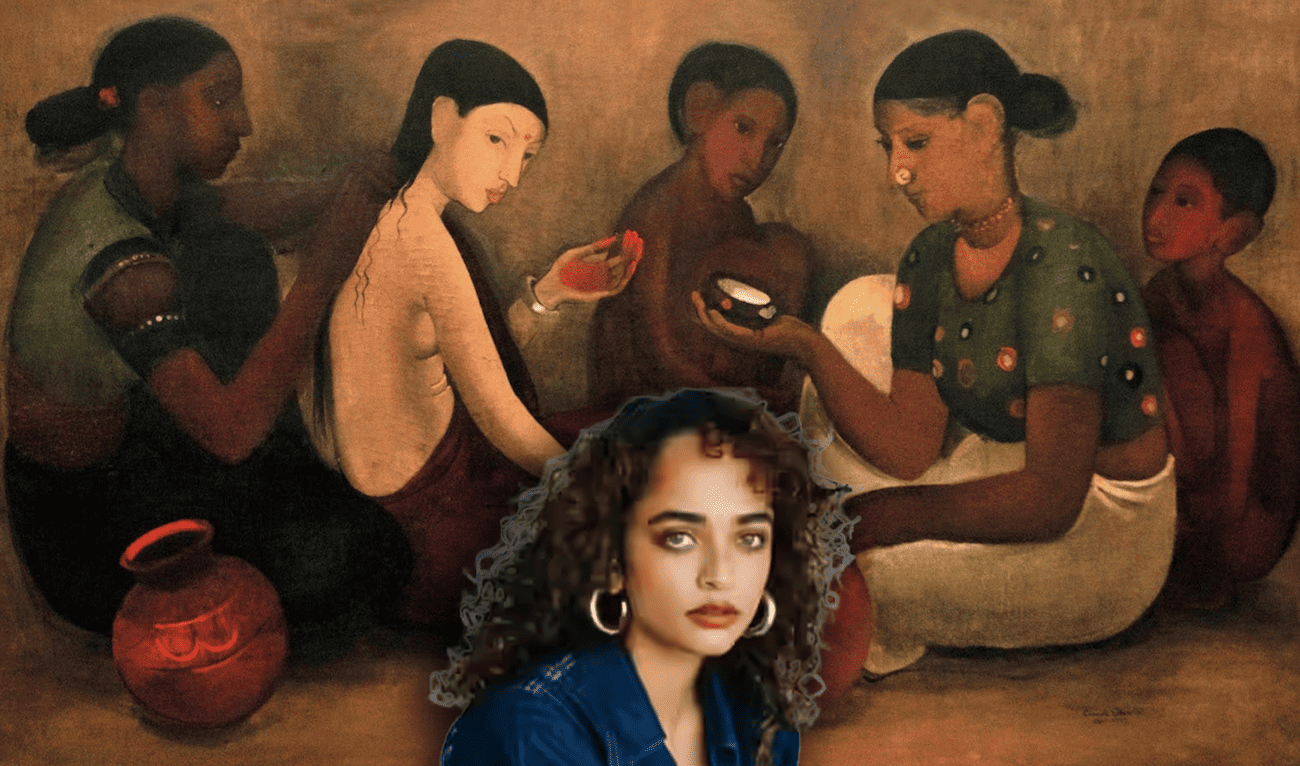

On Tuesday morning, filmmaker Mira Nair posted the first look of her next feature to her Instagram story. She captioned it simply with the film’s title: “Amri.”
Within hours, the image had been shared thousands of times — and for good reason. “Amri” is not an ordinary Bollywood biographical film. It is the project Nair has been, by her own account, building toward her entire career: a cinematic portrait of Amrita Sher-Gil, the Hungarian-Indian painter who burned through the early twentieth century like a comet, changed what Indian art could be, and died at the age of 28 before the world had fully understood what it had lost.
The first look, which Nair revealed exclusively to Variety before sharing it on social media, confirmed what industry observers had long suspected: the film would be a major international production, shot across India and Hungary, with a cast that crosses continents and generations. And at its center — in the role of Amrita herself — stands a face most audiences will not yet recognize. That, too, feels right.
The Cast: A Newcomer at the Center, Stars in the Wings
The ensemble Nair has assembled for Amri is a statement in itself. According to Deadline Hollywood, the central role of Amrita Sher-Gil will be played by Anjali Sivaraman, a young actor known from the streaming series “Class and Bad Girl.” The decision to cast a relative newcomer in the lead — rather than an established star — echoes choices Nair has made throughout her career, from the non-professional children she cast in “Salaam Bombay!” to Kal Penn’s breakthrough role in “The Namesake.” Amrita Sher-Gil’s life is a story about someone who refused to be defined by received hierarchies. It makes a certain kind of sense that the actor bringing her to life would arrive on her own terms.
The supporting cast is formidable. Jaideep Ahlawat — who became an international name through his role in “Paatal Lok” and has since become one of the most sought-after character actors in Indian cinema — plays Umrao Singh Sher-Gil, Amrita’s father: a Punjabi Jat Sikh aristocrat, Sanskrit and Persian scholar, and passionate amateur photographer who passed on to his daughter both an aristocratic bearing and a restless inner life. Emily Watson, the British actor nominated for Academy Awards, plays Amrita’s mother, Marie-Antoinette Gottesman — a Hungarian-Jewish opera singer from a wealthy bourgeois Budapest family who met Umrao Singh while visiting Lahore and married him against considerable cultural odds.
Anjana Vasan, the British-Indian actor who received wide acclaim for the television series “We Are Lady Parts,” plays Indira Sher-Gil, Amrita’s younger sister — a pianist who trained in Paris alongside her sister and who, as the mother of artist Vivan Sundaram, would go on to become a custodian of Amrita’s legacy. Jim Sarbh, one of the most intellectually distinctive actors of his generation in India, plays Karl Khandalavala — the lawyer, art critic, and close friend who became one of Amrita’s most important champions and who spent years after her death preserving and contextualizing her work for a world that had been too slow to appreciate it.
And then there is Priyanka Chopra Jonas. According to Deadline, Chopra plays Madame Azuri — and is also serving as executive producer on the film. Her dual role, as both performer and producer, underscores the seriousness of the project’s ambitions: this is not a vanity vehicle but a film that one of its cast members has invested in at every level.
The cast also includes Krisztián Csákvári as Victor Egan — the Hungarian-Jewish cousin whom Amrita married in 1938, despite her parents’ reservations, and with whom her romantic and creative life became deeply intertwined in her final years.
What the Film Will Explore
“Amri” is, in the words of its director, not a conventional biopic. Set across Hungary, France, and India in the early twentieth century, it traces the two worlds that shaped Sher-Gil’s imagination — the Budapest of her birth, the Paris of her artistic formation, and the India that she came to believe was her only true subject — and follows her as she synthesized them into a visual language entirely her own, as Deadline reported.
The film will explore Sher-Gil’s coming of age as both an artist and a woman, her restless search for selfhood, her deliberate defiance of convention in her romantic and creative life, and her determination to forge a visual identity that had no precedent.
“Every film I’ve made in the last several decades has been inspired by the art of Amrita Sher-Gil,” Nair said in a statement published by Deadline. “She taught me how to see. She absorbed the best European training to distill the soul of India in a way that no one ever had — it is this distillation that has informed my own cinema from the beginning. The bravery of her palette, colour, and framing of the ordinary people of India has eternally moved me.”
The film will explore Sher-Gil’s coming of age as both an artist and a woman, her restless search for selfhood, her deliberate defiance of convention in her romantic and creative life, and her determination to forge a visual identity that had no precedent.
Producer Samudrika Arora described the film’s animating tension to Deadline as one that will resonate far beyond its historical setting. “There is something deeply human in the tension of coming from two wildly different worlds — the challenge of belonging to both, and never entirely to either,” Arora said. “What moved me to make this film is how Amri carried the best of each world within her, and not lose herself in the space between them.”
Producer Michael Nozik placed Sher-Gil’s significance in the broadest possible frame. “While the film is set between the two World Wars,” Nozik told Deadline, “Amrita is a character out of time and before her time — she is a true visionary artist and social revolutionary, her life story a beacon of inspiration.”
“Amri” is co-written by Nair and Clara Royer, and produced through Mirabai Films, Samscape, and Papertown Productions, in association with KNMA and Miramax, according to Deadline. Production has taken place across India and Hungary, Bollywood Bubble reported, with the film currently in post-production.
The Life Behind the Film: Who Was Amrita Sher-Gil?
To understand what Nair is attempting with Amri, it helps to understand just how singular — and how misunderstood — Amrita Sher-Gil was in her own time.
She was born Dalma-Amrita on January 30, 1913, in Budapest, then part of the Austro-Hungarian Empire. Her father, Umrao Singh Sher-Gil Majithia, was a Punjabi Sikh aristocrat and scholar. Her mother, Marie-Antoinette Gottesman, was a Hungarian-Jewish opera singer. The family was stranded in Budapest during the First World War before relocating to Shimla — then Summer Hill — in northern India in 1921, according to the DAG World archive. The young Amrita was precocious, stubborn, and immediately apparent as a talent: her uncle Ervin Baktay, himself a painter and Indologist, recognized her gifts during a 1926 visit to Shimla and became an early advocate for her formal training, according to Wikipedia.
At sixteen, she sailed to Europe with her mother to study painting in Paris — first at the Académie de la Grande Chaumière and later at the École des Beaux-Arts, where she encountered the work of Cézanne, Modigliani, and Gauguin, and came under the influence of her teacher Lucien Simon. She was the youngest student ever admitted to the École des Beaux-Arts, and became the first Asian artist to be elected an associate member of the Grand Salon in Paris, winning a gold medal, according to Wikipedia and Britannica. She was nineteen years old.


But the prizes and the Parisian acclaim were not enough. By 1933, as the DAG World archive records, she had begun to feel what she later described as an intense longing to return to India, sensing in a way she found difficult to articulate that her destiny as a painter lay there and not in Europe. “I can only paint in India,” she wrote in a letter to her father. “Europe belongs to Picasso, Matisse, Braque…. India belongs only to me.”
She returned to India in late 1934 and embarked on the most decisive phase of her brief career. A 1937 tour of South India — and a transformative encounter with the cave paintings of Ajanta — produced her celebrated South Indian trilogy: Brahmacharis, South Indian Villagers Going to Market, and Bride’s Toilet. These paintings, as Britannica noted, represented a radical departure from the realist watercolor mode then dominant in Indian art, and marked the moment when her synthesis of European training and Indian subject matter became fully realized. She wrote that her artistic mission had become “to interpret the life of Indians and particularly of the poor Indians pictorially — to paint those silent images of infinite submissiveness.”
Her life was as dramatic as her canvases. She was unafraid of scandal: her love affairs — with men and women, with her first cousin Viktor Egan whom she married in 1938, and with figures as varied as the journalist Malcolm Muggeridge — were lived openly and defiantly, at a time and in a social milieu that had little tolerance for a woman who refused to perform conventional femininity. Her work was sometimes criticized by Indian critics as too Western, sometimes by European critics as too Indian. She ignored both. She sold relatively few paintings in her lifetime.
She died on December 5, 1941, in Lahore, under circumstances that have never been definitively established. She was 28 years old. The cause of death was officially recorded as peritonitis, though speculation has persisted, as the Astaguru archive noted. She had been preparing for her first solo exhibition in Lahore. It never opened.
Posthumous recognition arrived slowly and then overwhelmingly. In 1976, the Government of India declared her a National Treasure artist, according to the DAG World archive. The National Gallery of Modern Art in New Delhi holds 95 of her 172 documented oil paintings, making it the primary repository of her work. Her paintings have set auction records at major sales: a 2006 auction saw her Village Scene sell for Rs. 6.9 crore — at the time, the highest price ever paid for a work by an Indian woman artist, according to the Artflute archive. Salman Rushdie wrote the foreword to the two-volume collection of her letters and writings compiled by her nephew, the artist Vivan Sundaram.
A Global Moment for Sher-Gil
The timing of “Amri” announcement is not coincidental. Major international exhibitions of Sher-Gil’s work are planned for 2027 — beginning in Paris, moving to Los Angeles and Doha, and concluding in New Delhi, where a permanent exhibition is also planned. Her work is arriving on the global stage at exactly the moment Nair’s film will introduce her to audiences who may never have encountered her name.
For Nair — who has spent her career exploring the lives of people caught between cultures, languages, and identities, from Bombay street children to Indian-American immigrants to the Ugandan Asian diaspora — Sher-Gil is in some ways the figure she has always been circling. A woman who belonged to two worlds and refused to choose between them. A painter who found her mission in the faces of the poor and the overlooked. An artist who paid for her originality in loneliness and posthumous recognition.
“She absorbed the best European training to distil the soul of India in a way that no one ever had,” Nair said to Deadline, in the words she used to open her statement about the film. The same sentence could describe what Nair herself has spent four decades attempting in cinema.
No release date for “Amri” has been announced. The film is currently in post-production.