




American Injustice: The Legal Odyssey of Subramanyam ‘Subu’ Vedam

- His murder conviction had been overturned. Instead of being freed after 43 years of wrongful imprisonment, he was taken to an ICE detention facility.
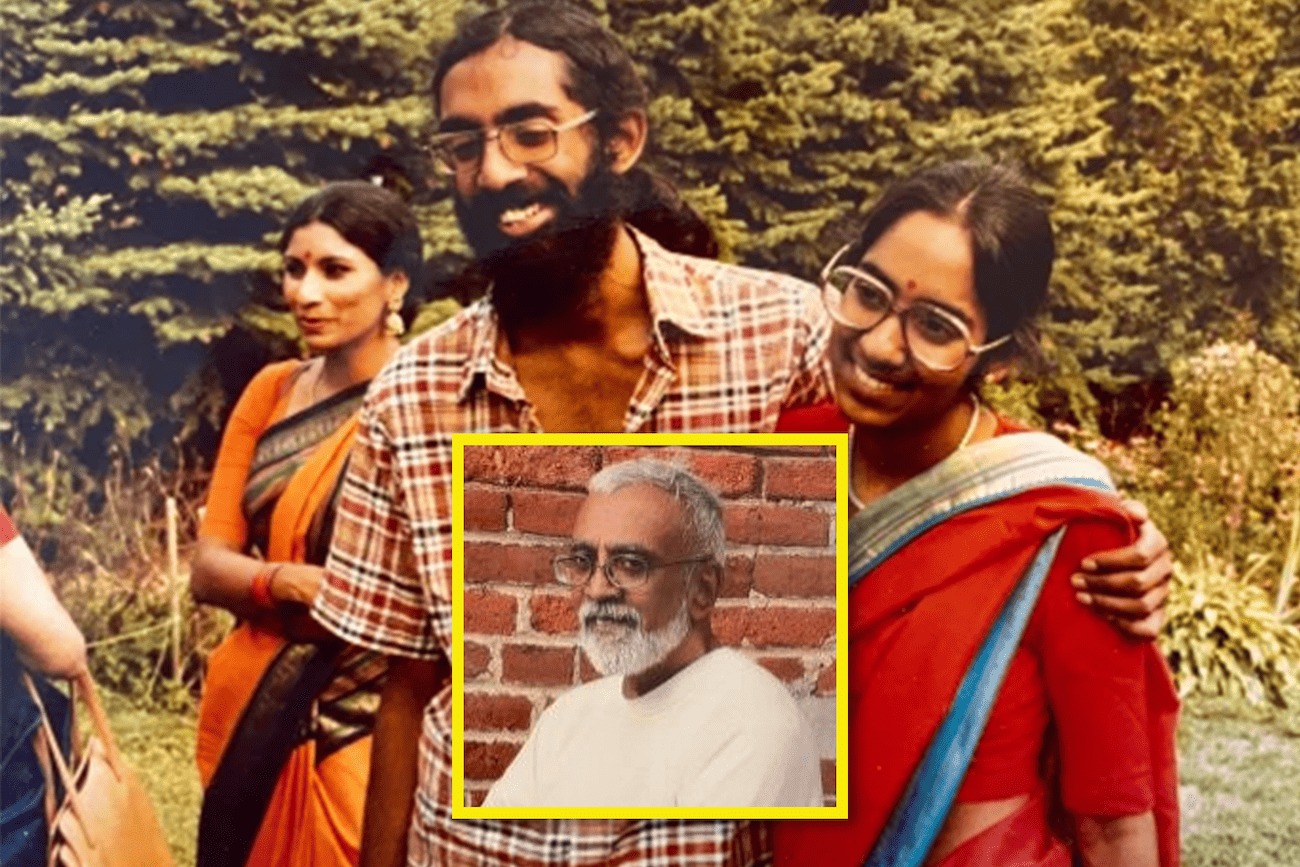

It was three in the morning when Saraswathi Vedam’s phone rang. She had waited more than four decades for this moment, and when it came she wasn’t sure whether to laugh or cry, she later told CNN. Her brother — Subramanyam “Subu” Vedam, who had entered prison as a young man of 20 and was now 64 and gray-haired — was finally going to be free. His murder conviction had been overturned.
It should have been the end of the story. Instead, it was the beginning of a new legal battle, one that would take Subu Vedam from a Pennsylvania maximum-security prison to an ICE detention facility, and eventually to an immigration courtroom where a judge would decide whether he could remain in the only country he had ever truly known.
A Life Interrupted at 20
Subu Vedam was born in Mumbai, India, but the country of his birth is largely an abstraction to him. His family brought him to the United States when he was nine months old, according to NBC News. He grew up in State College, Pennsylvania, where his father worked as a physics professor. He was, in every meaningful sense, American — a legal permanent resident who was reportedly just days away from naturalizing as a citizen when his life was upended.
In December 1980, Vedam’s high school friend and former roommate, 19-year-old Thomas Kinser, disappeared after giving Vedam a ride to buy drugs, according to the Associated Press. More than nine months later, hikers discovered Kinser’s remains in a sinkhole. There was a bullet wound in his skull.
Investigators focused on Vedam. He was initially detained on separate drug charges and eventually charged with Kinser’s murder. Prosecutors argued at trial that he had shot Kinser with a .25-caliber handgun he had purchased before Kinser’s disappearance. Vedam’s defense attorneys challenged the ballistics evidence, raising questions about whether the bullet recovered was consistent with that caliber of weapon. The jury was not persuaded. Vedam was convicted of first-degree murder in 1983 and sentenced to life without the possibility of parole.
Supporters of Vedam have long maintained, as CNN reported, that investigators fixated on him as the lone suspect at the expense of other legitimate leads, and that his ethnicity may have shaped how authorities initially approached the case.
Forty-Three Years of Maintaining Innocence
Through two full trials and decades of imprisonment, Vedam never stopped insisting he was innocent. According to NBC News, prosecutors extended plea bargain offers during both trials. He rejected them each time, telling an immigration judge many years later that he had never stopped proclaiming his innocence. He had nothing to trade away and no guilt to admit to.
What he did instead, as Onward State reported, was build a life inside prison walls. He earned three academic degrees. He designed and ran programs to assist fellow inmates. He mentored four nieces he came to know only from behind bars. He accumulated, over 43 years, not a single disciplinary demerit.
In 2022, attorneys working with the Pennsylvania Innocence Project uncovered something that prosecutors had never disclosed to the defense: an FBI report concluding that the wound in Kinser’s skull was inconsistent with a .25-caliber bullet — the very weapon that had been central to the prosecution’s case, according to reporting by Common Dreams, which cited the Miami Herald’s original investigation.
On August 28, 2025, Centre County Court of Common Pleas Judge Jonathan D. Grine ruled that the withheld evidence had denied Vedam a constitutionally fair trial, and vacated his conviction, as documented by WPSU public radio. The judge found that the suppressed ballistics report could have led a jury to a different verdict. Vedam became the longest-serving exoneree in Pennsylvania history, and among the longest in the United States, according to the World Socialist Web Site.
Freedom’s Door Closes Again
On October 2, 2025, Centre County District Attorney Bernie Cantorna announced his office would not seek a new trial. Key witnesses were gone, evidence had degraded over decades, and a retrial was not realistically possible. All charges against Vedam were formally dropped. The following morning, October 3, he was scheduled to walk out of Huntingdon state prison a free man.
He never made it.
A day after the charges were dropped, agents from Immigration and Customs Enforcement were waiting. They took Vedam into custody on the basis of a deportation order that had been issued back in 1999 — itself stemming from a separate youthful drug conviction.
A day after the charges were dropped, agents from Immigration and Customs Enforcement were waiting. They took Vedam into custody on the basis of a deportation order that had been issued back in 1999 — itself stemming from a separate youthful drug conviction. When Vedam was 19, before the murder charge, he had entered a no-contest plea to four counts of selling LSD, according to StateCollege.com. That conviction had never gone away. While he served a life sentence, the deportation order had lain dormant, impossible to contest from behind prison walls.
ICE transported him to the Moshannon Valley Processing Center in Clearfield County. In an emailed statement to WPSU, an ICE spokesperson described Vedam as a “career criminal and a convicted drug trafficker,” and said the agency would arrange for his removal in accordance with applicable law.
His attorney, Ava Benach, pushed back on that characterization with force. Speaking at a bond hearing reported by StateCollege.com, Benach argued that the offenses in question had occurred more than 40 years ago, when Vedam was a teenager. She noted that he had spent those four decades in prison for a crime he did not commit, emerging with an unblemished institutional record and three degrees. She also noted that District Attorney Cantorna had declined to retry him — a decision, she argued, that spoke to whether Vedam posed any genuine threat to the public.
A Race to the Border — and an Emergency Stop
The situation grew more urgent in the days after Vedam’s detention. ICE transported him from Moshannon Valley to Texas in preparation for his physical removal to India, according to StateCollege.com. A federal court intervened with an emergency stay of deportation, halting the process. Vedam was returned to Pennsylvania.
The Department of Homeland Security made its position plain throughout. In a statement to CNN, a DHS spokesperson said the vacation of Vedam’s murder conviction would not alter the agency’s enforcement priorities. The department publicly referred to Vedam as a “criminal illegal alien” — a description his attorney rejected, noting that Vedam holds lawful permanent resident status in the United States.
The Board of Appeals Steps In


In February 2026, the U.S. Board of Immigration Appeals — the Justice Department’s highest administrative body for immigration law — took up Vedam’s case and reached a notable conclusion. The board determined that the case presented an “exceptional situation” warranting a full reopening of immigration proceedings, according to CNN. Crucially, the board vacated the original deportation order, which had been grounded in the now-overturned murder conviction and the related drug charge.
The decision sent the case back to an immigration court — but it did not free Vedam. A bond hearing followed, at which immigration Judge Tamar Wilson denied his release. Wilson ruled that the drug conviction, entered decades earlier, made Vedam subject to mandatory detention regardless of other circumstances, Onward State reported. The assistant district attorney of Centre County attended the hearing, prepared to address questions about the decision not to retry Vedam. State College Mayor Ezra Nanes also appeared in support, according to Vedam’s attorney.
Saraswathi Vedam, speaking to StateCollege.com after the bond ruling, said the family had hoped the combination of the Board of Appeals decision, Vedam’s exoneration, and his record of conduct in prison would persuade the court to release him while his case proceeded. “The government has not proven valid grounds to remove him from the country,” she said, adding that her brother had compiled an exemplary record through more than four decades of wrongful imprisonment.
A Judge Rules: He Can Stay
On April 2, 2026, Immigration Judge Adam Panopoulos issued a ruling that cleared the path for Vedam’s potential release. In a decision reported by CNN, the judge found that Vedam had demonstrated genuine personal transformation and did not pose a danger to the public. Panopoulos found, according to NBC News, that Vedam had dedicated himself to the growth of others through education and mentoring during his years behind bars.
At a hearing the day before, Vedam had appeared remotely from the Moshannon Valley facility and addressed the court directly. Speaking of his youth and the drug offenses that had followed him for half a century, he told the judge — in words reported by NBC News — that he had been young, foolish, and made serious mistakes. He also told the court, as NBC News reported, that he had never ceased asserting his innocence of the murder charge throughout all his years of imprisonment.
The ruling does not yet mean freedom. The Department of Homeland Security has until early May 2026 to appeal. Vedam’s attorney, Benach, said she intends to file for his release on bond in the interim, according to CNN.
A Family Waits
Saraswathi Vedam learned of the April ruling alongside two of her daughters, listening from State College. She told CNN she was filled with gratitude — but also grief. Their parents, who had spent their lives hoping to see their son come home, did not live to witness this moment. She wept, CNN reported, saying it was not fair that they had not survived to see it.
Her earlier words to the Associated Press, from the first days of her brother’s ICE detention in October, still resonate as the legal proceedings continue. Her brother, she said, had spent his life learning — the hard way — that things do not always make sense. He knew, she told the AP, that you had to keep going. You had to stay the course, and hold onto the hope that truth, justice, and compassion would eventually prevail.
Subu Vedam, who grew up in State College, who was days away from becoming an American citizen when his life was taken from him, who spent 43 years in prison for a murder a court ultimately found he was never fairly tried for, is still waiting to find out if he will be allowed to remain in the country he has called home since he was nine months old.