




Nirav Shah, Son of Gujarati Immigrants, Could Be Democrats’ Best Bet to Flip Susan Collins’ Senate Seat

- The 48-year-old epidemiologist, attorney, and economist who won Maine's heart during COVID-19 is now weighing a Senate run after the Democratic nominee's campaign collapsed in real time. His path is complicated — but his name recognition is real, his credibility is deep, and the seat is winnable.

On July 6, 2026, the Maine Democratic Party’s carefully laid Senate strategy fell apart in a single news cycle. Politico published an account from a woman who accused Graham Platner — the oyster farmer and political newcomer who had just won the Democratic primary with nearly 80 percent of the vote — of raping her while heavily intoxicated in 2021 when they were in a casual dating relationship. Platner denied the allegation, calling it “troubling, serious, and false” and stating that “any accusation of non-consensual behavior is categorically untrue,” as CNN reported. But within 24 hours, senators Bernie Sanders and Elizabeth Warren had called for him to step aside, the Democratic Senatorial Campaign Committee had announced it would not invest in the race if he remained on the ballot, and the Senate Majority Leader Chuck Schumer and DSCC chair Kirsten Gillibrand had issued a joint statement demanding his immediate withdrawal.
Into that vacuum, one name surfaced more consistently than any other.
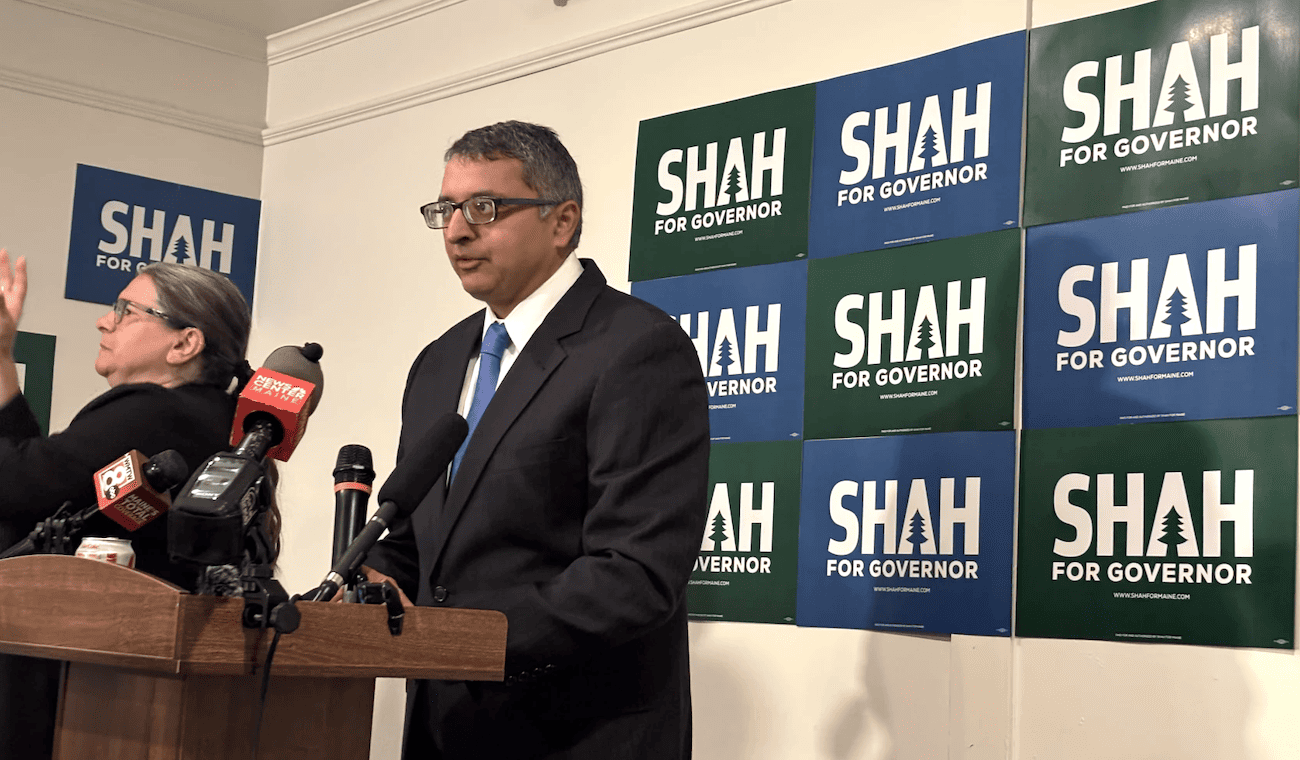
Maine Democrat Nirav Shah said Tuesday he is weighing a Senate bid in the wake of the new allegation of sexual assault made against Graham Platner. “In the past 24 hours, my team and I have received hundreds of encouraging messages,” Shah wrote in a social media post. “Right now, our number one priority must be defeating Senator Susan Collins. I have been having conversations with my wife, my team, and Mainers across the state about what comes next and evaluating whether I should enter the Senate race.”
The statement was careful, measured, and precisely calibrated — the kind of public communication that Shah’s supporters have come to expect from a man who spent four years briefing the state of Maine on a pandemic without once losing his composure.
The Son of Gujarati Immigrants Who Became Maine’s Favorite Doctor
Nirav Dinesh Shah was born in 1977 in Wisconsin. The son of Gujarati Indian parents who immigrated to the United States in the 1970s, Shah grew up in Wisconsin in a family that blended Indian and American traditions. His father worked as a physician, and his mother was a preschool educator — instilling in him a lifelong belief in education, service, and community.
He graduated valedictorian at Mayfield High School in Mayfield, Kentucky, in 1995. He attended the University of Louisville, where he majored in psychology and biology, receiving a Bachelor of Science in 1999. After college, Shah studied economics at Oxford and enrolled in medical school at the University of Chicago in 2000. Shah completed his J.D. degree in 2007 and his Doctor of Medicine in 2008, both from the University of Chicago, and was a recipient of the Paul and Daisy Soros Fellowships for New Americans. The fellowship, established specifically for immigrants and children of immigrants who are making extraordinary contributions to American life, was a fitting early recognition of a trajectory that had taken him from a small Wisconsin town to Oxford, Chicago, and eventually the halls of federal power.
Earlier in his career, Shah served as the chief economist of the Ministry of Health of Cambodia during his tenure as a Henry Luce Scholar, where he worked on a variety of public health programs aimed at reducing corruption in the health care system. In particular, he designed a system that reduced the number of administrative steps required to transfer funds from the central Ministry to rural hospitals, thereby reducing opportunities for corruption and graft. As Wikipedia documented in its account of his career, he learned Khmer during his time in Cambodia and credited his experiences there — and his ongoing relationships with colleagues in Southeast Asia — with giving him the early procurement instincts that served Maine well at the outset of the COVID-19 pandemic.
Shah was appointed as the director of the Illinois Department of Public Health in 2015 and served in that role until 2019. His tenure there was not without controversy. In August 2015, an outbreak of Legionnaires’ disease resulted in 13 deaths and 74 infections at the Illinois Veterans’ Home in Quincy, Illinois. Shah was among several state officials heavily criticized for their response to the outbreak, and a 2019 state audit report indicated that the state CDC did not visit the facility until the 12th day of the outbreak. Shah has maintained that the agency followed all federal guidelines, according to Wikipedia.
The COVID Years: “In Shah We Trust”
What happened next defined his public life entirely.
In 2019, Governor Janet Mills appointed Shah to be Director of the Maine Center for Disease Control and Prevention. Under his leadership, Maine achieved one of the highest vaccination rates and lowest COVID-19 death rates in the nation. His early actions — securing protective equipment, expanding testing capacity with Maine-based companies, and communicating transparently — were widely credited with saving lives and strengthening public trust.
Shah’s strengths in a general election against Collins are substantial. His vulnerabilities are equally real. He has never won an election, a fact that his critics have noted consistently.
The personal connection he built with the state’s residents during that period bordered on the extraordinary. A “Fans of Dr. Nirav Shah” Facebook page reached over 35,000 members. Stickers, T-shirts, and mugs with Shah’s likeness and the slogan “In Shah We Trust” and “Keep Calm and Listen to Dr. Shah” were printed and sold to benefit local nonprofits. Local confectioner Wilbur’s of Maine produced “Shah bars” with his photo on the wrapper, and an “In Shah We Trust” electronic road sign was erected in Topsham, Maine.
Down East Magazine, in its profile of Shah during the pandemic years, noted that he is multilingual — he learned Khmer while working in Cambodia’s Ministry of Health and speaks decent Gujarati, the language from the Indian state from which his family originates.
Maine Governor Mills praised Shah’s qualities in her statement announcing his departure for the federal CDC, noting that he spoke calmly and directly to the people of Maine, many of whom were scared and uncertain, and answered their questions with “compassion, empathy, humor, and a clarity.”
In January 2023, he was appointed as the principal deputy director of the U.S. Centers for Disease Control and Prevention and assumed that position in March 2023. Following the resignation of Rochelle Walensky, Shah served as the acting director of the U.S. CDC in July 2023 until Mandy Cohen assumed office. Shah resigned the position in February 2025. He left, as Maine Public Radio documented, after Trump’s reelection made his position untenable, and has since been highly critical of the new administration’s actions on public health.
In March 2025, Shah accepted an appointment to the faculty of Colby College in Waterville, Maine, to teach courses in public health, epidemics, and crisis communication. He received an honorary doctoral degree from Colby in 2022, as the college’s official announcement documented.
The Governor’s Race: A Near Miss That Set the Stage
Shah’s path to the Senate consideration runs directly through his performance in the Democratic gubernatorial primary held on June 9, 2026.
Shah won a devoted public following for his humor and communication style. He entered the governor’s race in October 2025 as a strong moderate contender. Despite winning the most first-round votes, Shah came in second in the ranked-choice runoff, behind Hannah Pingree, now the party’s nominee.

The margin of his loss and the manner of it matter politically. In Maine’s ranked-choice voting system, candidates who receive the most first-choice votes do not always prevail when second and third preferences are redistributed. Shah’s loss reflected the progressive wing of the Maine Democratic Party consolidating against him — a dynamic that Newsweek, in its account of potential Platner replacements, described precisely: Bellows and Jackson both came out of the primary in a strong position, as they coalesced more progressive support against more moderate candidates such as Shah.
The Senate Opportunity: A Winnable Seat, a Complicated Path
Maine’s Senate race is, by every measure, one of the most important on the 2026 map. Senator Susan Collins — the four-term Republican moderate who survived 2020 by more than eight points despite a fierce Democratic effort — is now running in a political environment dramatically more hostile to her party, as the Democratic Senatorial Campaign Committee has identified the seat as among their best opportunities to flip Republican-held Senate seats.
If Platner steps aside, the Maine Democratic Party’s state committee would be responsible for selecting a replacement nominee. Shah is, by multiple accounts, the most frequently mentioned candidate in those conversations. A Maine politics professor said if Hannah Pingree declines to enter the Senate race, the party might look to Nirav Shah, Troy Jackson, or maybe a Shenna Bellows rematch.
Shah’s strengths in a general election against Collins are substantial. His vulnerabilities are equally real. He has never won an election, a fact that his critics have noted consistently. The progressive wing of the Maine Democratic Party — whose ranked-choice preferences denied him the governorship — could resist a party-committee selection of a candidate they had just voted against. He is seen as more moderate than Platner but is well known throughout the state and placed ahead of Jackson in the gubernatorial primary. And his association with the Biden CDC — in a political environment where the current administration has made skepticism of federal health agencies a central organizing principle — could be weaponized against him in a general election.
Shah himself has been publicly critical of the Trump administration’s approach to public health. “Whether it’s your right to access vaccines for your kids, your right to reproductive health care, or your right to have a clean environment with clean air or clean drinking water, the federal government has abandoned its leadership,” he said at his gubernatorial campaign launch, as Maine Public Radio reported. That positioning gives him a clear contrast with Collins — but it also hands Republicans a line of attack in a state where COVID-era restrictions generated real and lasting resentment.
The question of whether the Maine Democratic Party’s state committee would select him over more progressive alternatives — Troy Jackson, Shenna Bellows, or others — turns on a judgment about electability that the party’s activists and the DSCC may assess differently. The DSCC’s explicit promise of financial investment if a credible candidate replaces Platner is a significant thumb on the scale in favor of a moderate who can compete across the full spectrum of Maine voters.
What is not in dispute is what Down East Magazine’s profile of Shah at the height of his pandemic celebrity captured in its headline: the state of Maine gave him a name that no amount of advertising can manufacture. He earned it, mask by mask and briefing by briefing, in the worst crisis the state had faced in a century.
Whether that trust translates into a Senate seat against one of the Republican Party’s most durable incumbents is the question Maine Democrats must now answer — possibly within days, and certainly under conditions none of them planned for.
Top image, courtesy of Maine Public.