




The Sound of Silence: Soma Mukhopadhyay, a Mother Who Figured Out What Nonverbal Autistic Children Can Actually Tell Us

- A Bengali chemist turned educator developed a technique in a Bangalore apartment to reach her silent son — and produced one of the most celebrated and most contested innovations in autism education of the past three decades.
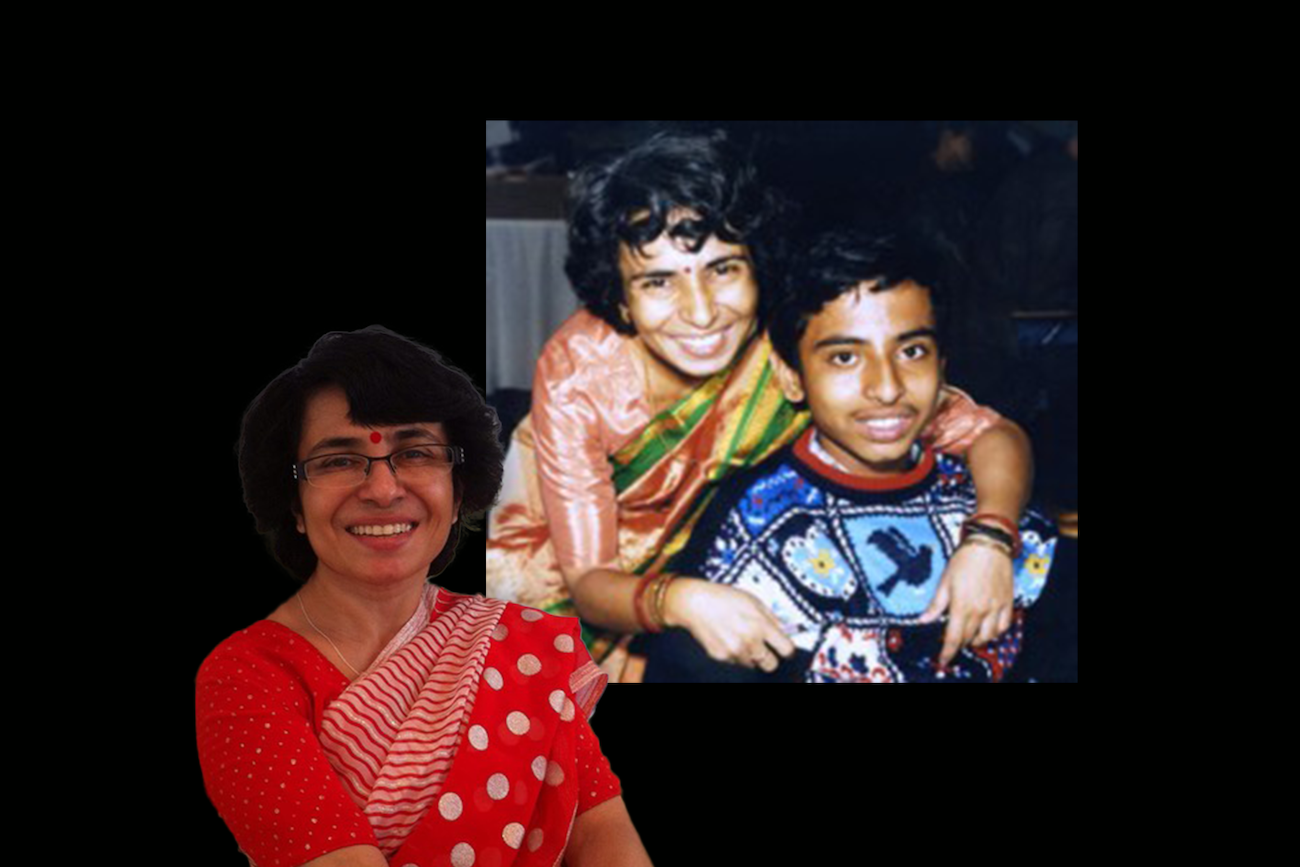

The story of the Rapid Prompting Method begins not in a university laboratory or a clinical research center but in a domestic space — an apartment in Bangalore, India, in the early 1990s, where a young woman trained as a chemist was trying to teach her nonverbal autistic son to read.
Soma Mukhopadhyay holds a Bachelor of Science in chemistry with honors and a Master of Science in chemistry, as well as a Bachelor of Education, according to the National Autism Association Conference’s official biographical page. She is a trained teacher as well as a scientist. When her son Tito Rajarshi Mukhopadhyay was diagnosed with autism at the age of three — and when the professionals who evaluated him implied, in the manner common to that era, that his silence meant he had little to offer the world — she rejected their assessment with a ferocity that would define the next three decades of her life.
“People do this thing that I call ‘otherization,'” she said in an interview published on DanaRoc.com. “As much as possible we keep the otherization away and try to treat and talk to the child as we talk to anyone else.” She did not, she said in the same interview, allow herself to treat Tito as fundamentally different from any other child. “My son has autism but that doesn’t stop me from insisting that he pick up his clothes or clean up his room. I treat him just like I would treat anyone else.”
What she developed through years of daily experimentation — by trial and error, as Grokipedia documented, combining behavioral and communication techniques in her search for something that could break through the wall of Tito’s silence — was the Rapid Prompting Method. She brought it to the United States in 2001, at the invitation of Cure Autism Now, a nonprofit that had seen a BBC documentary about Tito and wanted her to work with their members’ children. That documentary, “Tito’s Story,” had made a startling case: here was a boy who could not speak, who flapped and rocked and seemed entirely unreachable by conventional standards, and who had nonetheless handwritten a book, “Beyond the Silence,” published by the National Autistic Society in the United Kingdom when he was eleven years old.
The BBC documentary led directly to Soma and Tito’s move to the United States. In 2004, she began working with Helping Autism through Learning and Outreach — HALO — and in 2005 relocated from California to Austin, Texas, where she established the Halo-Soma Institute, according to Wikipedia’s documented account of the RPM’s history. She has worked at the Institute ever since as Executive Director of Education, serving, as the National Autism Association page documented, thousands of students — youth to adult — with autism and similar disorders.
What RPM Is — and What It Claims to Do
The Rapid Prompting Method is, at its most fundamental level, a teaching approach built on two core convictions: that nonverbal autistic individuals possess cognitive and intellectual capacities that their external behavior obscures, and that the barrier to expressing those capacities is not mental limitation but a failure of sensory integration and motor planning — specifically, an inability to initiate and sustain purposeful physical responses.
As described by HALO and documented in the Springer Nature Link entry on Rapid Prompting in Volkmar and Todd’s Encyclopedia of Autism Spectrum Disorders, RPM employs a “teach-ask” paradigm in which an instructor first presents academic material — science, history, literature — through rapid verbal, visual, auditory, or tactile prompts designed to engage the student’s reasoning. The instructor then prompts the student to respond by pointing to letters or choices on a letterboard, selecting between printed options, or eventually typing independently. Responses evolve, according to the method’s framework, from simple yes/no choices through increasingly complex letter-by-letter spelling, revealing the student’s comprehension and academic abilities.
The method is “low-tech” by design, requiring only an instructor, a student, paper, and a pencil. Sessions typically last 30 to 60 minutes and are paced to align with the student’s self-stimulatory behaviors — rocking, hand-flapping — with the instructor persisting in prompting even during off-task moments. The instructor is positioned to the right of the student — a placement Mukhopadhyay describes as designed to activate left-brain auditory processing regions associated with language, as Grokipedia documented.
Mukhopadhyay grounds RPM theoretically in Jean Piaget’s developmental psychology and A. Jean Ayres’s theory of sensory integration. She posits that by observing a student’s self-stimulatory behaviors, she can identify each student’s dominant learning channel — visual, tactile, or auditory — and tailor the approach accordingly.
“I see criticism as medals, not as scars,” she says. “Criticism comes with its own expiry date. Beyond a point the criticism — vocabulary gets exhausted and it becomes boring and redundant.”
When asked what distinguishes her pedagogical philosophy, she offered a characteristically direct response to her interviewer at NeuroClastic. “I like to story things myself. It makes everything interesting,” she said. “I use the same instinct of story-ing with Tito and my students perhaps as a habit. If I were to teach a typical student, I would still story everything.”
The evidence that the approach works — in anecdotal terms — is substantial. In her early American trial with seven nonverbal and two selectively speaking students with autism, all made demonstrable progress in communication, according to the HALO-Soma website. She has since worked with thousands of students. Her son Tito has authored two poetry collections, a collection of short stories, and a book, “The Mind Tree,” published in the United States by Arcade in 2003, in which he described his sensory experience of autism from the inside — providing, as the HALO-Soma website noted, “scientists new insights into this mysterious neurological malady.” The HBO documentary “A Mother’s Courage: Talking Back to Autism,” narrated by Kate Winslet and an official selection at the 2009 Toronto International Film Festival, featured Soma and Tito alongside other families navigating autism, and brought their story to a global audience.
The Science Dispute: Pseudoscience or Overlooked Method?
The scientific community’s assessment of RPM is sharply and unambiguously critical — a fact that Mukhopadhyay herself acknowledges without concession and her supporters contest with equal vigor.
Wikipedia categorizes RPM plainly as “a pseudoscientific technique.” The Rapid Prompting Method entry on Wikipedia adds that it is “closely related to the scientifically discredited technique facilitated communication,” the approach — now thoroughly debunked through controlled studies — in which facilitators were found to be unconsciously guiding the hands of nonverbal individuals, producing messages that reflected the facilitators’ own thoughts rather than those of the people they were ostensibly helping.
The American Speech-Language-Hearing Association has issued a formal statement opposing the practice of RPM, as Wikipedia documented. A 2012 peer-reviewed article published in Developmental Neurorehabilitation in Tandfonline concluded that “RPM may be the current façade of deceptive practices purporting to aid individuals with autism spectrum disorders in communicating,” noting that the evidence offered by HALO “does not come close to meeting the size of the claims made regarding its outcomes.”
The central scientific objection is the question of message authorship — the same question that destroyed facilitated communication’s credibility decades earlier. When a nonverbal student points to letters on a board, how can observers be certain the student is choosing the letters rather than responding, consciously or unconsciously, to subtle physical or gestural cues from the instructor? As the Wikipedia account of the scientific literature noted, it has been observed that “Mukhopadhyay gives a high rate of verbal, gestural, and physical prompts even to the most independent students.” Mukhopadhyay herself acknowledged, as Wikipedia documented, that “a teacher who wants to move quickly could accidentally guide the student’s arm through touch, although that is not allowed in RPM” — a concession that critics argue reveals an unresolved vulnerability at the method’s core.
A review published in 2019, as Wikipedia documented, concluded: “Until future trials have demonstrated safety and effectiveness, and perhaps more importantly, have first clarified the authorship question, we strongly discourage clinicians, educators, and parents of children with ASD from using RPM.”
As of April 2017, only one scientific study attempting to support RPM’s efficacy claims had been conducted — and reviewers found that study contained serious methodological flaws, according to Wikipedia. RPM is not recognized as a clinical profession, and has no established standards for registering, licensing, or certifying treatment providers, as Wikipedia noted.
Proponents of RPM have responded to these criticisms in ways that critics find circular. As Wikipedia documented, they have argued that subjecting RPM to controlled scientific validation — specifically, the message-passing studies used to expose facilitated communication’s failures — would be stigmatizing to people with autism and would effectively deny them the right to communicate. The authors of the 2012 Developmental Neurorehabilitation review described this framing as “circular logic” that insulates the method from the very scrutiny that could establish or disprove its claims.
Mukhopadhyay’s Own Response to Critics
Soma Mukhopadhyay has addressed the criticism of her method with a composure that her supporters find admirable and her critics find frustrating.


“I see criticism as medals, not as scars,” she told her NeuroClastic interviewer. “Criticism comes with its own expiry date. Beyond a point the criticism — vocabulary gets exhausted and it becomes boring and redundant.”
She has consistently argued that the scientific establishment’s resistance to RPM reflects a failure of imagination rather than a genuine assessment of the evidence — and that the anecdotal outcomes she has documented across thousands of students constitute a body of evidence that rigidly controlled laboratory studies are poorly designed to capture.
“When other therapists criticize,” she told NeuroClastic, “it gives me feedback that something we are doing is correct which is creating this motivation to criticize.”
The NeuroClastic interviewer — an autistic-led publication whose editorial orientation is broadly supportive of augmentative communication methods and critical of the medical establishment’s historical dismissiveness toward nonverbal autistic individuals — presented Mukhopadhyay as a figure whose contributions to the community of nonspeaking autistic people have been foundational. “It is because of Soma Mukhopadhyay and her son, Tito, that thousands of nonspeaking and minimally speaking autistic people around the world have access to reliable communication,” the publication wrote.
This framing reflects a genuine division within autism advocacy circles between those who apply scientific evidence standards uniformly to all communication interventions, and those who argue that the historical failure to presume competence in nonverbal autistic individuals has itself caused enormous harm — and that the urgency of providing communication access cannot wait for research methodologies to catch up.
The Legacy: A Method, a Movement, and an Unanswered Question
Whatever the scientific establishment’s current assessment of RPM, its cultural and institutional footprint is substantial. Soma Mukhopadhyay has authored more than a dozen books on RPM’s application across communication, curriculum development, motor skills, sensory tolerance, language development, mathematics, and reading, published by Outskirts Press between 2008 and 2017. The HALO-Soma Institute in Austin trains practitioners internationally, with certified RPM providers now operating in countries including Brazil, the United Kingdom, Australia, and India. Parent communities organized around RPM have built an international network of support, training, and advocacy that has grown largely outside of — and sometimes in explicit opposition to — the clinical mainstream.
The story of Tito Rajarshi Mukhopadhyay — the boy whose silence his mother refused to accept, who grew up to publish poetry and prose that gave neurotypical readers their most visceral account of autistic consciousness from the inside — remains at the center of everything. Whether his remarkable literary output was unlocked by his mother’s method or was always present and merely awaiting any communication channel, his existence as a published, articulate voice from within the experience of severe nonverbal autism has been impossible for either supporters or critics of RPM to ignore.
Tito himself, writing in “The Mind Tree,” offered the most precise summary of what his mother’s determination meant in his own life: that someone had believed, against the evidence available to conventional assessment, that he had something to say.
Soma Mukhopadhyay is still in Austin, Texas. She is, as she told her interviewer, still a student. “I have a lot more to learn,” she said in the DanaRoc.com interview, “and as I work with more children I will be learning much more.”
The method she developed on a Bangalore kitchen table is still being contested by researchers, embraced by parents, and practiced daily with thousands of nonverbal children for whom it remains, for better or worse, one of the few doors that has ever appeared to open.