




Future Tense: Justice Kavanaugh’s Qualified Support Leaves Room to Challenge the Constitutionality of Birthright Citizenship

- This is how constitutional rights erode in the United States — not through a single decisive ruling but through the patient accumulation of dissents and concurrences that reframe the question and narrow the precedent.

The Fourteenth Amendment does not use hedged language. It was not written by people who were uncertain about what they meant. The men who drafted it had just watched a country spend four years tearing itself apart over whether some of the people living in it were actually people — and before that, had watched the Supreme Court rule in Dred Scott v. Sandford that Black Americans had no rights a white man was bound to respect.
They had seen what happened when citizenship was left to the discretion of the powerful. So they wrote the Citizenship Clause the way you write something when you are determined not to be misunderstood: “All persons born or naturalized in the United States, and subject to the jurisdiction thereof, are citizens of the United States and of the State wherein they reside.” Not most persons. Not persons whose parents arrived the right way. All persons. They chose the broadest possible language deliberately, at a moment when they understood better than most what narrow language costs. They wanted to make this hard to undo.
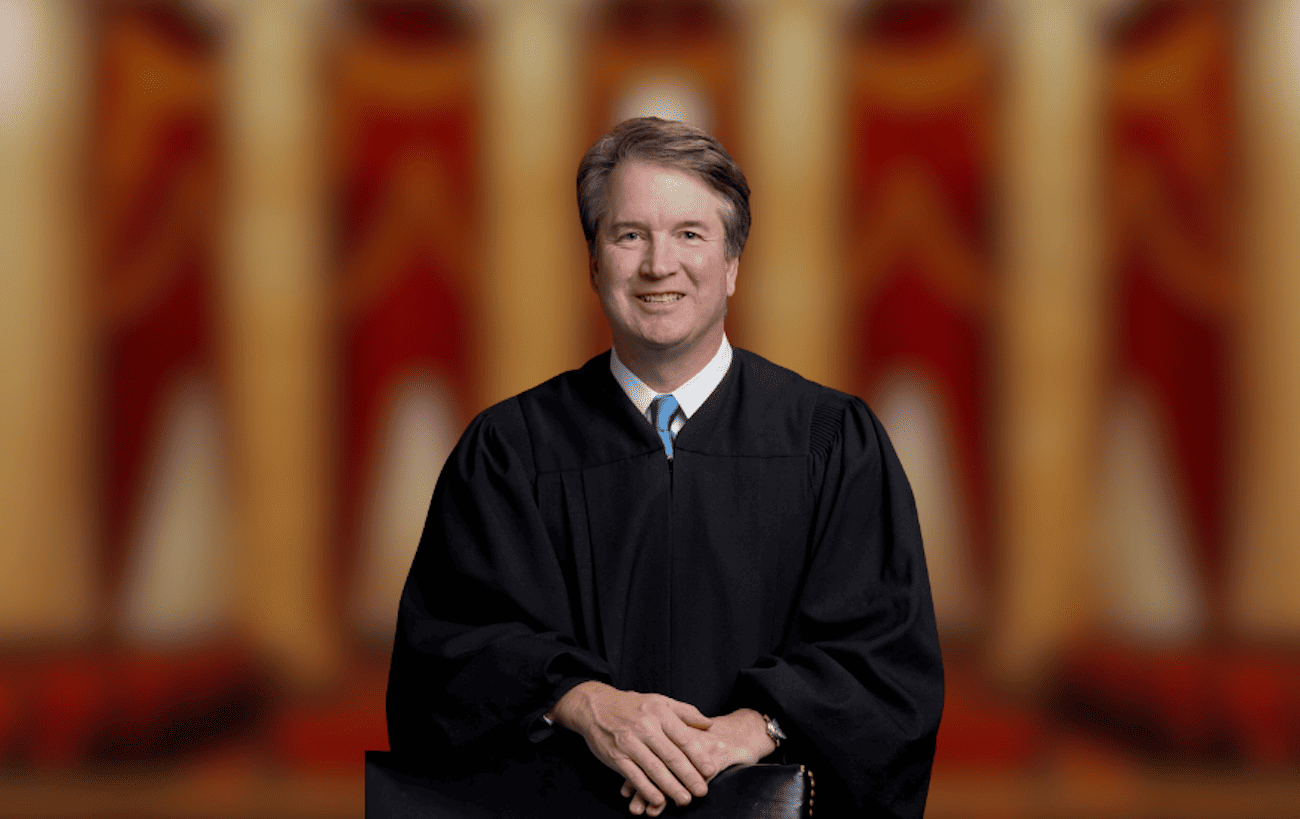
Yesterday, the Supreme Court ruled that Trump’s executive order stripping birthright citizenship from children born to undocumented immigrants and those on temporary visas was illegal. The decision is being received as a victory, and by the narrow arithmetic of outcomes, it is. But the ruling was 6–3 on the statutory question and 5–4 on the constitutional one — which is to say, on the question of whether the Fourteenth Amendment actually requires what it plainly says, a single justice stood between the White House and an entirely new definition of American personhood. That justice was Brett Kavanaugh, and he only held part of the line. On the constitutional question, he sided with the dissenters.
What Kavanaugh wrote in his concurrence, and what Thomas, Alito, and Gorsuch wrote in dissent, matters as much as the outcome. The two dissenting positions are not identical — they are, in fact, a paired strategy. Thomas argued that immigrants, regardless of how long they have lived and worked in the United States, remain “domiciled” in their countries of origin — that their allegiance, legally speaking, is to somewhere else, and that therefore their children cannot claim the Citizenship Clause’s protection. This argument is aimed at legal immigrants on temporary visas, students, green card applicants.
What Kavanaugh wrote in his concurrence, and what Thomas, Alito, and Gorsuch wrote in dissent, matters as much as the outcome. The two dissenting positions are not identical — they are, in fact, a paired strategy.
Kavanaugh’s position was more targeted at the undocumented: the authors of the Fourteenth Amendment, he argued, could not have anticipated the scale of unauthorized immigration, and therefore an exception for the children of those here unlawfully is consistent with the amendment’s original intent. Together, the two arguments cover nearly everyone Trump’s executive order sought to exclude. The generation that ratified the Fourteenth Amendment was, in fact, living through one of the largest immigration waves in American history, and they still wrote what they wrote. That Kavanaugh’s historical argument is weak doesn’t make it irrelevant. It makes it available — a drafted argument, on the record, waiting for a fifth vote.
This is how constitutional rights erode in the United States. Not through a single decisive ruling but through the patient accumulation of dissents and concurrences that reframe the question, narrow the precedent, and signal to future courts and future administrations exactly where the opening lies. The conservatives who spent decades writing that Roe was wrongly decided were not persuading anyone in the short term. They were building the intellectual scaffolding that Dobbs would eventually climb. Today’s dissents are that scaffolding — built carefully, in plain sight, for whoever comes next.
Democrats will likely treat the ruling in Trump v. Barbara the way they treated Roe after Casey reaffirmed it: as evidence that the threat was overstated, that the system held, that court reform is a fringe preoccupation. Chuck Schumer’s statement this afternoon declared that “those born in America are American,” as if the four justices who just argued the opposite were not sitting on the same court that will hear the next case, and the one after that. The right will treat this ruling the way it treated every setback in the long campaign against abortion rights — as a temporary obstacle and a clearer map of where to push next. That asymmetry of attention is not new, and it is not incidental. It is the mechanism by which things that seem settled become unsettled.


There is also the matter of what comes next in terms of the court’s composition. Justice Alito’s retirement has been discussed openly enough that it is no longer speculation so much as scheduling. If he steps down and is replaced by a nominee in forties, the conservative bloc does not merely hold — it deepens, with a justice whose tenure could extend well into the 2060s. The political conditions for that confirmation may be more precarious than they appear. Mitch McConnell, who shaped the current court more than any figure outside the justices themselves, is reported to be seriously unwell. If he is unable to serve, Kentucky’s Democratic governor would appoint an interim replacement, which could affect the Senate math on a confirmation vote in ways that are very hard to predict right now. These are contingencies, not certainties. But they are the terrain on which the next chapter of this fight will play out, and the people who understand that are not currently celebrating.
Birthright citizenship survived today because five justices read the Fourteenth Amendment and found it unambiguous. That should not have been a close call. The framers of that amendment had lived through enough to know that rights without constitutional anchoring are not rights at all — they are permissions, revocable whenever the political climate shifts. They tried to build something that would outlast the climate. For 158 years it largely has. What today’s ruling revealed is that the anchor is still holding, but that there are four justices actively working to loosen it, and that the conservative movement has every intention of finding a fifth. The question is not whether this will be relitigated. The dissents made clear it will be. The question is whether the people who believe the Fourteenth Amendment means what it says will be paying attention when it is.
Top image, courtesy of the Collection of the Supreme Court of the United States.
Ganpy Nataraj is an entrepreneur, author of “TEXIT – A Star Alone” (thriller) and short stories. He is a moody writer writing “stuff” — Politics, Movies, Music, Sports, Satire, Food, etc.