




Who’s the Real Boss of India: Elon Musk’s Showdown With Narendra Modi Over Starlink Licenses

- Musk’s question about whether Ambani is the “real boss of India” is more than a routine complaint about bureaucratic delays. It publicly challenges the relationship between political authority and corporate power.

Elon Musk’s public question about whether Mukesh Ambani is the “real boss of India” exposes tensions over satellite internet, government regulation and the influence of powerful business groups. It also raises a larger question: is a dispute over market access becoming an open confrontation with Narendra Modi’s government?
Elon Musk has taken his dispute over Starlink’s entry into India into the public arena, questioning why the satellite-internet company continues to face regulatory hurdles despite operating in scores of countries—and asking whether billionaire Mukesh Ambani exercises more influence over India than its elected government.
In a post on X, Musk wrote: “Starlink is licensed in over 165 countries and has spent five years complying with every single law and requirement of the government of India, so why still no license? Is Ambani the real boss of India?”
The post is a pointed challenge to Prime Minister Narendra Modi’s government. But the immediate dispute is more complicated than Musk’s formulation suggests: Starlink has already secured a key Indian telecommunications license, while still requiring additional clearances and spectrum allocation before it can begin commercial service.
Reuters reported on October 8 that the Indian government rejected Musk’s allegations of bias, saying Starlink and domestic competitors Reliance Jio and Bharti Airtel were at a similar stage of the approval process, with spectrum allocation and security clearances still outstanding. The government described the allegations as unfounded.
Musk’s intervention nevertheless brings into sharp focus a conflict involving a global technology company, India’s increasingly assertive regulation of digital platforms and the position of large domestic conglomerates in a market that is central to the future of telecommunications.
A Licensing Dispute With a Powerful Rival
Starlink, owned by Musk’s SpaceX, has sought to enter India’s satellite-broadband market for several years. Its service uses a constellation of low-Earth-orbit satellites to deliver internet connectivity, including to places where conventional broadband infrastructure is limited.
The company received a major breakthrough in June 2025, when India’s Department of Telecommunications granted it a license to provide satellite communications services. But that approval did not amount to permission to begin selling service immediately. Reuters reported that Starlink still needed further regulatory authorization, spectrum, ground infrastructure and security testing.
The stakes are substantial. India has a vast potential customer base, and satellite internet could serve remote communities, businesses and public institutions. It could also compete with established telecom operators, including Reliance Jio, the telecommunications arm of Ambani’s Reliance Industries.
The disagreement over spectrum policy has been particularly contentious. Musk has favored assigning satellite spectrum administratively rather than requiring companies to acquire it through an auction. Reliance Jio and other domestic interests have challenged aspects of the proposed framework, arguing that satellite operators should not receive terms that disadvantage terrestrial telecom companies.
In 2025, the government adopted an administrative allocation approach, broadly in line with Musk’s preference. Reuters reported that the decision followed months of debate between Starlink and Indian telecom companies.
That history complicates the suggestion that the government has simply blocked Musk to protect Ambani. Starlink has obtained a key license, and the government says the remaining requirements apply to multiple providers. At the same time, Musk’s complaint raises a legitimate public-interest question: are regulatory requirements being applied consistently, transparently and without undue influence from companies that already dominate the market?
Those questions require evidence about the licensing process, not just the competing assertions of billionaires.
Is This an Open Break With Modi?
Musk’s question about whether Ambani is the “real boss of India” is more than a routine complaint about bureaucratic delays. It publicly challenges the relationship between political authority and corporate power in one of the world’s largest markets.
But calling it a definitive break between Musk and Modi would go beyond the available evidence. The post is an unusually confrontational statement about a specific commercial dispute; it does not, by itself, establish a broader political rupture.
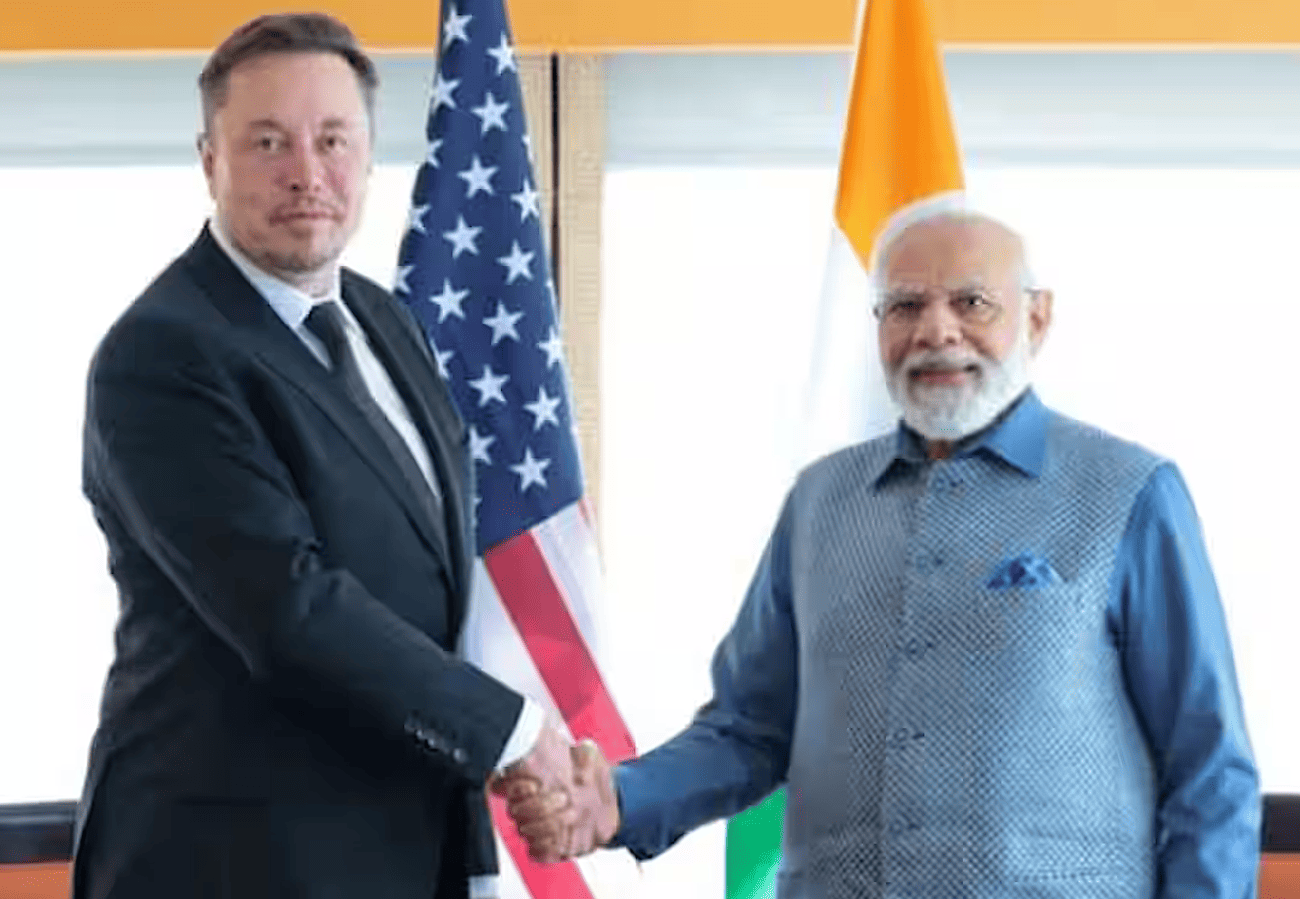
The two men have had reasons to cooperate. Musk’s companies have interests in India spanning satellite communications, electric vehicles and other technologies. Modi, meanwhile, has promoted India as a destination for global investment and advanced manufacturing. Their February 2025 meeting in Washington included discussion of Starlink’s plans and India’s security requirements, according to Reuters.
The relationship therefore illustrates a familiar tension in international business: political leaders may court global entrepreneurs for investment and technology, while those entrepreneurs expect governments to provide predictable and commercially favorable conditions.
Musk’s willingness to challenge India publicly suggests that cordial meetings and commercial partnerships do not prevent conflict when regulatory decisions affect his companies. Whether this becomes a sustained confrontation will depend on what happens next—not just on the rhetoric of a single post.
India’s Social-Media Rules and the Limits of Online Dissent
The Starlink dispute also unfolds against a wider debate about the Modi government’s approach to digital platforms, online speech and the power to compel companies to remove content.
But calling it a definitive break between Musk and Modi would go beyond the available evidence. The post is an unusually confrontational statement about a specific commercial dispute; it does not, by itself, establish a broader political rupture.
India’s Information Technology Rules, introduced in 2021, require social-media intermediaries to meet specified due-diligence obligations. The government says these requirements are necessary to address unlawful content, misinformation and other online harms. Critics, including digital-rights advocates, argue that the rules give authorities expansive powers and leave platforms vulnerable to pressure to remove material without adequate transparency or procedural safeguards.
The concern is not merely theoretical. A Reuters investigation published in August 2025 examined thousands of pages of legal filings and interviewed police officers involved in content-removal requests. It found that Indian authorities had sought the removal of a wide range of material, including misinformation but also news about a deadly stampede and cartoons critical of Modi and local politicians. Reuters reported that government and state agencies had ordered X to remove about 1,400 posts or accounts between March 2024 and June 2025.
The findings illustrate the difficulty of drawing a clear line between legitimate enforcement and political censorship. Governments have a responsibility to address threats, criminal activity and dangerous misinformation. But when officials can demand removal of content that criticizes political leaders, the public needs meaningful safeguards to distinguish enforcement of the law from suppression of dissent.
The regulatory pressure has intensified. In February 2026, the Financial Times reported that an amendment to India’s 2021 social-media rules reduced the time platforms have to remove content following certain official notices from 36 hours to three hours. The Internet Freedom Foundation warned that the shorter deadline could turn platforms into rapid content censors and undermine due process, particularly when users are not informed of the orders affecting them.
X has itself challenged Indian content-removal practices, even as it has complied with government orders. Reuters’ 2025 investigation documented the tensions between the company and Indian authorities over the scope of such demands.
There is, however, an important distinction between this debate and Musk’s latest complaint. His post concerns Starlink’s commercial approvals, not a specific order to remove online content. The two disputes share a broader question about the relationship between powerful technology companies and government authority, but one should not be presented as proof of the other.
Musk has often portrayed himself as a defender of free expression on X. His record as a platform owner, and his decisions about content moderation, have also attracted criticism. His objection to Indian government restrictions should therefore be assessed on its substance rather than treated as proof that his commercial interests and his free-speech arguments always coincide.


Modi, Ambani and the Influence of India’s Corporate Elite
Musk’s invocation of Ambani touches a politically sensitive subject: the influence of India’s largest business houses under Modi.
Ambani’s Reliance empire spans telecommunications, retail, energy and other sectors. Gautam Adani’s conglomerate has major interests in infrastructure, ports, airports and energy. Both groups operate in industries where government policies, licenses, contracts and regulation can have substantial commercial consequences.
Modi’s political opponents have repeatedly accused his government of favoring powerful industrialists, particularly Adani. The government and the companies have rejected allegations of improper favoritism. The existence of close business-government interactions is not, on its own, proof of corruption or unlawful conduct; specific claims require evidence.
There is documented evidence, however, that major corporate interests and political financing intersect in India. A Reuters investigation published in April 2024 examined public records relating to the Prudent Electoral Trust, which it described as the largest-known donor to the ruling Bharatiya Janata Party (BJP). Reuters reported that the trust had raised $272 million since its creation in 2013 and channelled roughly three-quarters of that amount to the BJP. Such funding does not by itself establish that donors received policy favours, but it highlights why transparency in political finance matters.
The debate over Ambani and Adani has also been part of electoral politics. In May 2024, Modi and opposition leader Rahul Gandhi exchanged accusations over the industrialists and political funding. Reuters noted at the time that neither leader presented evidence for the claims made in that exchange, and that neither businessman had publicly disclosed whom he might support.
These distinctions matter. India’s large business groups can legitimately compete for contracts and seek changes to policy. The democratic concern arises when opaque decision-making, concentrated market power or political financing makes it difficult for citizens to determine whether rules are serving the public interest or particular corporate interests.
Musk’s post gives that debate a new international dimension. If a foreign company believes a domestic competitor has an advantage because of political access, the government should be able to demonstrate that decisions are based on published criteria, consistent standards and verifiable security or technical requirements.
But the allegation that Ambani is the “real boss” remains Musk’s rhetorical question, not an established fact.
The Larger Test: Transparent Rules, Not Billionaire Rivalries
India has legitimate reasons to scrutinize satellite communications. Security agencies have raised concerns about unauthorized satellite devices and their possible use in sensitive areas. Reuters reported that Indian authorities had recovered Starlink devices in law-enforcement and military-related incidents, while the company maintained that its satellite beams were not active over India.
Those concerns should be addressed through clear, proportionate and consistently applied rules. A satellite operator’s global footprint does not exempt it from the laws of the country in which it wants to operate. Equally, security requirements should not become a pretext for protecting incumbents from competition.
The same principle applies to social-media regulation. Governments can enforce laws against genuine harms, but restrictions on speech should be transparent, open to challenge and subject to independent oversight. Platforms should not be forced to guess whether the removal of a post is legally necessary or politically expedient.
Musk’s challenge is thus best understood as both a commercial confrontation and a test of accountability. It exposes the friction between a global entrepreneur seeking access to a lucrative market and a government that controls the licensing and regulatory environment. It also revives questions about how much influence India’s most powerful business houses exercise over policy.
Whether this becomes an open, lasting conflict between Musk and the Modi government remains to be seen. The more consequential issue is whether the dispute produces greater transparency—or simply another contest among billionaires, with the public left to infer whose interests the rules ultimately serve.