




Nana Patekar, 1951–2026: The Fire That Burned Through Bollywood for Five Decades

- The actor who won three National Film Awards, served as an Honorary Lieutenant Colonel in the Indian Army, and built a drought relief foundation that helped thousands of farmers, died of cardiac arrest at his Goa home on October 8. He was 75.
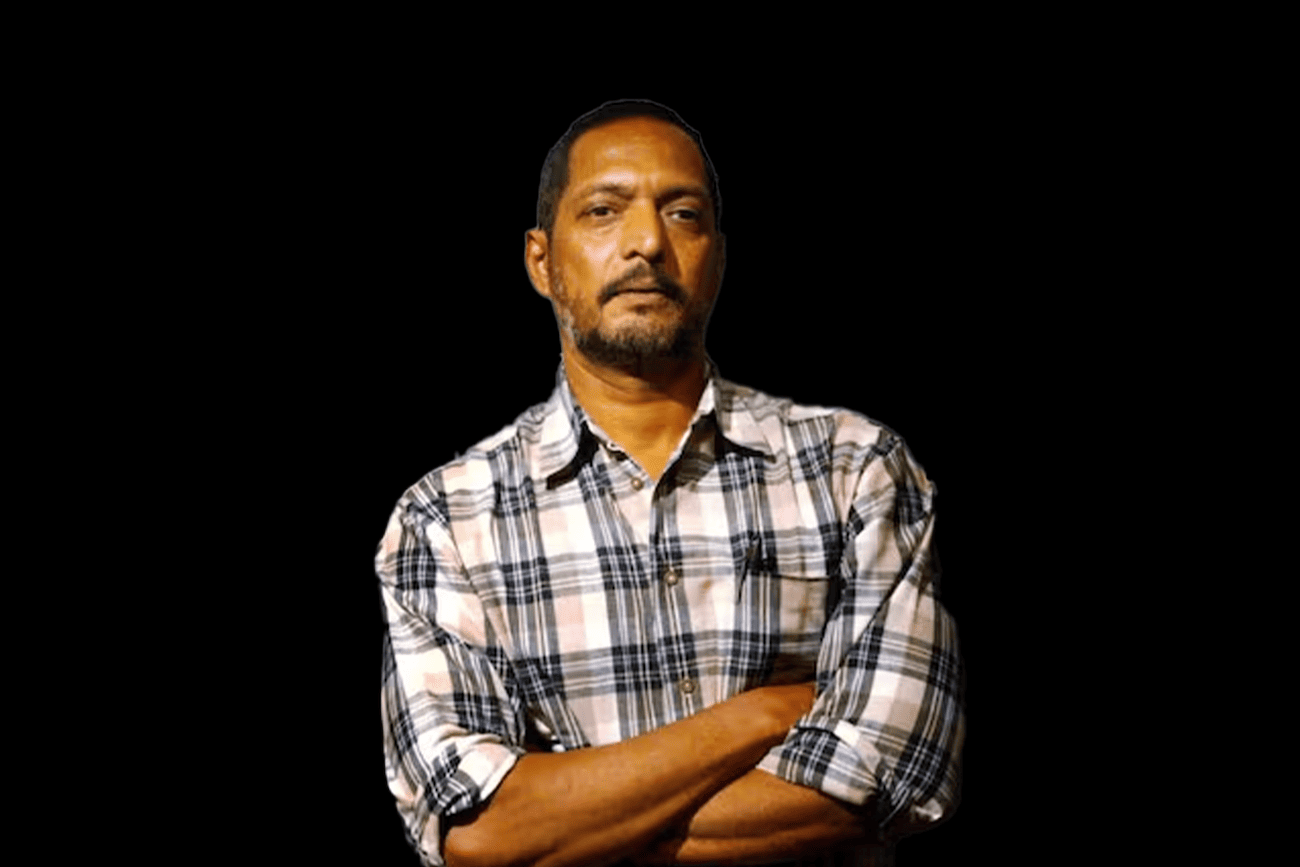

At approximately 4 a.m. on Thursday, October 8, 2026, neighbors and household staff found Vishwanath Patekar — known to the world as Nana Patekar — sweating heavily and slipping into unconsciousness at his residence in Goa. By the time emergency help arrived, he was already in cardiac arrest.
Dr. Shekhar Salkar, chief of the oncology department at Manipal Hospital, told ANI that Patekar was brought to the hospital in an unresponsive state. “Despite 45 minutes of continuous CPR, he could not be revived,” Salkar said, according to ANI report. He was declared dead at 5:20 a.m. local time. A medico-legal case was registered and an autopsy ordered.
Nana Patekar was 75. His career had lasted 48 years.
Murud-Janjira to Sir J.J.: The Formation of a Performer
Vishwanath Patekar was born on January 1, 1951, in the coastal town of Murud-Janjira in the then-Bombay State — a place whose history as a virtually unconquered medieval fortress town might, on reflection, seem a fitting origin for the actor who would build a career on defiance, ferocity, and the refusal to yield, as Wikipedia confirmed from the biographical record.
He attended Sir J.J. Institute of Applied Arts in Mumbai — one of the most distinguished fine arts institutions in India, which has trained generations of painters, graphic designers, and visual artists — an educational choice that gave Patekar a visual and aesthetic grounding in the arts before he found his primary medium in performance.
His film debut came in 1978, in the Hindi film “Gaman” — a quiet, elegiac film about the migration of a Rajasthani man to Mumbai to work as a taxi driver, directed by Muzaffar Ali. Patekar acted in a few Marathi films and some Bollywood films in the early years of his career before his particular gift for volatility, moral intensity, and the portrayal of men operating at the edge of social legitimacy found its proper expression, as Al Jazeera reported.
The film that announced him to the wider world was Vidhu Vinod Chopra’s “Parinda” in 1989 — a crime drama set in Mumbai’s underworld in which Patekar played the villain Anna, a terrifying crime lord whose capacity for sudden, spectacular violence made him one of Indian cinema’s most memorable antagonists of any era. The performance — controlled, menacing, and punctuated by eruptions of psychotic energy — established the template for what would become Patekar’s signature mode: the man on the edge, the pressure that builds before the explosion, the quiet before the chaos.
“Parinda” remains one of the most important films in the history of Mumbai crime cinema. Patekar’s Anna remains its most enduring image.
The 1990s: Krantiveer, the Army, and Three National Awards
The decade that followed “Parinda” was the most creatively productive of Patekar’s career — and one of the most physically demanding.
In 1991, he wrote, directed, and starred in “Prahaar: The Final Attack” — the film in which he played a military commando, a role that reflected his genuine relationship with the Indian armed forces. Patekar served as an Honorary Lieutenant Colonel in the Indian Army, with service years spanning 1990 to 2013, and participated in the 1999 Kargil War in an official capacity. The army connection was not merely aesthetic. It was biographical.
“Krantiveer” in 1994 — directed by Mehul Kumar — became the film most closely associated with his name and his voice in the popular Indian imagination. He played Pratap, a man from the margins of Mumbai society who becomes a revolutionary avenger against corrupt politicians and criminals. The film’s climactic monologue — delivered with an intensity that audiences have memorized and quoted for three decades — became one of the most celebrated individual acting moments in the history of Hindi cinema. What is less widely known is what it cost to deliver it. During the shooting of the film, Nana got ill and had to be admitted to hospital. He returned to shoot the climax immediately after discharge, as the Wikipedia entry on “Krantiveer” documented from the published accounts of the production. The National Film Award for Best Actor that year went to Patekar. He had filmed the performance that won it after walking out of a hospital.
In 2018, actress Tanushree Dutta accused Patekar of sexual harassment during the making of a film in 2008 — an allegation that she had first raised in 2008 and that resurfaced during the global #MeToo movement. Patekar denied the allegation.
He would win three National Film Awards in total — for “Krantiveer” (1994), “Agni Sakshi” (1996), and “Natrang” (2010, the Marathi film in which he played a village folk artist) — a record that places him among the most decorated actors in the history of Indian cinema across both Hindi and Marathi traditions.
He was awarded the Padma Shri by the Government of India in 2013 — the country’s fourth-highest civilian honor.
The international dimension of his career came through Mira Nair’s “Salaam Bombay!” in 1988, in which Patekar appeared in a role that gave him exposure to global festival audiences, as the Associated Press noted in its obituary. Director Satyajit Ray, the most revered filmmaker in Indian cinema history, was fond of Patekar’s talent and wanted to direct him, as IMDb confirmed from its biographical records — a collaboration that was never realized.
The Full Range: From Menace to Comedy to Farmer Relief
One of the consistent mischaracterizations of Patekar’s career is the reduction of his range to his intensity. He was, to his core, a performer of immense versatility — and the evidence is in the filmography.
“Welcome” in 2007 — Anees Bazmee’s broad, exuberant comedy — cast Patekar as Uday Shetty, a good-hearted gangster with violent instincts and an enormous heart, alongside Anil Kapoor, Akshay Kumar, and Paresh Rawal. The film was a massive commercial success and demonstrated, to audiences who associated him exclusively with intensity, that Patekar could deploy his controlled volatility for comic effect with as much precision as for dramatic terror. Patekar received widespread praise for the role. He reprised it in “Welcome Back” (2015).
He played a politician in Prakash Jha’s political thriller “Raajneeti” (2010), a film that used the grammar of Indian political corruption to retell the Mahabharata, and delivered a performance in the Marathi film “Natrang” (2010) — playing a village folk artist who takes on the traditionally female role of the lavani dancer — that won him his third National Film Award and is considered by many critics his finest overall performance.
His most recent films include “Vanvaas” (2024), in which he played opposite Utkarsh Sharma, and the 2026 film “O’Romeo,” featuring a large ensemble cast including Shahid Kapoor, Tamannaah Bhatia, and Vikrant Massey, as the IMDb filmography confirmed — meaning that at 75, in the year of his death, he was still working.
The Naam Foundation: Drought Relief and Human Solidarity
Among the dimensions of Patekar’s public life that receive less sustained attention than his performances is the work of Naam Foundation — the organization he co-founded with actor Makrand Anaspure in 2012 to provide emergency relief to drought-affected farming communities in Maharashtra.


Maharashtra’s Vidarbha region — one of India’s most agriculturally distressed areas, where thousands of farmers have died by suicide over decades of debt, crop failure, and inadequate government support — became Naam Foundation’s primary area of operation. Patekar and Anaspure drove through villages, distributed funds, met farmers and their families personally, and used their public profiles to draw attention to an ongoing humanitarian crisis that the mainstream media and the political class had largely normalized.
The foundation also provided relief during floods. National Herald, in its October 8 obituary of Patekar, described this dimension of his legacy as making him “not merely a distinguished actor but a remarkable public figure.”
He was, in this sense, the embodiment of the social ideals that his most celebrated performances — Pratap in “Krantiveer,” the common man who finally refuses to submit — depicted as possibility. The difference was that in Naam Foundation’s work, the refusal to submit was not cinematic. It was practical, unglamorous, and conducted largely outside the public eye.
The #MeToo Allegation and Patekar’s Denial
No complete account of Nana Patekar’s life can omit the allegation made against him during India’s #MeToo movement.
In 2018, actress Tanushree Dutta accused Patekar of sexual harassment during the making of a film in 2008 — an allegation that she had first raised in 2008 and that resurfaced during the global #MeToo movement. Patekar denied the allegation, as NBC News reported. The case did not proceed to criminal conviction. The allegation was among several that drew attention as women publicly spoke out against sexual misconduct in the Indian film industry during 2018, as NBC News noted.
Tributes
Prime Minister Narendra Modi mourned his death, writing on X that Patekar had brought “remarkable versatility and creativity to every role and gave us characters that will be remembered for generations.” Modi also praised what he described as Patekar’s “intensity, individuality and unmistakable presence.” Congress leaders Mallikarjun Kharge and Rahul Gandhi also mourned his death and hailed his cinematic legacy.
He is survived by his son Malhar Patekar. He and his wife Neelkanti had been separated.
The man Satyajit Ray wanted to direct. The actor who filmed his National Award-winning climax after walking out of a hospital. The Honorary Lieutenant Colonel who served in Kargil. The foundation that drove to drought-stricken villages when the cameras were off. The villain whose name you learned in “Parinda” and the revolutionary whose monologue you memorized from “Krantiveer.”
He was all of those, in the same body, across 75 years.
Indian cinema will not replace him. It will remember him.