




Trump’s New $103,265 H-1B Visa Fee Misunderstands How High-Tech and Specialized Labor Markets Operate

- The measure risks becoming an economic tax on American competitiveness and end up penalizing the very engine of American innovation.
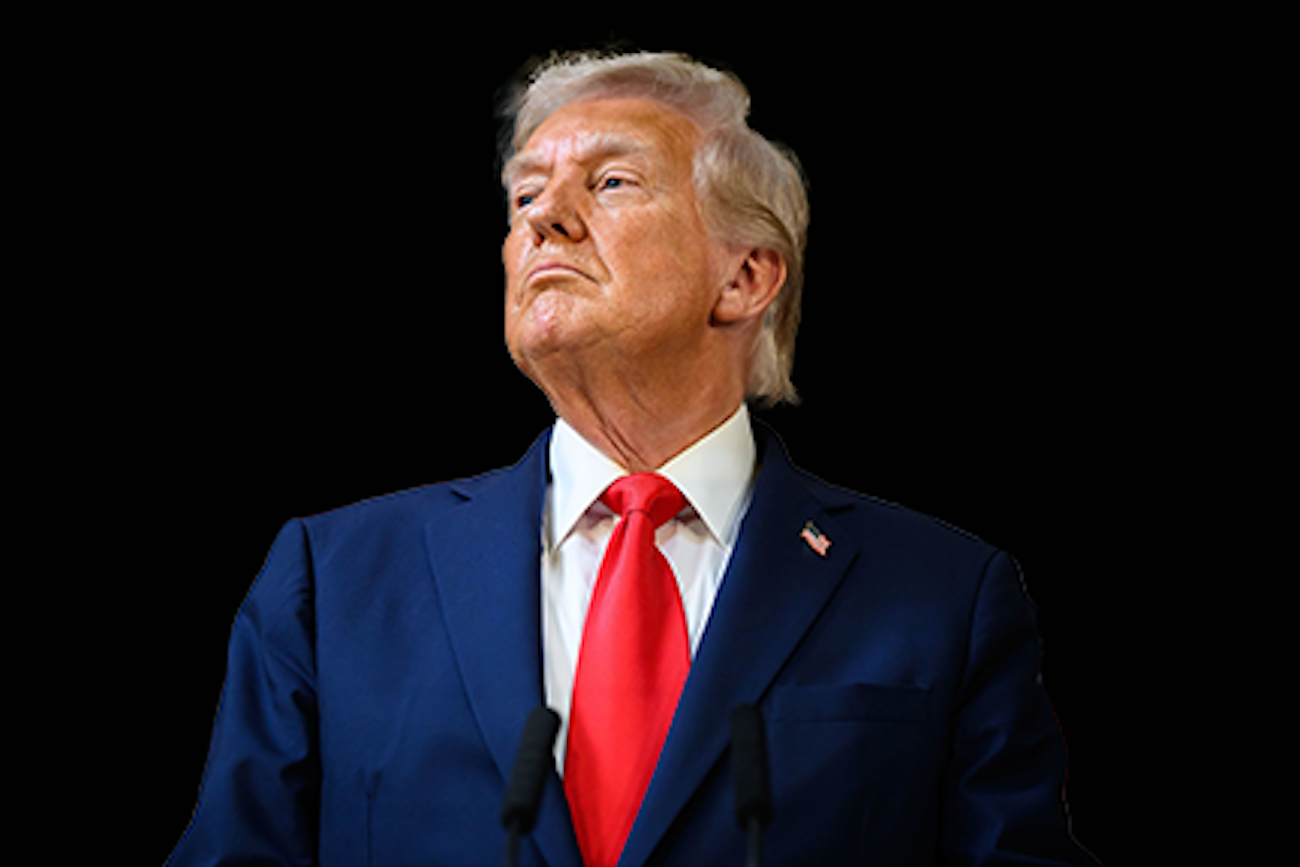

When the Department of Homeland Security introduced a proposed rule to slap a staggering $103,265 fee on cap-subject H-1B visa petitions, the administration framed it as a necessary measure—both to recover agency operating costs and to protect domestic labor. But beneath the administrative rhetoric lies a policy that functions less as a revenue mechanism and more as an economic tax on American competitiveness.
This move marks the administration’s second attempt to erect a financial barrier around high-skilled immigration. After a federal judge struck down an earlier $100,000 fee order as an unlawful tax, DHS returned with a higher price tag and a broader mandate, attempting to route around judicial pushback by rehousing the charge under a different statutory authority.
The central premise of the proposal—that forcing companies to pay a six-figure premium per foreign worker will naturally lead to more hiring of American talent—fundamentally misunderstands how high-tech, specialized labor markets operate.
1. Squeezing Startups and Academic Institutions While multinational corporations may absorb six-figure regulatory costs as a line-item expense, early-stage startups, mid-sized engineering firms, and universities cannot. The H-1B program has long served as a vital bridge for international graduates from top U.S. universities transitioning into the workforce. Pricing out smaller employers simply narrows the playing field, concentrating top global talent in the hands of mega-corporations that can afford the tollgate.
2. Offshoring the Talent Pipeline Global talent is mobile. If the cost of hiring a top-tier software engineer, biomedical researcher, or artificial intelligence specialist in Silicon Valley or Boston suddenly inflates by $103,265 up front, companies will adapt—not by hiring domestic workers who do not exist in sufficient specialized numbers, but by establishing remote research hubs in Toronto, London, or Bangalore. Instead of keeping foreign-born talent within the American tax base and consumer economy, the policy incentivizes the exportation of high-paying tech jobs.
3. Weaponizing Fee Structures Historically, standard filing fees for H-1B visas ranged from $2,000 to $5,000. A sudden 2,000% increase transforms what should be a routine administrative processing fee into a prohibitive barrier designed to accomplish through bureaucratic cost what Congress has chosen not to pass into law.
Global talent is mobile. If the cost of hiring a top-tier software engineer, biomedical researcher, or artificial intelligence specialist in Silicon Valley or Boston suddenly inflates, companies will adapt— by establishing remote research hubs in Toronto, London, or Bangalore.
The recent proposed DHS regulation introducing a $103,265 H-1B fee is the executive branch’s strategy to bypass the judicial roadblocks that struck down its original $100,000 fee. Understanding the earlier legal defeat explains why the administration shifted tactics.
The September 2025 Presidential Proclamation
In September 2025, the administration issued a Presidential Proclamation imposing a flat $100,000 charge on new consular-processed H-1B visa petitions.
- The Executive Argument: The administration invoked presidential authority under the Immigration and Nationality Act (INA), claiming foreign high-skilled labor was “detrimental to U.S. interests” and replacing domestic workers.
- The Business Impact: Standard H-1B processing historically ran between $2,000 and $5,000. A 2,000%+ increase caused immediate pushback from higher education institutions, healthcare providers, and technology firms. Court filings revealed that between September 2025 and mid-February 2026, USCIS collected the $100,000 fee on only 85 applications nationwide.
The June 2026 Court Decision
A coalition of 20 Democratic state attorneys general and major business organizations challenged the rule in federal court. On June 8, 2026, U.S. District Judge Leo Sorokin in Boston issued a ruling that vacated the $100,000 fee.


- Unauthorized Tax vs. Regulatory Fee: Under the U.S. Constitution, Congress—not the President—holds the sole power to levy taxes (the Non-Delegation Doctrine and Article I Taxing Clause). The judge ruled that a mandatory six-figure payment far exceeded the reasonable administrative cost of processing a visa and functioned as an illegal, unappropriated tax.
- Precedent Cited: The court relied on recent Supreme Court precedent (Learning Resources v. Trump) regarding executive overreach in tariff enforcement, establishing that the executive branch cannot use emergency or proclamation powers to generate federal revenues without statutory authority from Congress.
- Administrative Procedure Act (APA) Violations: The court found the administration failed to analyze how such massive fees would impact public state entities, including state universities and healthcare systems experiencing severe staffing shortages.
The Shift to Formal Agency Rulemaking
Although the administration appealed the district court decision, the temporary nature of presidential proclamations—coupled with severe judicial skepticism—prompted a change in strategy:
- Changing Legal Anchors: Instead of relying solely on broad executive powers under the INA, the Department of Homeland Security (DHS) published a formal proposed regulation. By routing the fee through standard federal rulemaking under Title 8 agency fee-setting authorities, the administration is attempting to construct a administrative record that can withstand APA challenges.
- Raising to $103,265: The slight increase reflects updated agency calculations intended to frame the charge as a cost-recovery and program-integrity regulatory fee rather than an arbitrary executive penalty.
The current 30-day public comment period sets up the next stage of the legal battle: if DHS publishes the final rule, business coalitions and states will likely amend their existing lawsuits to challenge the new regulatory framework on similar separation-of-powers grounds.
Protecting American workers is a legitimate policy goal, but doing so requires investing in domestic STEM education, expanding training programs, and addressing labor market abuses directly—not pricing U.S. businesses out of the global market for specialized skills. Far from protecting domestic jobs, this $103,265 penalty risks penalizing the very engine of American innovation.
Amy Ghosh is a Los Angeles-based Attorney at Law, specializing in Immigration Law, Family Law, and Employment Law, among others. She can be reached at: amygesq@gmail.com.