




Beyond the Dravidian Divide: Chief Minister Vijay’s Inclusive Cabinet Signals a New Tamil Nadu

- The southern state now enters relatively unfamiliar territory — a progressive coalition government.
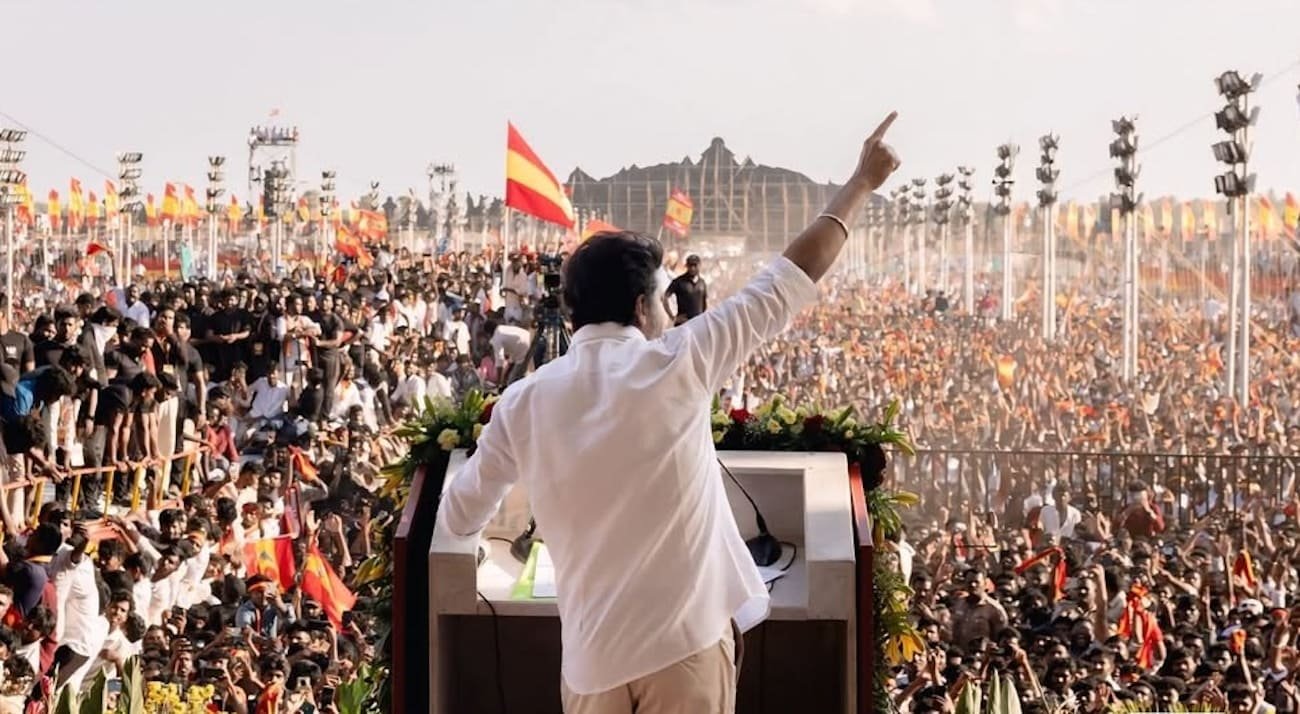

The first major challenge for the new government came almost immediately: proving its majority on the Assembly floor. In the 234-member Assembly, the magic number was 118. Tamizhaga Vetri Kazhagam (TVK) had emerged as the single largest party with 108 MLAs of its own, falling short of a simple majority.
But, support came quickly.
The Congress, smaller regional parties, independents, and in a dramatic political development, rebel AIADMK legislators backed the government during the floor test. Vijay’s government secured an impressive 144 votes in favor, easing immediate concerns about stability.
Even so, Tamil Nadu now enters relatively unfamiliar territory — a Coalition government.
Historically, the state has preferred decisive mandates and stable single-party governments led by either the DMK or AIADMK. Coalition governments are far more common at the national level than in Tamil Nadu’s political culture. That alone makes the TVK-led coalition government historically significant.
But what makes this election even more remarkable is the way TVK appears to have cut across many of Tamil Nadu’s long-standing social and political divisions — caste, religion, class, gender, and age.
Unlike most major politicians in India, Vijay did not enter politics as the representative of a single caste bloc, political dynasty, or ideological movement. Instead, he came with a broader public identity shaped by cinema and popular culture. Over three decades, he built a massive fan following that extended across villages, towns, and cities, connecting with people from different economic and social backgrounds.
That gave him something many traditional politicians struggle to achieve: a connection that crossed social barriers.
But, the most important and hardest of these hurdles was breaking the caste limitation.
In Tamil Nadu, caste identity has historically played a central role in electoral politics. Political parties often relied on carefully built caste alliances and regional vote banks. Vijay’s relatively caste-neutral public image therefore became a major political advantage, particularly among younger voters who appeared less attached to traditional loyalties.
At the same time, TVK also carefully avoided strong religious polarization. Vijay positioned himself around inclusion, governance, anti-corruption politics, and social justice, helping the party attract support across communities.
The new cabinet appears to have one of the strongest representations of Dalit leaders in Tamil Nadu’s history. Several Dalit ministers have been given important portfolios with real administrative authority rather than symbolic roles.
For many first-time voters, TVK represented not just another party, but the possibility of political change outside the familiar DMK-AIADMK framework.
Cinema certainly helped Vijay, but his success cannot be explained by stardom alone. His fan clubs evolved into political networks powered by volunteers and social media. WhatsApp groups, YouTube channels, Instagram reels, and youth-driven campaigning helped TVK create a movement that felt more direct and emotionally connected than conventional party politics.
In a way, TVK’s rise resembled what investor Charlie Munger famously described as the ‘Lollapalooza effect’ — a rare moment when multiple social, emotional, and political forces converge simultaneously to create a wave far larger than any one factor alone could explain.
Ultimately, however, political transformation is judged not only by electoral success but also by inclusion in governance.
That is why all eyes turned toward the formation of Vijay’s cabinet ministry.
The party has sent a strong and different message.
The new cabinet appears to have one of the strongest representations of Dalit leaders in Tamil Nadu’s history. Several Dalit ministers have been given important portfolios with real administrative authority rather than symbolic roles. In the state’s political history, Dalit representation has often existed at the margins of power rather than at its centre.
The ministry now includes a record eight Dalit ministers — the highest representation for the community in any Tamil Nadu cabinet to date. In another significant shift, several of these ministers were elected from general constituencies rather than reserved seats, suggesting a broader social acceptance that goes beyond symbolic representation.

By giving key responsibilities to Dalit ministers, Vijay appears to be signaling that representation must translate into real participation in governance. In a state shaped by the anti-caste and social justice ideas of B.R. Ambedkar, this carries deep political and symbolic meaning.
The cabinet also includes four women ministers, making it one of the youngest and most socially diverse ministries in the state’s history.
Still, the real challenge begins now.
Winning an election through momentum, emotion, and public excitement is one thing. Governing effectively, building institutions, and delivering results is another. Across Tamil Nadu, there is both excitement and caution. Many people want change and greater youth participation in politics, while also wondering how this new generation of leaders will perform once in power.
For now, though, one thing is undeniable: Tamil Nadu politics has entered a new phase.
The 2026 election was not simply about defeating one party or another. It reflected a broader desire among voters to move beyond old political divisions and imagine a different kind of leadership.
The future of that experiment will now depend on governance, delivery, and whether TVK can transform electoral energy into long-term political credibility.
Until then, Tamil Nadu watches — with curiosity, caution, and hope for a better tomorrow.
Jayashree Srikanth lived in the United States for 16 years, then moved to Bangalore with her husband and two daughters. She is a proud homeschooler of a neurodiverse young adult, who now has a successful art career, has won several awards including carrying the torch for the Rio Paralympics, in 2015. Her younger daughter graduated from UCLA and is now working for a healthcare startup in Chicago, IL.