




The Washington Post’s Bombshell Investigation Into a Hindu Guru’s Alleged Grip on Tulsi Gabbard

- A year-long investigation drawing on 25,000 pages of documents — including hundreds of confidential memos spanning her congressional career — suggests that America's former Director of National Intelligence may have been steered for years by a reclusive Hawaiian religious leader whose followers describe as a deity and whose ambition, according to one source, was "to rule the world"
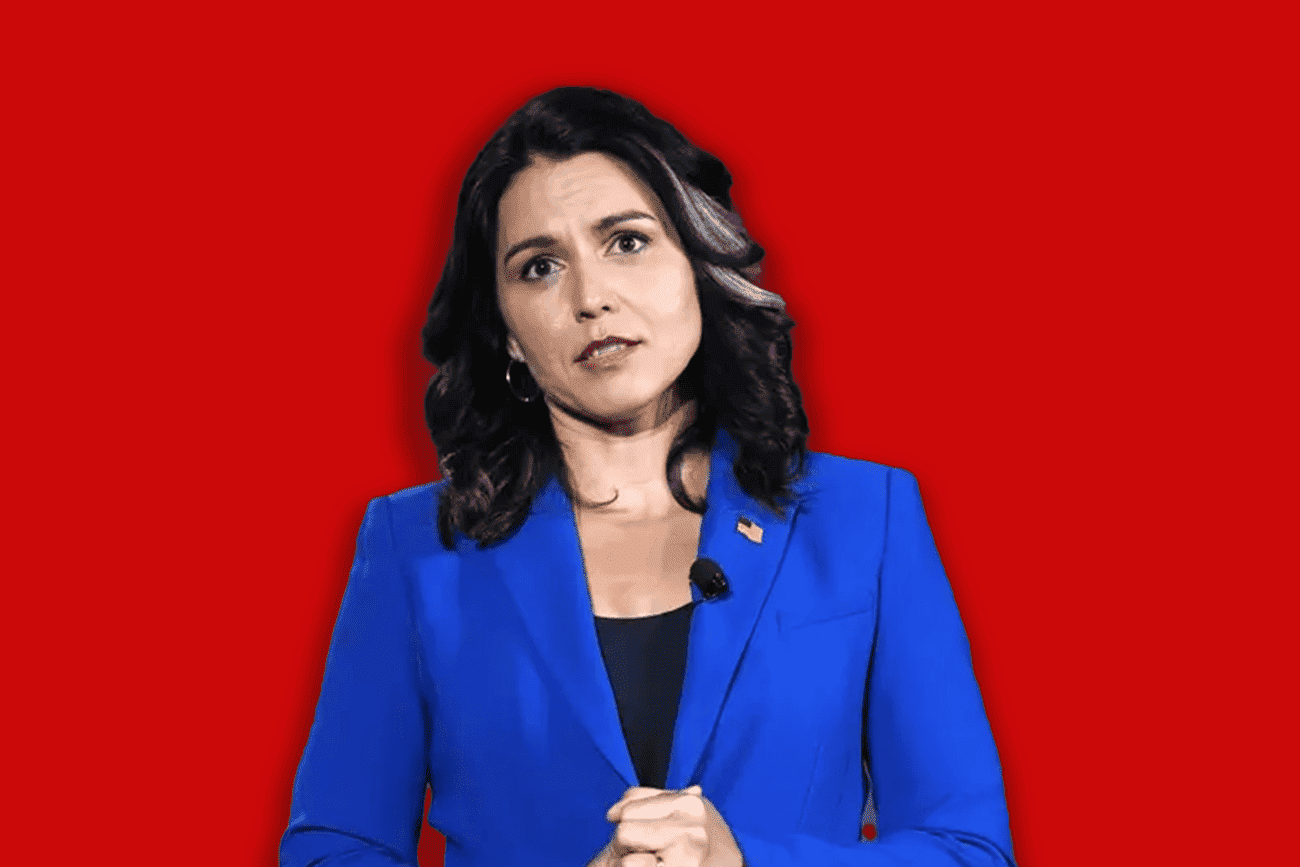

Two days after The Washington Post informed Tulsi Gabbard’s office that it was proceeding with publication of an investigation into her relationship with her spiritual mentor, her resignation as Director of National Intelligence was made public. Whether the timing was coincidental, as her office has implied, or a connection the Post found worth noting, as its reporting does, is one of the many questions left hanging in the air by one of the most consequential pieces of American political journalism published this year.
The investigation, written by Post reporter Jon Swaine and published on June 21, 2026, after more than a year of reporting and the review of more than 25,000 pages of documents, alleges that Gabbard — the former Democratic congresswoman from Hawaii, presidential candidate, convert to the MAGA movement, and until recently the nation’s top intelligence official with oversight of the entire American intelligence apparatus — was guided throughout significant stretches of her political career by Chris Butler, 78, the reclusive founder of the Science of Identity Foundation, a Hawaii-based breakaway Hare Krishna group in which Gabbard was raised.
Gabbard’s office called the investigation “a blatant example of anti-Hindu bigotry.” Butler’s associates denied he authored any of the memos the Post identified. And yet the story has, as Mediaite put it, “sent shockwaves” through American political media — because if the documents are what the Post says they are, they raise a question with no comfortable answer: was the woman who oversaw America’s most powerful intelligence agencies being scripted, in part, by a man who once described those same agencies as institutions run by “madmen”?
The Documents: 25,000 Pages, Hundreds of Memos
The investigation’s evidentiary foundation rests on a trove of material obtained by Swaine from Rebecca Saltzburg, a former member of the Science of Identity Foundation who worked on several of Gabbard’s congressional campaigns. Saltzburg provided the material to the Post because, as Swaine wrote and was reported by Mediaite, she felt Gabbard had misled voters about Butler’s role and his influence on her decision-making.
The cache includes more than 25,000 pages of documents, among them hundreds of confidential memos spanning the years 2011 to 2017 — most from Gabbard’s first two congressional terms, according to ECIKS and the Deep Dive’s accounts of the Post’s findings. The memos, Swaine reported, contained directives on legislation she should propose, policies she should embrace, and how she should conduct herself on television. They were sent from email addresses on the Nine Isles domain — a domain the Post identified as reserved for the office of Chris Butler — according to ECIKS.
“Their content was extraordinary,” Swaine wrote in his own account of the reporting process. “Dozens of attached memos appeared to document directives and advice for Gabbard from her time in Congress. Some contained instructions on what legislation she should propose, which policies she should embrace and how she should conduct herself on television. They had an air of authority.”
The authorship of the memos became the central disputed question of the investigation. Butler’s associate Sunil Khemaney claimed he — not Butler — had written them, as the Deep Dive reported. But the Post conducted a stylometric analysis — a statistical method examining word choice and linguistic patterns — comparing the memos against Butler’s own 7,000-page archive of lectures, as well as writings by Mike Gabbard, Tulsi’s father, and Khemaney himself. The analysis, as ECIKS reported, suggested the memos came from a single speaker who was much more likely to be Butler than either of the other two men. Distinctive nonstandard words — including “duplistic” instead of “duplicitous,” and “judgmentalism” — appeared in both the memos and Butler’s known lecture archive.
Saltzburg told Swaine that Butler does not use a computer, instead delivering his advice verbally to secretaries who transcribed his remarks into memos. She said the anonymity of the memos’ author was intentional — designed to mask Butler’s identity if the documents ever became public, according to the Daily Beast.
What the Memos Directed
The most specific and verifiable evidence in the investigation concerns the relationship between the memos’ contents and Gabbard’s actual conduct as a congresswoman.
Working with Post colleague Aaron Schaffer, Swaine compared Gabbard’s remarks across 32 television interviews conducted between 2014 and 2016 with the talking-points memos that had been sent to her. On 24 of those 32 occasions, Gabbard used language from the memos almost verbatim, as Swaine reported. In the remaining eight instances, she used different words but promoted the same ideas.
One specific legislative example is documented in detail. In early 2014, a directive in the memos pushed Gabbard to introduce legislation that would punish countries whose citizens fought for the Islamic State. “Get it started in the morning,” the directive read, according to the Daily Beast. A week later, Gabbard introduced that same bill, as the Daily Beast reported.
On at least one occasion, the Post found, a Butler aide sent Gabbard a pre-written tweet — and she published it without alteration.
The memos were not uniformly flattering to Gabbard. The author at one point branded her “mealymouthed” over a bill she had introduced, and in a separate passage told her directly that no one cared what she though. A March 2015 exchange within the group, reviewed by the Post, debated whether Gabbard should publicly acknowledge being one of Butler’s disciples.
Documents reviewed by the Post showed that dozens of fake social media accounts were created and operated by SIF members specifically to defend and amplify Gabbard online during her congressional years.
The Social Media Operation
Beyond the memos’ legislative and media guidance, the investigation uncovered what the Post described as a coordinated social media influence campaign run by Butler loyalists on Gabbard’s behalf.
Documents reviewed by the Post showed that dozens of fake social media accounts were created and operated by SIF members specifically to defend and amplify Gabbard online during her congressional years. Some accounts used false names and biographies, with avatar photographs copied from elsewhere on the internet, according to ECIKS. Saltzburg told Swaine she had played a prominent role in the operation and later came to regret it, though she said that at the time she believed the effort served a higher purpose.
The Post also found that some of those same fake accounts were among the most vocal voices praising Gabbard after she announced her resignation from the Trump administration in May 2026. One account, identified as @ImACruzn, wrote: “DNI Gabbard is a true patriot and will be missed.” Another added: “Tulsi Gabbard is a Patriot. She will be greatly missed.” The Post noted the documents suggest Gabbard was aware of the social media operation.
Who Is Chris Butler?
Chris Butler was born in 1948, the son of an anti-war activist, and entered the 1960s counterculture while enrolled at the University of Hawaii, eventually joining the burgeoning Hare Krishna movement as a guru under the name Sai Young, according to Wikipedia’s account of the Science of Identity Foundation’s history.
In the 1970s, he broke away from the International Society for Krishna Consciousness — the mainstream Hare Krishna organization — and founded the Science of Identity Foundation. The SIF teaches a form of Hinduism centered on devotion to Krishna, combined with expectations around meditation, yoga, and vegetarian diet. Butler’s teachings have also included, according to Wikipedia’s documented account, Islamophobia and condemnation of homosexuality.
In 1976, his disciples launched a new political party — the Independents for Godly Government — presenting themselves as a multifaith coalition of conservative-minded reformers and running candidates for congressional and mayoral offices, without disclosing their links to Butler or to the Hare Krishna faith, according to Wikipedia. Butler himself ran a late-night television show called “Chris Butler Speaks” on Channel 13 in the 1980s. Since the 1990s, he has kept an extremely low profile, rarely speaking in public.
Within the SIF, Butler’s status among followers is unlike that of most religious leaders. “I was raised to believe Chris Butler was God’s voice on Earth, and if you question him or offended him in any way, you were effectively offending God,” a former SIF member wrote in a 2017 Medium post, as the Daily Beast reported. One source told the Post that Butler harbored an ambition to “rule the world.” Butler himself has previously described America’s intelligence and defense agencies as institutions run by “madmen” — a characterization that sits uneasily alongside the fact that, if the Post’s investigation is accurate, he held influence over the woman who for more than a year ran those same agencies.
Gabbard grew up inside the SIF — her parents both held senior positions in the organization, according to the Post. Butler has likened her to a star pupil, according to Wikipedia’s account of the SIF’s history.


Gabbard’s Denials — Then and Now
The question of Gabbard’s relationship with Butler is not new, though the Post’s investigation has placed it in sharper and more documented relief than any previous reporting.
As recently as 2019, when asked directly whether Butler had served as her political mentor, Gabbard replied: “No, no, not at all,” as the Deep Dive reported. Her denial was categorical and unambiguous.
During her Senate confirmation hearing as Director of National Intelligence in early 2025, she was asked about her relationship with the SIF and with Butler. She worked to minimize those connections.
After the Post’s story published, Gabbard’s chief of staff was the only member of her team to respond to the publication’s repeated requests for comment. The response was a statement from a spokeswoman: “These allegations are a blatant example of anti-Hindu bigotry.” The spokeswoman added: “I cannot imagine WaPo’s readers would be interested in yet another uncredible, bigoted attack on the DNI’s faith.”
The framing of the investigation as anti-Hindu bigotry was rejected publicly by the Post’s team and by media commentators. Atlantic writer Anne Applebaum responded on X: “So @jonswaine @washingtonpost has seen hundreds of documents containing evidence that Tulsi Gabbard, Donald Trump’s Director of National Intelligence, was directed throughout her career by the leader of the cult she grew up in.”
MSNBC’s Joe Scarborough, on Morning Joe, said: “It is a Hare Krishna-styled group that many people have compared to a cult. People don’t suggest that being in a Hare Krishna group is the same as being in a cult, but in this case, when you have something that may be a spinoff of that and a cult-like leader advising members of Congress how to speak, how to put forward legislation, how to style their hair. There’s a problem here.”
MSNBC’s Jonathan Lemire added his own assessment: “The endgame of these instructions not quite clear, but Tulsi Gabbard has always been sort of a mysterious figure. But we also know from reporting that the Trump administration was looking to move on from her soon anyway.” He also noted the unusual quality of the internal communications: Butler’s communications to Gabbard were described as sometimes “very demeaning sort of rhetoric to her, a member of Congress,” raising what Lemire described as “all sorts of questions as to her background and to what actually was the goal here.”
The Timing: A Resignation and an Investigation Collide
Gabbard announced her resignation as Director of National Intelligence in May 2026, citing her husband Abraham Williams’ diagnosis with a rare bone cancer, with her final day set for June 30. But months of reporting, confirmed by multiple outlets including Politico and MSNBC, indicated the Trump administration had already been looking to replace her well before the announcement.
The Post’s investigation, which Swaine conducted over more than a year, arrived in print two days after Gabbard’s office was notified of publication — and days after her departure from the Trump cabinet was finalized. The coincidence of timing has drawn sustained comment. As one observer posted on X, “This is a great story, timed perfectly so that it doesn’t matter.”
Whether or not it matters in the immediate political sense — Gabbard is no longer in office — its implications extend beyond her tenure. She ran for president in 2020. She was, until June 30, the official with oversight responsibility for all of America’s intelligence agencies. And if the Post’s 25,000 pages of documents are what Swaine and his colleagues conclude they are, the question of who was actually shaping her worldview — and toward what ends — is not a question that will resolve itself simply because she has left government.