




The Inner John Lennon: Watching Credits Roll With A.R. Rahman’s ‘Kya Kamaal Hai’ in Imtiaz Ali’s ‘Main Vaapas Aaunga’

- The film hands you a song about a world without grief at the precise moment you have finished learning, for three hours, exactly how much grief it took to dream one up.
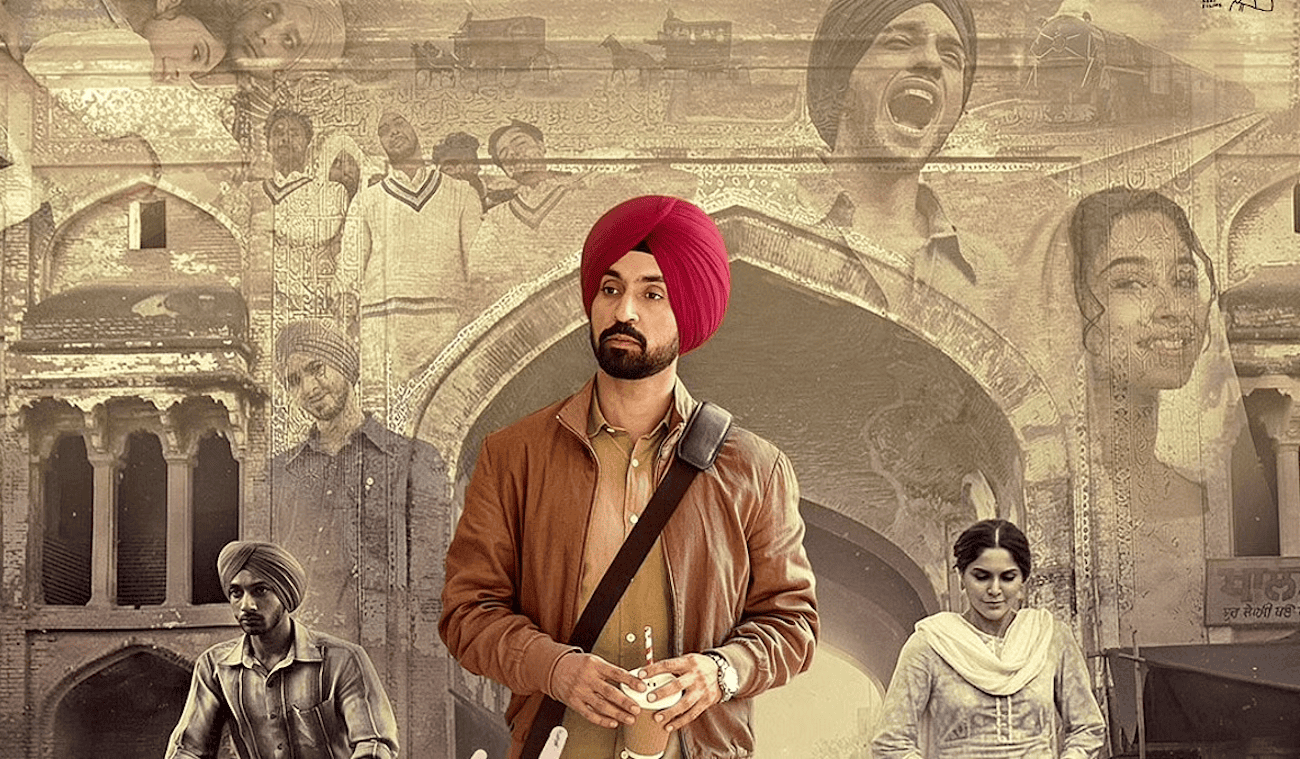

The film “Main Vaapas Aaunga” is over, and the credits have begun to roll, and I am not moving. On the screen, Kya Kamaal Hai is playing — but not as a song picturized on a couple, the way you might expect. Imtiaz Ali has saved a different cut for the very end: a montage of the displaced. Refugees from our own century, families carrying everything they own past borders that did not ask their permission, intercut with archival fragments from 1947.
And over those images, Diljit Dosanjh is singing about paradise. It is not a love song, though it began life as one. Irshad Kamil writes a place into being — a world where no one is angry, no one is unfaithful, no one is separated, no one is ever lost again, where every sorrow shrinks smaller than the smallest flower and the coins of grief turn out to be counterfeit, refusing to pass from hand to hand.
A.R. Rahman scores it as a hymn that declines to raise its voice. And as the verses drift over the faces of the uprooted, you understand what you are actually watching: Indian cinema’s answer to Imagine.
The comparison isn’t ornamental. John Lennon, in 1971, asked us to picture a world with nothing to kill or die for, no countries, no borders, only the brotherhood of man — and then dared us to call him a dreamer. Kya Kamaal Hai does the same impossible arithmetic in a different key. It conjures its utopia not by arguing for it but by describing it so plainly and so warmly that the absence of cruelty starts to feel less like fantasy and more like something we mislaid.
And, like Lennon, it knows exactly how to break you: by laying the gentlest imaginable melody over the hardest possible truth. Lennon used a piano and a plea; Imtiaz Ali uses Rahman’s devotional calm and a reel of human beings who were forced to leave home. Kamil’s closing lines insist that decency is not in decline, that love is not in a drought — and the cruelty of the timing is the point.
The song does not deny the suffering on screen. It floats above it, the way hope has to. Ali has called this end-credits version a balm, an expression of solidarity, “a cry of hope and a salute to the resilience of mankind.” Somewhere in the montage, an anonymous refugee is quoted saying that given the choice between death and leaving home, he would have chosen death — but he was not given the choice.
I won’t pretend I held it together. I didn’t, and I’m not embarrassed to say so.
That is the strange magic of the gesture. The film hands you a song about a world without grief at the precise moment you have finished learning, for three hours, exactly how much grief it took to dream one up.
“Main Vaapas Aaunga” opens not with sweep but with a tremor. A ninety-five-year-old Sikh patriarch lies on a bed, mumbling what everyone around him hears as nonsense — Martians, Hitler, a scramble of half-words and orphaned names. His grown sons read it as dementia and brace for the inevitable. Only his grandson, a London-based stand-up who has flown home to keep vigil, refuses to dismiss the noise. He listens harder. And slowly, the gibberish resolves into a buried life: a boy named Keenu in pre-Partition Sargodha, a girl named Afsana (Jiya), mediocre Urdu poetry passed across furtive glances, a romance moving at the speed of first love right up until 1947 cleaved the ground beneath it.
What’s remarkable is the structure of the old man’s memory. He has lived seventy-eight years in India and remembers none of them. What survives — what the disease, cruelly and mercifully, leaves intact — are his first seventeen years in a country that no longer exists by that name. He is trying to drive to Sargodha and getting stopped at a border he cannot comprehend, because in the geography of his mind there was never a line at all.
The film treats this not as tragedy alone but as a kind of liberation. The illness that erases his last conversation is the same illness that returns him, whole and seventeen, to the only place he ever called home. The forgetting becomes a form of remembering. It is the most humane idea in the film, and Imtiaz Ali holds it with both hands.
The gravitational mass the whole film orbits is Naseeruddin Shah. It feels almost lazy to call it a great performance, because the word implies effort you can see, and you cannot see any here.
I don’t claim to have followed every partition film that has ever been made in India but from the few I have — I know how rarely this material is handled without either melodrama or sermon. The temptation is always to weaponize 1947, to turn ruptured families and corpse-filled trains into ammunition.
“Main Vaapas Aaunga” does something braver and harder. It refuses to romanticize the violence — there is brutality here, and Ali makes you sit with it rather than look away — but it also refuses to let that brutality calcify into hatred. The film’s quiet, devastating argument, delivered through a granduncle who would rather a story die with him than be inherited as venom, is that if love dies with those who lost it, all that’s left to pass down is hate. History that isn’t humanized hardens into something toxic — the kind of thing that now gets manufactured wholesale at what we’ve come to call WhatsApp University. The film knows this, even if it’s too elegant to say so directly.
The center of all this, the gravitational mass the whole film orbits, is Naseeruddin Shah. It feels almost lazy to call it a great performance, because the word implies effort you can see, and you cannot see any here. He reframes the war between lucidity and confusion as something older and more wounding — a battle between the armor a man builds to survive and the boy that armor was built to bury. There is a register he reaches in the final stretch, a private grief recited almost to himself, that put me in mind of an aged Leonard Cohen reading a last letter aloud to a muse he had outlived. That Shah can be funny and unbearable and transcendent inside the same trembling breath is the kind of thing that reminds you why certain actors get called the greatest of their generation, and the description stops feeling like hyperbole.
Around him, the film is generous. Vedang Raina, as the young Keenu, carries the soul of the older man forward convincingly, an idealistic teenager insisting that Hindus, Sikhs and Muslims could never really be separated — using the musicality of his own ignorance to protect his romance from a history closing in. Sharvari gives Afsana a glow that the film needs, a brightness it can later afford to mourn.


And Dosanjh, as the grandson piecing the puzzle together, is the warm, searching presence that lets us in. His own track — the commitment-phobic comedian, the immigrant by choice set against a grandfather who was an outsider by force — is the film’s least emotionally pulling thread, and you could argue it knows that. It’s the price of admission for a structure this ambitious.
Because the film is ambitious, and ambition leaves marks. There are stray notes — a subplot or two that gesture at depth without earning it, a parallel drawn a touch too neatly, a love interest that comes across on screen more as an idea than a person. But here is the thing about a film built almost entirely from rhythm and rapture: its very minor narrative bumps sit beside its highs like a wrong note inside a beautiful phrase, audible but forgivable. “Main Vaapas Aaunga” works the way memory itself does — it keeps what moved you and quietly lets the rest blur at the edges. You walk out holding the highs. The film asks for that grace, and earns it.
Editor Aarti Bajaj, as ever on an Imtiaz Ali film, is something closer to a co-author, threading timelines and feelings and silences together so fluidly that the seam between past and present dissolves. And A.R. Rahman’s score is the connective tissue under all of it — songs that behave like secular travelers, crossing the borders the history of the film keeps trying to erect. “Tere Paas Main” is the spine, the ache, the memory that the film keeps returning to. “Dariya,” with its visuals, carries a soul and a sorrow that took me straight back to Vidai Kodu Engal Naadae from Kannathil Muthamittaal — which, to my ear, is Rahman reaching for the most devastating thing he knows how to do. And Kya Kamaal Hai presides over all of it, the dream the whole bruised film is reaching toward.
What lingers, days later, is the audacity of the gesture. Imtiaz Ali has spent a career being praised and accused for the same habit — telling one love story in endless variations, building designer-broken heroes who behave as though the world’s problems happen to other people. Here, he confronts that legacy head-on. The bubble of romance, he seems to concede, was always an illusion; even bubbles cannot escape the weather they float through. In almost all his earlier films, lovers move through the world to reckon with their feelings. Here, for once, the love story has to reckon with the world.
It made me think about my own grandmothers, and the villages they spoke about as if they had left only yesterday. It made me grieve for a loss I never lived through. And it sent me back, again, to those faces scrolling past the credits, and the voice singing over them — a Jharkhand director, a Punjabi singer, a Tamil Nadu composer, an Urdu poet from Punjab, dreaming aloud, together, of a world with no lines drawn through it.
Kya kamaal hai.What a wonder it would be.
Ganpy Nataraj is an entrepreneur, author of “TEXIT – A Star Alone” (thriller) and short stories. He is a moody writer writing “stuff” — Politics, Movies, Music, Sports, Satire, Food, etc.