




Unwitting Victims: How a Polarized Nation Demands We Choose Either the Protesters Or the Police

- The recent students revolt managed to place one set of young Indians emotionally against another. One is asked to defend the honor of the police. Another is asked to defend the rights of the protesters.
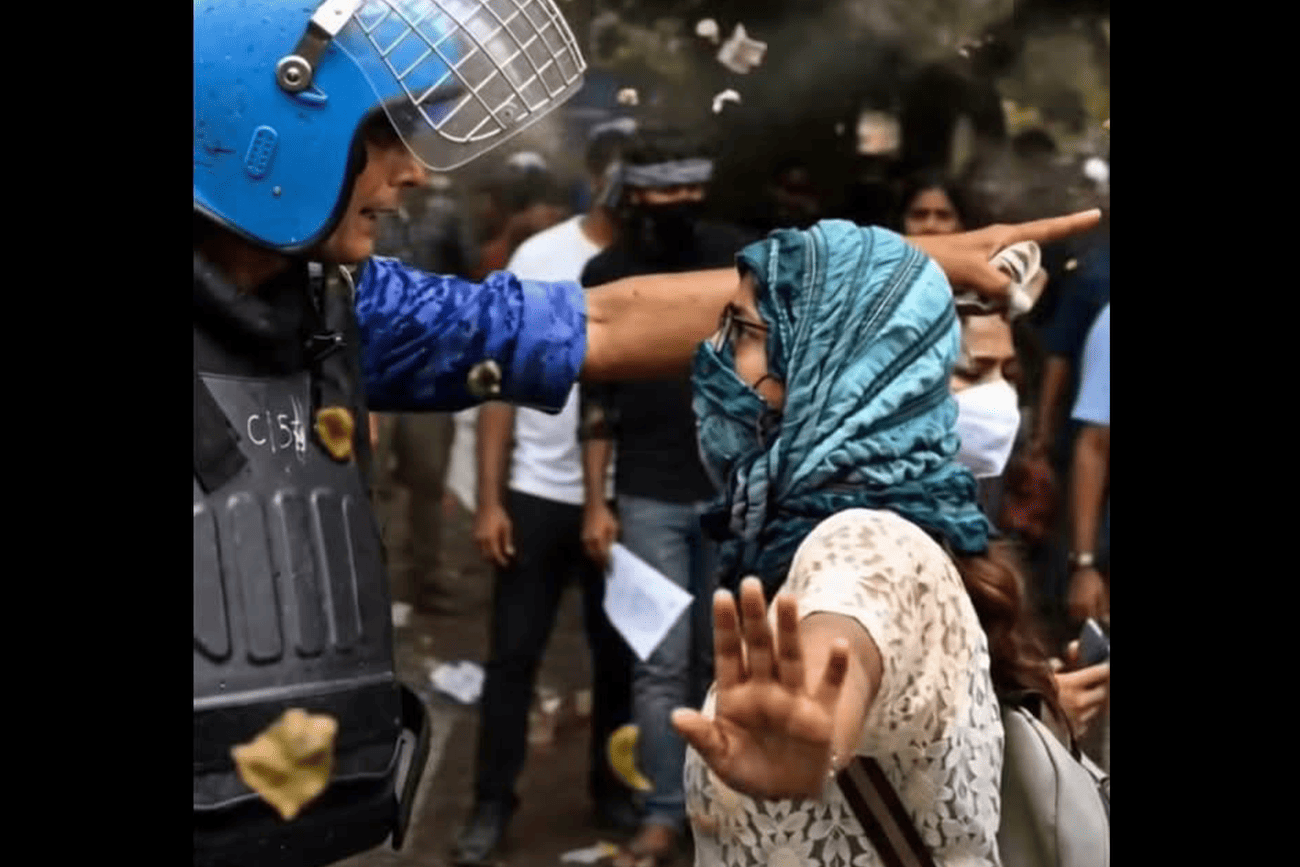

This morning I found myself reading two stories that, at first glance, had nothing to do with each other. One carried the voices of the families of police personnel injured during the violence at Jantar Mantar. A young woman spoke of her father, a police officer, and said he had “almost been lynched.” Spouses and children described the anxiety of watching men who had left home in uniform return with injuries. Their anger was understandable.
The other story has been unfolding for days across newspapers, television channels and social media. It is about students who had gone to protest the examination paper leak and returned with injuries of their own. Parents spoke outside hospitals. Doctors spoke of treatment. Political leaders visited wards. There were allegations of excessive force, of lathi charges, tear gas and pellet injuries. There were images of the police slapping and assaulting girls.
The police disputed parts of those allegations. The arguments continue. The injuries and the traumas, however, are beyond argument. As I finished reading, it struck me that these were not two stories. They were the same story. They are about children.
Not just the students who went out to protest, but also the children who waited for their parents in police uniforms to return home. One child fears that a father may never again be the same after a violent clash. Another fears that a daughter or a son may never again see clearly after being caught in one. Neither child created this crisis, but both have become its public face.
That, to me, is the most disturbing development of the past fortnight.
When the protests began, the issue was painfully simple. The NEET-UG examination, that determines the future of millions, had been tainted by a paper leak. Young people, many of whom had spent years preparing for it, believed they had been betrayed. Whether one agreed with every slogan raised at Jantar Mantar or not, the underlying grievance was serious enough to demand answers. A government is expected to protect the integrity of a public examination. When that integrity collapses, students have every right to demand answers.
What followed is now part of the public record. The protests intensified. The police moved in. There were clashes. Protesters alleged that force far exceeded what the situation demanded. The police maintained that they had been attacked while discharging their duty. Police personnel were injured. Students were injured. The courts have since been drawn into questions relating to the treatment of injured protesters. Political parties have traded accusations. Every institution has defended its own version of events.
What has disappeared is the question that started everything. How did the paper leak happen? Who failed to prevent it?
The mother of an injured student has no quarrel with the daughter of an injured constable. The daughter of that constable has no personal quarrel with the student who went out to protest. They have never met.
Those questions have steadily given way to another, far more emotional contest. The ruling establishment has highlighted the injuries suffered by police personnel. The Opposition has highlighted the injuries suffered by students. Television has found compelling images on both sides. One evening we watch a mother describing what happened to her son. The next evening we watch the daughter of an injured police officer pleading that her father’s sacrifice not be forgotten. Social media, as always, picks a side long before it picks the facts.
And somewhere in the middle, I find myself asking a question that nobody on television seems interested in asking. Which child is wrong?
Is it the student who believed the examination system had failed him and walked into a protest? Is it the young aspirant who, unable to cope with the despair and uncertainty surrounding the examination, took the irreversible step of ending her life? Or is it the daughter who saw her father return home bruised after a day of violence and now believes those who attacked the police deserve condemnation?
I cannot persuade myself that any of these children is the villain. They are all responding in the most natural way possible. A student defends his future. A daughter defends her father. A mother defends her children. That is what families do. There is nothing surprising about it, and certainly nothing blameworthy.
What surprises me is something else: How quickly we have allowed these families to become adversaries.
The mother of an injured student has no quarrel with the daughter of an injured constable. The daughter of that constable has no personal quarrel with the student who went out to protest. They have never met. Their lives would probably never have crossed but for a paper leak, a protest and a violent confrontation. Yet today they appear to stand on opposite sides of a national argument, as though one family’s grief must diminish the other’s.
That is not an accident. It is what happens when politics begins to consume a public tragedy. The government, the Opposition, the television debates, even social media have behaved predictably. Every camp has found its heroes and its victims. Lost in this contest have been the millions of students whose faith in the examination system was shaken by the leak itself.

I do not say this to diminish the suffering of injured police personnel. Their families have every right to demand justice if officers were assaulted while carrying out their duty. Nor do I say it to minimize the pain of injured students or the anguish of parents who believe their children were subjected to excessive force. Compassion is not a finite resource. It does not have to be rationed between uniforms and examination admit cards.
What troubles me is that we have reached a point where sympathy has become partisan.
We Indians like to describe ourselves as a young nation. We speak with pride about our enormous youth population and the promise it represents. Yet within days of this crisis, we have managed to place one set of young Indians emotionally opposite another. One is asked to defend the honor of the police. Another is asked to defend the honor of the protesters. Adults have built the barricades. Children are expected to occupy them.
That is a failure far greater than a leaked examination paper. A paper leak can be investigated. Systems can be strengthened. It is much harder to repair a society that begins teaching its children that another child’s grief is somehow less worthy because it belongs to the other side.
I keep thinking about the young woman who said her father was almost lynched. I also keep thinking about the parents who say their son returned from a protest with injuries that may alter his life forever. Neither of them leaked the paper. Neither decided how the protest would be handled. Neither framed the political narratives that followed. But both now carry the consequences of decisions taken by others.
That, more than anything else, should trouble us.
V.V.P. Sharma is a Delhi-based senior journalist and commentator. This opinion was first published on the author’s Facebook.