




I Watched ‘The Odyssey’ First Day, First Show: The Liberties Christopher Nolan Takes With Homer’s Epic Are Real, And They Are Brilliant

- I am going back at least once more. Odysseus took twenty years to get home. The least I can do is give Nolan another three hours.
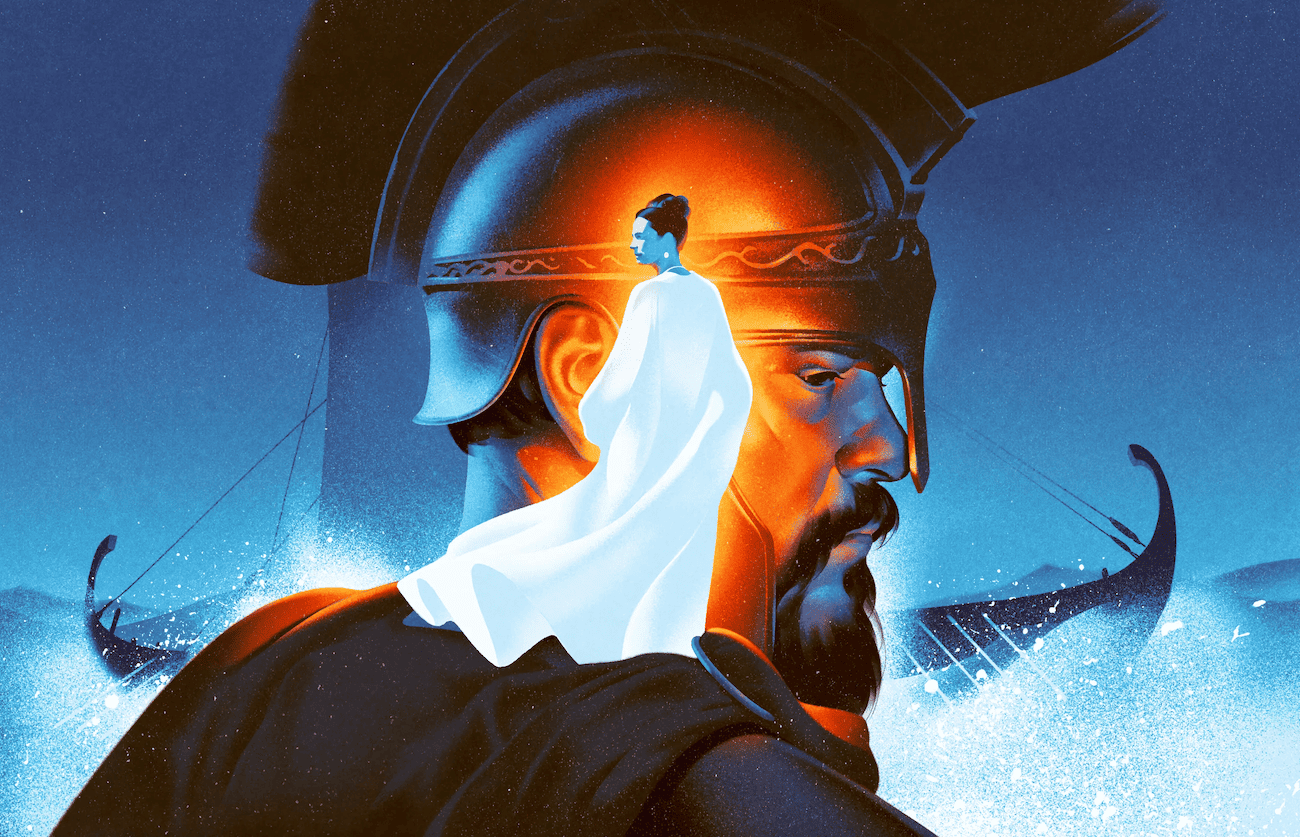

FDFS is not an acronym I expect most of my American friends to know. First Day, First Show. It is a habit — a ritual, really — that I never partook in India, but one I have carried across an ocean from Tamil Nadu, where the opening show of a big film is less a screening than a festival, complete with drums outside the theater and confetti inside it. There were no drums at my suburban Michigan IMAX on Thursday — a day before the rest of the country gets its turn. But about ten minutes into Christopher Nolan’s “The Odyssey,” I felt that old FDFS electricity anyway — the specific joy of watching something enormous arrive in the world at the same moment you do.
Walking out three hours later, I did what every movie lover does after a great one: reached for comparisons. “Mad Max: Fury Road.” “The Lord of the Rings.” “Oppenheimer.” This one beats them all for me — not only because of what is on the screen, but because of what I know about how it got there.
There is no CGI crutch holding this thing up. Nolan shot the entire film on IMAX cameras — the first feature ever to do so — using technology his team had to essentially invent along the way. And my favorite detail: a loaded IMAX film magazine runs out in roughly two and a half minutes. My phone shoots longer videos of my dog chasing squirrels. Every scene in this three-hour epic was captured in stretches shorter than a song, the actors stopped mid-grief, mid-rage, mid-battle while someone swapped the film, then required to find their way back into the exact emotional register. At some point in Matt Damon’s heaviest confession, a camera assistant almost certainly called for a reload, and he stood on a windy beach holding twenty years of guilt in his chest, waiting for a fresh magazine. Then he did it again. The ships sit in the water like ships. The storm feels wet. The film is a $250 million argument that reality, photographed with enough obsession, is still the greatest special effect ever devised.
The Casting Problem That Solves Itself
I will be honest about the first fifteen minutes: none of these people looked right to me. I had never read The Odyssey cover to cover — I knew the story by cultural osmosis — and even that comes with casting already done in your head. Odysseus, in my imagination, was carved from the same quarry as the statues. Instead, here was Matt Damon, sturdy but decidedly human, and Tom Holland, who would need a footstool to intimidate a Cyclops.
And then Nolan does what Nolan does. He immerses you so completely that the mental statues crumble and the actors take their place. Damon plays Odysseus not as a demigod but as a man carrying twenty years of guilt in his shoulders, and it turns out that guilt, not height, is what makes a hero imposing. Anne Hathaway’s Penelope is steel wrapped in patience. Robert Pattinson makes Antinous the kind of villain you want to reach into the screen and slap. John Leguizamo, as the blind and loyal Eumaeus, nearly walks away with the whole film using nothing but tenderness.
And a detail I registered with some pride. Himesh Patel — the lone actor of Indian origin in that sprawling ensemble — as Eurylochus, Odysseus’s doubting second-in-command, the crewman whose skepticism keeps puncturing his captain’s certainty. The press tour treated him like a cameo; the film treats him like a lead. Nolan hid a co-star in plain sight, and it is a quiet pleasure to watch him claim the space.
And Travis Scott. Yes, that Travis Scott — cast as the bard who sings the story of the Trojan War. On paper it reads like a stunt. On screen it is quietly perfect: Homer’s epic survived for centuries as oral performance before anyone wrote it down, carried from voice to voice by professional performers of rhythm and memory — a tradition anyone who has sat through a villupattu or a harikatha performance knows in their bones. The bard was always the rapper of his day. Nolan just closed the loop.
What Nolan Changed
My Homer is secondhand, so take this as an honest civilian’s audit. The liberties are real, and they are brilliant. In Homer, the Lotus Eaters and Calypso are separate stops — an island where the men eat a flower that dissolves their desire for home, and a later one where a nymph keeps Odysseus as her lover for seven years. Nolan fuses them: his Calypso feeds Odysseus lotus petals, and the drug takes his memory. Homer’s Odysseus knows exactly who he is while sharing Calypso’s bed. Nolan’s has forgotten his own name, his wife, his kingdom — the infidelity becomes amnesia, the seven lost years a coma of grief. Purists may call it sanitizing. I call it translating.

Himesh Patel as Eurylochus, Odysseus’s doubting second-in-command.
A detail I registered with some pride. Himesh Patel — the lone actor of Indian origin in that sprawling ensemble — as Eurylochus, Odysseus’s doubting second-in-command. Nolan hid a co-star in plain sight, and it is a quiet pleasure to watch him claim the space.
The boldest change is the quietest: Nolan has escorted the gods offscreen. No Zeus hurling bolts, no Poseidon rising to swat the ships — the crew believes they have angered the sea god, and the film lets them believe it, while the audience watches what might just as easily be weather. Take away Poseidon, and the ten lost years stop being a punishment handed down from above; they become a trail of Odysseus’s own decisions. Every liberty Nolan takes turns out to be the same edit made over and over — divine punishment swapped for human conscience. Homer’s hero suffers at the whim of the gods. Nolan’s is a man who did terrible things to win a terrible war and cannot outrun the arithmetic.
What Nolan kept is just as revealing. The poem’s deepest obsession is not monsters but hospitality — xenia, the sacred obligation to feed and shelter the stranger, because any beggar at your door might be a god in disguise. The film preserves this as “Zeus’ Law,” invoked so often it becomes the moral spine: the suitors are villains because they are guests devouring a host. One review noticed that Zeus’ Law sounds suspiciously like the Golden Rule. Reading that, I smiled the smile of a Tamil man who grew up with the Thirukkural’s entire chapter on virundhombal — the honoring of guests — and with the instruction that the guest is God, Atithi Devo Bhava. Homer’s Greeks fed strangers because gods walk among us in rags; so did our grandmothers’ generation, half a world away. Some laws predate everybody’s scripture, and it is quietly moving to watch a $250 million blockbuster rest its climax on one of them.
Yes, Telemachus calls his father “dad,” and more than one reviewer winced at the modern speech. I didn’t. Homer composed in the living, ordinary Greek of his listeners; the marble diction we expect is the real anachronism, a Victorian habit we’ve mistaken for antiquity. It reminded me of Mani Ratnam and Jeya Mohan’s choice of language for Ponniyin Selvan — trusting a thousand-year-old story to speak plainly.
Here is the irony worth savoring. Nolan rewrote the hero’s morality, deleted the gods, merged two islands, and cut the oldest punchline in Western literature — and the self-appointed guardians of the text noticed none of it. The only “inaccuracy” that stirred their scholarly passion was the skin color of one actress.
Helen, and the Man Who Yells at Clouds
Lupita Nyong’o plays Helen of Troy. And the loudest film critic on Earth — a man who had, at the time of his loudest criticism, not seen one frame of the film — decided she was the problem.
Back in January, when word spread that Nyong’o — a Yale School of Drama graduate with an Academy Award on her shelf — had been cast as Helen, Elon Musk took to the platform he owns to announce that “Chris Nolan has lost his integrity.” He was amplifying a post arguing that Helen must be fair-skinned and blonde because Homer said so. He escalated from there: accusing Nolan of being racist against Greek people, boosting false casting rumors, co-signing the theory that a film about a man trying to get home to his wife is a plot to destroy Western civilization.


Let us take the “accuracy” argument on its merits, the way one examines a fish that has been left out too long. Helen of Troy’s father is Zeus. Her mother, Leda, was seduced by that same Zeus while he was disguised as a swan, after which Helen hatched — hatched — from an egg. This is the character whose casting demands strict biological fidelity. I await Mr. Musk’s peer-reviewed position paper on the historically accurate skin tone of a demigoddess born from waterfowl. If your commitment to textual fidelity begins and ends at the melanin of one actress, the text was never your concern. And there is a particular flavor of irony in a man best known for naming a child like a Wi-Fi password lecturing Christopher Nolan on artistic integrity.
Here is what I can report from inside the actual theater: Nyong’o is luminous. Her screen time is brief — criminally brief; my one gripe is that the face that launched a thousand ships gets barely a scene to launch them — but she makes every second count, playing Helen with a weary, knowing gravity that lingers long after she leaves the frame. The film opened to the best reviews of Nolan’s entire career. The only launched fleet Musk commands in this story is a thousand quote-tweets, sailing nowhere.
The Long Way Home
Ludwig Göransson, by the way, is going to win the Oscar for this score. Write it down, date it, notarize it if you like — a pounding, shape-shifting thing that turns into war drums when the film needs a heartbeat and into something ancient and aching when Odysseus remembers what he has done.
I grew up in a culture where the great epics are not literature but weather — always present, absorbed before you can read, retold during family dinners, at every wedding and every funeral. So perhaps I was always going to be a soft target for a three-hour film about a war-haunted king trying to find his way back to a wife who refuses to stop waiting. Nolan reportedly built his adaptation around a single question: what could keep a man away from a family he loves for twenty years? The monsters are the poem’s answer. His answer is guilt — a war that keeps collecting payment from its survivors long after the last city burns, a man who stays lost partly because he does not yet believe he deserves to be found. Whether any god is actually watching, the film pointedly refuses to say. It doesn’t need one. The judge Odysseus fears most has been aboard the ship the whole time.
The oldest stories survive because they are load-bearing. Nolan has not modernized “The Odyssey” so much as trusted it — trusted that a story about the cost of war, the pull of home, and the long labor of becoming worthy of return would still work if he simply built it big enough and honest enough and pointed the largest camera ever made at it.
It works. It more than works. I am going back at least once more. Odysseus took twenty years to get home. The least I can do is give Nolan another three hours.
Ganpy Nataraj is an entrepreneur, author of “TEXIT – A Star Alone” (thriller) and short stories. He is a moody writer writing “stuff” — Politics, Movies, Music, Sports, Satire, Food, etc.