




How the Youth Helped Lift the Cloud of Fear That Silenced Even the Faintest Criticism of the ‘Divine Incarnate’

- He, who couldn’t be named, was being called a monkey, by Gen Z at Jantar Mantar. And we were alive to see it. We crawled out of the stone under which we were hiding for the past 12 years and applauded heartily. It was liberation for us.
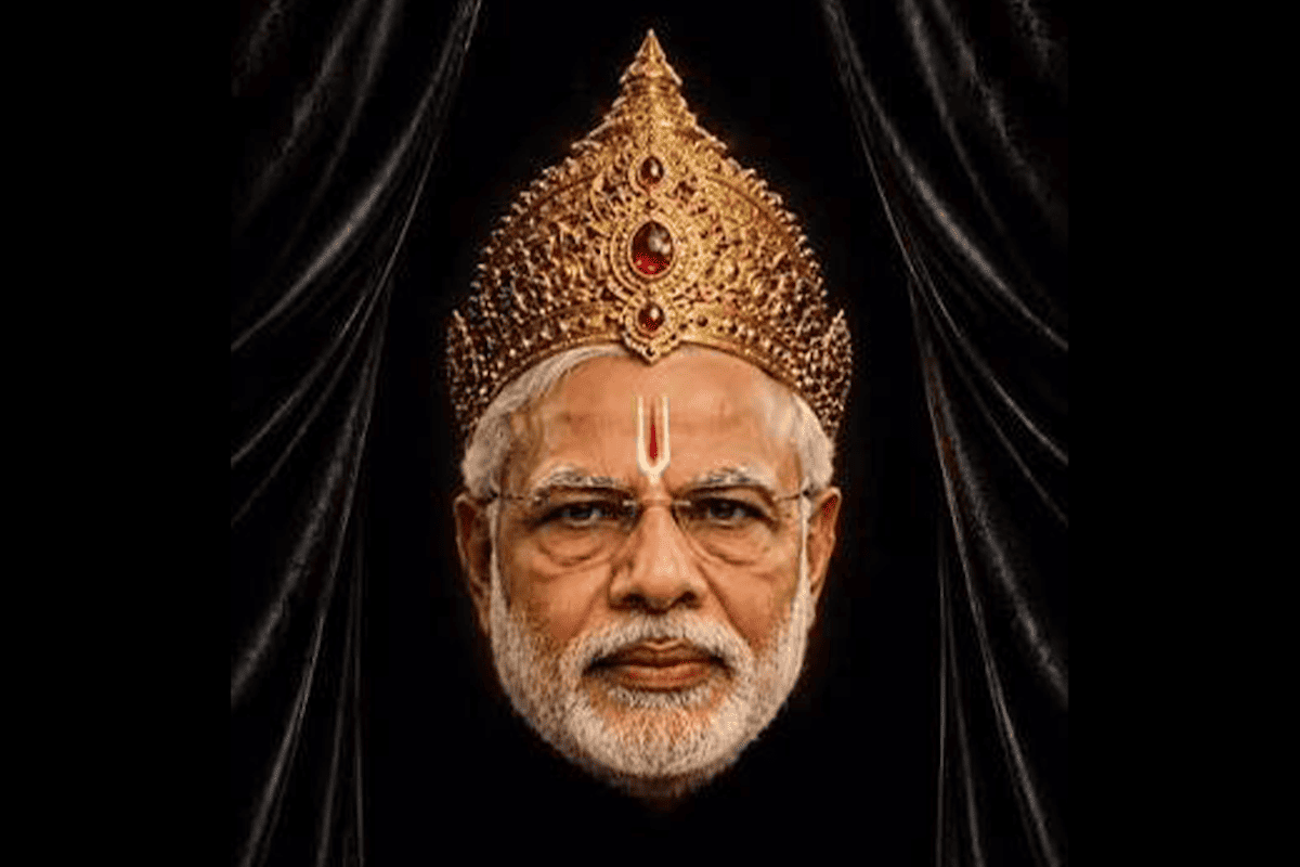

I’ve been thinking about this. The Gen Z kids that danced, heckled, abused and brought Narendra Modi and his government to their knees, did not just break the parental and societal chains that bound them, they liberated the generations before them —the millennials and even the cowardly lot of boomers that I belong to.
The last 12 years had cast such a spell of fear and gloom on us (I know it’s presumptuous to use the first person plural but I’m more than sure that there are others who felt this way) that we were careful to keep our criticisms and opinions to our own safe groups. There were some words in particular that instinctively caused us to press the pause button. Modi was one. Muslim was another.
For 12 years, we operated in a world where an unwritten code prevailed. Modi could be mentioned only if it was to praise him. Muslim could be mentioned only if it was to condemn and vilify them. Sitting in a restaurant, we glanced furtively around us to ensure that no mole was within ear shot. At work we looked over our shoulders and cast and recast our sentences.
The government’s lapdog media observed the code like a sacred duty. They bestowed on Modi so much virtue and wisdom and attributed capabilities so fantastical that he started to believe he was a divine incarnation.The anti-Muslim routine could not be missed. Not even for a day. Even the print media, though more restrained, paid obeisance to the Supreme Leader.
The owners held conclaves where paeons were sung to him. At one such conclave, a newspaper owner, who’d publicly disdained politicians until 2014, rose from his chair to read out a poem in the leader’s honor. Even the number two got his share of compliments just in case the succession was close. Even if that wasn’t imminent, it had to be remembered that one and two occupied a rarefied space where only they knew whose stars would rise and whose would sink. So it was best to be risk-averse here.
For 12 years, we operated in a world where an unwritten code prevailed. Modi could be mentioned only if it was to praise him. Muslim could be mentioned only if it was to condemn and vilify them.
Print media didn’t pick on Muslims as crudely and brutally as godi TV but it was nonetheless on guard for words such as lynchings, Muslim rights and deprivations.
For those of us writing opeds and edits, the editorial space was a sanctuary, away from the here and now of the news pages. The opinion pages were by definition a space allotted to free opinion. But even here there was an invisible line that could not be crossed.
This was driven home to me by a friend, who asked me if I’d noticed that even where an oped was critical of the government, it never mentioned Narendra Modi by name. If you were lucky you could attack the government (policies only), but not the man who ran it. If you saw it as unwritten censorship, you had the option not to write or quit.
The country inched closer and closer to dictatorship. All the institutions had turned into handmaids of the government. It became clear that from here on, no election would be lost. No change . None. Nada.
Then it happened. A miracle in the form of a kiddie invasion. Hordes of them descended on the streets demanding accountability from the government. Bold and fearless, they occupied Jantar Mantar, colonized Lutyen’s Delhi. They sang, danced and raised daring, sometimes unprintable, slogans. Their creativity was stunning.


They called out the government, they called out Modi. They called him chota bandar and set it to music with action and beats. The song has since become an anthem of sorts.
He who couldn’t be named was being called a monkey. And we were alive to see it.
We crawled out of the stone under which we were hiding and applauded heartily. It was an unpretentious, natural act for the kids. It was liberation for us. They weren’t even conscious that they were being rude and ill-mannered towards a figure of authority who demanded and got obedience.
If luck favoured us we’d piggyback on the baby daredevils to our own freedom. If not we’d console ourselves that we saw something which we didn’t expect to see ever and which, at least momentarily, raised our spirits and lit our paths.
Vidya Subrahmaniam is an Indian journalist and political commentator. She served as the Associate Editor at The Hindu, and a Senior Fellow at The Hindu Centre for Politics and Public Policy.
The current youth movements in India is a result of centralized government and dominant role of governments, state and center, in everyday lives. India inherited the colonial command and control public administration system and government knows best mindset. Late Prime Minister Nehru and his colleagues basically kept the system as was with minor cosmetic changes, and strengthen the central rule. The Modi administration like previous administrations is following the same centralized micromanagement system with a tight grip on country’s everyday life. The NEET fiasco is a good example. Why country need NEET examination bureaucracy? Prime Minister Modi should consider reforming the Indian public administration system compatible with India’s democratic governance mission . Start with the decentralization of government, give power to people through their local governing bodies, reorient the IAS officers who control the permanent government both at center and state, with public servant mindset, and create a strong role for the private sector. Indians by their DNA are free thinkers and do well when in charge of their own destiny.