




Netflix’s ‘Best of the Best’ Is a Joyful, South Asian-Centered Dance Film That Earns Its Crowd-Pleasing Finale

- Directed by Lena Khan from a screenplay by Hasan Minhaj and his "Patriot Act" co-writer, starring Maitreyi Ramakrishnan in her best post-"Never Have I Ever" performance, the film is the most ambitious and most successful South Asian American comedy to reach Netflix since "Never Have I Ever" itself.
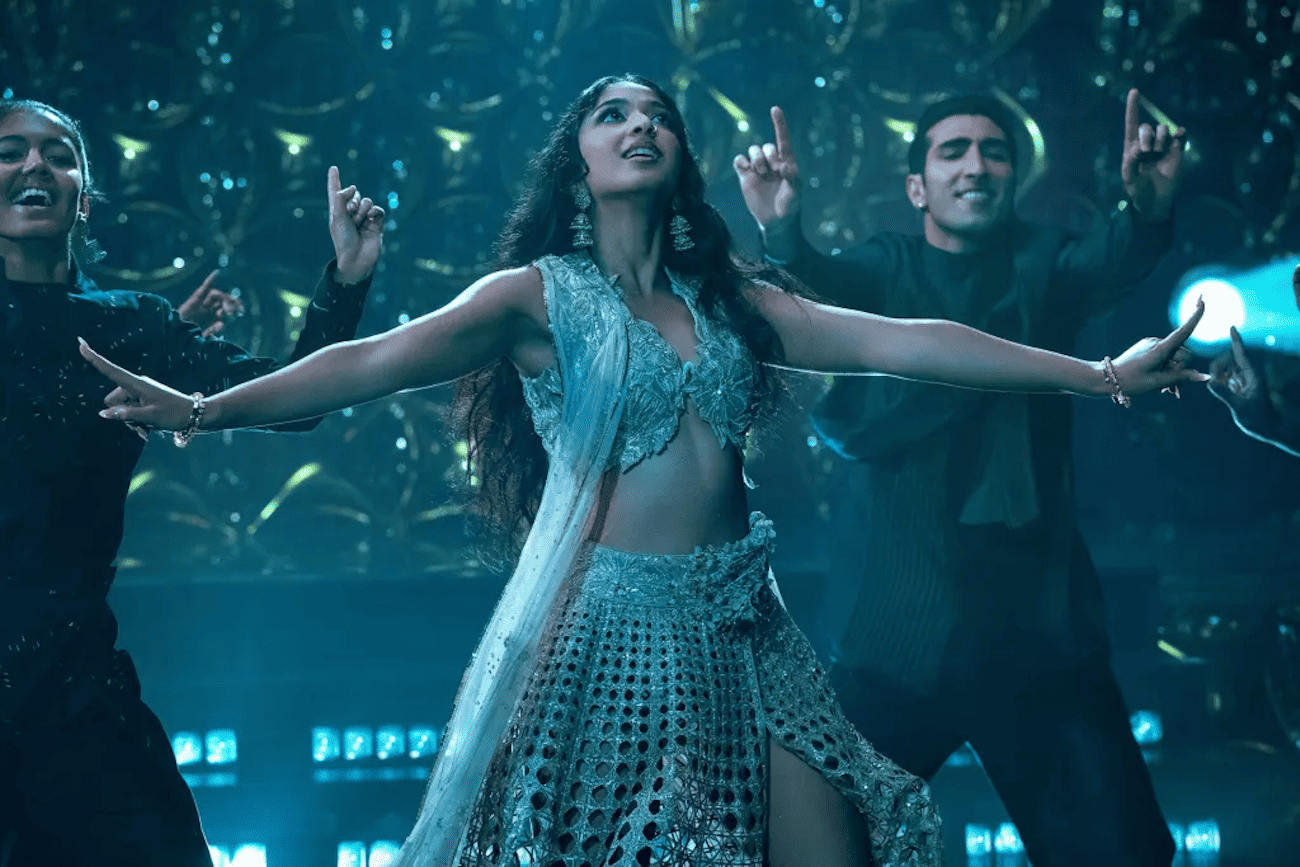

“Best of the Best,” directed by Lena Khan from a screenplay by Hasan Minhaj and Prashanth Venkataramanujam, premiered on Netflix on September 18, 2026. It runs 112 minutes, carries a PG-13 rating, and — in the most literal possible description of its premise — follows two childhood best friends, Maya and Anjali, who join UCLA’s competitive Bollywood-fusion dance team, only to discover that the road to winning the U.S. Championship is far more raucous and cutthroat than they ever imagined, as the Netflix official listing confirmed.
It is produced by Minhaj and Venkataramanujam through 186K Films — Minhaj’s production company, his first film venture. Singer and composer A.R. Rahman created a track for the movie in homage to Maitreyi Ramakrishnan’s Tamil heritage, a detail that situates the film within a longer tradition of South Asian artistic collaboration reaching across generations and diasporas.
A Dream Team of South Asian American Talent
The creative assembly behind “Best of the Best” is, by any measure, the most concentrated gathering of prominent South Asian American talent in a single American film production to date.
Hasan Minhaj — the Peabody Award-winning creator and host of “Patriot Act,” known for marrying political comedy with personal storytelling — co-wrote the screenplay with Prashanth Venkataramanujam, his longtime “Patriot Act” collaborator. The partnership had already demonstrated, across the run of that Netflix series, a gift for making comedy that was simultaneously culturally specific and broadly accessible. The writers interviewed several South Asian women who had participated in collegiate Bollywood-fusion dance competitions to ensure an accurate representation of the competitive scene.
Lena Khan’s previous directorial work includes the Amazon Prime video “Flora and Ulysses” and several episodes of “Never Have I Ever” for Netflix. Her prior with Ramakrishnan gave the collaboration an existing vocabulary.
Maitreyi Ramakrishnan — the Canadian Tamil actress who spent four seasons as Devi Vishwakumar on Netflix’s “Never Have I Ever,” one of the most successful Indian American-centered streaming series in the platform’s history — plays Maya, the film’s more reserved, dance-reluctant half of the central friendship. Priyanka Kedia, whose previous work includes “Disclosure Day,” plays Anjali.
The ensemble cast also includes Chaneil Kular, Ankur Rathee, Lilly Singh, Janina Gavankar, Nico Greetham, Saara Chaudry, Nihar Duvvuri, and Minhaj himself in an acting capacity.
The Plot: Friendship, Ambition, Identity, and the Rhythm in Between
The film opens in the recent past, where Maya and Anjali — childhood best friends whose entire social and emotional vocabulary is expressed through dance — suffer a humiliating high school performance that causes Maya to put away her dancing shoes entirely. The opening establishes the central dynamic with efficiency: dance means the same and yet entirely different things to each of them, which is the friendship’s great resource and its great vulnerability simultaneously.
Both arrive at UCLA as computer science majors — a choice that itself carries satirical freight in a film written by Minhaj, who has made comedy from South Asian parental expectations throughout his career. Their discovery of Agni, UCLA’s competitive Bollywood-fusion dance team, pulls Maya reluctantly back to the art she abandoned and propels Anjali toward the boy she has immediately become infatuated with.
What follows is, as Seat42F’s review acknowledged, structurally familiar: “There will be a competition, a team under pressure, friendships tested by ambition and a finale that asks everyone to put their feelings into choreography.” But the film’s value, as that review also argued, lies not in its originality of structure but in the specificity of its people. As the AV Club’s review said: dance fuels each of Maya and Anjali’s imaginations and expressions differently, but also consistently brings the longtime pals together.
The subplot of the film involves Team Agni deciding what kind of performance it wants to put on — whether to chase the competition’s aesthetic preferences or to honor the full cultural heritage of Bollywood fusion rather than the crowd-pleasing “Bollywood-adjacent” performance style that tends to win trophies. It is a debate about cultural authenticity versus institutional success that the film handles with more nuance than its competition-movie genre would require it to, as the AV Club observed.
What the Critics Said: Warmly Yes, With Caveats
The critical consensus on “Best of the Best” is, across the board, genuinely warm — with variations in enthusiasm rather than fundamental disagreement about what kind of film this is and whether it succeeds at being it.
Oscar-winning composer A.R. Rahman — the Chennai-born creator of the “Slumdog Millionaire” and “Roja” scores, arguably the most celebrated film composer in Indian cinema history — created an original track for “Best of the Best” in homage to Maitreyi Ramakrishnan’s Tamil heritage.
IndieWire delivered the most enthusiastic review, calling the screenplay “brilliant” and the film “a giddy and soul-affirming story” whose ethos — “to be extra is to be human” — it described as “surprisingly timeless.” IndieWire praised how Minhaj and Venkataramanujam used “their topical chops to make this bubbly effort particularly of the moment,” noting the film’s integration of “quicksilver political comedy” with the familiar rhythms of collegiate drama. One quote from the film’s dialogue — “AI is here, your degrees are worthless, you’ll never own a home — back to practice!” — captured the script’s ability to locate sharp contemporary observation inside a genre format. IndieWire also specifically praised cinematographer Adam Carboni for framing the film “in a glowing daytime warmth, peppered with gorgeous intermissions that plunge the audience into starry nights that give the whole affair a music video-like pulse.”
Pajiba called it “an enjoyable dance comedy that doesn’t rely on nostalgia” and found it a worthy heir to films like “Bring It On” and “Pitch Perfect” — the foundational texts of the collegiate competition comedy — while crediting it for having “its own personality” rather than mining those predecessors for easy callbacks. “Best of the Best is full of good quips, layered relationships, and memorable moments,” the Pajiba review concluded. “It draws from the best of the dance film genre while having its own personality. Ramakrishnan is consistently fantastic.”
Seat42F offered what is perhaps the most balanced assessment, acknowledging the formula while defending the execution: “Best of the Best may know every stop on the college-dance-movie map, but it travels there with enough heart, wit and visual energy to make the route feel newly personal.” The review concluded: “It is a joyful, generous crowd-pleaser whose best moments are less about winning than the exhilaration of being seen — by your friends, your team and yourself.”
The AV Club found the film succeeds because it spends time with Maya and Anjali as they reckon with their culture, noting that its emotional core holds even when the plot is formulaic: “As formulaic as this may seem, Best Of The Best’s execution still makes the drama ache whenever Maya and Anjali lash out at or accidentally hurt each other. And it’s just as satisfying whenever both of them reunite, hang out, or, best of all, dance unabashedly together.” The AV Club called Ramakrishnan’s performance “a delight” and described the film as “finally a worthy follow-up to her four-season Netflix series.”


The most ambivalent note in the Metacritic collection came from a critic who observed: “Even when it wraps things up a little too conveniently, ‘Best of the Best’ leaves you wanting a movie more like a traditional three-hour Bollywood affair” — a remark that functions simultaneously as mild criticism and genuine compliment.
The A.R. Rahman Connection
Among the film’s production details, one carries particular resonance for the Indian and South Asian diaspora audience the film is clearly targeting.
Oscar-winning composer A.R. Rahman — the Chennai-born creator of the “Slumdog Millionaire” and “Roja” scores, arguably the most celebrated film composer in Indian cinema history — created an original track for “Best of the Best” in homage to Maitreyi Ramakrishnan’s Tamil heritage. For Ramakrishnan, the collaboration carried deep personal meaning: she said it fulfilled her late grandmother’s wish to see her work with Rahman, as TimesNow reported. The track represents the kind of cultural bridge — between Tamil cinema tradition and South Asian American college life — that the film as a whole is attempting to build.
It also situates “Best of the Best” within a longer creative tradition: South Asian artists working across the diaspora-homeland divide to produce cultural artifacts that are simultaneously rooted in specific heritage and oriented toward an American mainstream audience.
The Broader Significance: A Genre Gets Its South Asian Moment
Teen Vogue, in its coverage of the film’s cast, called “Best of the Best” “a spiritual successor to “Bend It Like Beckham” — the 2002 Gurinder Chadha film that used South Asian women’s athletic ambition in a British context to tell a story about identity, family expectation, and belonging, as Wikipedia documented from the Teen Vogue citation. The comparison is apt: both films use a competitive, team-based setting to explore what it means to be young, South Asian, and ambitious in a Western context where those identities are not always legible to the institutions surrounding them.
What “Best of the Best” adds to that tradition — and what the involvement of Minhaj, Venkataramanujam, Lena Khan, and Ramakrishnan collectively represents — is a creative ownership of the narrative that “Bend It Like Beckham” gestured toward but could not fully realize, given its British production context and its non-South-Asian director. Here, the people writing, directing, and performing the South Asian American collegiate experience are themselves part of it. The Bollywood-fusion dance competition circuit that forms the film’s backdrop is, as Variety’s original casting announcement noted, a genuine and growing cultural institution on American college campuses, where dance teams have emerged as spaces for South Asian community building and cultural connection.
That specificity — the sense that the world the film depicts is real and recognized rather than approximated — is what elevates “Best of the Best” above the competent genre exercise it could have been into something that functions, at its best moments, as both entertainment and cultural documentation.
It is now streaming on Netflix. Turn it up.