




Usha Vance at the Kennedy Center: A Low-Profile Trustee in the Middle of a High-Profile Fight

- Vance has not made herself the public face of the transformation. However, her actions as a trustee have become increasingly consequential. She remained on that board through the renaming controversy; was part of the legal team defending the board's position.
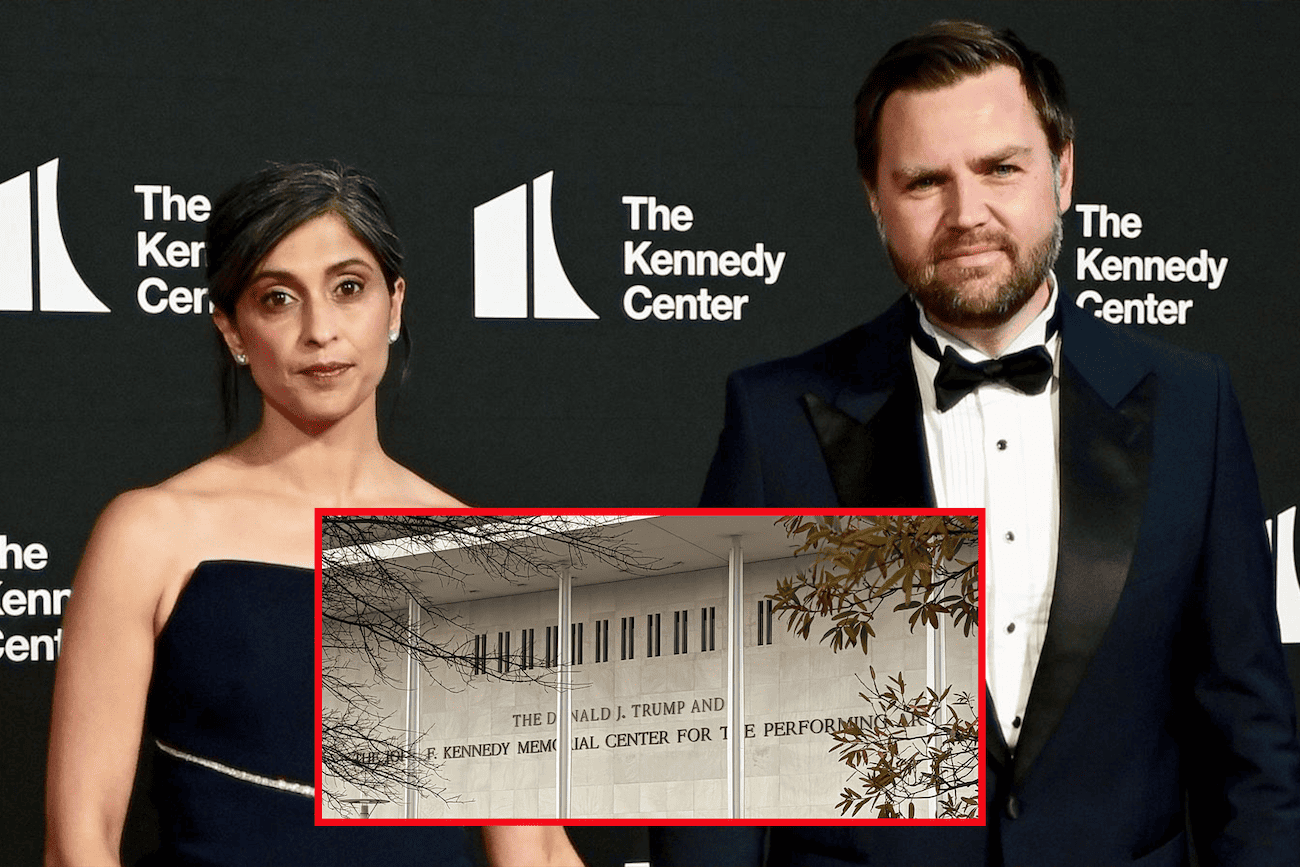

When Usha Vance joined the board of trustees of the John F. Kennedy Center for the Performing Arts in February 2025, she brought to the institution a background that was more closely associated with law and classical music than with partisan politics. A Yale- and Cambridge-educated lawyer who had clerked for Chief Justice John Roberts and then-Judge Brett Kavanaugh, Vance had also served as secretary of the Cincinnati Symphony Orchestra’s board. The White House appointed her to the Kennedy Center board for a term running through September 2028.
Since then, however, the Kennedy Center has become one of the most politically contested cultural institutions in Washington. President Donald Trump’s takeover of its board, his installation of himself as chairman, the dismissal of longtime president Deborah Rutter, the renaming fight, artist withdrawals, financial difficulties and now the center’s closure have placed every trustee in an unusually visible position.
Vance has generally occupied a different position from some of the louder voices in the controversy. She has rarely commented publicly on the institution’s increasingly bitter disputes, but she has remained a member of the board and, importantly, joined the legal appeal defending the board’s position after a federal judge ruled that Trump’s name could not legally be added to the Kennedy Center. The available public record therefore portrays her less as a public spokesperson for the administration’s Kennedy Center strategy than as a trustee who has stayed with the board as its decisions have come under increasing legal and cultural scrutiny.
A Trustee Appointed in Trump’s Takeover
Vance’s appointment came as part of Trump’s sweeping restructuring of the Kennedy Center.
In February 2025, Trump removed members of the existing board who had been appointed by President Joe Biden and installed a new group of trustees. He then became chairman after the newly constituted board elected him to the position. The board also terminated Rutter, who had led the Kennedy Center since 2014, and installed Richard Grenell, a Trump ally, as interim president. Reuters described the move as a rapid takeover of an institution that had traditionally enjoyed bipartisan support.
The White House’s February 13, 2025 announcement specifically listed Vance as one of Trump’s appointees, replacing Christopher G. Korge.
The appointment was not entirely disconnected from her previous experience. Before entering national political life, Vance had served on the Cincinnati Symphony Orchestra board and, according to the White House, had been secretary of that board. She is also a trustee of the Washington National Opera.
That background makes her presence on the Kennedy Center board somewhat different from that of trustees whose principal connection to the institution is their political or administrative association with Trump.
Her First Kennedy Center Controversy Came in Person
Vance’s most conspicuous early encounter with the controversy came not at a board meeting but from a concert seat.
On March 13, 2025, she and Vice President JD Vance attended a National Symphony Orchestra performance at the Kennedy Center. As they entered the hall, the audience broke into sustained booing and shouted at the vice president. The concert was delayed amid heightened security. The Washington Post reported that the incident lasted more than 30 seconds.
The episode placed Vance in an unusual position. She was both the vice president’s wife and a newly appointed trustee of the institution whose audience was protesting the administration’s intervention in the center.
In an April 2025 interview with The Free Press, Vance discussed the incident herself. She said she and her husband had not expected their arrival to attract much attention and described the booing as lasting roughly 20 or 30 seconds before they watched the performance. “JD waved at them, and then we enjoyed the show that we had come for,” she said.
That response became one of the few occasions when Vance directly addressed the Kennedy Center controversy in public.
From Programming Dispute to Institutional Battle
The controversy quickly moved far beyond the audience’s reaction to the Vances.
Following Trump’s takeover, several prominent figures associated with the Kennedy Center departed. The Washington Post reported that musician Ben Folds, opera singer Renée Fleming and producer Shonda Rhimes left their positions following the leadership changes. Productions, including Hamilton, also canceled engagements.
Trump had criticized what he regarded as the center’s programming, including its hosting of drag performances, and said he wanted the institution to reflect a different cultural vision. His administration’s supporters argued that the Kennedy Center had become too politically and culturally liberal; critics argued that the changes threatened the center’s traditionally broad and bipartisan cultural mission. Those competing interpretations have remained at the heart of the dispute.
For Vance, the changes were unfolding at an institution where she had a formal fiduciary role but where the president himself was now the chairman.
That distinction is important. There is no substantial public record of Vance becoming a principal public advocate for the administration’s programming changes. Instead, her most consequential involvement appears in the formal actions of the board.
The Name Fight
The controversy reached a new level in December 2025, when the board voted to rename the institution in Trump’s honor.
On June 11, 2026, Vance was among the defendants who formally appealed Cooper’s ruling to the U.S. Court of Appeals for the D.C. Circuit. The federal docket specifically lists “USHA VANCE” among the parties filing the notice of appeal.
The Kennedy Center said the board had unanimously voted to call the institution the “Donald J. Trump and The John F. Kennedy Memorial Center for the Performing Arts.” The Washington Post and other outlets reported that Vance was among the trustees appointed by Trump.
The claim of unanimity was disputed by Rep. Joyce Beatty, an ex-officio Democratic member of the board, who said her microphone had been muted and that she had not been permitted to voice her opposition. Because Vance’s individual vote was not separately reported in the sources reviewed, it would be inappropriate to attribute the decision personally to her beyond saying that she was a member of the board that took the action.
The dispute then moved into federal court.
On May 29, 2026, U.S. District Judge Christopher Cooper ruled that the Kennedy Center’s governing statute did not permit the board to rename the institution for Trump. The judge subsequently rejected the board’s request to put that ruling on hold while it appealed.
And here Vance’s role became more concrete.
Vance Joins the Legal Fight
On June 11, 2026, Vance was among the defendants who formally appealed Cooper’s ruling to the U.S. Court of Appeals for the D.C. Circuit. The federal docket specifically lists “USHA VANCE” among the parties filing the notice of appeal.
That is one of the clearest indications of how she has weathered the controversy: she has not publicly broken with Trump’s Kennedy Center board, even after a federal judge rejected one of its most consequential decisions. Instead, she has remained legally aligned with the board’s position.
The court docket also continues to identify her as a defendant in the litigation concerning the Kennedy Center’s governance and renaming.
This does not establish what Vance personally thinks about Trump’s broader cultural agenda, nor does it establish that she personally devised or advocated every action taken by the board. It does establish that she has remained formally involved in defending the board’s position in court.
The Two-Year Shutdown


The controversy intensified again in March 2026, when the board approved a plan for a two-year closure and renovation of the Kennedy Center. Trump presided over a March 16 board meeting at the White House, and the board unanimously approved the proposed renovation and shutdown, according to USA Today. Vance was among the Trump-appointed trustees.
The center’s financial and artistic problems became increasingly difficult to separate from the political battle. The Washington Post reported in December 2025 that ticket sales had weakened, artists and productions had withdrawn, and the institution was increasingly marked by political programming and leadership changes.
The legal dispute over Trump’s name continued alongside the renovation plans. In June, the court rejected the board’s request to stay the order requiring removal of Trump’s name, noting that the defendants had not demonstrated that they would suffer irreparable harm if the name were restored only if they ultimately prevailed on appeal. Vance was among the trustees named in that appeal.
The Latest Crisis
By September 2026, the Kennedy Center controversy had moved from a dispute over programming and symbolism to the physical future of the building.
On September 15, Judge Cooper again blocked the board from putting Trump’s name on the building or renaming the center’s grounds in his honor. The ruling said that such memorialization would require congressional authorization.
Hours later, the board voted to close most of the Kennedy Center for repairs. Trump said the renovation would not proceed unless his name could be added to the building, although Congress has already appropriated $257 million for renovations. The Justice Department appealed Cooper’s ruling.
Two days later, Cooper ordered the Kennedy Center to give 30 days’ notice before undertaking any major physical change to the building, including demolition. The center’s executive director, Matt Floca, said a separate temporary closure was necessary because of acute safety concerns and structural deterioration.
Once again, Vance was part of the board confronting the crisis, although there has been little public evidence of her speaking independently about the latest developments.
A Conspicuous Silence
That relative silence may ultimately be the most notable feature of Vance’s Kennedy Center role.
Unlike Trump, who has made the institution a recurring subject of public statements, or Grenell, who frequently defended the administration’s changes, Vance has not made herself the public face of the transformation. Her public comments about the center have largely been personal rather than institutional — most notably her account of being booed at the March 2025 concert.
At the same time, her actions as a trustee have become increasingly consequential. She accepted a seat on a board reshaped by Trump; remained on that board through the leadership changes and the renaming controversy; was part of the legal team defending the board’s position; and remained a trustee as the institution moved toward closure and a major renovation.
Her legal background adds another dimension. Vance’s experience includes appellate work and Supreme Court clerkships, while the Kennedy Center dispute has increasingly become a question of statutory authority, board governance and the limits of presidential control over a congressionally established memorial. The White House identifies her as an experienced litigator who worked on complex civil litigation and appeals before entering public life.
Yet there is a distinction between having the legal expertise to understand a dispute and publicly explaining or defending it. Vance has largely chosen the latter course: participating in the board’s institutional response without becoming one of its principal public voices.
That approach has allowed her to avoid much of the direct political combat surrounding Trump and the Kennedy Center. But it also means that as the institution’s legal and financial troubles deepen, her membership on the board increasingly connects her to decisions whose consequences extend well beyond the boardroom.
For now, the public record shows Vance staying with the institution — and with the board that Trump remade — rather than distancing herself from either. What it does not show, at least publicly, is how she privately views the transformation of an institution with which she had a genuine arts connection before becoming one of the most politically scrutinized trustees in Washington.