




How a White Couple Chose to Keep the South Asian Baby Born From an IVF Clinic’s Catastrophic Error

- Six months after Tiffany Score and Steven Mills welcomed a daughter who was 100 percent South Asian — and six months after the clinic responsible shut down, and stopped answering questions — both families have quietly agreed on a path forward that no law had prepared them for.
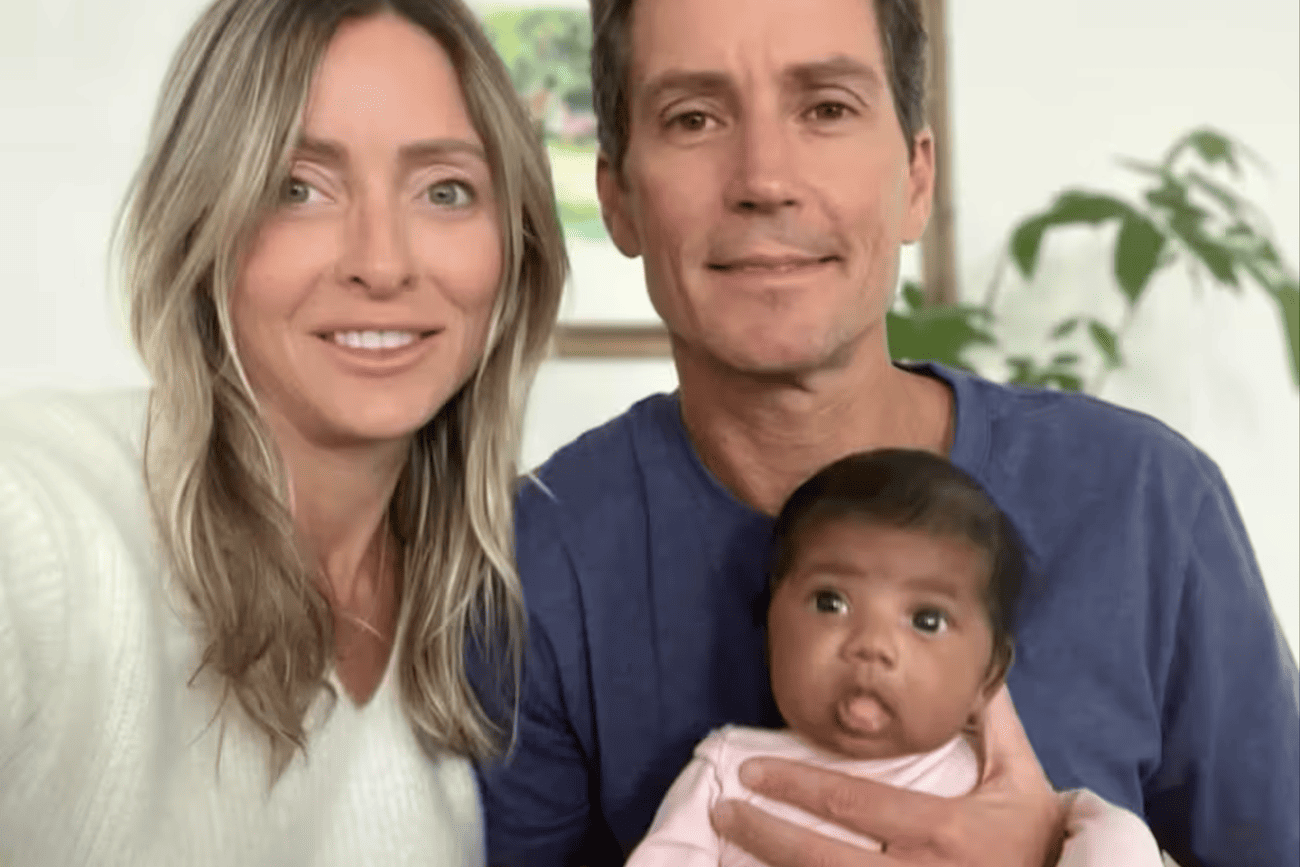

On December 11, 2025, Tiffany Score gave birth to a healthy baby girl at a Florida hospital. She and her partner, Steven Mills, had spent months preparing for the moment. What they were not prepared for was what they saw.
Score and Mills, who are both white, had undergone in vitro fertilization at the Longwood, Florida, clinic and pursued genetic testing because their baby “displayed the physical appearance of a racially non-Caucasian child,” their lawsuit said. The results, when they came, were unambiguous. The testing revealed that the baby, named Shea, was 100% South Asian, according to Score and Mills’ attorney.
What followed — a lawsuit, a clinic’s collapse, a nationwide search for a South Asian couple who did not know their embryo had been used, and finally, a custody agreement reached in a Florida courthouse — is one of the most extraordinary cases in American reproductive medicine. And at the center of it is a six-month-old girl named Shea, who will be raised by the white couple from Florida who carried her, gave birth to her, named her, and loved her — with the South Asian biological parents who made her remaining a part of her life.
The Clinic, the Error, and the Lawsuit
The embryo that became Shea was implanted in Score at the Fertility Center of Orlando — a clinic based in Longwood, Florida — in March 2025, according to Fox 35 Orlando. Score and Steven Mills sued IVF Life, Inc. and Dr. Milton McNichol, who led the fertility clinic before its closure. Score and Mills said they solicited the services of the clinic to assist them in the IVF process and contracted with the clinic for “cryogenic storage of three viable embryos.”
In January, Tiffany and Steven sued the Fertility Center of Orlando and its head reproductive endocrinologist, Dr. Milton McNichol, accusing them of implanting the wrong embryo in April 2025. The lawsuit triggered a cascade of institutional exposure that would eventually bring the clinic down entirely. The IVF clinic reportedly filed for bankruptcy in late 2024 and was cited by the Florida Department of Health the following year for violations. A separate lawsuit filed in March 2026 alleged the clinic had allowed a woman with “a long history of severe mental illness” to serve as a surrogate for her cousin — and that the baby she gave birth to was born with a genetic disorder and died days after birth, as NBC News reported.
The Fertility Center of Orlando announced its closure on its website, saying the decision was made “after thoughtful consideration.” An entirely new IVF network subsequently opened at the same location, according to NBC News.
The Search: Sixteen Couples, One Match
The lawsuit set in motion a complex forensic and legal search for the South Asian couple whose embryo Score had carried. The clinic had identified one South Asian couple from 16 sets of potential parents whose egg retrieval and embryo transfer dates were around the same time as Score’s.
DNA testing tracking a March 2020 egg retrieval group successfully identified the child’s anonymous biological mother, Patient 004, enabling both families to settle custody matters privately outside of court. In April 2026, attorneys for Score and Mills announced that Shea’s biological parents had been found. The names of the biological parents, identified in court documents only as Patient 004, have been kept confidential.
The attorney for the South Asian biological parents, Rob Marcereau said that his clients “intend to remain a part of this child’s life, while recognizing the impossible situation that both families have been placed in, through no fault of their own.”
The process of finding Patient 004 was itself a matter of public record that drew wide attention. News of the husband and wife’s lawsuit — and the release of a photo of the two parents with baby Shea — received massive media attention. Attorney Jack Scarola, who represents Score and Mills, said his law office received calls from people questioning whether they might be baby Shea’s parents or wondering if the children they welcomed through IVF are genetically theirs.
An additional complication arose during the investigation. A woman who was not identified, acting on her own initiative in response to published media reports about the litigation, self-reported to Score and Mills as someone who also had an embryo transfer on April 7, 2025, and who birthed a baby in December 2025. She was not, ultimately, the biological mother — but her outreach reflected how broadly the case had penetrated public awareness.
The Custody Agreement: “A Heartbreaking Decision”
On June 12, 2026, a court filing confirmed what both families had agreed to. In a court filing Friday, Mara Hatfield, Score and Mills’ attorney, wrote that her clients and Patient 004 had “come to a mutually devised custody agreement” that recognizes Score and Mills’ rights as the “permanent custodial parents of their daughter.”
In a statement Monday provided by their attorney, the couple said they were committed to respecting the privacy of Shea’s biological parents, “with whom they have begun and intend to continue to foster a relationship of friendship and trust.”
The attorney for the South Asian biological parents, Rob Marcereau, addressed the situation with careful, measured language. Marcereau said in an email that his clients “intend to remain a part of this child’s life, while recognizing the impossible situation that both families have been placed in, through no fault of their own.”
NBC News reported that in a separate account attributed to a source familiar with the biological parents’ position, the South Asian couple had made what was described as a “heartbreaking decision” not to fight for custody — choosing instead to accept a role in Shea’s life that would be defined by the agreement rather than by a courtroom battle. The identities of the biological parents remain protected and have not been publicly disclosed.
Circuit Court Judge Margaret Schreiber expressed her view at a hearing on Monday, June 15: “I’m glad the parties have reached an agreement while this child is relatively young,” she said, according to the Orlando Sentinel.
An Unresolved Question: Where Are Score and Mills’ Embryos?


The custody agreement resolved the most immediate human question in the case — who will raise Shea — but left a second, deeply unsettling question entirely open.
As a result of a lawsuit filed by Tiffany and Steven, the clinic conducted extensive DNA testing of other embryos created and stored at the same time as theirs. The broader question of what happened to the embryos that Score and Mills had stored — and whether any of them were implanted in another woman — remains unresolved. Score and Mills’ broader medical malpractice lawsuit remains open as the Fertility Center of Orlando permanently shuts down operations and attorneys investigate the location and genetic validity of the parents’ remaining missing embryos.
Jack Scarola, their attorney, was explicit about the stakes. “Remaining questions about the fate of Tiffany and Steven’s unaccounted for embryos … are still pending,” Scarola told People. “The current legal proceeding will remain open to address those matters. However, we expect that we will now also begin to focus on the need for our clients to be compensated for the expenses they have incurred and the severe emotional trauma that they endured and will continue to experience.”
What the Case Reveals: An Industry Without Guardrails
The case has done something that years of advocacy had not: it placed the regulation — or rather, the lack of regulation — of the American IVF industry at the center of a national conversation.
The extraordinary case has put a spotlight on IVF in the U.S., which experts say lacks oversight compared with other developed countries. Still, there is little precedent for such an extreme mistake: Embryo mix-ups are known to have happened to only a handful of families across the U.S.
The defendants have not disputed that Shea “should be, but is not, the genetic child” of the plaintiffs, according to a judge’s summary in court filings. The clinic’s own closing statement acknowledged the error: it was “actively cooperating with an investigation to support one of our patients in determining the source of an error that resulted in the birth of a child who is not genetically related to them,” the statement read.
What the case has not produced, as of this writing, is any federal legislative response. The United States has no single regulatory body equivalent to the Human Fertilisation and Embryology Authority in the United Kingdom, which imposes strict licensing requirements and mandatory error reporting on IVF clinics. The American IVF industry operates under a patchwork of voluntary guidelines, state health department oversight — which, in the Fertility Center of Orlando’s case, cited violations only after the damage was done — and civil litigation as the primary accountability mechanism.
For Tiffany Score and Steven Mills, the accountability mechanism is still pending. For baby Shea, the outcome is settled. She will be raised by the couple who carried her, named her, and formed what their original lawsuit described as an “intensely strong emotional bond” with her starting in pregnancy. Since the start of their legal odyssey, Score and Mills repeatedly made clear that they wanted to keep Shea.
Two families, brought together by an institution’s catastrophic failure, are now building something without a name or a legal template. The custody agreement calls it “a relationship of friendship and trust.” For Shea, whose story began in an error and whose future has been shaped by an extraordinary act of human generosity on the part of her biological parents, it may eventually come to mean something simpler: that she has more people who love her than most children ever will.