






In “short,” Indonesia can be described as the land of islands, islets, shoals, sandbars, and beaches, temples, gates, gods, rituals, and offerings, rice terraces, swings and waterfalls, volcanoes, calderas, tsunamis, and earthquakes, komodos, monkeys, and elephants, dances, sarongs, and plenty of massages, and finally nasi goreng literally everywhere all times of the day. I know that wasn’t short by any means, but so wasn’t Indonesia.
Indonesia is an archipelago of over 17,000 islands. Only 6,000 of those are inhabited but they are home to 285 million Indonesians, making it the 4th largest country by population. The most popular (and populous) islands are Java, Sumatra, Bali, Borneo (shared with Malaysia/Brunei), Sulawesi, and Papua (western half of New Guinea). Straddling the equator in the Indian ocean, Indonesia’s islands span wider than the United States.
Bypassing the capital city Jakarta, a friend and I started our trip in Bali, which is considered the face of Indonesia from a tourism perspective. I heard later from our guides that Jakarta is overpopulated (most populated in the world, currently at a whopping 42 million), smoggy, trafficky, making it a nightmare for residents as well as tourists, although it is famous for its street food. In fact, the city is sinking so fast at several inches a year that by 2050 more than 50% of it is estimated to be underwater, and they are moving to Kalimantan. Hmm, now I am wondering if I should have popped in there for a day before it disappears.
Bali’s diverse attractions have cemented its status as a tourist paradise. The island’s rich spiritual heritage is evident in its numerous temples and vibrant rituals, while its natural beauty is showcased in lush rice fields, picturesque waterfalls, and dramatic cliffs. Visitors can rejuvenate themselves with indulgent massages and spa treatments, and experience the warmth and hospitality that defines the island’s people. There are a lot of activities like surfing and trekking for adventure seekers too.
We kicked off our trip with a blissful day — napping, eating, and treating ourselves to massages and spa treatments (an indulgence we repeated several more times during the trip). We needed that as we packed a lot into the next day, which started with batik and silver workshops, and buying things one doesn’t need. Goa Gajah, which translates to elephant cave (you grasping the Sanskrit connection?), our first temple in Bali, a 11th century marvel with Shiva, Ganesha statues and a sacred tank for us to dip our legs in.
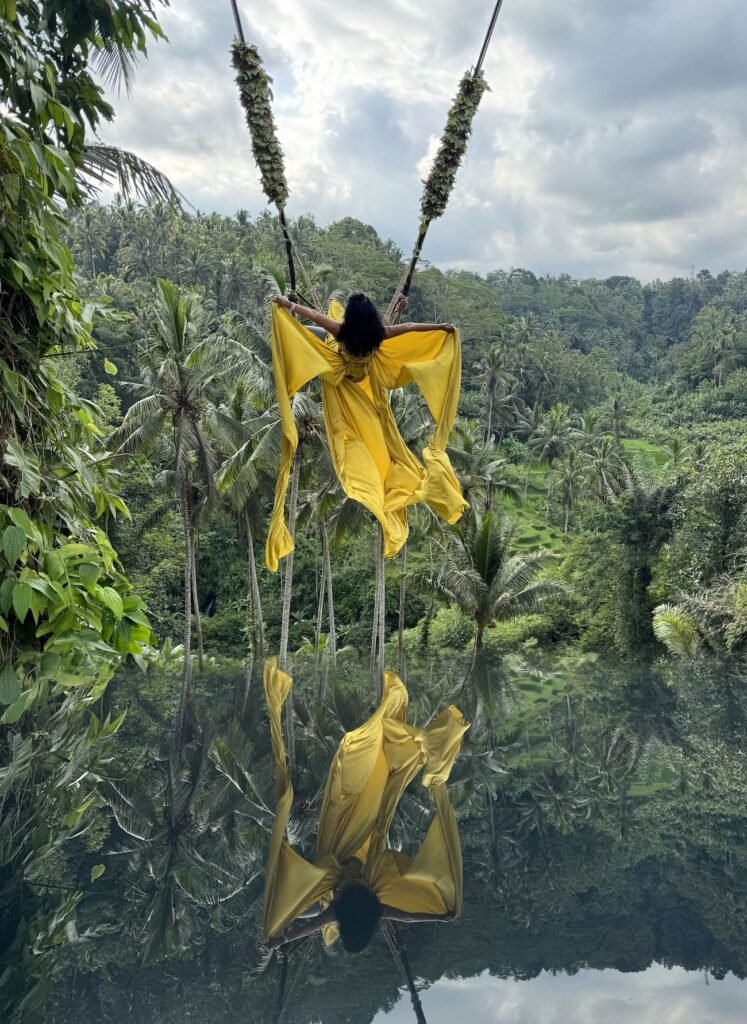
Before lunch, we sampled an assortment of teas and coffees, and I got my first luwak coffee here, coffee beans eaten, digested, and excreted by civets. Yes that’s a thing, and a very popular one. After lunch with a view of the stunning Batur mountain (active volcano + caldera), we did the most touristy thing of the trip — the Bali swing (not proud of that, I admit it).
Multi-religious Mosaic
Indonesia has layers of history. Hindu and Buddhist kingdoms like Majapahit and Srivijaya flourished until Islam arrived via trade in the 13th century, becoming the dominant religion. Bali, however, stayed Hindu with nearly all of its 5 million residents practicing Hinduism. The country endured over three centuries of Dutch occupation until gaining Independence in 1945. Today, Indonesia is mostly secular, recognizing multiple religions.
I was struck by the Balinese devotion, they know Hindu mythological characters I’d almost forgotten, and you see statues of even Ravana, Jatayuvu, and other characters which I found to be unusual. Every Ubud village has at least three temples (one each for Brahma, Vishnu, and Shiva), and traditional homes have private temples (highest temples per-capita I counted in my head). Everyday puja complete with offerings is a must almost for every family, business, and establishment.
I prefer to travel with Exoticca for their small groups and I enjoy hanging out with like-minded people especially when I travel solo. I am so glad I picked this trip that had Java in the itinerary. Yogyakarta (Jogja), recognized by UNESCO as a City of Philosophy, is Java’s cultural hub, known for arts and heritage. Java may have fewer temples than Bali, but its Hindu and Buddhist sites are architectural and historical gems. We spent three days in Jogja, soaking it all in.
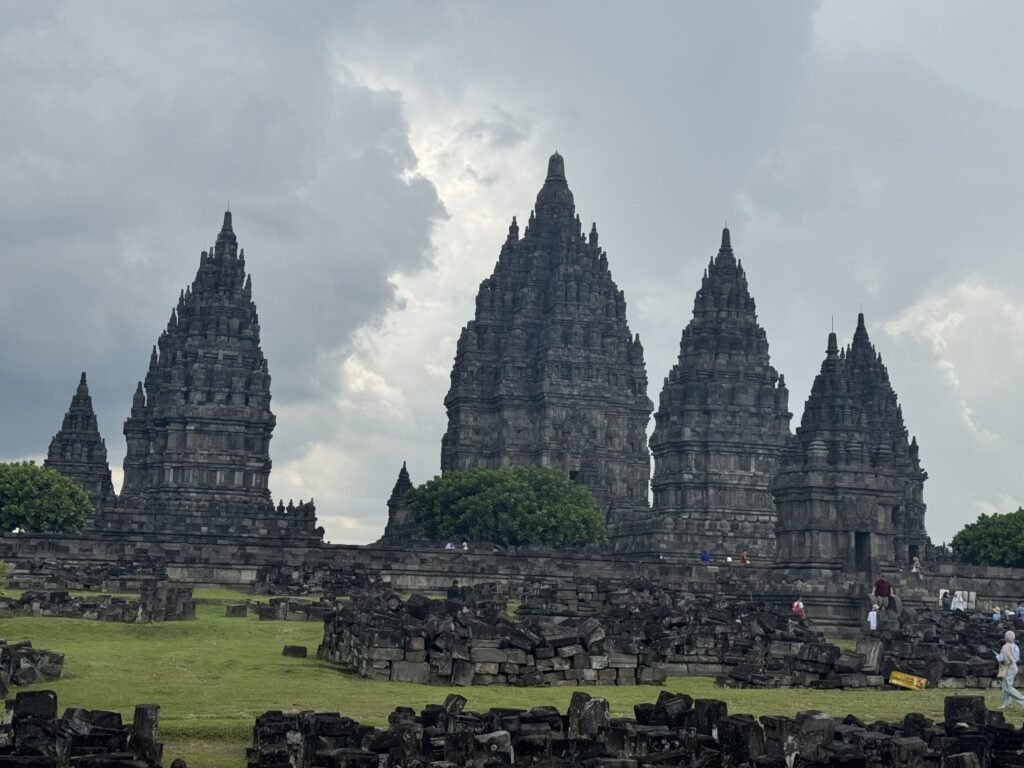
As soon as we landed in Jogja, our guide whisked us off to Prambanan, Indonesia’s largest temple complex, with towering shrines dedicated to the Trimurthis — Brahma, Vishnu, and Shiva. Built with dark lava rock, it matches Angkor Wat in grandeur. We ended the day with a dance show — Ramayan, enjoyed the Javanese ballet-style dance form and Hanuman’s pyrotechnics.
Pancasila (derived from the Buddhist term Pancha Sheela), is Indonesia’s state ideology, focusing on five principles: belief in one God, civilized humanity, unity in diversity, democracy, and social justice. For a nation spanning 17,000 islands, with 700+ languages and diverse religions, these principles are key in bringing them together as a nation.
That was exactly what we experienced at the Sultan’s Palace the next day. We were impressed by Hindu/Buddhist exhibits, kids practicing dance, and signs of cultural and religious tolerance. We were thrilled to learn the liberal Monarch is grooming his elder daughter as his heir. The Palace is very humble but we fell in love for its simplicity.
The culture museum was good and we got to meet the puppet maker with puppets of every Hindu mythological character you can think of, somehow they can tell the characters from their crowns/headwear. With time left before our slot for Borobudur, we stumbled upon another Buddhist temple, where serene Buddhas enveloped in green moss made it look ancient and authentic. I love Buddha art and collect pieces when I can afford.
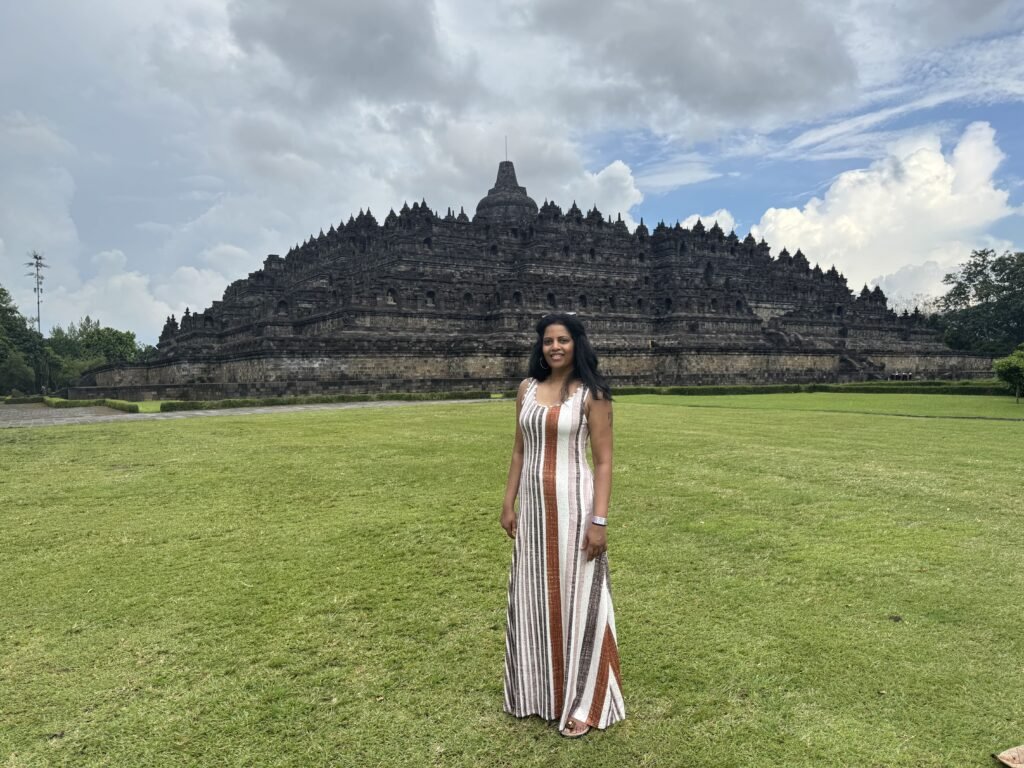
Borobudur is one of the world’s greatest Buddhist monuments and clearly a highlight of my trip. This pyramid-like structure, massive and intricate, with 72 stupas housing Buddhas, takes your breath away. Hard to believe it lay hidden under volcanic ash until UNESCO restored it in the 1970s, some blocks still waiting for reassembly. Two thoughts hit me: why isn’t it a Wonder of the World, and how stunning the aerial view must be!
The Ring of Fire
Situated on the Ring of Fire, Indonesia takes the top position for the number of volcanoes, with 130 of its 400 volcanoes still active. Mount Merapi near Yogyakarta is the most active one with casualties in the hundreds when it erupted in 2010. Mount Tambora, another Indonesian volcano, had the largest recorded eruption in History killing thousands of people, and caused global cooling, effects of which were felt as far as North America. If that’s not enough, Indonesians also experience earthquakes and tsunamis, the largest of which measuring at 9.2 in 2004 killed over two hundred thousand people.
On our last day in Yogyakarta (although we spent a good part of the day after at the airport dealing with flight delays), we visited the Tamansari water castle, with swimming pools which were once meant for the royal family. The Sultan and main wife had a private pool; another was shared by concubines and princesses – no men allowed, not even princes. The vibrant Malioboro street was good for food and shopping that afternoon.
I was blown away by our guide’s knowledge of religion (he could chant the Gayathri mantra and some Vedic verses), but I kept correcting his Sanskrit pronunciation. It took me a few days to realize his way isn’t necessarily wrong, it’s local. What bothered me however was their adoption of the Hindu caste system, dividing people by birth and occupation.
Bali is Indonesia and Ubud is Bali to most tourists. We stayed in Ubud, Bali’s spiritual and cultural center, the next three nights. Our day started with a dance performance at a temple showing the triumph of Barong (good) over Rangda (evil), complete with gamelan, a traditional music ensemble. I preferred the slow, graceful Javanese dance form over the dramatic, intense Balinese one.
We drove to Denpasar later that day to visit the Kumbasari market, Puputan Badung monument (dedicated to people who fought the Dutch), and Agung Jagatnatha temple, a Hindu sanctuary. Bajra Sandhi, a monument dedicated to the struggle of the Balinese people ended up being the highlight of my day. The building was impressive but the park around with its green ponds looked beautiful from the observation deck.
Bali’s public transport is scarce, so most people, locals and tourists, arrange their own rides. You can rent scooters or bikes for short hops, but traffic is chaotic. Your dollar goes a long way, so hiring a driver makes sense. On this trip, it was just me and a friend, and we had flexibility to tweak the itinerary and we totally took advantage of that, especially the next day.
Gateway to Photo-Op
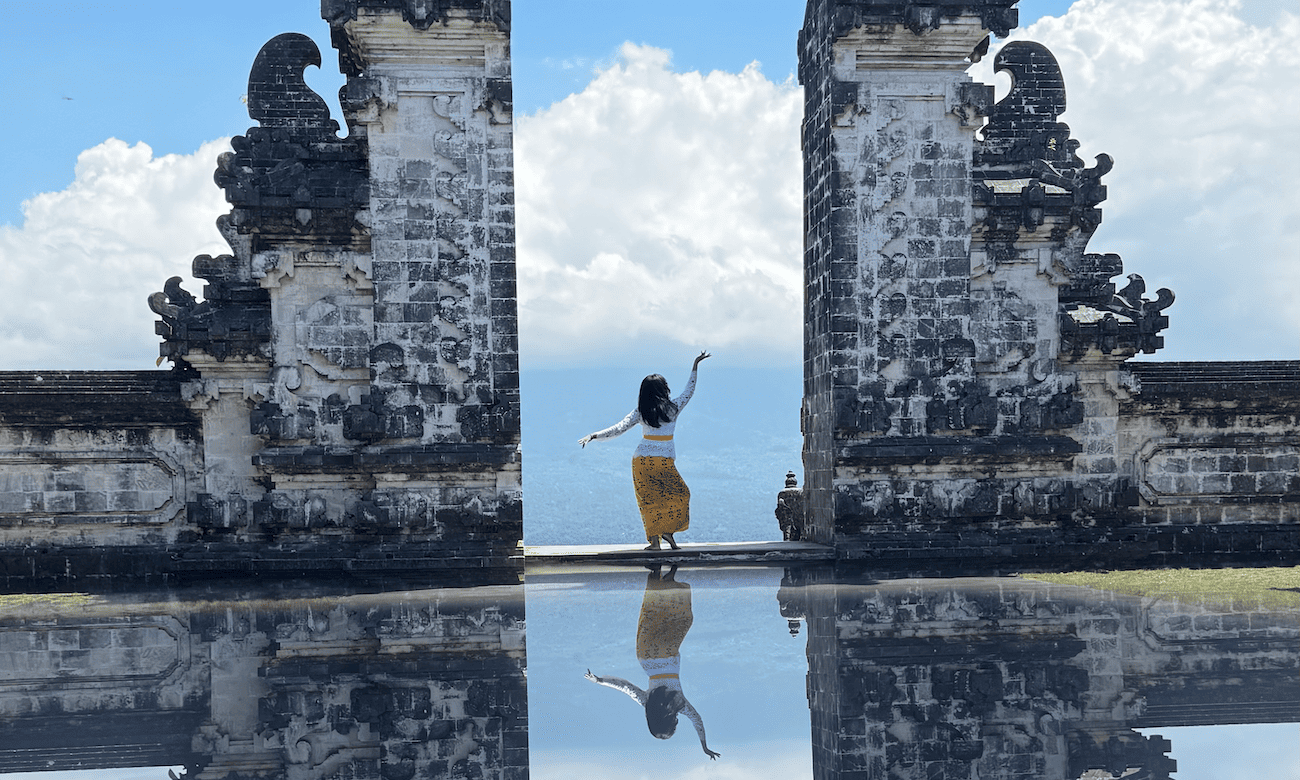
Candi Bentar, the classic split gateway, is a typical entrance to most temples, palaces, and even homes. These ornate gates are beautiful and I took pictures with every one of them. It is called indulgence however when you drive 2.5 hours each way, wait for another 1.5 hours for your turn, just for a photo-op. We indulged in this activity as it is the most instagrammed spot and aptly named as Gates of Heaven. I even rented a dress.
Men and women both wear sarongs, but ladies wear a lace blouse generally in white and men wear a headdress, especially for temple visits. At most temples, they gave us sarongs to wear over our own outfits, but some required the full traditional outfit to be able to enter the main temple. Walking was tricky, climbing steps was a challenge in those tight wraps, and I looked like a samosa.
Besakih temple, considered the holiest of temples for Balinese Hindus was festive but extremely busy that day. Devotees with offerings — flowers, fruits, and sweets in baskets, were in the thousands but entry was limited to Balinese only. We tried sneaking in, claiming we were Hindus. But a full traditional outfit was required and we bailed. A kind family shared their “prasad” with us.
The green rice terraces were stunning but they have to do something with all that rice they are growing. Indonesian cuisine centers on rice, options being plain rice, nasi goren, nasi padang, and guess what, rice noodles. That was too much rice even for the Indian in me and eating it three times a day was a tad too much. We were craving bread or other carbs in general and that KFC bun tasted so good when we were able to get one. I incorporated their delicious fruits into every meal.
Protein-wise, I should’ve loved all the chicken, but it was everywhere. Curries would’ve hit the spot but they deep fried to eat with rice. We were seeing a variety of veggies including bitter gourd being sold but the places we went to served only carrots, cucumbers, and bok choy, that too in salt water. For an island, seafood options were surprisingly slim, apparently due to logistics (ice is pricey).
Predator Island
We kicked off super early the next day as I planned an insane komodo island day trip, and boy, am I proud of it. The 7am flight took us to Labuan Bajo, Flores, closest airport to Kamodo, but the views of the hundreds of islands we passed by, green, mountains, against the ocean waters in at least 20 shades of blue, were amazing. That should be an activity by itself.
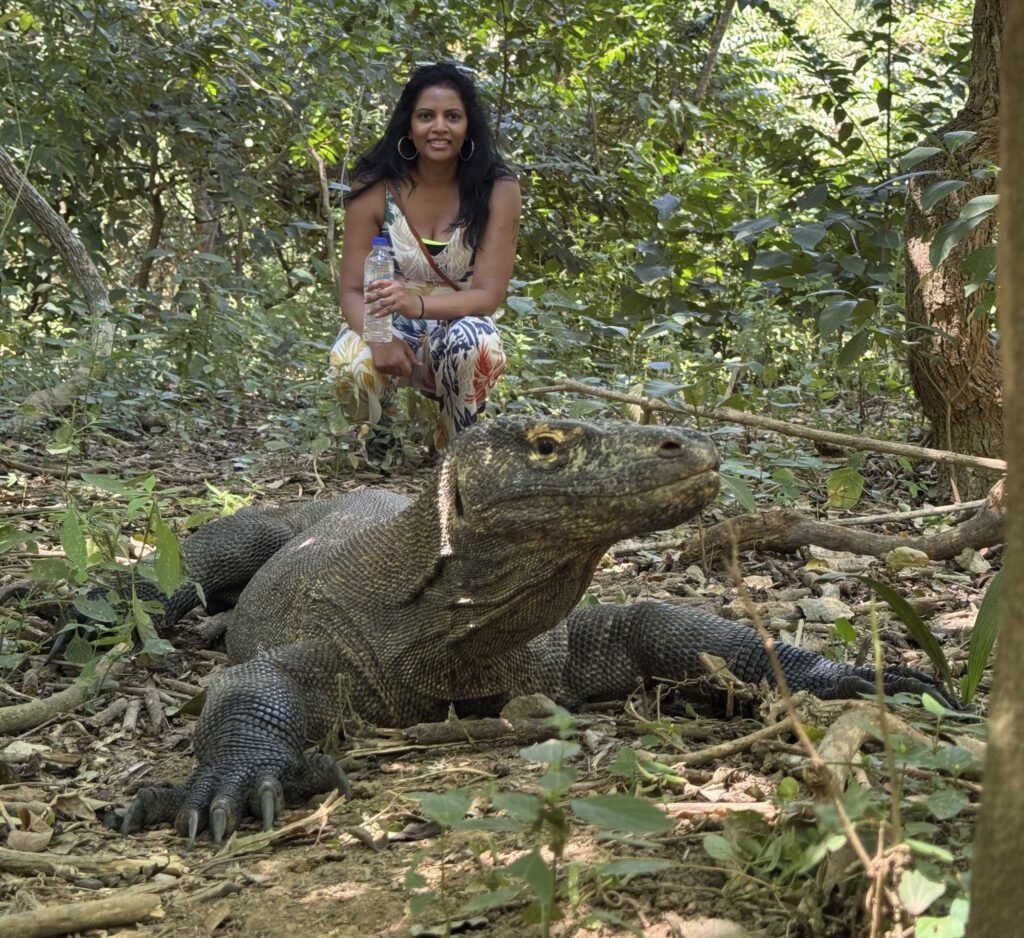
A two-hour boat ride got us to the island I dreamed of (my son is very jealous, I’m sure), and we were immediately assigned a ranger with a pronged stick (that’s it?) to guide us. My jaw dropped when he said he grew up in a village close by, alongside these 9-ft, 300-pound predators. I wondered if they knew him on a first-name basis at this point.
I wasn’t entirely wrong, he was able to find us a giant male adult Kamodo soon enough. They are called dragons for a reason, they look like they are from the dino category of prehistoric animals. I am of the mindset that most animals are cute, but I would refrain from using that adjective here. With their thick skin and forked tongues, they helped me get rid of that word from my head. Needless to say, I didn’t bring one back home.
Kamodos are apex predators which means they are at the top of the food chain with no natural enemies. If their size isn’t enough, one should fear their venomous bite that they use to kill, before devouring their prey. They are good candidates for triathlons — they can run (faster than humans), swim (I can barely float), and even climb trees (I think I am better at this, but didn’t want to find out). At this point, I am at the mercy of the pronged stick and tipped our ranger heavily for finding multiple kamodos but more for bringing me back safe.
Threat, however, comes in other forms here, in the form of secondhand smoking. Indonesia ranks high in male smoking rates, unfortunately, with over 70% of adult men smoking. We noticed some women puffing away, that too in public places. To my chagrin, guides and drivers were taking frequent smoke breaks, and I was mad (and curious), and tried one myself. I heard affordability and peer pressure are to blame for the epidemic here.
Lunch at Pink Beach reminded us of the “Kaho na pyaar hain” movie, where our Bollywood idol, Hrithik Roshan gets stranded on this island with his love interest. We missed having the handsome hulk with us but danced to the songs anyway. The sand’s pink tint comes from red corals washing ashore, and our boxed lunches tasted extra good on this secluded beach.
Kuch Kuch Hota Hai

That reminds me, Indonesians love Bollywood, although most people only know two movies — “Kuch Kuch Hota Hai” and “Kabhi Khushi Kabhi Gum,” and only two actors — Shah Rukh Khan and Kajol. A few with further interest in the matter mentioned Amitabh Bachchan, Deepika Padukone, and the “Mahabharata” TV series. Some guides said I looked like Kajol, but I thought that was more due to their familiarity than resemblance. I blushed and thanked them anyway.
We had two more stops before we headed back to the airport. Taka Makassar, a sandbar in the middle of the ocean, a net new experience on this trip. It was so beautiful and I made futile attempts to capture it with my camera. Next stop, Kelor Island had this lazy island vibe which helped unwind after the day’s excitement.
Balinese Hinduism preaches Tri Hita Karana — harmony with God, harmony among people, and harmony with nature. This philosophy is woven into their daily lives – evident in their daily religious rituals and offerings to Gods, kindness and patience they show towards each other, and environmental conservation efforts. It’s likely a key part of their resilience in the face of natural disasters.
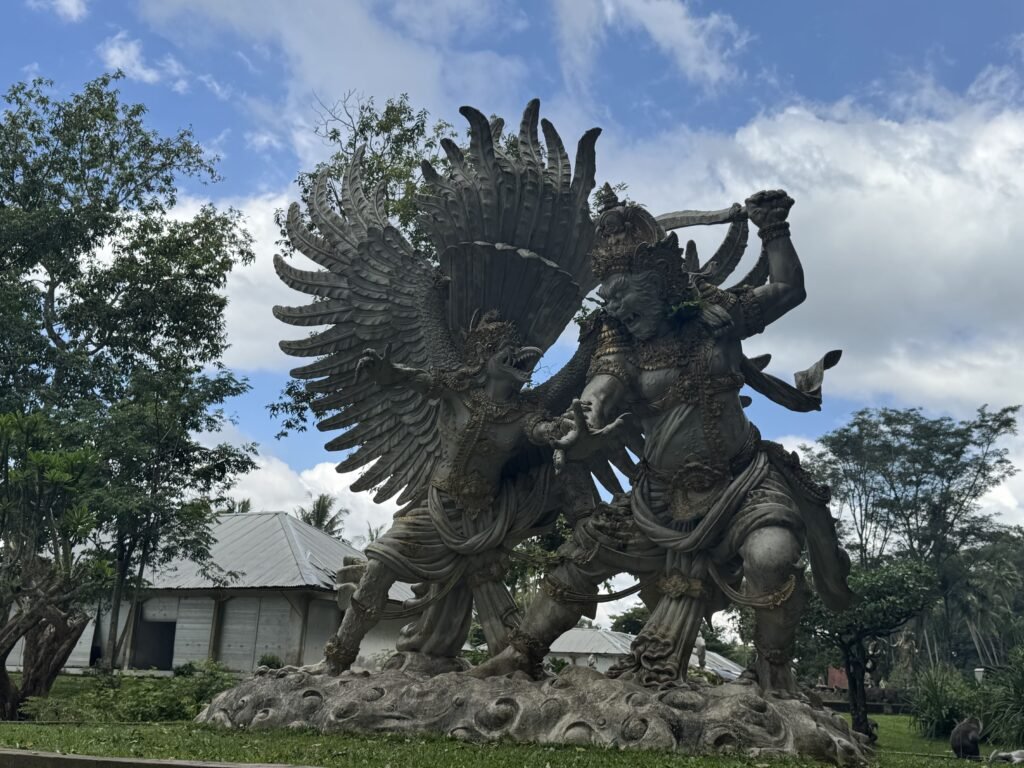
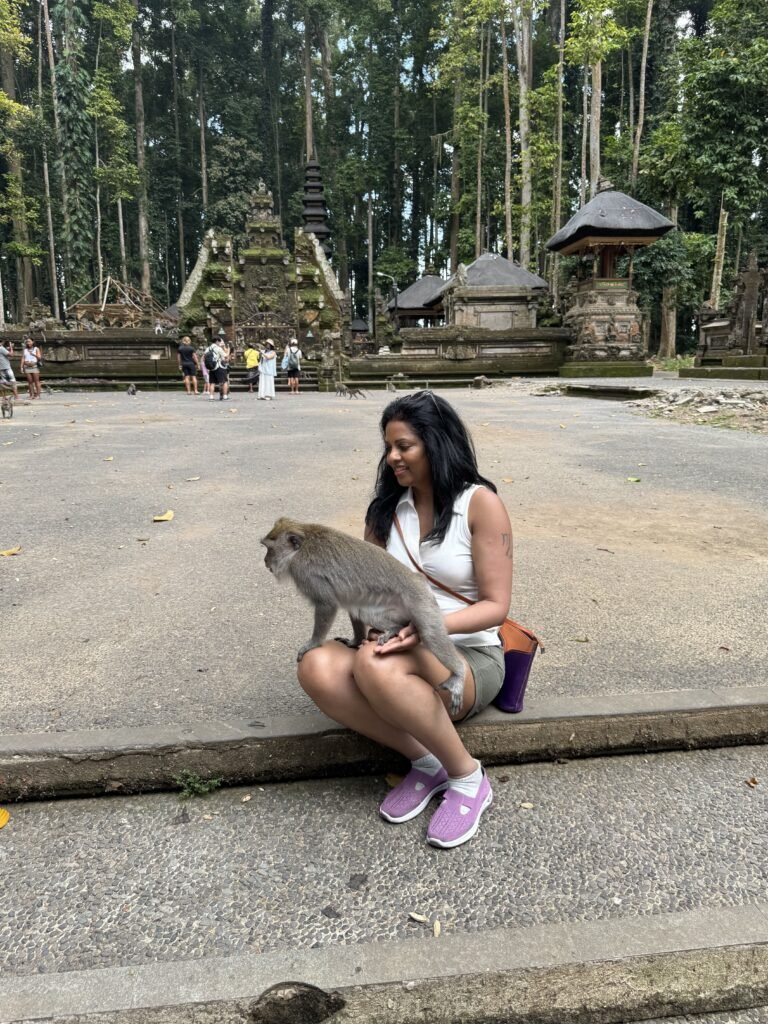
We crammed a lot into the next day, starting with the monkey forest. Ancient temples covered in moss, free-roaming monkeys (friendlier with peanuts), and dense foliage were the highlights. They had statues of Ram and Lakshman, but even bigger were the statues of Kumbhakarna, Hanuman, and Ravana fighting Jatayu.
Many Hindu traditions are kept alive here and observed more devoutly than in my home country. Our vehicle was suddenly decked out in garlands; our guides said it’s a day to honor sharp objects, weapons, and instruments. That caught my attention – Ayudha/Shastra Puja is a thing here too. Again, super impressed that this small island nation keeps our traditions alive.
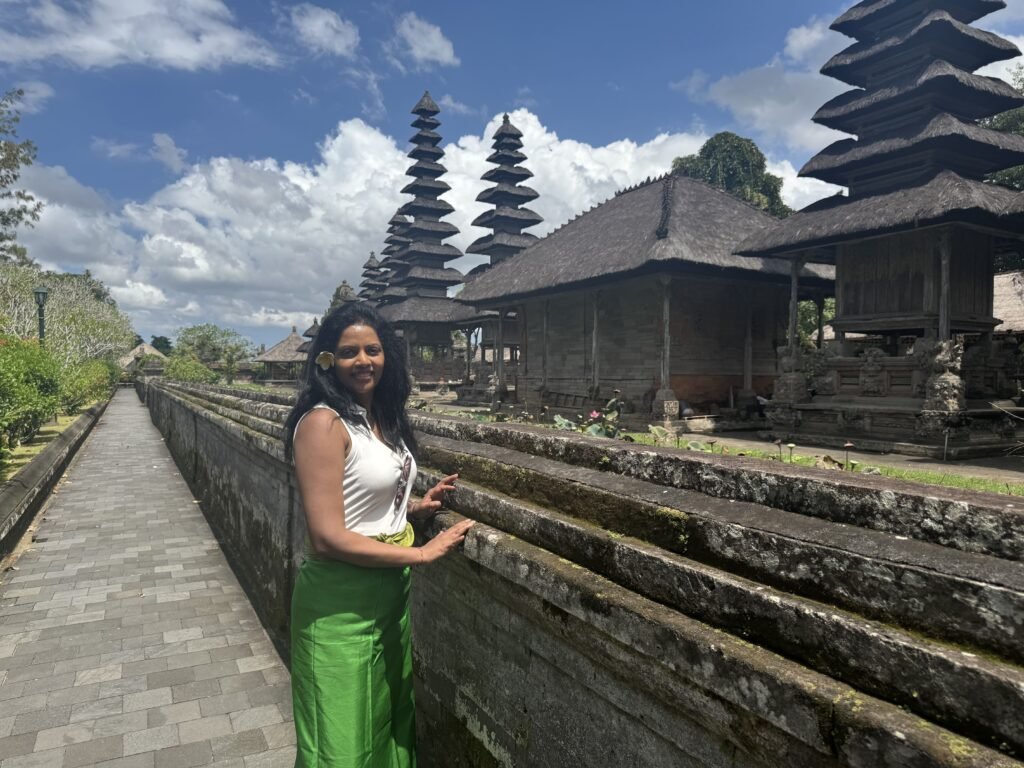
Taman Ayun “beautiful garden” lives up to its name. Meru pagodas, split gates, moats, gardens, and fountains add to the charm and the video they were showing featured some Indian VIPs performing pujas at this Balinese Hindu shrine. Did I mention the lotus pond that I fell in love with?
There were many in the take-home category in Indonesia. I tried to stay away from artwork, as its not easy to carry and I am out of wall space at home, but I ended up grabbing batik sarongs, silver earrings, teas, coffees (multiple luwaks), spices (their cardamoms smell different), purses, and spa products. The Japun flower perfumes were too good to resist. For now, my son has to be happy with the komodo tee I got for him.
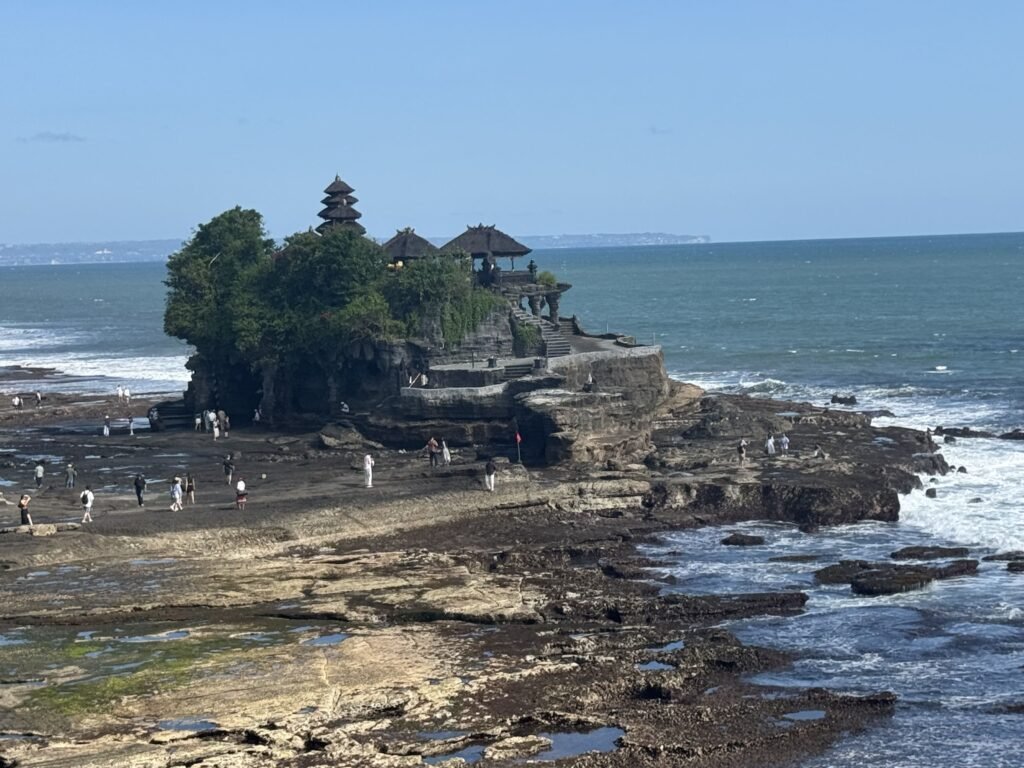
Tanah Lot is one of the most interesting temples I have ever visited. This sea temple operates at the main temple located on a rock setting when the tide is low and it is possible to reach by foot. Luckily it was when we went, and we were excited to get bija (wet rice placed on forehead) blessings from the priests. Judging by the waterline, it’s pretty clear you can get stuck there at high tide. This place is so picturesque, I didn’t have to be a pro to take good pictures.
We tried some interesting local foods. Black rice pudding – black rice cooked in coconut milk and served with palm sugar, was interesting and tasted good when eaten right. Gudeg we got to taste in Yogyakarta, young jack fruit slow-cooked in, surprise, coconut milk and served with palm sugar, was probably the best local food we tried.
A beverage with short rice noodles served in coconut milk and palm sugar (I know) called “Dawet” is seen everywhere on the streets of Yogyakarta and it was interesting.
Klepons, sweet rice balls coated with grated coconut, explode in your mouth, releasing, surprise, palm sugar syrup. When I was complaining about the repeats, our guide suggested babi guling, roast sucking pig, which we didn’t want to indulge in, but the thing he was gushing about and which I couldn’t try was — makan pinang (Indian paan).
Exoticca arranged a free massage at our hotel the next morning and we enjoyed the late start to the day. We experienced traffic congestion, as we were warned, getting to and back from Uluwatu temple, but I want to say it was worth it. This Balinese Hindu temple, dedicated to Rudra, sits pretty on breathtaking cliffs that reminded me of the Cliffs of Moher, Ireland.
The monkeys here, as we were warned, were very naughty. They snatch away glasses, phones, water bottles, jewelry, and whatever they can get hold of and only return them when temple security throws food as a bribe. The Ramayana show at the temple set against the sunset was a different experience from the Java one but seems to be popular with the tourists.
I loved Bali’s extremes — crazy traffic and chaos in the streets, but ancient temples give a spiritual vibe, and gorgeous rice terraces are super refreshing. My trip was equal parts sightseeing and chilling. Got to hit Bali’s attractions, natural and man-made but got to slow down to island pace, relax, and soak up the hospitality.
After saying goodbyes to our Exoticca guide and driver the day before, we had a full free day to spend in Bali. We engaged another driver to show us around and our first stop was Sukawati temple (one cannot spend a day in Bali without hitting a temple), Another sarong, more gates, more blessings, more offerings, the whole works.
Entry to Glass Bridge was expensive but offered an exciting experience. By exciting I meant my legs were shaking the entire time I was walking over the bridge and looking at the water and jungle several meters below. A trip to the Icon Bali mall made us feel like locals for the first time, but most stores were American chains and we lost interest. We hung out by the adjoining beach instead and listened to the stories of the island from senior ladies who insisted on pampering me with more services.
I have to be humble and admit there’s nothing avant-garde about my trip — hit all the landmarks, enjoyed services provided, and even indulged in insta-worthy photo sessions (Bali swing, Gates of Heaven), like a good tourist. But I got more out of this trip than any other. It is probably even premature of me to say this without experiencing the other great things Indonesian, but I will take the risk of sounding presumptive and declare Indonesia the most beautiful country in the world — a traveler’s Mecca. Mossy temples beat the carefully manicured gardens of the West in authenticity.
Padma Nadella is an IT professional who lives in Eagan, Minnesota, with her husband and 19-year-old son. She manages a Facebook group for Minnesotans to collaborate on events and activities related to health and fitness. The group now has over two thousand members. Jill of all trades, she enjoys playing volleyball, traveling the world, and entertaining, mostly, but dabbles in everything else.