




The Queen of Histopathology: In Memory of Dr. Anita Maria Borges, India’s Most Respected Cancer Pathologists

- She isn't truly gone. She remains alive in the glass slides I study, and in those my daughter examines. She lives on in our shared academic community. Perhaps Anita’s memory is a silent call to action— to keep that torch burning for the next generation.

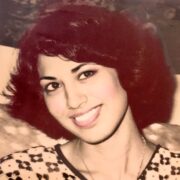
Today, while reading Margaret Atwood’s horoscope—she was born on November 18, 1939—in her latest memoir, “A Book of Lives,” I thought of another great doyenne, Professor of Cancer Pathology Dr. Anita Borges, born on November 19. I typed her name into my computer and was shocked to discover that she had passed away in September 2025. I was stunned. Memories of her loss sit heavily in my heart, stirring a vortex of emotions too difficult to sift through.
Dr. Borges is no more. The world has changed. Her voice is gone. The laughter that belonged only to her is gone. And yet, strangely, she is everywhere.
I feel the abyss of loss more deeply because I am so far away from Mumbai, from the familiar routine of looking at slides behind a microscope—analyzing, consulting, diagnosing, one case at a time. Today I feel the loss of the particular version of myself that existed in her presence: the parts of our shared history that only Anita knew, the fleeting conversations, expressions, gestures, and moments of recognition that belonged to us alone.
No one can completely enter that shared world. No one else can remember us exactly as she did. My parents, the two kindred souls who were always all ears to my experiences, are also gone. As I grieve, I offer fragrant jasmine to the memory of the Honorable Justice Madhukar Dudhat, who sent me to Tata Memorial Cancer Center in 1990. I have been thinking about that year at Tata Hospital a great deal since Anita’s death.
Dr. Borges died in Gorakhpur on September 18, 2025, while doing what she loved—presenting a lecture at a medical conference. She suffered a heart attack. She was a true Karma Yogi. She seemed larger than ordinary measures of time, having recognized her purpose early and pursued it with devotion and confidence: teaching, questioning, laughing, looking through a microscope, and seeing what others could not.
I first met her at Tata Memorial Hospital in 1990, when I was an observer in the Pathology Department. She poked her head into the fellows’ room and called out my name. I saw her bright eyes, pleasant countenance, beige handloom saree, neatly coiffed hair gathered in a bun, and brisk stance—as though trying to beat the clock at its own game. As the other fellows looked up at her with admiration, I knew I had encountered a woman who would profoundly influence my professional life.
Anita was the eldest daughter of Dr. Ernest Borges, the pioneering oncologist and cancer surgeon at Tata Memorial. She had trained at B.Y.L. Nair Hospital and Topiwala National Medical College in Mumbai, and later at the Royal Marsden Hospital in London and Memorial Sloan Kettering Cancer Center in New York. She became Professor and Head of Surgical Pathology at Tata Memorial, later established the Centre for Oncopathology at S. L. Raheja Hospital, served as Dean of the Indian College of Pathologists and Vice President for Asia of the International Academy of Pathology, and became one of India’s most respected cancer pathologists. She was affectionately known as the Queen of Histopathology.
To have an audience with her was to be in the presence of royalty. Tata was filled with renowned pathologists—Dr. Krishnamurthy, Dr. Nirmala Jambhekar, Dr. Soman, Dr. Sampat, and others. They shared cases freely, and many would send their difficult slides to Anita for her opinion. Her little side office was always overflowing with slides—on the desk, the floor, an empty chair, the windowsill. She would look at me with characteristic humor and exasperation and say, “I know you guys are trying to just kill me!” Then she would turn to the microscope. She would look at a slide once. And call it.
It seemed as though she possessed a divine intelligence in her eyes and brain. Yet what I remember most is that her brilliance never diminished her humanity. She was intensely curious about the patient, questioning me about the clinical history, gross pathology, and radiology. What had I observed? What did I think? And, most importantly, why?
She taught me that pathology was never simply about recognizing patterns. It was about understanding the patient behind the slide.
When an opening for a junior pathologist arose, I applied. Another, more established pathologist was selected. I was told I could continue as an observer because, judging from the way I dressed and presented myself, I did not appear to need the money. I was taken aback. Anita explained the committee’s reasoning with her characteristic candor: “A known devil is better than an unknown devil.”
But I kept going. I continued traveling from Navi Mumbai, changing buses and trains to reach Tata Memorial. Then fate intervened. One of the pathologists went on extended leave, and I was appointed as a locum pathologist. Those became some of the best days of my life: complex cases, frozen sections, fine-needle aspirations, intraoperative consultations, presentations, and endless intellectual discussions about making the most informed diagnosis for the patient waiting on the other side of it.
Anita took pride in the epithet of being “a pathologist who thought like a surgeon.” Dr. Borges understood that pathology was not merely about naming what was on a slide; it was about making a decision that could change treatment, and therefore change a life.
In 1991, when I went to Memorial Sloan Kettering as an observer and later as a fellow, Anita wrote beautiful letters on my behalf to Dr. Stephen Sternberg and Dr. Myron Melamed. Her letters opened doors. Dr. Andrew Huvos practically abducted me as I stepped off the elevator on the fifth floor. I was given cases, encouraged to attend conferences and presentations, and welcomed into a remarkable community of pathologists. Some thought I was like Anita. Those were very big shoes to fill. Her smiling black-and-white photograph was on the hallowed walls, and I tried to live up to the confidence she had placed in me.
Years later, when I returned on an NIH fellowship and discovered that laboratory research—extracting DNA, running gels, cloning genes—was perhaps not where I belonged, my mentors encouraged me toward diagnostic pathology. I took my boards almost on a whim. I passed.
Anita’s name had traveled ahead of me. Her recommendation helped open another door when Dr. Myron Melamed invited me to lunch at the Yacht Club in Westchester. Her approval was everything. She opened doors without making a spectacle of doing so. She helped people without making them feel indebted.
I remember seeing her again at the Indian Cancer Congress. I was presenting a paper on natural killer cell lymphoma when she appeared, breezy, warm, completely herself, larger than life. She smiled and asked, “Did you bring Carlos with you?”—her co-fellow at MSKCC. She had traveled back in time, to a life she had left behind. I had a message from him.
Anita took pride in the epithet of being “a pathologist who thought like a surgeon.” I relied on that phrase when I set up my diagnostic lab in Alabama. Dr. Borges understood that pathology was not merely about naming what was on a slide; it was about making a decision that could change treatment, and therefore change a life.
Her legacy extended far beyond her institutions and titles. She lectured across India, mentored generations of pathologists, and worked tirelessly to make high-quality pathology education accessible. During the COVID-19 pandemic, she and Dr. Sumeet Gujral established a free online teaching program, bringing expert instruction and slide seminars. She did not hoard knowledge. She taught people not only how to see, but how to think. Excellent diagnosis was based on an excellent tissue sample, fixed, processed, and stained perfectly. Every single time.
Being a very private person, she still gave me a piece of wisdom inherited from her mother: “when bad times come, remember that good times are just around the corner—and when life is good, remember that dark shadows may be lurking. The Borges family had endured the profound untimely loss of Dr. E. Borges and yet they all persevered, carrying his legacy forward. What a blessing.
I wish I had remembered that wisdom when I was in Mumbai for a week in early September 2025. I wish I had reached out to Anita. My daughter would have loved meeting her. Anita would surely have given her a “pearl of wisdom,” from one pathologist to another. Perhaps we could have had one more conversation. One more laugh at how she stopped her taxi in the middle of a downpour to drop me at my bus stop. But life rarely tells us which moments will become our last opportunities. That is the cruelty of hindsight.
As I write this, Gerard Manley Hopkins’s Spring and Fall comes to mind. Margaret, grieving over the falling leaves, does not yet understand the deeper source of her sorrow. Hopkins eventually tells us that “Sorrow’s springs are the same”: beneath the changing seasons lies the sorrow of mortality itself.
Perhaps that is what I am mourning. I am mourning Anita, of course. But I am also mourning the world in which she was alive with me. The world in which I could still imagine seeing her again, hearing her voice, watching her turn to the microscope, hearing her ask, “Why?”
Yet, she isn’t truly gone. She remains alive in the glass slides I study, and in those my daughter examines. She lives on in our shared academic community. Perhaps Anita’s memory is a silent call to action—a reminder to do my part in preserving a legacy of knowledge and empathy, and to keep that torch burning for the next generation.
With roots in Georgia and the Bay Area, and her heart still tethered to a childhood mango tree in Mumbai, India, Monita Soni approaches writing as a contemplative practice. A path to honor humanity. She has published hundreds of movie reviews, book critiques, poems, and essays, and contributed to combined literary works. Her two books are “My Light Reflections” and “Flow Through My Heart.” You can hear her commentaries on Sundial Writers Corner, WLRH 89.3 FM.