




Partition Was the Wound. Nationalism Became the Tool: The Cost of Memory and the Politics of Keeping It Alive

- Both of my grandfathers were shaped by persecution. But they carried it differently. One carried loss. The other carried gratitude, not blind nationalism.
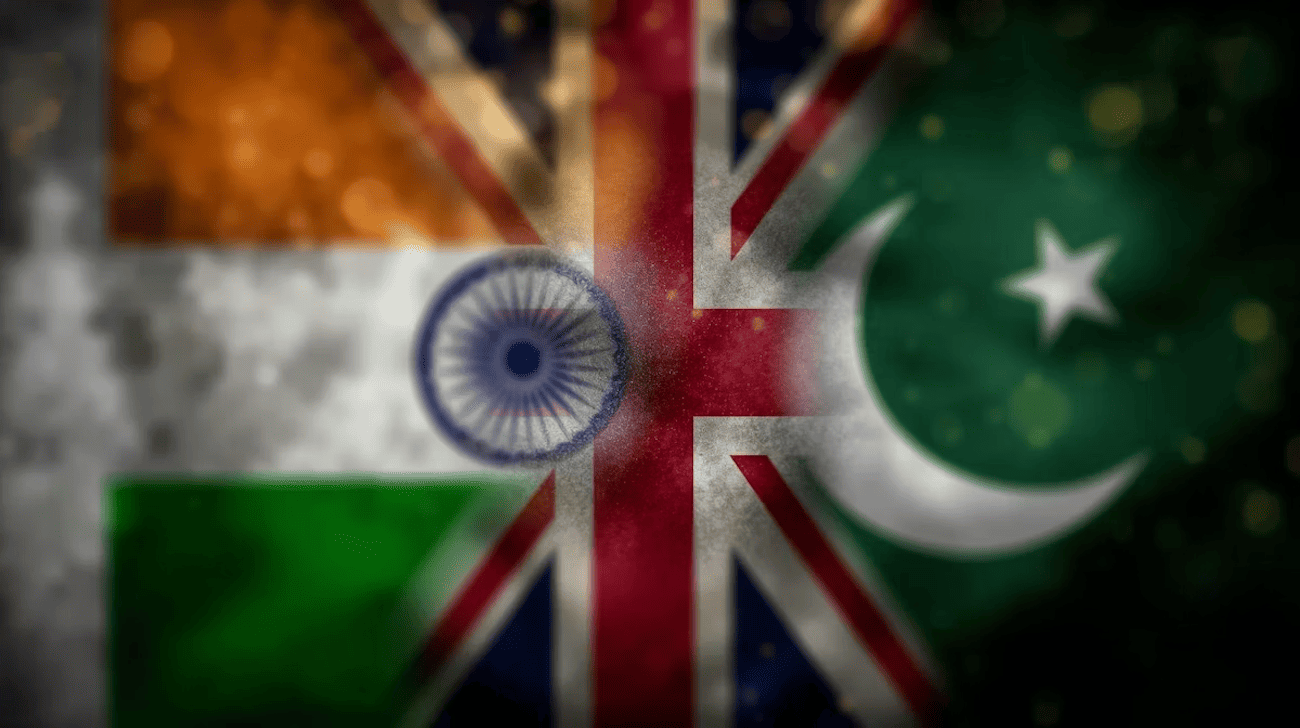

We Were Taught to Remember, Not to Question
In the late 1990s, somewhere between high school and my freshman year of college, I wrote an article for the youth section of The Nation, often referred to as Young Nation.
It was about India and Pakistan.
At the time, I thought I was writing about geopolitics.
I wasn’t.
I was writing about inheritance.
Partition Was Not History. It Was Evidence.
In my family, the Partition of India was not taught as a chapter. It was lived as a consequence.
My paternal grandfather did not describe it in political terms. He described what remained after it.
While fleeing from Gurdaspur to Lahore, he lost nearly his entire family, more than fifty people across generations.
He survived. Barely.
He carried his younger brother into the river while escaping.
Somewhere between blood loss and survival, he lost him.
He didn’t realize it until he reached the other side.
That moment never left him.
And yet, within that same history, there was something else.
A Sikh man, at personal risk, hid my great-grandmother fleeing the mob of Sikh men, protected her, and got her safely to Lahore.
A few men tried to erase my family.
Another ensured it continued.
That contradiction is where my understanding of history began.
Two Grandfathers. Two Versions of Pakistan.
That history did not produce a single worldview.
My paternal grandfather never forgave what Partition cost him.
Every August 14th was not a celebration, it was a reminder.
My maternal grandfather chose a different relationship with the same history.
As a student, he earned the highest marks in his high school examinations across Punjab. The British government offered him a fully funded opportunity to study in England.
He refused.
Not because he lacked ambition, but because he refused subordination.
He would not be educated into servitude.
He would not be their subject.
He built his life on his own terms.
He became one of Pakistan’s earliest Chartered Management Accountants, earned multiple degrees across disciplines, including Persian and economics, and went on to serve as a respected bureaucrat. He wrote extensively, on history, on politics, on Babri Masjid, in poetry and prose. A celebrated author and poet.
And, for a time, he wrote for me.
Every year, I would stand on a stage and deliver Independence Day speeches about Pakistan, its promise, its identity, its future.
Words he gave me.
Conviction he believed in.
But when the speeches ended, something didn’t follow.
We performed patriotism in public.
We did not examine it in private.
That gap stayed with me.
Because both of my grandfathers were shaped by persecution.
But they carried it differently.
One carried loss.
The other carried gratitude, not blind nationalism, but a belief that survival demanded something more than grief.
That difference became the starting point for my questions.
As a teenager, I wrote that India and Pakistan had far more in common than either population was encouraged to acknowledge. That assessment has not changed. What has changed is the clarity around why that recognition is resisted.
From Inheritance to Observation
By the time I wrote for Young Nation, those questions had already begun to take shape.
What I was being taught to say did not fully align with what I was beginning to see.
The 1990s in Pakistan followed a familiar political rhythm:
- Nawaz Sharif
- Benazir Bhutto
Power alternated. Structural issues did not.
At the same time:
- sectarian divisions deepened
- governance stagnated
- economic progress lagged behind regional counterparts
And with each electoral cycle, another pattern emerged:
Heightened tensions.
Escalation with India.
Moments framed as patriotism.
Including the Kargil War.
The Pattern
It was not difficult to see.
Conflict intensified when it was politically useful.
Nationalism surged when it was electorally convenient.
The public, on both sides, was expected to respond predictably:
with loyalty, with outrage, and without scrutiny.
But the more closely I watched, the more the underlying question sharpened:
Who benefits from sustained hostility?


Not rhetorically.
Structurally.
Because while populations absorbed the cost, economic, social, generational, power structures operated with far more continuity than the public narrative suggested.
This is not a denial of conflict.
It is an observation about its management.
What I Understood Then, and Understand Now
As a teenager, I wrote that India and Pakistan had far more in common than either population was encouraged to acknowledge.
That assessment has not changed.
What has changed is the clarity around why that recognition is resisted.
Alignment between populations introduces unpredictability.
It reduces political leverage.
It complicates narratives that depend on opposition.
Division, by contrast, is stable.
Manageable.
Repeatable.
The Reality We Avoid
We tell people to remember history.
But we rarely teach them to interrogate how it is used.
My family carries the memory of Partition in its most brutal form.
And within that same memory exists evidence that humanity did not disappear, it coexisted with violence.
That complexity matters.
Because once history is reduced to a single narrative, it becomes easier to mobilize, and easier to control.
Final Position
We could have been powerful together.
Not as an abstraction, but through measurable, structural outcomes:
economic cooperation, regional stability, shared advancement.
But that was never the incentive structure.
Because power was not built on cooperation.
It was maintained through control.
And control is far easier to sustain when people are taught to remember, but not to question.
Top image courtesy of Asia New Zealand Foundation.
Anny Reha is an advocate with extensive experience supporting families facing homelessness, displacement, and crisis. In her most recent role as the Commonwealth of Massachusetts’s Regional Director for the family shelter system, she oversaw shelter providers in the Boston and Northeast Massachusetts region, that provide housing, safety, and stability for some of the area’s most vulnerable communities, including survivors of domestic violence, migrants, and children. Driven by her own lived experience as a survivor and mother of a survivor, Anny brings deep empathy and resilience to her work. She has built a career across healthcare, community clinics, LGBTQ+ and refugee services, re-entry programs, and emergency response, including serving in COVID-19 isolation facilities. She is also the founder of a nonprofit dedicated to culturally sensitive, trauma-informed care. Anny believes that while trauma is never a choice, healing is, and that every woman deserves the chance to rise, dream, and lead without compromise.