




Laid off Indian H-1B Workers Have Only 60 Days. Washington Wants to Take Even That Away

- Anyone who has gone through professional recruiting knows that sophisticated companies do not hire senior talent overnight.
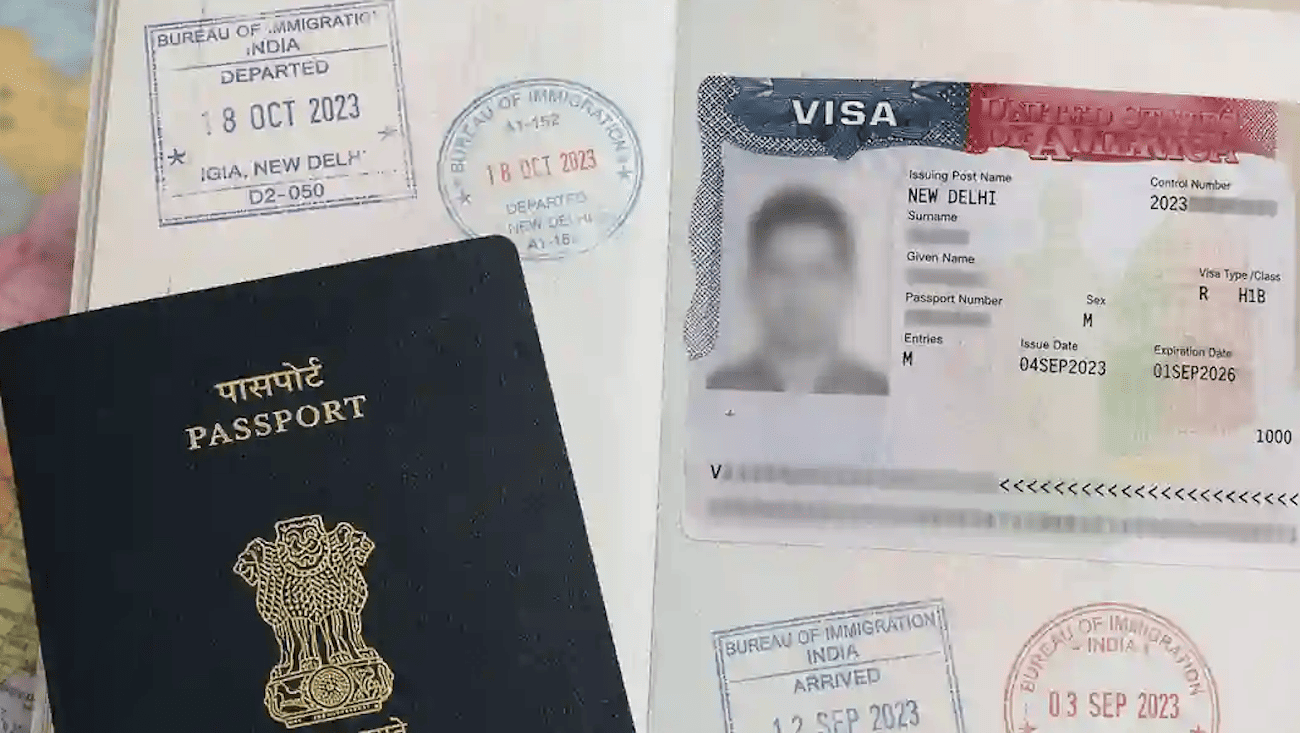

For most American workers, a layoff means losing a paycheck and beginning a job search. For an H-1B professional from India, the same layoff can start a second crisis: a countdown that can determine whether the worker and family can remain in the United States at all.
Under current regulations, certain employment-based nonimmigrant workers may receive up to 60 days after employment ends to find another employer, change status or make other lawful arrangements. Sixty days is already a remarkably short period in which to rebuild a professional career and protect a family’s legal status.
Now Washington is considering taking even that away.
The Department of Homeland Security has advanced a proposed rule, RIN 1615-AD22, for White House regulatory review that would eliminate the current up-to-60-day grace period for H-1B and several other employment-based nonimmigrant workers after their employment ends. The full proposed regulatory text has not yet been published, and the existing grace period remains in effect, so important details could still change.
For Indian Americans, however, the direction alone should be alarming.
According to USCIS’s FY2024 H-1B report to Congress, 71% of approved H-1B petitions were for beneficiaries born in India. The deeper problem is that many Indian professionals remain on temporary H-1B status for years after their lives in America have stopped being temporary.
Why 60 days exists
The legal foundation for the grace period dates to DHS’s 2016 high-skilled-worker final rule, which took effect in January 2017. The rule created the up-to-60-day post-employment grace period as part of a broader effort to improve job flexibility and provide greater stability to highly skilled workers.
The logic was simple then and remains simple now: employment can end in one afternoon, but immigration transitions cannot.
A laid-off H-1B engineer may need to find another employer, complete several interview rounds, negotiate an offer, obtain internal corporate approval, secure a Labor Condition Application and allow the prospective employer and its immigration lawyers to prepare the necessary filing.
Even for an exceptionally qualified professional, two months disappears quickly.
The grace period was never generous. It was a recognition that immigration law should not pretend that a senior engineer, physician or scientist can rebuild a career and complete a new visa process in a matter of days.
USCIS once told laid-off workers how to use that safety valve
During the Biden administration, USCIS made the transition system much easier to understand.
In December 2022, amid widespread technology-sector layoffs, the agency published “Options for Nonimmigrant Workers Following Termination of Employment”. USCIS warned that workers sometimes wrongly assumed that job loss meant they had no option but to leave the country.
The agency explained that, depending on individual circumstances, workers might be able to find another sponsoring employer, change to another nonimmigrant classification or pursue other lawful immigration options.
USCIS reinforced that message in correspondence addressing technology-sector layoffs, explaining that the grace period was intended to give workers time to pursue new employment or another lawful status. The agency specifically discussed visitor status as one potential bridge while a worker continued searching for employment. USCIS’s technology-layoff guidance made clear that laid-off professionals should not automatically assume they had to leave within 60 days.
If even the 60-day transition period disappears, an employee deciding whether to report unpaid wages, discrimination, retaliation or dangerous working conditions may have to consider what termination could mean for a spouse and children.
That guidance mattered. During waves of layoffs beginning in 2022, thousands of Indian professionals suddenly confronted an immigration deadline they had never expected to face. A worker who could not secure a new H-1B employer immediately did not necessarily have to uproot a family within a few weeks.
USCIS updated this guidance as recently as January 2025. It has since been moved into the agency’s archive and labeled out of date.
The regulation itself did not disappear when the webpage was archived. But the shift matters because that page had been one of the government’s clearest explanations of what a laid-off professional could lawfully do next.
Now DHS is considering eliminating the underlying grace period itself.
The Indian green-card backlog makes 60 days more consequential
The debate sounds very different if we imagine the typical H-1B worker as someone who arrived recently and expected to spend only a few years in the United States.
That is often not the Indian experience.
Many Indian professionals came to the United States for graduate school, moved into H-1B employment, secured employer sponsorship for permanent residence and then discovered that approval of an immigrant petition does not necessarily mean permanent residence is close.
Years pass. Careers advance. Children are born. Homes are purchased. Spouses establish careers. Families become deeply rooted in American communities.
The life becomes permanent even while the immigration classification remains temporary.
Then comes a layoff.
A professional who may have spent 10 or 15 years in the United States can suddenly find that the family’s legal stability depends on how quickly another company completes a hiring process and files immigration paperwork.
That is the central contradiction of the Indian H-1B experience. The United States may already have approved an employment-based immigrant petition recognizing that the worker qualifies for a path to permanent residence, yet the green-card backlog can leave the same worker exposed to a short-term employment shock that would have no immigration consequence for an American colleague sitting at the next desk.
The 60-day period does not solve that larger problem. It simply prevents the problem from becoming even harsher.
Two months is not much time to rebuild a career
Anyone who has gone through professional recruiting knows that sophisticated companies do not hire senior talent overnight.
A candidate may complete three or four interview rounds before an offer is made. The prospective employer must then approve compensation, determine whether it will sponsor the worker, obtain the required Labor Condition Application and work with immigration counsel to prepare the H-1B filing.
When layoffs are occurring across an entire industry, the challenge grows. Thousands of qualified workers may be applying for fewer openings at the same time.
The current rule acknowledges that reality. Eliminating it would not make immigration law more orderly. It would simply make layoffs more destructive.
Less mobility means more employer power
The harder immigration law makes it for an H-1B worker to change employers, the more leverage the current employer gains.
A U.S. citizen facing a bad employer can resign and look elsewhere without wondering whether leaving the job also threatens the family’s ability to remain in the country. An H-1B worker cannot separate those decisions as easily.

If even the 60-day transition period disappears, an employee deciding whether to report unpaid wages, discrimination, retaliation or dangerous working conditions may have to consider what termination could mean for a spouse and children.
That should concern responsible employers too. American businesses spend enormous resources building compliance programs and whistleblower systems intended to encourage employees to report problems. Immigration policy should not create a powerful reason for one category of worker to remain silent.
A competitive economy should allow skilled employees to move toward better opportunities. It should not make them more captive to the employer that happened to sponsor the last petition.
America is no longer the only destination competing for Indian talent
For decades, Indian professionals tolerated one of the world’s most frustrating immigration systems because the long-term American opportunity remained compelling.
That assumption should no longer be taken for granted.
India’s technology, research, pharmaceutical, finance and startup ecosystems are far stronger than they were when earlier generations of Indian professionals moved to the United States. Canada, the United Kingdom, Australia and other countries are also competing aggressively for globally mobile workers.
An engineer forced to leave the United States after a layoff may find an opportunity in Bengaluru, Hyderabad, Toronto, London, Sydney or Singapore. Once a family resettles, children enter new schools, a spouse finds another job and professional networks rebuild.
America may eventually make another visa available. The family may decide it no longer matters.
That is why the impact of eliminating the grace period cannot be measured simply by counting departures. The more important question is how many talented people eventually decide not to return.
Taking away 60 days would solve the wrong problem
The federal government has legitimate reasons to police fraud in employment-based immigration and ensure that temporary visa holders comply with the conditions of their status.
But it does not need to eliminate a finite transition period to do that.
DHS can scrutinize sham employment relationships, enforce the restrictions associated with changes to visitor or student status and deny discretionary protection where genuine abuse exists. Those measures target actual misconduct.
Taking away the grace period targets something very different: an ordinary job loss.
For Indian H-1B workers, that distinction matters enormously because the employment-based green-card system has already required many families to remain legally temporary for years. Until Congress fixes that underlying backlog, eliminating one of the few remaining shock absorbers would make an already precarious system substantially worse.
A professional who studied here, worked lawfully here, paid taxes here, secured employer sponsorship and waited patiently for permanent residence should not discover that one unexpected message from human resources can suddenly put an entire life in America at risk.
Sixty days is already very little time.
Washington should not take even that away.
Richard T. Herman is an immigration attorney and founder of Herman Legal Group. He has practiced immigration law for more than 30 years and is the co-author of Immigrant, Inc.: Why Immigrant Entrepreneurs Are Driving the New Economy. He writes about various immigration law topics, including H-1B visas and F-1 international student visas.