




Deconstructing Rahul Gandhi: A Moral Critic of Status Quo Who Has Uncomfortable Relationship With Power

- However, he has started to transition from the person who points out what is broken to the protagonist who offers to carry the weight of fixing it.
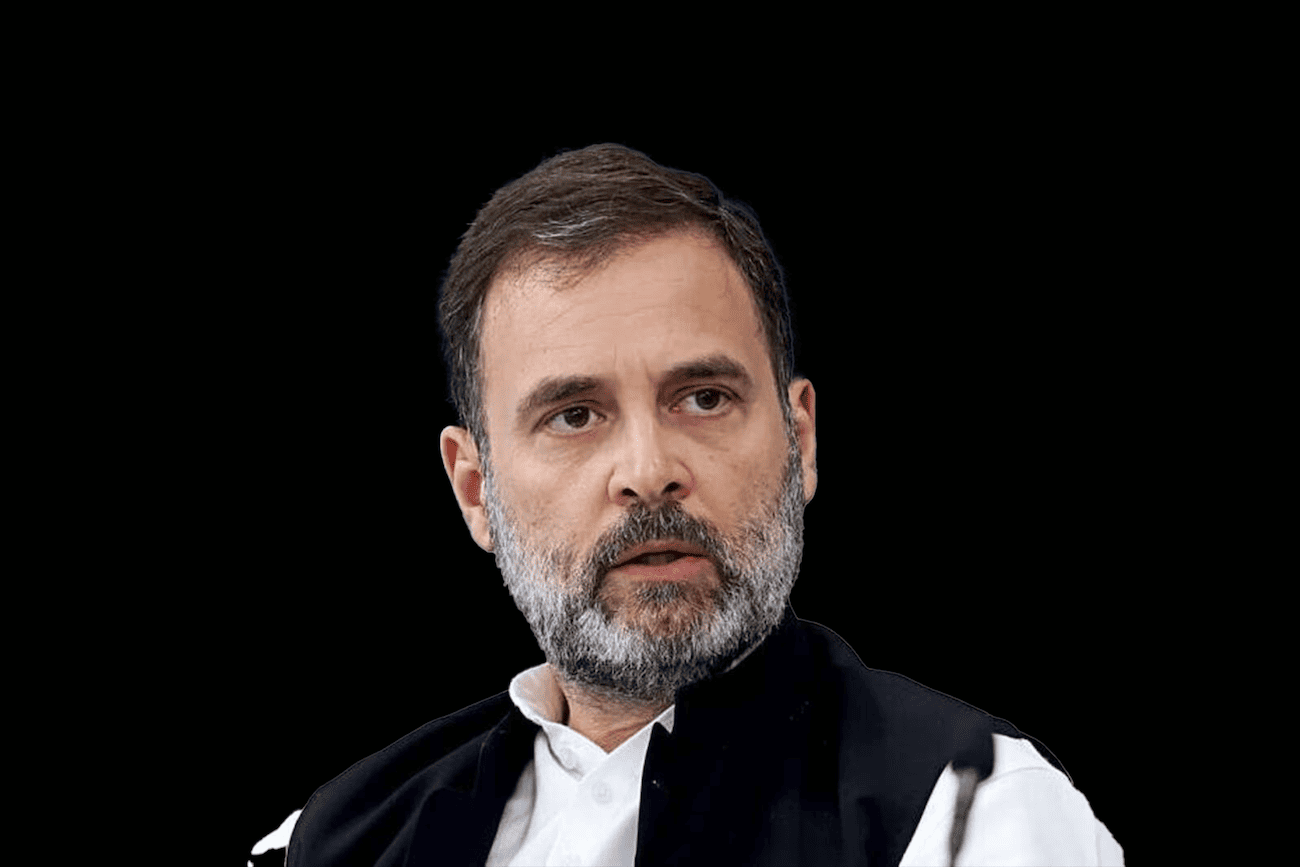
The debate between Ramachandra Guha and Shashi Tharoor over Rahul Gandhi’s fitness for the prime ministership has the quality of an argument conducted in the wrong room. Both men are intelligent. Both are serious. And both are circling a question that, however sharply posed, does not reach the thing that actually matters.
Guha asks whether Rahul Gandhi possesses the experience, the record, the demonstrated capacity that high office demands. Tharoor responds that democratic leadership cannot be reduced to an administrative résumé, that many of history’s most consequential figures arrived at power without first managing a ministry.
Neither is wrong. But both are arguing about fitness when the real question is something older, harder, and less comfortable to ask in polite intellectual company. Does Rahul Gandhi understand power?
The Currency of Authority
History is often written as the story of governments. In reality, it is frequently the story of the people who preceded them. Gandhi never governed a province. Mandela never administered a ministry. Havel arrived in the presidency from a prison cell and a playwright’s desk. Wałęsa came from a shipyard. King never held elected office.
What these figures shared was not experience in the conventional sense but something prior to it—the ability to articulate a national longing before the nation had found words for it, to organize a constituency that did not yet know it existed, to embody a possibility that institutional politics had declared unavailable. Their authority was not credentialed. It was earned in a different currency entirely. Administration came later, and sometimes badly. But the authority came first, and it came from somewhere experience alone could not manufacture.
This is the context Guha’s argument quietly assumes away. The pathway to national leadership does not run primarily through demonstrated executive competence. It runs through the capacity to make a political moment legible—to stand at the intersection of a people’s fear and longing and say: here, this way. No electorate in history has voted primarily for a résumé. They vote for a story, a direction, a sense that the future has someone willing to be responsible for it.
The Dynastic Paradox
Nor does the dynasty argument strengthen Guha’s case; instead, it exposes the lazy consensus of his critics. There is a contradiction at its center that tends to go unexamined.
If Rahul Gandhi is fundamentally a dynastic politician, then what he inherits is not merely a surname or a collection of vintage portraits. He inherits a century of accumulated institutional memory—of historic victories and catastrophic failures, of relationships forged and broken across decades, and the specific, brutal education that comes only from watching power at close range across generations. To grow up in the Nehru-Gandhi household is to be steeped in the mechanics of the Indian state, its fault lines, and its vulnerabilities.
If he is not dynastic—if he is to be judged strictly as an individual—then he must be evaluated on his character, his instincts, his judgment, and the coherence of his political vision. One cannot simultaneously argue that he is a blank-slate amateur imprisoned by his lineage, while denying that the lineage itself carries vast, usable political knowledge. The argument shifts depending on what his critics need to prove at any given moment.
Yet even this misses the deeper question. The issue is not what Rahul Gandhi has inherited, but what he has actively chosen to do with that inheritance.
Morality Versus Machinery
For more than a decade, Rahul Gandhi has occupied a peculiar position in Indian political life—one without clear precedent in the modern democratic tradition. He has functioned less as a conventional politician than as something closer to a moral critic of the prevailing order.
He has challenged economic concentration, questioned institutional erosion, and raised the alarm about democratic accountability. He has spoken of unemployment, of inequality, of a social fabric pulled too tight in too many directions at once. Whether one agrees with his analysis is secondary. What matters is that a coherent moral framework is visible beneath it.
But morality and power do not operate according to the same laws, and confusing them is among the most common—and most costly—errors in political life.
The moral actor seeks truth and absolute clarity, identifies and exposes contradictions, is satisfied with being correct, and values the purity of principles.
Conversely, the political actor seeks authority and consensus, resolves or contains contradictions in order to act, must be effective above all else, and builds coalitions and compromises to scale.
Rajiv Gandhi will be judged by whether he completes the transition he has finally begun: proving that morality, without the willingness to seek, organize, and exercise power, remains merely a beautiful commentary on the world as it is, rather than an act upon the world as it might be.
Effectiveness in politics means building the machinery—the coalitions, the organizations, the disciplines, the second tier of capable people—that can convert ideas into outcomes against the friction of an indifferent or actively hostile world.
This is where Rahul Gandhi’s challenge begins. His difficulty has never been a shortage of convictions. It has been an uncertain, sometimes visibly uncomfortable relationship with power itself—with its demands, its textures, its necessary compromises. For years, his politics resembled the politics of witness rather than the politics of conquest. That earned admiration from a dedicated sliver of the electorate. It did not win power.
The Scale of Instinct
The most instructive response to Guha’s argument is, perhaps unexpectedly, Narendra Modi himself. Before 2014, large sections of India’s intellectual class regarded Modi as dangerously unsuitable for national leadership—too divisive, too provincial in his instincts, too willing to use the instruments of the state in ways that alarmed liberal sensibilities. His supporters regarded him as transformative.
Yet the question that history answered was never whether Modi had governed India before governing India. It was whether the instincts visible in Gujarat would scale. And they did—with remarkable, and in many respects alarming, fidelity. The Modi who governs India is recognizably the Modi who governed Gujarat. His strengths expanded. So did his weaknesses. His instincts became policy; his preferences became institutions. Character, once formed, tends to persist. It scales. What, then, does Rahul Gandhi’s observed behavior suggest?
For a long time, the prognosis was uncertain. He appeared less attracted to centralized authority, more inclined toward consultation, and skeptical of concentrated power. But he also gave the impression of a man genuinely unsure whether he wanted power, or whether he is willing to pay the particular price that power extracts.

From Witness to Protagonist
That long-standing ambiguity, however, is no longer the final word. A shift has occurred that renders both Guha’s skepticism and Tharoor’s defense somewhat dated.
Through the grueling miles of the Bharat Jodo Yatras and the bruising battle of successive general elections, Gandhi has begun a visible evolution. He is no longer just the detached intellectual or the accidental heir delivering speeches from a distance. By physically walking across the geography of the country, he attempted something elemental: to touch the ground, to build a counter-narrative from the soil up, and to forge a direct, unmediated relationship with the electorate.
This journey marks a psychological pipeline: it begins with the politics of witness, where one merely exposes contradictions; it moves into ground mobilization through the yatras; and it points toward the politics of the protagonist, where one actively seeks and exercises power.
This was not the behavior of a mere witness; it was the behavior of a man beginning to understand that the machinery of an opposition must be fueled by an alternative national story. He has started to transition from the person who points out what is broken to the protagonist who offers to carry the weight of fixing it.
He is learning that a leader in opposition cannot just ask questions; they must eventually provide answers. They cannot merely expose contradictions; they must offer a direction despite them.
The Republic’s Balance
The question that opens beyond Rahul Gandhi is larger, and it concerns the republic itself. Healthy democracies require two kinds of people who rarely understand each other—those capable of criticizing power, and those capable of exercising it. The crisis deepens when critics cannot become governors. It becomes catastrophic when governors can no longer tolerate critics.
India confronts this tension now, in an acute form. The ultimate question is not whether Rahul Gandhi becomes Prime Minister. It is whether Indian democracy can still produce—and recognize, and elect—leaders capable of holding both moral legitimacy and political effectiveness in the same hands; conviction and competence; criticism and the courage to construct.
Nations do not decline because they lack strong governments. They decline when they lose the bridge between conscience and authority—when the people who see clearly cannot act, and the people who act have stopped seeing.
The future will judge Rahul Gandhi by a simpler standard than his critics apply or his supporters prefer. Not by the surname he carries, nor by the criticisms he has absorbed. He will be judged by whether he completes the transition he has finally begun: proving that morality, without the willingness to seek, organize, and exercise power, remains merely a beautiful commentary on the world as it is, rather than an act upon the world as it might be.
Satish Jha, former Editor, Indian Express Group and The Times of India Group writes on geopolitics, international affairs, and development.