




America at 250: Learning About First Stories of This Land Dating Back Thousands of Years Before the Birth of the United States

- While Native American traditions and Hindu traditions are distinct and unique, I found myself appreciating this shared spirit of reverence.
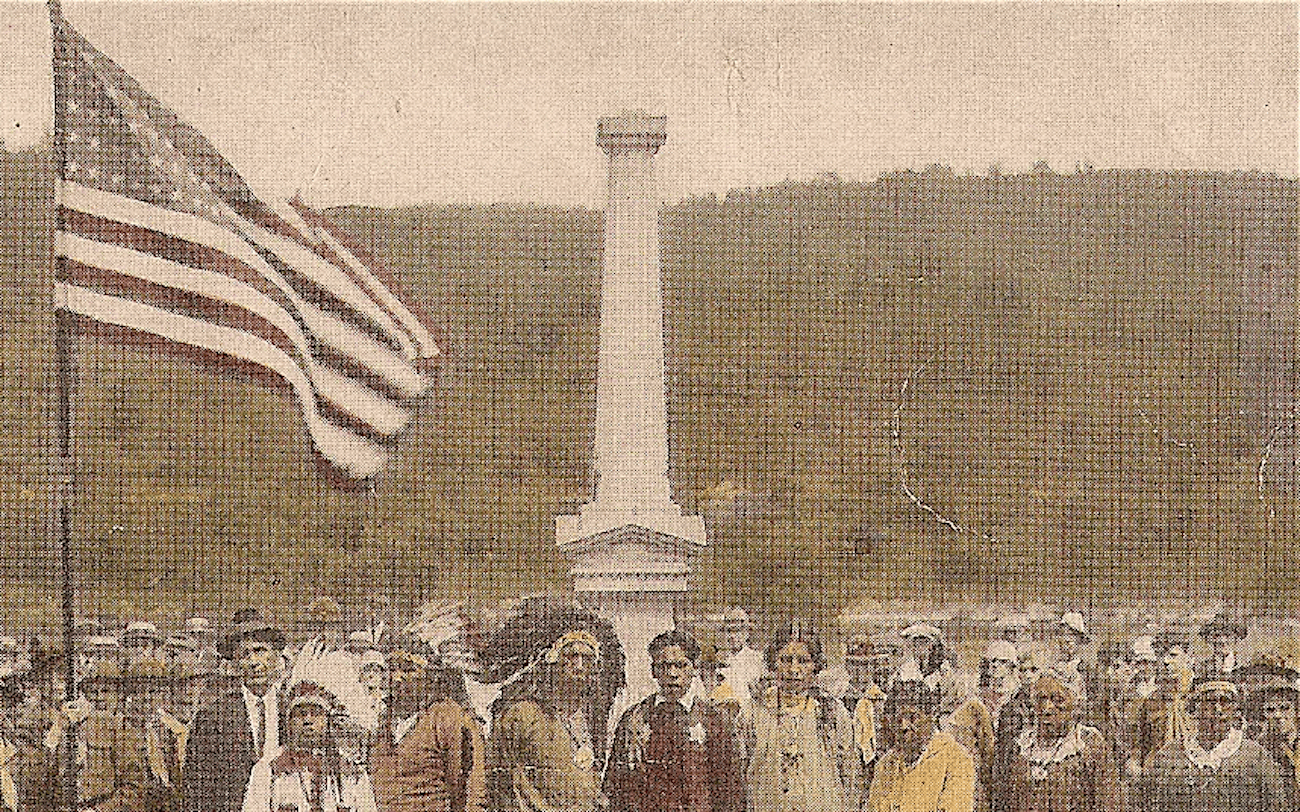

As America prepares to celebrate its 250th anniversary, communities across the nation are reflecting on the people, events, and ideals that have shaped this country. There is much to celebrate — democracy, innovation, opportunity, resilience, and the remarkable diversity that continues to define the American experience.
Yet, as I reflect on America at 250, my thoughts return to a story I encountered only recently; a story that existed long before the founding of the United States.
Last year, during a camp at Jagannath Dham in Belfast, New York, I was assigned to tell a story. As I prepared for the session, I began researching Native American history and culture. What started as simple background preparation soon became an unexpected journey of discovery.
Although I have lived in America for years, I realized how little I truly knew about the Indigenous peoples of this land.
As an immigrant, I had spent time learning about the American Revolution, the Constitution, the Founding Fathers, and the nation’s journey over the past 250 years. Yet I had rarely paused to learn about the people whose connection to this land stretches back thousands of years before the birth of the United States.
The more I read, the more I realized that these were not distant stories from another part of the country. The very state of New York is home to Indigenous nations whose history and presence continue to this day. The area surrounding Jagannath Dham itself has deep Indigenous roots. I learned about the Haudenosaunee Confederacy, one of the world’s oldest continuing democratic alliances, and the nations that comprise it — the Oneida, Mohawk, Onondaga, Seneca, Cayuga, and Tuscarora.
My research led me further.
I read about tribal nations preserving their languages and traditions despite enormous challenges. I learned about reservations and communities striving to maintain their cultural identity across generations. I encountered stories of displacement, broken treaties, and cultural survival.
Most profoundly, I read about the Trail of Tears — the forced relocation of thousands of Cherokee people from their ancestral homelands. Families were separated from the lands they had inhabited for generations. Communities were uprooted. Many lost their lives during the journey.
These were not merely historical events.
They were human stories.
Stories of grandparents and grandchildren.
Stories of communities struggling to hold on to identity.
Stories of grief, courage, survival, and hope.
As a storyteller, I have always believed that stories help us see the world through another person’s eyes. This research did exactly that. It expanded my understanding of the country I now call home.
As America celebrates 250 years of independence, I believe these stories deserve a place in our national reflection.
The story of America did not begin in 1776. Long before the Declaration of Independence was signed, Indigenous peoples had developed societies, governance systems, spiritual traditions, and ways of life deeply connected to the land. Their history is inseparable from the history of this continent.
Remembering this does not diminish the celebration of America’s achievements. In fact, it enriches it.
A mature nation is capable of celebrating its accomplishments while also acknowledging the complexities of its past. True confidence does not come from telling only the comfortable parts of a story. It comes from telling the whole story.
What struck me most during my research was not only the hardship Native communities endured but also their extraordinary resilience.
Despite centuries of disruption, Indigenous cultures continue to thrive. Languages are being revitalized. Traditional ceremonies continue to be practiced. Young people are reconnecting with ancestral wisdom. Communities continue to preserve and celebrate their heritage while building their future.
A mature nation is capable of celebrating its accomplishments while also acknowledging the complexities of its past. True confidence does not come from telling only the comfortable parts of a story. It comes from telling the whole story.
The story is not merely one of loss.
It is a story of resilience.
It is a story of renewal.
And perhaps it is a story from which all Americans can learn.
As someone shaped by Hindu traditions, I found myself reflecting on the concept of Dharma.
Dharma is often understood as that which sustains harmony. It reminds us that our lives are connected to our families, our communities, our ancestors, and the natural world around us. It teaches gratitude, responsibility, and reverence.
As I learned more about Indigenous cultures, I encountered values that felt strikingly familiar.
A reverence for nature.
Respect for ancestors and elders.
Gratitude for the gifts of the earth.
A sense of responsibility toward future generations.
An understanding that human beings are not separate from nature but part of a larger interconnected whole.
While Native American traditions and Hindu traditions are distinct and unique, I found myself appreciating this shared spirit of reverence.
One of the ideas that particularly resonated with me was the Lakota expression Mitákuye Oyás’iŋ, often translated as “we are all related” or “all my relations.” More than a greeting, it expresses a worldview in which human beings, animals, plants, the earth, and all forms of life are interconnected.
I discovered similar expressions among other Indigenous peoples. The Ojibwe phrase Gidinawendimin carries the understanding that we are all related to one another. The Cherokee concept of Sidanelvspeaks of family and belonging in a broader sense than we often use the term today.
As I reflected on these ideas, I was reminded of a Sanskrit expression I learned in a song: “Vayam Sarve Sahodara” — We are all brothers and sisters.
This simple statement encourages us to look beyond differences of race, language, nationality, or faith and recognize our shared humanity.
I was also reminded of a timeless verse from the Maha Upanishad:
“Vasudhaiva Kutumbakam” — The whole world is one family.


For centuries, this idea has inspired people to see themselves not merely as members of a community or nation, but as participants in a larger human family.
Although these expressions emerged from different cultures and continents, they seem to point toward a common truth: that life is interconnected, that our well-being is tied to the well-being of others, and that wisdom begins when we move beyond separation toward relationships.
Perhaps this is one of the reasons these Indigenous stories stayed with me long after my research was complete. They were not only teaching me about history. They were inviting me to think differently about belonging.
They were reminding me that the land, the people, the animals, the forests, the rivers, and future generations are all connected in ways that modern life sometimes causes us to forget.
As America enters its next quarter millennium, perhaps the most important question is not only what we are celebrating but what we are carrying forward.
Can we build communities rooted in mutual respect?
Can we care more deeply for the environment that sustains us?
Can we listen to voices that history has sometimes overlooked?
Can we learn from traditions different from our own?
Can we remember that diversity is not merely about coexistence but also about learning from one another?
America’s 250th anniversary is more than a commemoration of the past. It is an invitation to imagine the future.
For me, one of the unexpected gifts of preparing a storytelling session was discovering stories that expanded my understanding of this country. Those stories reminded me that every nation is strengthened when it remembers all of its people and honors all of its histories.
As we celebrate America at 250, may we take a moment to remember the first peoples of this land, their struggles, their resilience, their wisdom, and their enduring contributions.
Because remembrance is not the opposite of celebration. It is what gives celebration its depth.
And perhaps, by listening to the oldest stories of this land, we may discover values that can guide us through the next 250 years — gratitude, responsibility, resilience, reverence, and the understanding expressed in many languages and traditions:
Mitákuye Oyás’iŋ.
Vayam Sarve Sahodara.
Vasudhaiva Kutumbakam.
We are all related.
We are all brothers and sisters.
The whole world is one family.
Top image: https://sni.org/culture/history/
Sugandha Ganesh is a volunteer with the Hindu Swayamsevak Sangh, USA. She leads HSS’s initiative called Hindu Education Foundation(HEF) in New Jersey.