




The Ad That Could Backfire on Vivek Ramaswamy: Ohio Governor’s Race Turns Personal

- An anonymously circulated attack ad featuring Democrat Amy Acton’s estranged mother has provoked outrage and revived painful details of Acton’s childhood. The controversy raises a question for voters: will the attack damage Acton’s credibility—or persuade Ohioans that her opponent’s campaign has crossed a line?
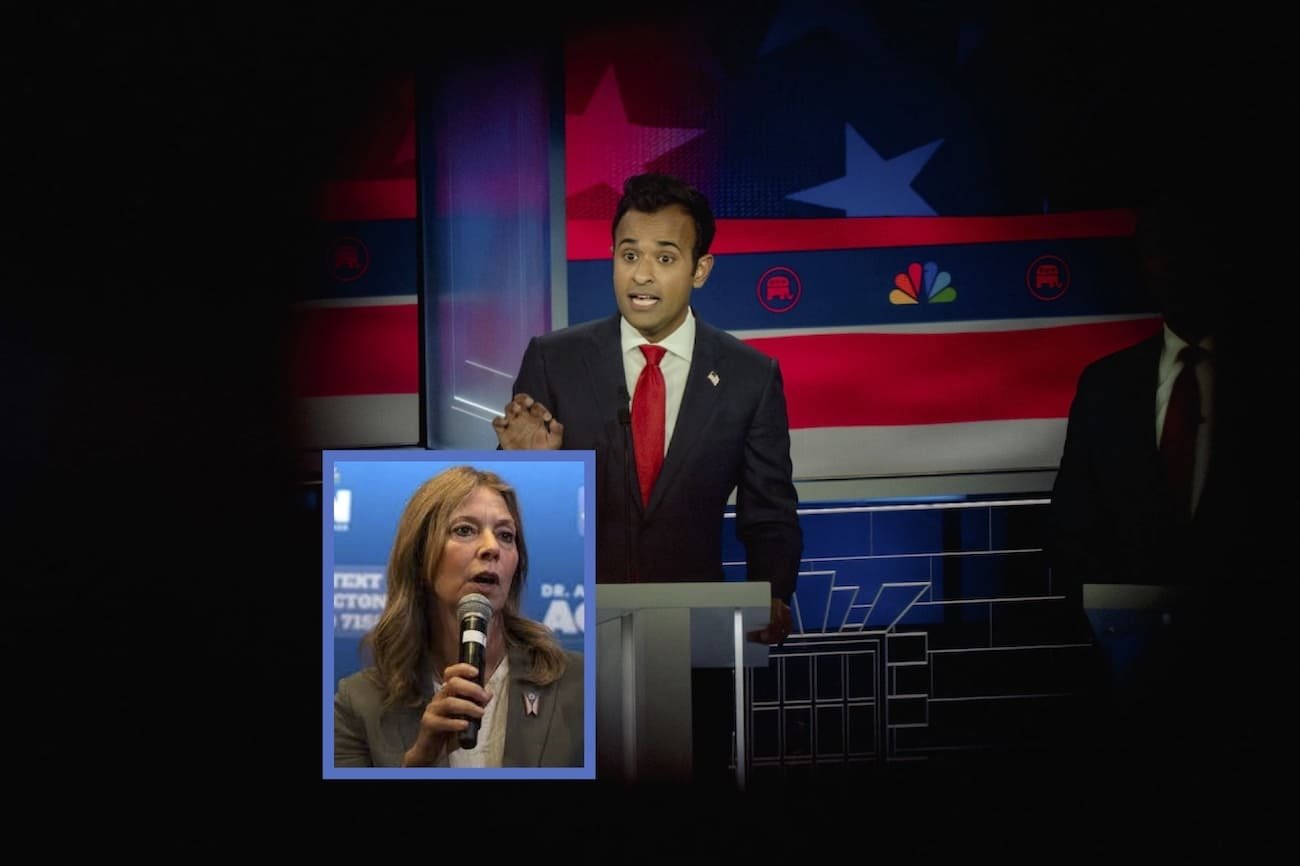

An attack ad targeting Ohio Democratic gubernatorial candidate Amy Acton has drawn intense criticism after featuring her estranged mother accusing her daughter of lying about her childhood. The video, which surfaced online about two weeks before Election Day, has intensified an already contentious race against Republican Vivek Ramaswamy.
The controversy is not simply about the ad’s accusations. It also concerns the use of a deeply troubled family history in a political contest—and whether voters will punish the candidate associated with the attack, even though responsibility for producing and financing the video has not been established.
In its October 20 report, The Associated Press said the video features Donna Arthur, Acton’s mother, questioning her daughter’s honesty and disputing her account of growing up in poverty and experiencing periods of homelessness. The ad does not identify a sponsor, and its origins and funding were unclear when AP reported on it.
Acton, a physician who previously directed the Ohio Department of Health, suggested that Ramaswamy was behind the attack. His campaign did not directly acknowledge responsibility or disavow the video. Campaign spokeswoman Connie Luck responded by saying Acton had “some serious problems with the truth that the public needs to be aware of,” according to AP.
That distinction matters: the ad’s appearance in political circles supportive of Ramaswamy does not, by itself, establish that his campaign produced or paid for it. Ohio Capital Journal reported that the video was spread by right-wing online influencers and that it lacked a disclaimer identifying who paid for it, according to Ohio Capital Journal report.
A Family History Becomes Campaign Ammunition
The ad has drawn particular condemnation because it intersects with Acton’s account of childhood sexual abuse and family instability.
Acton has said that her stepfather sexually abused her when she was a child. According to AP’s review of police and court documents, her stepfather was arrested and charged in 1978 after her biological father reported the alleged abuse. The man pleaded not guilty, was indicted by a grand jury, and later failed to appear at a court hearing. These records establish the existence of the criminal case; they should not be confused with a conviction.
AP also reported that Acton and her brother were removed from their mother’s custody when they were children. Acton has not seen her mother since they were together in court in 1978, according to the news agency.
Acton’s brother, Philip Stearns, issued a statement through her campaign condemning the ad. He accused Ramaswamy of turning the abuse Acton experienced into a political talking point. His statement was published by Acton’s campaign on October 20.
Some voters may see the video as an effort to discredit Acton by using her estranged mother rather than by challenging her record as a public official. That could generate sympathy for Acton.
The mother’s claims in the video should be understood as allegations made by a participant in a bitter, decades-long family estrangement—not as independent proof that Acton misrepresented her childhood. The ad’s anonymous sponsorship and the lack of independently established evidence supporting its claims are central to evaluating its political significance.
Why the Attack Could Backfire
Political campaigns routinely question an opponent’s honesty, judgment and record. But an attack that appears to exploit a candidate’s painful personal history can produce a different reaction from an argument about policy or public performance.
Some voters may see the video as an effort to discredit Acton by using her estranged mother rather than by challenging her record as a public official. That could generate sympathy for Acton, particularly among voters who regard the use of alleged childhood abuse as an unacceptable campaign tactic.
There is also a risk that the controversy will shift attention away from the candidates’ competing plans for Ohio. Instead of discussing healthcare, the economy, taxes or the state’s direction, voters are now being asked to assess a family dispute whose most intimate details have become campaign material.
The possibility of a backlash is consistent with some political-science research, although no study can predict the precise effect of this particular ad. A 2025 study published in the European Journal of Political Research examined the effects of personal attacks compared with policy-focused debate. Its experimental findings suggested that personal attacks can be perceived as excessively negative and can lower evaluations of the candidate sponsoring them.
Research published in the American Journal of Political Science, under the title “Positive Spillovers from Negative Campaigning,” likewise found that negative campaigning can sometimes rebound against the attacker, making that candidate appear less cooperative or capable. The study drew on an Italian mayoral contest and a survey experiment, however, so its findings cannot be transferred mechanically to an Ohio gubernatorial race.
The political calculation is therefore uncertain. An attack can reinforce existing suspicions among voters who already distrust a candidate, but it can also alienate undecided voters who believe the campaign has gone too far.
Could it Change How Ohioans Vote?
The timing makes the controversy especially consequential. The ad appeared close to election day, when campaigns have limited time to redirect the conversation or recover from a damaging public impression.
Polling reported around the time the controversy emerged showed Acton with an advantage, although the numbers varied by poll. Those surveys provide a snapshot of the race, not evidence that the ad has helped or hurt either candidate. Establishing an effect would require polling conducted after voters had encountered the video, ideally compared with earlier measurements using comparable methods.


The controversy could influence voting in at least three ways.
First, it may strengthen Acton’s support among voters who view the ad as cruel or exploitative. For those voters, the issue could become a test of character rather than a dispute over her childhood account.
Second, it could have little effect on voters whose choices are already determined by party loyalty, ideology or their views of the candidates’ records. In a polarized election, even a widely criticized attack may not change many votes.
Third, the ad could help Ramaswamy with voters already inclined to doubt Acton’s credibility—particularly if they accept its claims at face value. But that outcome depends on the video’s credibility and the campaign’s ability to keep the discussion focused on Acton rather than on the ethics of the attack.
There is another complication: the uncertainty over who produced and financed the video may itself become part of the controversy. If voters believe a candidate is benefiting from an attack while avoiding responsibility for it, that perception could create a separate credibility problem. But without evidence establishing who commissioned the ad, assigning responsibility to Ramaswamy would go beyond what has been verified.
A Test of Campaign Judgment
The episode illustrates the risks of making a campaign personal in a way that appears to exploit trauma. The tactic may energize a candidate’s existing supporters, but it can also prompt a broader audience to question the campaign’s judgment.
For Acton, the immediate challenge is to prevent the controversy from defining her candidacy while defending her account of her own life. For Ramaswamy, the question is whether his campaign can benefit from the attack without being held responsible for it—and whether voters will accept that distinction.
The available evidence does not yet show that the ad has changed voting behavior. What it has done is place the candidates’ conduct, as well as their policy positions, under scrutiny.
In a close election, that may matter. Voters are not merely deciding which candidate they trust to govern Ohio. They are also deciding what kinds of political tactics they are willing to tolerate in the pursuit of power.