




The Teflon Gods of Silicon Valley: No Country Should Hang Its Economy On One Man’s Reputation

- Gods do not retire. Men do, and men also lie, get sick, and get things wrong. We have built an economy that depends on forgetting the difference.
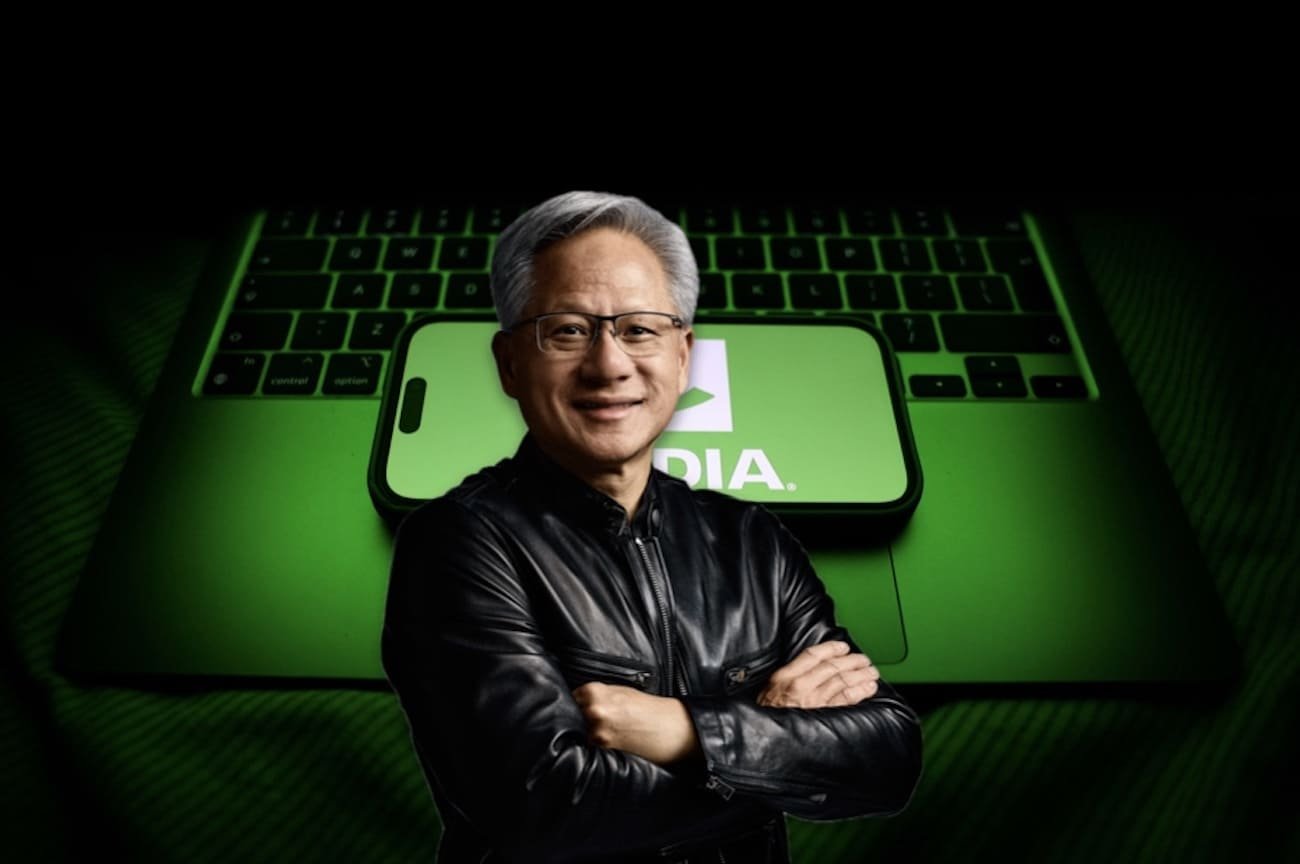
For eleven days this month, the American stock market behaved like a family in a hospital waiting room. One man had left his job. Trillions of dollars of other people’s savings sagged while everyone waited to hear whether he would be allowed back. When Nvidia’s board reinstated Jensen Huang on Monday, the company gained roughly $900 billion in value and the major indexes had their best day since April 2025.
Most of the mainstream news coverage treated that as a happy ending. I think it is one of the most alarming things I have watched a market do. It means the retirement accounts of schoolteachers, the pension funds of whole states and the mood of the entire economy now ride on the personal reputation of one executive. His judgment, his health, his private life, the company he keeps. No country should be pawned on that.
Zohran Mamdani, the mayor of New York, said it more plainly than any economist has. Working people, he pointed out, never agreed to have their pensions hang on Jensen Huang’s “fidelity to his marriage,” and yet for days that is exactly what moved them. He went on to worry aloud about how much of the stock market, and so how much of the American economy, now leans on a single technology. And he reached for the old warning usually credited to Justice Louis Brandeis: a country can have democracy, or it can have great wealth gathered into a few hands, but it cannot keep both.
Nothing Sticks
We have seen this movie before. In November 2023 the board of OpenAI fired Sam Altman, saying he had not been candid with them. Within five days he was back, after nearly the entire staff signed a letter threatening to quit, and the directors who had fired him were the ones who lost their seats. Silicon Valley took the lesson to heart: a board that moves against its founder is signing its own resignation.
Nvidia’s directors have now relearned it in public. They found that Huang violated the company’s code of conduct. They rehired him anyway, because the alternative was watching the share price keep falling. Robert Armstrong of the Financial Times described the company’s org chart as a mirror of the Chinese Communist Party’s, “a mess of arrows all leading to one man,” with no succession plan and, until this month, no board chairman at all. When a company is built that way, holding the man at the center to the rules becomes something nobody can afford.
In 2008 we learned the phrase “too big to fail” and were told it applied to banks. The tech industry has spent the years since building people who fit the description. An engineer at Nvidia who did what the board says Huang did would have been walked out by security. The founder got an hours-long meeting, a unanimous vote and a $34 billion bump in his net worth.
The God Complex
Nobody is born believing the rules are for other people. It takes years of being told so. Investors tell a founder he is a once-in-a-generation genius, because their returns depend on it. Employees tell him, because their stock grants depend on it. Presidents hang medals on him and call him a national treasure. Eventually the man and the company become one thing in his own mind, and a threat to him starts to look like a threat to civilization.
You could hear it in Huang’s own statement after he resigned over his personal conduct. He said he would be honored to come back if the board decided it served shareholders, employees, the company and America. A man leaves in a scandal of his own making and offers his return as a service to the nation. I don’t think that was spin. I think he believes it, and so do most of his peers about themselves.
It helps that the industry’s stated project is to build a machine smarter than the human race. People who think they are midwifing a god are not inclined to see themselves as bound by an HR policy.
And a god needs a congregation. Nearly 200,000 people signed a letter demanding Huang’s return, thousands of them Nvidia employees. Famous founders lined up behind him. When the news came, people cheered the way you would cheer a soldier coming home. I understand the employees, whose mortgages are paid in stock. The founders I understand too well. Most of them run companies built the same way, around one irreplaceable man and a board that will not cross him, and they were defending their own immunity. We have spent a generation teaching very smart people that the share price is the moral fact and everything else is commentary. They learned it.
The pressure was applied in public, by people with very large megaphones. Elon Musk announced on X the day after the resignation that he was signing the petition, and when someone suggested he hire Huang himself, replied that it would be an honor. The head of Y Combinator signed. So did the founder of Epic Games and a co-founder of Uber. The CEO of Shopify answered Musk with “You have my sword.” These men own a good share of the country’s wealth and most of the platforms on which the argument was being held, and they used both to lean on the board of a company none of them runs. They said they wanted due process for Huang. What they demanded was his job back before any process had finished.
The believers I have the least patience for are the ones who say, with a straight face, that Huang’s leadership is critical to the future of human civilization. I heard versions of it all month, from people who should know better. Without him the AI race is lost. Without him America falls behind. Without him progress itself stalls.
Nvidia employs tens of thousands of engineers. Its chips are manufactured by another company, on another continent. During the eleven days Huang was gone, the interim CEO reported the quarter and raised the growth outlook. The chips kept shipping and the engineers kept designing the next ones. The only thing that stopped working was the stock, which tells you the stock was pricing a myth.
Civilization has outlived every person who was ever called indispensable to it. To say otherwise about a chip executive is a kind of worship, and it is useful worship. A man who is critical to civilization cannot be fired, questioned or investigated without the questioner being cast as an enemy of the future.
When the State Signs On
A god complex in one industry is a cultural problem. It becomes an oligarchy when the government joins the congregation. The president of the United States personally lobbied the board of a private company to take its CEO back. He does not deny it. “I made the deal,” he told CNBC. He owns the stock, by his own disclosures, in the tens of millions of dollars.
The friendship was paid for in installments. Nvidia gave $1 million to Trump’s inauguration. In October 2025 it gave $25 million toward his White House ballroom, tied for the largest gift on a donor list the Washington Post obtained this fall. The Post reported that the money arrived less than three months after the administration agreed to let Nvidia sell advanced chips to China, and that the company asked for the donation to be kept anonymous. Nvidia says its support for the country has nothing to do with its business interests.
Huang himself has been at the president’s side for most of the second term. The two have met or appeared together at least fifteen times. He traveled in the presidential delegations to Riyadh, London and Beijing. He has told reporters, proudly, that Trump phones him late at night. Last month the president gave him the National Medal of Science.
This government has spent two years telling ordinary people that the rules are the rules. Overstay a visa and you are put on a plane. Want a Chinese-made drone or camera and you are told it is a security threat you may not buy.
He is far from the only one who bought a seat. The ballroom alone drew $333 million from 67 donors, more than half of it from tech, telecom and crypto companies. Apple matched Nvidia’s $25 million. Microsoft gave $10 million. Amazon, Google and Meta are on the list, along with defense contractors, crypto exchanges and the family of the commerce secretary. The inauguration before it raised a record sum, with million-dollar checks from most of the same names. The one person missing from the ballroom’s donor list is the president, who had promised to pay for it himself.
Then there is the commerce secretary, Howard Lutnick, whose department decides which chips Nvidia may sell abroad. His family is on the ballroom donor list. Senators from both parties have written to him about reports that he repeatedly delayed putting export restrictions on Nvidia into effect. And according to a Wall Street Journal report cited by The Dispatch, he held on to his job after giving $25 million to the president’s library. The regulator and the regulated are writing checks to the same man.
I am less interested in the details of that weekend than in the structure it exposed. A president’s economic record depends on a bull market. The bull market depends on the AI ecosystem. And the health of the AI ecosystem depends on one chipmaker, and the chipmaker depends on one man. Each of them needs the others to stay upright, so each will protect the others, and questions about conduct, security or law become threats to be managed.
Oligarchy does not mean that rich people exist. It means a small number of men whose private interests have fused with the power of the state, so that protecting them becomes government policy. A board that takes its chief executive from the White House has stopped being a board. And every other board in the country has now been shown whom to call when it is in trouble, and whom to fear when it wants to do the right thing.
We Know How This Goes
Americans used to be good at recognizing this arrangement when it happened in other countries.
We gave Russia the word for it. In the 1990s a few men walked away from rigged privatizations owning the country’s oil, metals and banks, and the press called them oligarchs. Then Vladimir Putin taught them that a fortune in Russia is held at the Kremlin’s pleasure. The ones who understood kept their yachts. The state and the billionaires became one organism, and nobody inside it has been accountable to the public since.
India, where I was born, offers a newer version. Two business houses, Ambani’s and Adani’s, now sit across ports, airports, power, telecom, retail and media. Critics have argued for years that their growth tracked their closeness to the people in government. Both groups reject that. But the pattern has an American chapter now.
In 2024 federal prosecutors in Brooklyn indicted Gautam Adani on bribery charges, which he denied. This year, after his lawyer, who is also the president’s personal lawyer, told officials that Adani stood ready to invest $10 billion in the United States, the administration dropped the case. The judge asked whether the pledge had played a part and accepted that it had not. I’ll let readers decide how much comfort to take from that.
We in America like to think we are different. We just do it one industry at a time. Wall Street nearly took down the world economy in 2008, was rescued with public money, and almost no senior banker saw the inside of a courtroom. Purdue Pharma pleaded guilty twice over how it sold OxyContin, while the family that owned it kept billions and no member of it was criminally charged.
Silicon Valley is the latest, and it holds more than the banks or the drug makers ever did. They captured their regulators. The tech industry has captured the stock index, the retirement accounts, the president’s political fortunes and the country’s whole story about its own future. A nation in that position is a hostage, and hostages do not hold their captors to a code of conduct.
The Scoreboard


Underneath all of it is a habit that makes me angrier than any single tycoon: we have let the stock market become the measure of whether the world is going well.
On Monday the indexes had their best day in a year and a half, and the television graphics turned green, and people who follow these things felt that life had improved. Ask what actually improved. Nobody’s rent went down. Nobody’s wages went up. No disease was cured and no bridge was repaired. An executive with a conduct finding against him got his job back. The week before, when the same indexes were falling and the mood was grim, nothing in the lives of most Americans had gotten worse either.
The wealthiest tenth of households own roughly nine-tenths of the stock in this country. For everyone else the market is mostly weather on someone else’s estate. Yet we report it every evening as if it were the national pulse, and politicians govern as if it were. The president’s own boast on Monday was that nobody else could have revived the stock the way he had.
Once the index is the scoreboard, whatever lifts it counts as good and whatever lowers it counts as bad. Investigating a powerful man lowers it. Putting him back lifts it. That is how a country talks itself into believing that accountability is a threat to prosperity, and how a tech founder’s reputation ends up being treated as a public asset the government must defend.
The Party of the Working Man
Three weeks ago American voters delivered their own verdict on all this. Democrats took both chambers of Congress, flipping seven Senate seats, some of them in states that had not sent a Democrat to Washington in generations. The campaign, by every account, turned on two things: the cost of living and the smell of corruption.
This is the response. Within the month, the president and vice president of a movement that calls itself the voice of the forgotten worker spent a weekend on the phone rescuing the job of a man worth more than $100 billion. Then the president went on a business channel to take credit for the stock.
I would like someone in that party to explain to a warehouse worker in Ohio or a nurse in Kansas what she got out of it. Her rent is the same. Her groceries are the same. She watched her government move with a speed and a tenderness it has never once shown her, on behalf of a billionaire whose company wrote a $25 million check for a ballroom she will never enter. A party can call itself the champion of working people, or it can run a concierge service for the richest men alive. After this weekend it does not get to claim both.
Two Rulebooks
This government has spent two years telling ordinary people that the rules are the rules. Overstay a visa and you are put on a plane. Want a Chinese-made drone or camera and you are told it is a security threat you may not buy. The same government looked at a chief executive whose close companion is suspected by its own intelligence agencies of feeding information to Beijing, and whose company sold billions of dollars of chips to the firm she controlled, sales now reportedly under SEC investigation, and concluded within a weekend that he is a national treasure.
The only difference I can find between those cases is that one group has no stock price.
I don’t know whether Jensen Huang broke a law. The people whose job is to find out have not finished, and the president has already told them what answer he expects. My argument does not depend on the answer. Suppose he is cleared of everything. We would still have a country in which one man’s bad week can erase a trillion dollars, one phone call from the president can reverse a board, and nearly everyone with money in the game stands up and cheers when it does.
It is not only the president’s opponents who can see this. Newt Gingrich, about as dependable a Trump ally as exists, called the reinstatement “profoundly wrong” and said Congress should dig into it as a national security matter. Senator Tom Cotton said he had warned the administration and that Congress has plenty to investigate. Senator Pete Ricketts wrote that Huang’s “behavior does not support reinstatement.” Senator John Curtis pressed the commerce secretary for answers in writing. Even the president’s own treasury secretary, a week before the reversal, had called for a clean sweep of Nvidia’s management. Most of them were careful not to say Trump’s name. They did not need to. When this many people in the president’s own party are uneasy in public, the complaint has stopped being a partisan one.
Jensen Huang is 63. At some point he will retire, or fall ill, or make a bad call, the way every executive eventually does. After this month nobody can claim not to know what happens to the rest of us when that day comes, and I have not heard anyone in power propose doing anything about it.
Gods do not retire. Men do, and men also lie, get sick, and get things wrong. We have built an economy that depends on forgetting the difference.
Ganpy Nataraj is an entrepreneur, author of “TEXIT – A Star Alone” (thriller) and short stories. He is a moody writer writing “stuff” — Politics, Movies, Music, Sports, Satire, Food, etc.