




Through the Immigrant Looking Glass: My Journey From a Small Village Near Srikakulam to ‘Dos Bros Force’

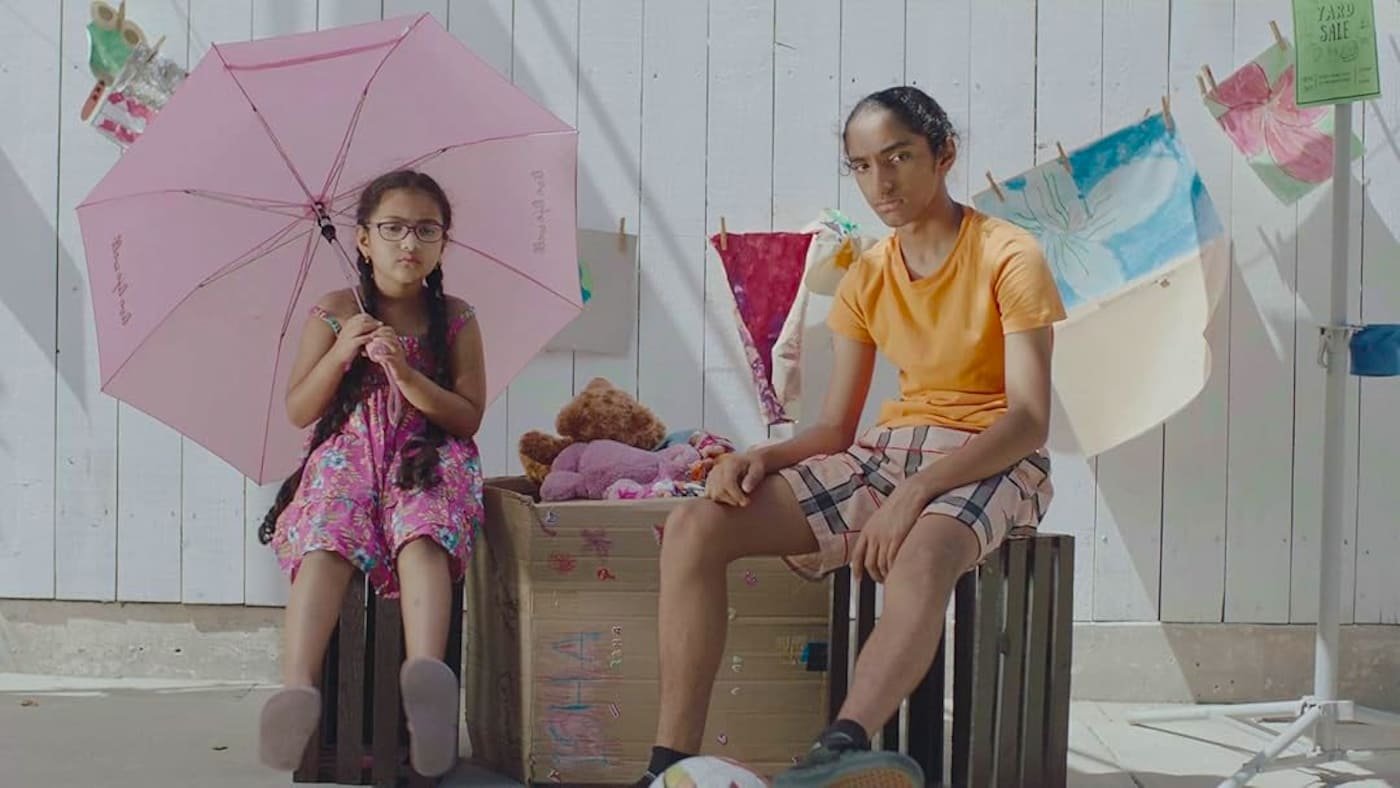
- There is no single Indian immigrant experience. With this award-winning short film, I wanted to tell a story rooted in a very specific cultural context, while still allowing it to resonate beyond it.

There’s a memory I keep returning to.
An arcade near my school – not the traditional American one, just a row of TVs with video game consoles and plastic chairs propped in front. But that was more than enough.
The glow of CRT screens. The muffled sound of button mashing and victory cries leaking through the glass. I didn’t have money to get in, so I would stand outside, watching other kids play Street Fighter and Mortal Kombat, imagining what it felt like to be inside.
One day, my brother told me we could play for free. We did. For hours. It was the happiest day of my life. Until my father found out what happened to the missing 100 rupees.
But something shifted in him that day. A month later, he bought us our first video game console. That moment stayed with me. It became one of those childhood memories that doesn’t fully make sense until much later.
“Dos Bros Force” began as an attempt to capture that feeling.
Growing up, for like most children, what I wanted felt urgent. What my parents were doing felt distant, sometimes even obstructive. Only much later did I begin to understand the other side.
My parents left their village in Srikakulam for Hyderabad in search of better opportunities. They built a life from scratch in a new environment, carrying not just their own aspirations, but the weight of an entire family system. Much of their life was defined by sacrifice, uncertainty, and a constant negotiation between survival and dignity.
When I eventually moved to the United States, I found myself on a similar path — leaving behind everything familiar to pursue a future that only existed as an idea.
That’s when “Dos Bros Force” began to evolve. It stopped being just about kids and video games, and became about something deeper: the gap between what children want in the present, and what parents are working toward for the future.
I’m currently expanding “Dos Bros Force” into a Telugu/English family dramedy feature film set in 1990s California.
We often talk about “immigrant stories” as if they are one thing. But the truth is, they are deeply specific.
There is no single Indian immigrant experience. A Telugu family that moved to the United States in the 1990s carries a different history, a different rhythm, and a different set of cultural negotiations than families from other regions or generations.
Yet within that specificity lies something universal.
The desire to belong.
The pressure to succeed.
The quiet distance that forms between parents and children, even when love is constant.
With “Dos Bros Force,” I wanted to tell a story rooted in a very specific cultural context, while still allowing it to resonate beyond it.
The short film was supported by the Netflix x Tasveer Film Fund, and went on to screen at over 50 film festivals, winning 14 awards. But the most meaningful responses didn’t come from juries or accolades.
They came from people.
From immigrants who said, “This feels like my family.”
From non-immigrants who said, “I didn’t know this world, but I understand it better.”
That’s when I realized the film had found its audience.
I’m currently expanding “Dos Bros Force” into a Telugu/English family dramedy feature film set in 1990s California.


If the short is about a moment, the feature is about a journey. It explores not just the children, but the entire family — the quiet frustrations and compromises of the parents, the emotional world of the kids, and the tension between the life you’re living and the life you’re building.
One of the arcs I’m most excited about is the mother’s journey. Immigrant mothers often clip their own wings so their families can soar, and those sacrifices are rarely centered in storytelling. Bringing that perspective forward feels important.
For all the progress we’ve made in representation, many stories still remain unseen.
Particularly stories that live in the in-between: Between countries. Between generations. Between who we are and who we are becoming.
“Dos Bros Force” sits in that space.
It’s not about spectacle. It’s not about extremes. It’s about the everyday moments that shape us — the ones we often overlook, until we’re old enough to understand them.
If the film does anything, I hope it opens a conversation.
Between parents and children.
Between past and present.
Between what we inherit and what we choose to carry forward.
Because sometimes, the most important stories are the ones we take for granted.
Kalyan Sura is a writer/director and VFX supervisor based in California. His work explores identity, family, and belonging through culturally rooted stories with a commercial lens. His short film “Dos Bros Force,” supported by the Netflix x Tasveer Film Fund, screened at 50+ international festivals and won 14 awards. He is currently developing the feature version. Watch the full film: https://www.youtube.com/watch?v=TkF1i5PKxtk Learn more: https://www.kalyansura.com/ Follow the film: https://dbfmovie.com/