




Sriram Krishnan Departs the White House After Shaping the Most Consequential AI Policy

- The Chennai-born venture capitalist who arrived at the Trump White House facing a racially charged MAGA backlash leaves 17 months later having earned the president's personal praise.
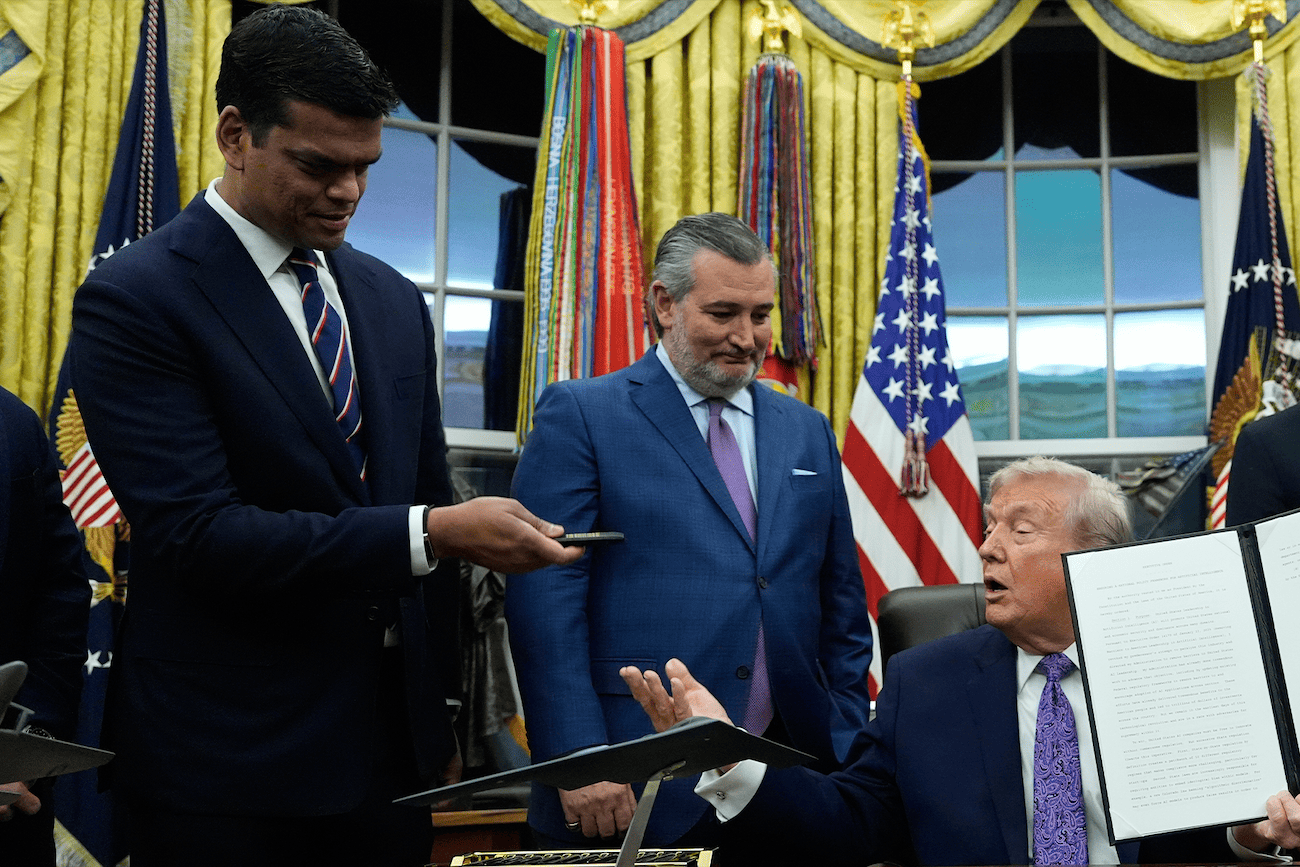

On Saturday, June 6, 2026, Sriram Krishnan posted a brief but unmistakable message on X. “This journey has been the privilege of a lifetime,” he wrote, according to Reuters. He offered no further explanation. He did not need to. After 17 months as the senior White House policy adviser for artificial intelligence, the Chennai-born tech investor and former Andreessen Horowitz general partner was departing the most powerful executive office in the world at the end of the month — and doing so, by every account, on his own terms.
The Washington Post broke the news of his departure hours earlier, reporting that Krishnan had informed administration officials of his plans to leave his post in order to start an outside institution focused on influencing technology policy. The Post, citing a person familiar with his plans who spoke on condition of anonymity, reported that Krishnan was expected to continue playing an active role in the administration’s approach to AI even from outside the White House.
What that outside institution will look like has not been publicly described. But the shape of what Krishnan accomplished inside the White House — and the remarkable arc of his 17 months there, from controversy-scarred arrival to presidential commendation — is now clearly visible.
A Rough Beginning: MAGA’s Loudest Welcome
The story of Sriram Krishnan’s time in the Trump White House begins not with a policy briefing but with a culture war.
On December 22, 2024, President-elect Trump announced on X that Krishnan would serve as Senior Policy Advisor for Artificial Intelligence at the White House Office of Science and Technology Policy. “Sriram Krishnan will serve as Senior Policy Advisor for Artificial Intelligence at the White House Office of Science and Technology Policy,” Trump wrote, adding that Krishnan would “help shape and coordinate AI policy across government, working with the president’s council of advisors on science and technology,” as TechCrunch reported. Krishnan would work closely with David Sacks, named Trump’s AI and crypto “czar.”
Krishnan responded with characteristic brevity and warmth. “I’m honored to be able to serve our country and ensure continued American leadership in AI,” he wrote on X. “Thank you, Donald Trump, for this opportunity.”
What followed was, by any measure, a stunning episode of public hostility. The backlash from the MAGA movement was immediate and, in significant stretches, explicitly racial. Laura Loomer — the far-right commentator and Trump loyalist — called the appointment “deeply disturbing” and said it was “not racist against Indians to want the original MAGA policies I voted for,” as Newsweek reported, adding that she had voted for a reduction in H-1B visas. The root of the hostility was Krishnan’s advocacy for removing country-specific caps on employment-based green cards — the per-country limits that have created multi-decade backlogs for Indian-origin skilled workers.
A social media post that went viral asked “Did any of yall vote for this Indian to run America?” — a query that David Sacks, one of Trump’s most prominent tech allies and the incoming AI and crypto czar, answered directly. “Sriram has been a US citizen for a decade,” Sacks wrote on X. “He’s not ‘running America.’ He’s advising on AI policy. He will have no influence over US immigration policy. These attacks have become crude, and not in the holiday spirit. I’m signing off now. Have a merry Christmas.”
Sacks also went further, invoking the philosophy of American exceptionalism in Krishnan’s defense. “It is GREAT that talent around the world wants to come here, not to China, and that Sriram can rise to the highest levels,” he wrote, as America’s News Brief documented.
Crucially, Axios reported that Krishnan had advocated for raising country caps on green cards but had not specifically commented on H-1B visas — a distinction that critics on social media consistently collapsed. Axios described Krishnan as an “unlikely candidate for controversy, known throughout Silicon Valley for his affability.”
Trump himself did not publicly rebuke the hostile voices within his coalition in the days immediately following the appointment. But he would eventually make his view of Krishnan’s value unmistakable.
The Man Behind the Appointment: From Chennai to the West Wing
Sriram Krishnan was born in January 1984 in Chennai, Tamil Nadu, India. He earned his undergraduate degree in engineering from SRM University — SRM Institute of Science and Technology — in Kattankulathur, near Chennai.
He moved to the United States in 2007 on an L-1 intra-company transfer visa to work at Microsoft, where he became a founding member of Windows Azure — the cloud computing platform that would become one of the company’s most consequential products — according to Axios. He remained in Seattle for more than six years before moving to Silicon Valley, where he held senior product roles at Snap, Facebook, Yahoo, and Twitter, according to TechCrunch.
Trump cited Krishnan as the leading figure behind the American executive order on AI — a direct presidential attribution of one of the administration’s most significant technology policy documents to a Chennai-born immigrant.
He became a U.S. citizen in 2016, according to Axios. In late 2020, he was appointed a general partner at Andreessen Horowitz, one of the most influential venture capital firms in Silicon Valley, according to TechCrunch. In 2023, he was selected to lead the firm’s first non-U.S. office in London, focusing on early-stage crypto investments. He left the firm in late November 2024, shortly before Trump announced his appointment.
His public profile extended well beyond venture capital. During the COVID-19 pandemic, Krishnan and his wife Aarthi Ramamurthy — a tech entrepreneur in her own right — launched a popular audio show on the Clubhouse platform, which hosted conversations with figures including Elon Musk and Mark Zuckerberg. Krishnan had also developed a close working relationship with Musk during Twitter’s post-acquisition restructuring in 2022, spending time in what TechCrunch described as the “war room” with Musk and Sacks as the platform was rebuilt. That relationship — with both Musk and Sacks — gave him credibility inside the MAGA tech ecosystem that few Indian Americans could claim.
What He Built: From Stargate to the AI Executive Order

Once confirmed in his role on January 20, 2025, Krishnan moved with purpose and speed. Time magazine named him one of its Persons of the Year for 2025 as an “Architect of Artificial Intelligence,” describing him as providing the “wake-up call that we needed” to the broader AI builder community — a characterization that the Wikipedia article on Krishnan cited as central to his legacy in the role. Time credited his work as having helped lead to “a multiyear, $500 billion initiative dubbed Stargate” to push American-made AI.
The Stargate initiative — a joint venture between OpenAI, SoftBank, and Oracle, announced in January 2025 with Trump present at the announcement — represented the administration’s most visible early commitment to maintaining U.S. leadership in frontier AI development. Krishnan’s role in building the policy architecture around it was central to his value to the White House.
He also moved into a focused position at the National Economic Council in early 2026, as All Toc documented in March 2026, signaling a maturation of the administration’s approach to AI from a collection of discrete technology initiatives into what the NEC framework treated as an integrated economic and regulatory priority. The move aligned AI policy coordination more closely with broader economic planning, including regulatory and market structure questions.
The capstone of his policy tenure was the executive order President Trump signed on June 2, 2026 — just four days before Krishnan’s departure announcement. Titled “Promoting Advanced Artificial Intelligence Innovation and Security,” the order established a voluntary framework under which technology companies could submit their most capable AI models to the federal government for cybersecurity review for 30 days before public release, as the Council on Foreign Relations and the Atlantic Council both documented in detailed analyses. The order explicitly stated that it was the policy of the United States to “promote AI innovation and security by working collaboratively with the private sector to modernize government and private sector information systems and harden them against external threats,” as the CFR quoted directly from the order’s text.
The Atlantic Council’s assessment, published June 3, described the order as recognizing what it called the “AI dual-mandate” — supporting rapid innovation and government adoption while creating practical mechanisms to address national security risks. The Council praised the order for striking a balance between those competing imperatives. Reuters, in its account of Krishnan’s departure, noted that Krishnan had been involved in the administration’s broader efforts to create a national framework for regulating AI development, including in the context of growing security concerns about the capabilities of frontier models — citing, as an example, reporting about Anthropic’s Mythos model, which had reportedly demonstrated the ability to expose cybersecurity vulnerabilities in financial institution systems.
Trump’s Assessment: “Without Him, Things Would Not Function”
By December 2025, whatever distance had existed between the president and his Indian-born AI adviser had entirely closed. Trump made his view explicit in terms that left little room for ambiguity.
“Without him, things on AI would not function well,” Trump said of Krishnan in December 2025. Trump also cited Krishnan as the leading figure behind the American executive order on AI — a direct presidential attribution of one of the administration’s most significant technology policy documents to a Chennai-born immigrant who had arrived in the United States less than two decades earlier on a company transfer visa.
The Time Person of the Year recognition and the presidential commendation together constituted something remarkable in the history of Indian American public service: a first-generation immigrant who had been subjected to explicitly racial hostility from elements of the president’s own political base had, within a year, earned the president’s personal endorsement as indispensable to one of the administration’s central policy priorities.