




India’s ‘First Family’ Finally Has Someone Speaking From Within, Instead of the Story Told Entirely By Those Who Oppose It

- “Belonging: A Journey Of Love,” is more than a personal memoir. It is Sonia Gandhi’s attempt to place on record her version of the Nehru-Gandhi family’s relationship with India, its political inheritance and the Congress party.
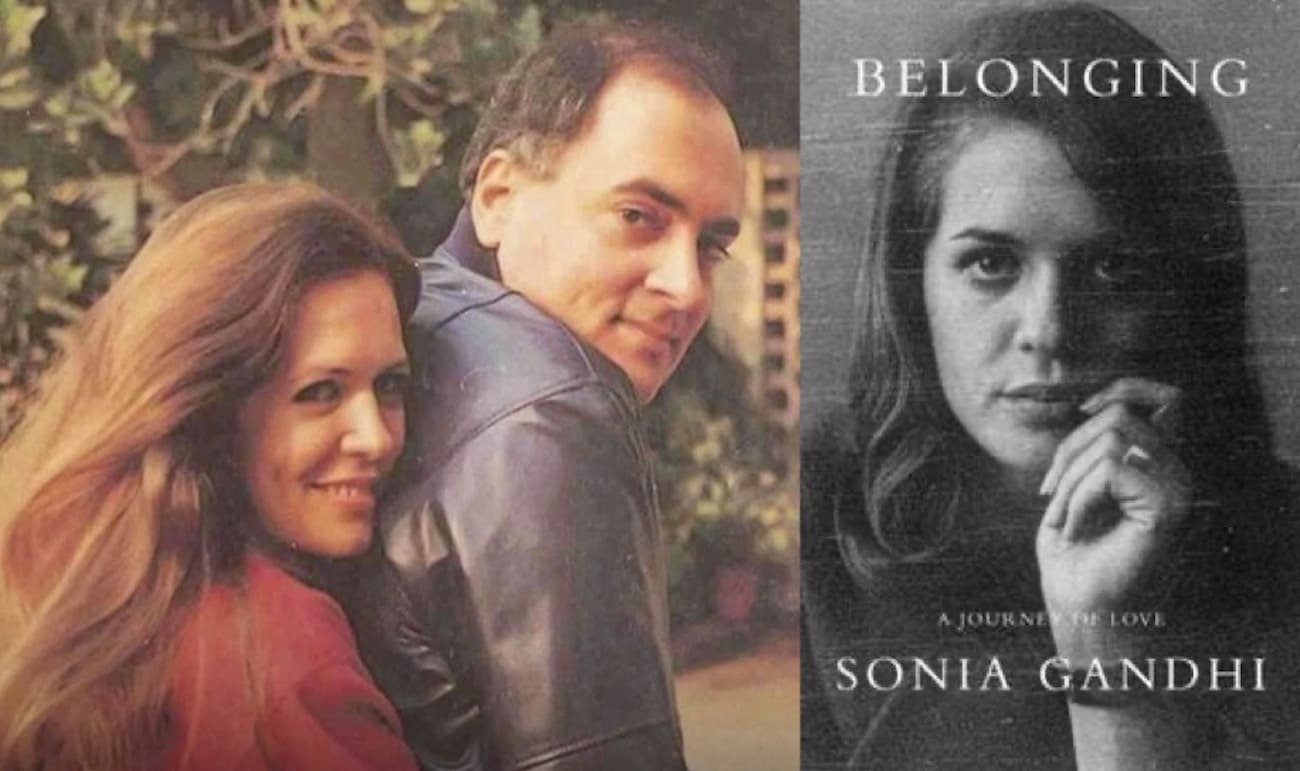

For the next few months, “Belonging: A Journey Of Love,” will travel with the Congress. It will turn up in election speeches, television studios and party meetings. Sonia Gandhi has put her account on the table. The party will decide how much of it to use; the BJP, which passages to attack. The rest of us must work out where testimony ends and history begins.
The title is doing a good deal of work. Sonia Gandhi has spent much of her public life being told that she does not belong. Her birth, accent and origins have all been made political material. She became an Indian citizen, entered a family whose members had shaped the republic, and eventually led its oldest national party. None of that stopped the question being asked. In Indian politics, some questions are allegations with a question mark attached.
Although the book is written as a personal account, it is hard to see it as just that. Sonia Gandhi is not simply a member of a well-known political family; she has lived through much of its later history and remains its surviving matriarch. Over the years, that history has been discussed, debated and often interpreted by others. What makes her account different is that she writes from within it. She can draw on personal conversations, family loss, moments of doubt and decisions made behind closed doors, away from public scrutiny. These are experiences that no biographer, however well informed, can fully capture from the outside.
For years, the BJP has repeatedly targeted the Nehru-Gandhi family over Emergency, the 1984 anti-Sikh violence, Operation Blue Star, Bofors and dynastic politics. Sonia Gandhi’s foreign origins have also been a constant target. Her decision not to become Prime Minister in 2004, and the influence she continued to wield over Manmohan Singh’s government, have been used to question her political authority. Over the years, much of the family’s history has been seen and discussed through the BJP’s version of it. With “Belonging,” Sonia Gandhi has now placed her own account of these events before the public. The family finally has someone speaking from within, rather than having its story told entirely by those who oppose it.
The BJP can now give Nehru a well-deserved rest. It has “Belonging” to quote from whenever it wants to attack the family. The Congress, in turn, has the same book to fall back on whenever it wants to answer those attacks. This raises an interesting possibility: will political skirmishes between the two parties now become a contest of quotations, with the BJP pulling out passages to indict the family and the Congress producing others in its defense?
There is a chicken-and-egg question here. Is the author more important than the book, or has the book acquired importance because of its author? Probably both. A Sonia Gandhi memoir would attract attention whatever it contained. But a book addressing the family’s relationship with India and the Congress has a use beyond the literary. It may become a reference point for party workers answering charges with inherited loyalty and familiar lines.
The title also opens a question beyond the family. What makes a person belong in India? Birth, citizenship, language, cultural familiarity, sacrifice, public service, or acceptance by other people? Sonia Gandhi’s life has been measured against these tests.
That is where “Belonging” could become something like a Congress family Bible. Not literally, and not by order of the high command. But workers may treat it as an authorized account of how Sonia Gandhi wants the family’s inheritance understood. When asked about the Emergency, the 2004 change of government, her foreign origins or her relationship with Manmohan Singh, the memoir offers her version. It is a source to cite, and a position to defend.
The BJP has made the Nehru-Gandhi family a central target of its argument against Congress. The list is familiar. The Babri Masjid demolition, the 2002 Gujarat riots, and Congress’s record on secularism are also part of this contest. A memoir cannot settle these disputes. But Sonia Gandhi has supplied a first-person response to questions that have followed her family for decades.
For Congress, that matters. It can say this is not a journalist’s reconstruction, a biographer’s inference or an opponent’s accusation. This is what the person at the centre says she saw and understood. Her account of the Emergency, including its description as a mistake and her recollection of Indira Gandhi’s reflections, gives workers something to point to. Her account of the 2004 decision not to become prime minister can be used against the charge that the family was hungry for office. Her response to Babri can be cited in arguments about secularism. That is a political advantage.
But the word ‘can’ matters. These are arguments Congress leaders may make, not verdicts delivered by history. Sonia Gandhi’s recollections deserve to be heard, not treated as self-proving. A participant’s testimony is valuable because it is personal. It also carries the limitations of memory, selective or otherwise, perspective and self-defense. That applies to every political memoir.
The book appears to handle some questions cautiously. Bofors remains a persistent stain in the public argument around the family. Sonia Gandhi’s differences with P. V. Narasimha Rao are another area readers may examine. What is explained, defended or passed over will matter as much as the passages that make headlines. A family member writing about family history is entitled to choose her ground. Readers are equally entitled to notice the ground she does not enter.
The silences may matter to historians. A memoir is not a deposition in which every relevant fact must be disclosed. It is a shaped account, even when the writer insists on speaking plainly. The selection of episodes, their order and the people who receive attention tell us something. So does the absence of detail. Congress workers may look for answers; the BJP for omissions. Historians will compare the account with documents and other witnesses.
The title also opens a question beyond the family. What makes a person belong in India? Birth, citizenship, language, cultural familiarity, sacrifice, public service, or acceptance by other people? Sonia Gandhi’s life has been measured against these tests, sometimes by people who would not accept any answer. She has lived here for decades, raised a family and led a party with a long history in the freedom movement and the republic. Yet suspicion attached to her origins remains available for political use. The memoir lets her describe belonging rather than leave it to her critics.

Is “Belonging” the final word? It cannot be. If the party uses the book only to replace one set of slogans with another, it will waste the opportunity. It could use the account to confront its own history, including uncomfortable parts.
“Belonging” is more than a personal memoir. It is Sonia Gandhi’s attempt to place on record her version of the Nehru-Gandhi family’s relationship with India, its political inheritance and the Congress party. In doing so, she has given the party something it has hitherto lacked: an account of its history from the person at the centre of its most consequential political decisions for nearly three decades. And from the only surviving witness of that immediate family from that era.
The book will inevitably become a reference point for Congress leaders defending the party’s record against the BJP. But its ultimate importance will depend on whether it encourages a more honest engagement with history or becomes a new orthodoxy that Congressmen are expected to repeat.
For Sonia Gandhi, “Belonging” is her truth. Should it become the Congress party’s settled history? That is another matter.
PS: I have not read the book yet.
V.V.P. Sharma is a senior journalist and commentator based in New Delhi.