




Epic Opening: ‘Ramayana: Rise of a Legend’ — Spectacle, Faith and Politics in India’s Biggest Film Bet

- The film was built to cross borders. It opened on nearly 50,000 screens in more than 100 countries.
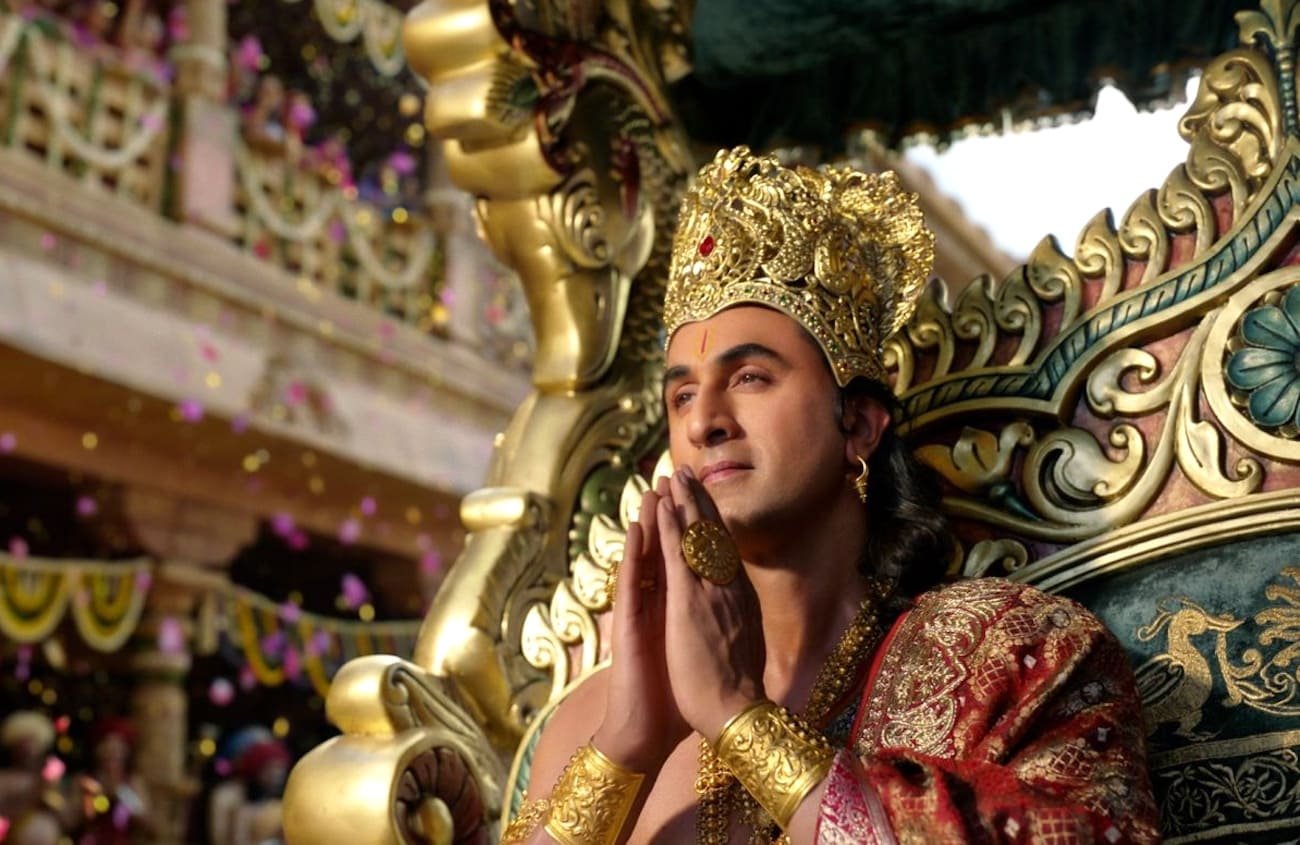

Nitesh Tiwari’s “Ramayana: Part 1,” released in some markets as “Ramayana: Rise of a Legend,” reached theaters worldwide on Nov. 5, just ahead of Diwali. Ranbir Kapoor plays Ram, Sai Pallavi plays Sita, and Yash, who also co-produced, plays Ravana. The score is by A.R. Rahman and Hans Zimmer, and the visual effects come from DNEG, the studio behind Dune.
The film opened to ₹62.47 crore ($6.7 million) in India on its first day, according to Bollywood Hungama, and ended its extended four-day Diwali opening with ₹230.32 crore ($24.6 million) net in India. Globally, Sony reported $55.7 million over the four days, a Diwali opening record for an Indian production, Variety reported. That included $6 million from IMAX screens, the format’s biggest global launch for an Indian film.
Critics are more divided than audiences. The film holds a 76% critics’ score from 42 reviews on Rotten Tomatoes, against 90% from verified audiences, and a Metacritic score of 63, meaning “generally favorable.” The consensus across outlets: a staggering spectacle, carried by Yash’s Ravana and one standout set piece, that often struggles to make its central relationships feel alive.
What the Critics are Saying
The enthusiasts. Several major Indian outlets rated the film highly. The Times of India’s Renuka Vyavahare (4.5/5) argued that Kapoor’s restrained Ram is almost the opposite of his violent turn in Animal and shows a new side of his range. Rishabh Suri of the Hindustan Times (4/5) said strong performances and a memorable Jatayu sequence outweigh a slow first half and uneven music, according to the review summaries compiled on Wikipedia. Scroll’s Nandini Ramnath called it a sleek, sumptuous Hollywood-style spectacle.
The middle ground. The Indian Express’s Shubhra Gupta, NDTV’s Saibal Chatterjee, Firstpost and News18 all landed at 3/5. Chatterjee found the scale dazzling but the familiar characters flat and inert, as quoted in Bollymoviereviewz’s compilation. News18’s Chirag Sehgal named Yash and Ravie Dubey’s Lakshman as the film’s highlights.
The skeptics. Outlook gave it 2.5/5. In The Quint, the reviewer praised the climactic Jatayu–Ravana fight but found Kapoor’s Ram uninvolving and the central relationships emotionally empty, calling it “cinema that is rendered.” IGN’s Siddhant Adlakha was harshest, at 4/10. He faulted clunky action, weak CGI and awkward AI lip-syncing, per Metacritic’s summary.
Where they agree. Across the spectrum, critics single out Yash’s Ravana, the Pushpak Vimana and Jatayu sequences, and the sheer visual ambition. The most frequent complaints concern the 195-minute running time (longer overseas), the songs, and how little emotional connection Ram and Sita generate. The Hollywood Reporter India argued that the action set pieces land partly because the drama around them is so frictionless.
Why it Matters in India Now
No Indian story carries more political weight. In modern India, the Ramayana became closely tied to the Hindu nationalist campaign to build a Ram temple in Ayodhya on the site of a 16th-century mosque, AFP noted in an explainer published ahead of the release. Some scholars argue that Ramanand Sagar’s hugely popular 1980s television series helped strengthen that movement. The mosque was demolished in 1992, and the temple opened in 2024. The epic also anchors India’s two biggest festival seasons: Dussehra, which marks Ram’s victory over Ravana, and Diwali, associated with his return to Ayodhya. The film’s marketing followed that calendar, opening advance bookings on Dussehra and releasing in Diwali week.
The most frequent complaints concern the 195-minute running time (longer overseas), the songs, and how little emotional connection Ram and Sita generate.
With the Ayodhya temple now built and politicians regularly invoking “Ram Rajya,” the epic feels newly urgent, The Federal wrote during production. The outlet reported that some critics read the project through producer Namit Malhotra’s public views on Indian cultural pride, which they see as aligned with the governing BJP’s narrative. Others framed the film as a potential corrective to Adipurush, the 2023 Ramayana adaptation that drew public anger over its dialogue and depictions and flopped.
The casting has drawn attention too. Sunny Deol, who plays Hanuman, is a former BJP member of Parliament. Arun Govil, Ram in the 1980s TV series and now a BJP MP, appears here as King Dashrath. The film’s English-language marketing carries the tagline “Our Truth. Our History,” according to Metacritic’s listing, echoing Malhotra’s long-stated aim to present the epic as history and culture to the world.


Supporters see a long-overdue, world-class showcase of Indian civilization made with Hollywood-level resources. Critics of Hindu nationalism worry that the line between devotional epic and political project is increasingly hard to see. Most reviews so far have judged it as filmmaking rather than ideology. India TV’s review, for instance, said Tiwari keeps the mythological events intact and relies on visuals for novelty, rather than reinterpreting the story.
Will it Travel? America and Europe
The film was built to cross borders. It premiered at the Academy Museum of Motion Pictures in Los Angeles on Oct. 27, is distributed internationally by Sony Pictures, and carries a PG-13 rating in the U.S. Filmibeat reported it opened on nearly 50,000 screens in more than 100 countries.
Early Western reviews are encouraging but not rapturous. Peter Bradshaw of The Guardian gave it 4/5, likening its unselfconscious storytelling to Hollywood’s 1950s and ’60s sword-and-sandal epics and calling it “a rather amazing adventure,” per Metacritic. He also compared parts of it to The Lord of the Rings and The Lion King. The New York Times’ Nicolas Rapold found it respectable and respectful. IndieWire’s Christian Zilko gave it 3.5/5 and Screen Rant 7/10. IGN was sharply negative.
The opening weekend. In North America, Sony opened the film in about 1,433 locations, the widest release there for an Indian film. It took in roughly $8.6 million over the three-day weekend and $12.1 million over four days, finishing fifth, The Hollywood Reporter reported. That is the second-biggest four-day North American start for an Indian film, behind Dhurandhar 2: The Revenge, according to Deadline figures cited by ComingSoon. In the U.K., its four-day gross of £2.15 million set a new opening record for Indian cinema, Pinkvilla reported. In Australia it debuted at No. 1, Variety Australia reported.
What the numbers suggest — an assessment. The first weekend points to a record run with South Asian diaspora audiences, who drive most overseas business for Indian films, in the U.S., the U.K. and Australia. A broad Western crossover has not yet shown up. The film ranked No. 2 worldwide but only No. 5 in North America, a split ComingSoon called unusual. Reviewers flag obstacles for newcomers: a running time over three hours (longer overseas), a story that assumes familiarity with the epic, and a two-part structure that ends on a cliffhanger; reports differ on whether Part 2 arrives in 2027 or 2028. In its favor, RRR showed in 2022 that an Indian spectacle can widen its audience through word of mouth over several weeks, and European critics like Bradshaw are approaching this one as an enjoyable epic rather than a curiosity. Second-weekend holds in the U.S. and Europe will show whether it reaches beyond its core audience.