




In Netflix Series ‘Unaccustomed Earth,’ Jhumpa Lahiri’s Most Celebrated Book Finds Its Ideal Form

- Eight stories about Bengali American families in Cambridge, Massachusetts, reimagined as a single interconnected saga — with Freida Pinto, Siddharth, and an extraordinary ensemble, directed in its opening episodes by Ritesh Batra, and arriving on December 17.
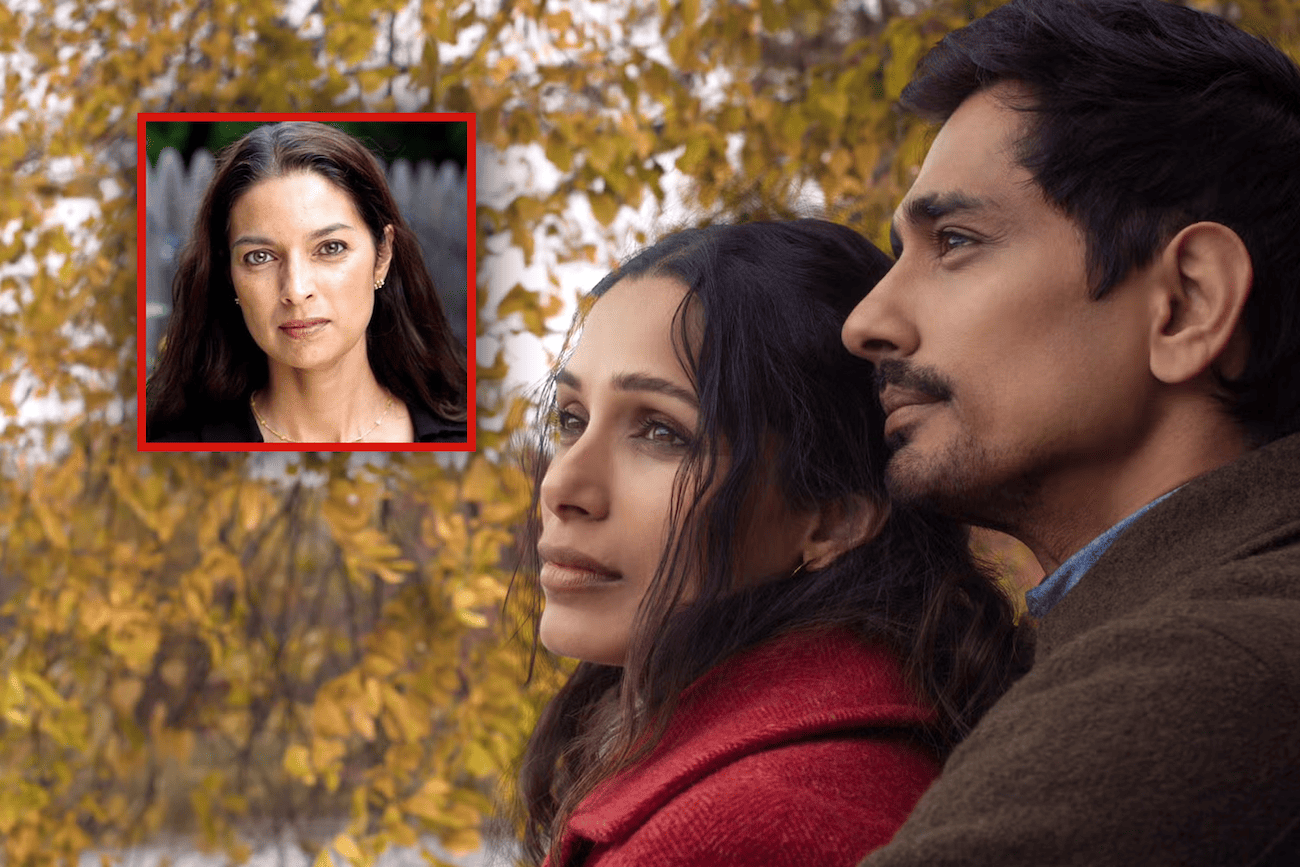

On September 17 and 18, 2026, Netflix released the first look images of “Unaccustomed Earth” — its upcoming adaptation of Jhumpa Lahiri’s 2008 short story collection — along with a confirmed premiere date of December 17, 2026. The announcement immediately generated significant attention among literary and South Asian diaspora audiences who have long hoped the collection would find its way to screen.
The first look images — still photographs from the production, featuring Freida Pinto and Siddharth in what appear to be both intimate domestic settings and charged emotional confrontations — were accompanied by a character and plot description that confirmed what industry insiders had suspected since production began: the adaptation would not simply translate Lahiri’s eight distinct stories as separate episodes, but would weave their characters and themes into a single, continuous narrative centered on an interconnected Bengali American community in Cambridge and Boston, Massachusetts.
“Unaccustomed Earth welcomes you into the saga of an interconnected Indian American Bengali community in Cambridge, Massachusetts,” Netflix Tudum stated in its official description of the series. The platform called it “epic, vibrant, and dramatic” — a description that suggests the production has embraced the full emotional and narrative scope that Lahiri’s stories, taken together, contain.
A Pulitzer Winner’s Most Celebrated Collection
To understand the ambition of the Netflix adaptation, it is necessary to understand what “Unaccustomed Earth” is and what it represents in American literary history.
Jhumpa Lahiri published “Unaccustomed Earth” in 2008, seven years after her debut novel “The Namesake” and eight years after her debut collection “Interpreter of Maladies” won the Pulitzer Prize for Fiction — making her the first South Asian American writer to win the honor, and one of the youngest fiction writers ever to receive it. “Unaccustomed Earth” became Lahiri’s first book to top the New York Times Best Seller list — a milestone that reflected both the expansion of her readership and the deepening of her literary ambition.
The collection consists of eight stories, divided into two sections. The first section contains five standalone stories exploring different Bengali American families across multiple American cities — Cambridge, Seattle, Boston, Rome. The second section, which takes its name from a Nathaniel Hawthorne epigraph that gives the collection its title — “Human nature will not flourish, any more than a potato, if it be planted and replanted, for too long a series of generations, in the same worn-out soil. My children have had other birthplaces, and, so far as their fortunes may be within my control, shall strike their roots into unaccustomed earth” — consists of three interconnected stories following two characters, Hema and Kaushik, from childhood to adulthood across continents.
The book’s central preoccupations are those that have defined Lahiri’s entire body of work: the weight of parental sacrifice on children who did not ask for it, the specific loneliness of the second-generation immigrant who belongs fully to neither the old world nor the new, the way love is shaped and constrained by cultural obligation, and the melancholy of lives that turned differently than anyone planned. The epigraph’s image — of human beings as plants that need new soil to flourish — gives the stories their organizing metaphor and their bittersweet emotional tone.
Lahiri’s previous work was adapted for the screen in 2006, when director Mira Nair brought “The Namesake” to cinema with Irrfan Khan and Tabu in its central roles — a film that received strong critical reception and established that Lahiri’s specific mode of quiet, interior, domestic storytelling was translatable to visual narrative.
A South Asian Ensemble Behind and in Front of the Camera
The creative assembly behind “Unaccustomed Earth” is, by any measure, one of the most distinguished and deliberately curated in the history of South Asian American storytelling on screen.
The book’s central preoccupations are those that have defined Lahiri’s entire body of work: the weight of parental sacrifice on children who did not ask for it, the specific loneliness of the second-generation immigrant who belongs fully to neither the old world nor the new.
Madhuri Shekar serves as writer, showrunner, and executive producer. Shekar is best known to international audiences for her work as a writer on Netflix’s “3 Body Problem” — the massively ambitious 2024 adaptation of Liu Cixin’s science fiction trilogy, co-created by David Benioff, D.B. Weiss, and Alexander Woo, which was among the platform’s highest-profile launches of that year — and on “The Nevers” (2021), the HBO alternate-history drama, according to India TV News and DTNext. Her selection as showrunner is not simply a matter of writing credential. She also chose the structural approach that has generated the most anticipation about the series: rather than adapting the eight stories as separate, self-contained episodes, she reimagined them as interlocking narratives from the same community, as The Viewer’s Perspective documented from her own description of the creative process.
“Rather than adapting the stories as separate installments, the Netflix series connects their characters within the same Indian American community,” Shekar explained while discussing how she developed the adaptation, as The Viewer’s Perspective quoted from her development interviews.
Jhumpa Lahiri herself serves as executive producer — a direct involvement that signals the author’s investment in the adaptation and provides the production with both creative guidance and the implicit authority of the originating voice. Lahiri’s participation as executive producer distinguishes this adaptation from many literary-to-screen translations in which the original author has no formal role in the production.
Ritesh Batra will direct and executive produce the first two episodes — episodes 101 and 102. Batra, the Mumbai-born director whose debut feature “The Lunchbox” (2013) became an international phenomenon, winning the BAFTA Award for Outstanding British Film nomination and screening at Cannes, and whose “Photograph” (2019) premiered at Sundance, brings to the series a sensitivity to quiet emotional register and the interior lives of South Asian characters that maps precisely onto what Lahiri’s stories require. The Lunchbox’s particular genius — its ability to convey profound emotional connection between two people who never fully meet — suggests a director ideally suited to material in which so much of the most important experience is unspoken. Batra previously directed the acclaimed “Sense8” episodes for Netflix, establishing a direct prior relationship with the platform.


Nisha Ganatra, whose directorial credits include “Freakier Friday” (2025) and the critically praised “Late Night” (2019), serves as executive producer — bringing to the production a filmmaker’s eye and a record of working sensitively with South Asian American characters in mainstream Hollywood contexts.
John Wells — whose producing credits include “ER,” “Shameless,” “Shameless UK,” and dozens of other prestige television productions — rounds out the executive producer team alongside Erica Saleh, Erin Jontow, and Celia Costas.
The Cast: Pinto, Siddharth, and an Ensemble Across Two Continents
Freida Pinto plays Parul Chaudhury — a wife and mother who, after receiving a life-changing cancer diagnosis, returns with her family from Mumbai to Cambridge, Massachusetts, the city where she once felt most at home. “Parul once gave up her college first love to honor her father’s wishes,” as The Viewer’s Perspective documented from Netflix’s character description. “Years later, after receiving a life-changing cancer diagnosis, she moves her family from India back to Cambridge, Massachusetts, the place where she once felt most at home. Knowing that her time may be limited, Parul decides to pursue the life she never allowed herself to have.”
Pinto’s casting is both commercially sensible and artistically appropriate. She rose to international fame with Danny Boyle’s “Slumdog Millionaire” in 2008 — the same year “Unaccustomed Earth” was published — and has since maintained a career that spans studio films, independent productions, and prestige television. Her personal biography — she was born and raised in Mumbai, where Parul’s family has been living before the story begins — gives her an authenticity in the role that purely diasporic actors might not have brought.
Siddharth — the Chennai-born actor, filmmaker, and activist whose Tamil film career spans more than two decades — plays Amit, the first love Parul left behind to honor her father’s wishes. At the center is Parul, a devoted wife and mother whose return to Cambridge after five years in Mumbai brings her face-to-face with Amit Mukherjee, the love she never quite left behind, as Netflix Tudum’s official story description documented. Siddharth’s most recent work includes “Operation Safed Sagar” and “Lust Stories 3,” as DTNext confirmed — and his casting opposite Pinto brings a cross-industry pairing that draws on both Hindi and Tamil cinema traditions alongside Hollywood sensibilities.
The ensemble cast supporting the two leads is substantial and carefully assembled. Indraneil Sengupta plays Jai; Parveen Kaur — the Canadian actress of Punjabi heritage known for “Transplant” — plays Nina; Sarayu Blue — the Indian American actress known for “Never Have I Ever” — plays Ruma; Justin Bartha plays Adam; Adi Roy plays Kaushik; Iyla Sundarsingh McKaig plays Hema; and Jayant Kripalani plays Pranab. Additional cast members announced in subsequent production updates include Siddharth, Justin Bartha, Parveen Kaur, Swayam Bhatia, and Palomi Ghosh, as Netflix Tudum confirmed.
The casting of Sarayu Blue as Ruma is particularly resonant for readers of the original collection: “Hell-Heaven,” from the first section of the book, is among the stories centered on a character named Ruma — and “Unaccustomed Earth,” the book’s title story, is built around Ruma’s relationship with her widowed father who comes to visit. Adi Roy as Kaushik and Iyla Sundarsingh McKaig as Hema bring to the screen two of the book’s most beloved characters — the protagonists of the trilogy that closes the second section of the collection.