




Happy 61st, America: A Naturalized Citizen’s Toast On the Country’s 250th Birthday

- Two hundred and fifty years is a remarkable run for an idea. Sixty-one is barely a lifetime for a country, and mine is still being decided. I have the certificate that says I’m American. What I don’t have is the luxury of assuming the certificate will always be enough.
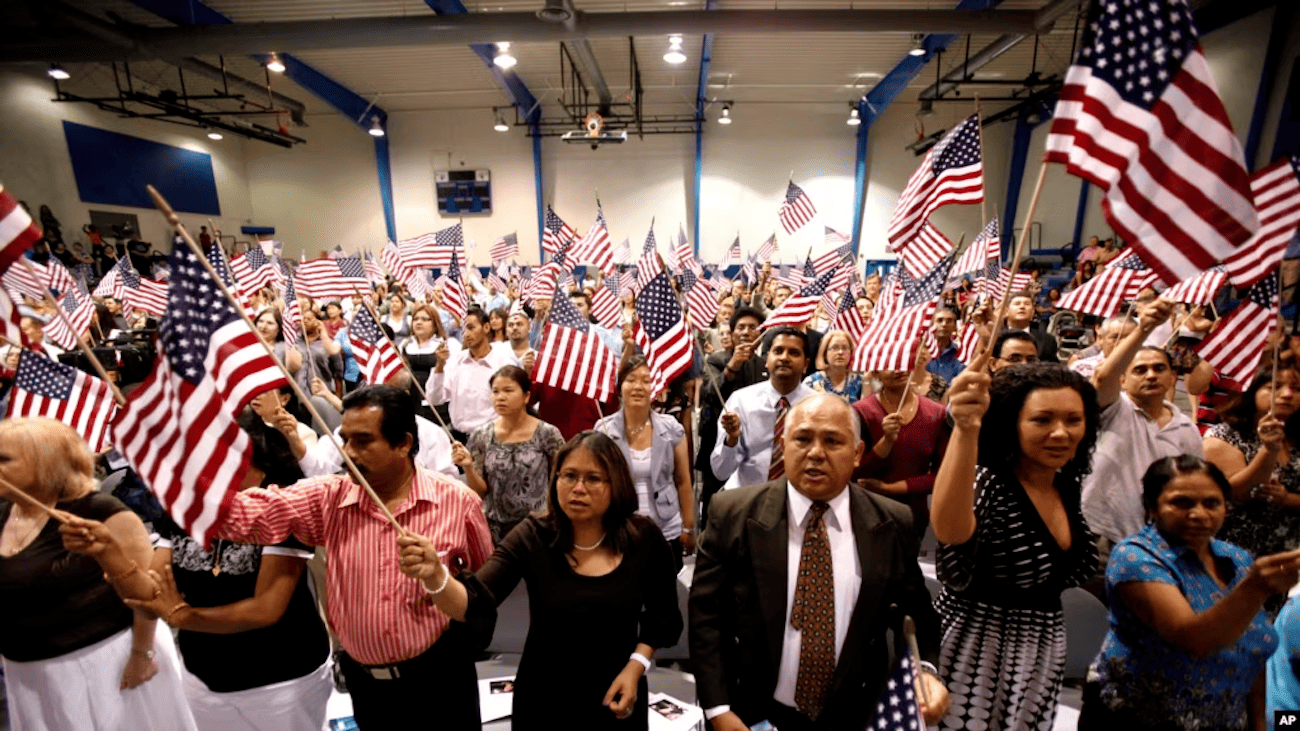

I have been to exactly one event in my American life where grown adults from dozens of countries cried in a government building for the right reasons. It was my naturalization ceremony. The judge mispronounced most of our names and nobody minded, because we understood that this was, in its own way, the point — a country clumsy enough to butcher your name and generous enough to give you its passport anyway. We stood and renounced “all allegiance and fidelity to any foreign prince, potentate, state, or sovereignty,” which is a lot of Renaissance vocabulary to throw at a man whose English is fluent but whose emotions are still Tamil.
That day is my July 4th. The other one — the one with the fireworks, the one turning 250 this week—I celebrate the way converts celebrate everything: not harder than the people born into it, just never absentmindedly.
So consider this a toast. But attentive is what converts are, and attentive is what I intend to be. Because the America I’m toasting is not, strictly speaking, 250 years old. And its actual age is the thing I want to talk about.
The Boring Miracles
Let me first make the case for the country, and let me make it specifically, because gratitude in the abstract is just a greeting card.
What astonishes the immigrant is never the Statue of Liberty. It is the boring miracles. It is the clerk at the Secretary of State’s office who processes your paperwork without asking your caste, your father’s name, or what you might be prepared to offer for faster service. It is the pothole complaint that gets the pothole filled—sure, sometimes after two months, but it does get filled. It is the discovery that the line means the line — that the system, creaky and maddening as it is, mostly works without an envelope sliding across a desk.
It is the fact that in 2007, two immigrants could start a consulting company in Michigan and no one demanded to know who our people were, which official was our patron, or why we thought men with our surnames deserved to compete. The forms were just forms. And the forms were all there was. In most of the world, the forms are the beginning of a negotiation. Here, astonishingly, they are the whole transaction.
It is the national pastime of complaint. Americans grumble about their country with a freedom so total they’ve stopped noticing it’s a freedom. You can mock the president in print, on stage, in a Facebook post your uncle will regrettably share — and then you can sleep soundly, uninterrupted by a knock. I have lived in places where satire now requires courage. Standup comedy can get you arrested without charges. Writing a Medium post can send you to prison without an opportunity to appeal. Here it merely requires Wi-Fi. That is not a small thing. That is close to the whole thing.
Nobody chooses America more deliberately than the person who had to pass a test to love it officially.
And it is reinvention — the great American absolution. Nowhere else on earth does the question “what did you do before this?” carry so little penalty. Engineers become brewers. Consultants become writers. The country hands out second acts like samples at Costco, and it does not check your original credentials at the door.
The 61-year-old Country
Here is the complication, and it is a loving one: almost none of this was available to someone like me for the first 189 years of the American experiment.
The idea was there from the start — all men, created equal, endowed by their Creator. It remains the most beautiful sentence ever committed by a committee. But the reality that lets me write this essay as a citizen was founded in 1965, when the Hart-Celler Act dismantled a quota system that had allotted India roughly one hundred immigrants a year. One hundred. The doors of the world’s great universalist idea, open a crack the width of a visa officer’s mood.
After 1965, the country I actually live in came into being — the medical residencies and motel corridors, the H-1Bs and the spelling bee dynasties, the Edison strip malls and the Frisco subdivisions. The America of my daily life is not an old country. It is a young one, wearing an old country’s birthday hat.
Which means the things I love most about America are younger than my parents. And younger things are easier to lose.
What the Naturalized Know
This is where the toast acquires an edge, because the naturalized citizen carries something the birthright citizen does not: a control group.
We know, from lived memory rather than dystopian fiction, what it looks like when institutions ask your surname before your case number. We know what a press that flatters power sounds like, because we grew up adjusting the antenna to hear it. We know what happens when citizenship stops being a fact and becomes a favor — renewable, revocable, contingent on the right paperwork surviving the right audit. India is running a version of that experiment right now with its electoral rolls, and I have watched, from Michigan, with the specific dread of a man who recognizes the opening scenes of a film.


So when the Supreme Court spends the week before the semiquincentennial parsing which Americans are born American enough, the immigrant does not say “it can’t happen here.” We say, quietly: we’ve seen the early frames. I made the longer legal argument elsewhere and won’t re-litigate it over the birthday cake. I’ll only note the arithmetic — the constitutional promise of 1868 survived by a single vote, and the demographic promise of 1965 now lives in the same weather.
Taking this country for granted is a luxury item, and like most luxury items, it is unevenly distributed. The birthright citizen inherited the boring miracles and can be forgiven for assuming they are load-bearing walls. The naturalized citizen knows they are furniture — beautiful, movable, and removable by anyone with sufficient determination and a majority.
The Toast
And yet: happy birthday, America. I mean it without irony, which by current standards makes me a radical.
Converts don’t out-pray the congregation; they just never doze off in the pew. We flew thousands of miles, filled out the forms, studied for a civics test most natural-born citizens would fail, and swore off potentates we had never met — all for the privilege of complaining about this place from the inside. Nobody chooses America more deliberately than the person who had to pass a test to love it officially.
So this Fourth, I’ll raise a glass to both anniversaries — the 250-year-old idea and the 61-year-old reality that finally let me in to test it. Two hundred and fifty years is a remarkable run for an idea. Sixty-one is barely a lifetime for a country, and mine is still being decided.
I have the certificate that says I’m American. What I don’t have is the luxury of assuming the certificate will always be enough.
As of last week, neither does anyone else.
Ganpy Nataraj is an entrepreneur, author of “TEXIT – A Star Alone” (thriller) and short stories. He is a moody writer writing “stuff” — Politics, Movies, Music, Sports, Satire, Food, etc.