




Secret Lives of Parents: ’The Whistler’ is a Testament to Ann Patchett’s Mastery of Setting and Sensory Detail

- The novel is a luminous reminder of life's sweetness and impermanence, proving that the feeling of being completely known by another person, even for a short time, can change your universe forever.
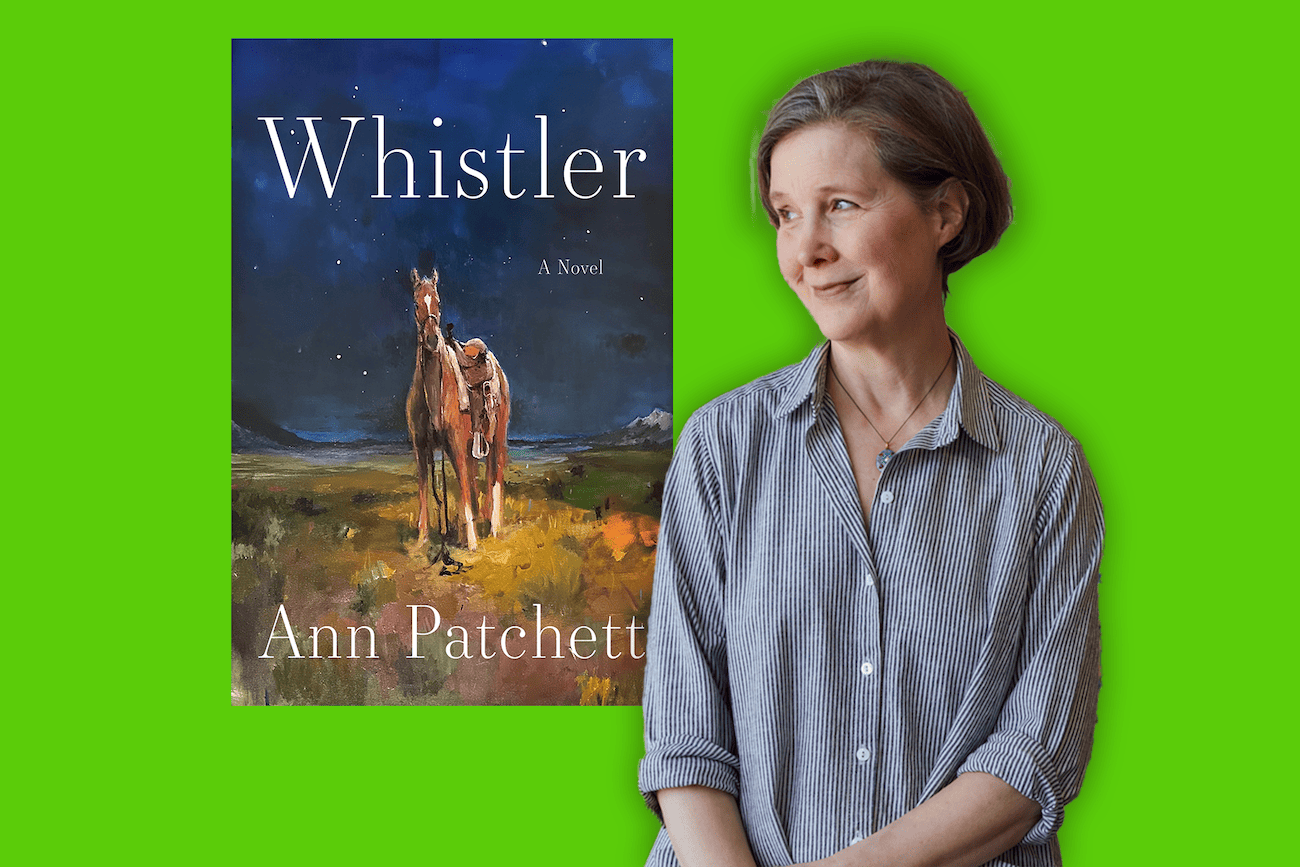

I first picked up Ann Patchett’s latest novel, “The Whistler,” because of its cover: a beautiful oil painting of a brown horse with a white flare and two white stockings standing in a prairie. The horse’s gaze immediately pulled me back to my childhood and the days I spent reading “Black Beauty.” Opening the book, I found a dedication to Jim Fox featuring a quote by Jules Verne: “I only ask to live another hundred years so that your memory will remain with me longer.” That quote instantly endeared the story to me. But I was totally committed when I hit the page where Patchett writes that you only have to be in the company of one person who sees you completely, even if it is for a short time.
The novel felt both contemplative and uplifting. While the familiar theme of mothers and their complex bonds with their daughters reemerges in “The Whistler,” this novel belongs entirely to the unbreakable, tender, and magical bond between a young girl and her stepfather. Patchett beautifully tracks how Eddie Triplett’s sensitive, kind, and sunny personality profoundly shapes the life of the protagonist, Daphne Fuller.
The story opens four decades after their separation. Daphne, now a fifty-two-year-old English literature teacher, and her husband, Jonathan, are visiting the Metropolitan Museum of Art when they notice an elderly, white-haired man following them. It is Eddie. Meeting again after forty years, time utterly falls away. Though Eddie was only married to Daphne’s mother for a little over a year when Daphne was nine, their brief time together left a permanent imprint on both of their souls.
Their reunion forces them to relive the fateful car accident that permanently altered the trajectory of their lives. Patchett brilliantly reconstructs the past, taking us back to a night when Eddie and young Daphne drove up a hill in an Impala on a spontaneous whim to see the stars, armed with nothing but chicken tenders and Cokes. When Eddie misses a curve, the car plummets halfway down a cliff, landing sideways, nestled dangerously in the pine trees. The narrative meticulously traces the anatomy of that night: the pain of the physical injuries, and a little girl finding the emergency bag and a space blanket, only to realize the chocolate bars were long gone.
The defining moment occurs when Eddie keeps Daphne calm by sharing a story about a girl named Mary and her horse, Whistler. A novel proposal he was reviewing ( or writing). As Daphne gets completely engrossed in the tale of Whistler bolting, throwing Mary, and then returning to save her. The story forges an enduring connection. In the dark, Eddie instructs her to tell the rescuers he is her father (not her “stepfather. He reassures her that while there are bad people in this big world, there are still far more good, generous people.
Patchett’s best book so far! Can’t wait to drive to the Parnassus bookstore in Green Hills, Nashville, and have Ann sign it for me.
After the rescue, the tragedy takes a sharp turn at the hospital. Daphne’s beautiful mother, Abigail, an ambitious woman obsessed with cultivating a perfect life, divorces Eddie. Daphne is never allowed to tell her side of the story, so she locks the memory away. This change leaves her and her sister, Leda, to spend years wondering why their mother so abruptly cast Eddie aside, especially since he had been a good friend and colleague before he became her husband.
As the plot unfolds, we see how the sisters survived having “front-row seats” on the edge of their mother’s life. Abigail, a successful publicist, eventually marries a self-help author of positivity books, moves to a large country house with a beautiful garden, and favors her stepsons because they are “easier.” Abigail expects her daughters to call her, but she never calls them. Through it all, the sisters learn to apply their own seat belts and put on their own life jackets. They build a beautiful, companionable, non-competitive relationship—burrowing their feet under each other’s limbs in the same bed, sharing a lobster toy on the nightstand, marrying supportive men, and pursuing successful careers, with Leda becoming a clinical psychologist.
What makes this narrative so rich is Patchett’s mastery of setting and sensory detail. She is exceptionally good at creating a vivid sense of space, whether it is a peaceful walk through Central Park, the tree-lined streets of Bronxville, or a boat ride in a restored Chris-Craft on the glorious bay in Darien, Connecticut. We experience the train and bus journeys where Daphne sits grading papers, and Patchett paints a gorgeous picture of Abigail’s garden, where her third husband, Lucas, falls among the lilacs on one of his morning strolls. Her prose is equally brilliant in the heavy moments, describing chemotherapy rooms with floor-to-ceiling windows overlooking the East River under a blanket of low-hanging clouds.
Woven into these environments are exceptional character studies. Patchett captures the specific, telling mannerisms of human behavior, the way a person’s shoulders square with resolve or crumple under personal grief. Even the character names roll effortlessly off the tongue: Triplett, Zabriskie, Hottling, Fuller, and Ha. This structural brilliance extends to the carefully crafted backstory, revealed meticulously, layer by layer, keeping the reader entirely absorbed until the final page. Furthermore, the book benefits from impressive research; Patchett illustrates medical realities with striking accuracy, detailing different types of leukemia, the specific veins used for chemotherapy, and the pathways by which melanoma spreads.


Some readers might find it strange for a young girl to be so deeply impressed by a stepfather she knew for such a short time. However, Patchett strengthens the credibility of this relationship by infusing the text with a shared, vivid love for books, literature, spontaneity, and art. She constructs the atmosphere beautifully, painting pictures of rooms, hallways, desks, and chairs, filled with stacks of books meant for reading, rereading, and debating, much like the intellectual life Patchett herself shared with her friend Jim Fox. This description resonated with me growing up in a house full of books and discussing them with my dear father.
For avid readers of Patchett, the novel feels incredibly personal. It echoes her own real-life experiences with older male mentors: the tender, uncomplaining moments of taking an aging man to chemotherapy, offering him a handful of cherries, and bringing him home; the heartbreaking memory of taking her biological father to see Big Sur on a first-class ticket, and quietly sitting next to him as he passed away mid-flight, keeping the secret until the plane safely landed; and the comforting presence of an older hospital administrator, possessing a calm, unique capability for dealing with disease, bad prognoses, and death, who becomes her husband.
Much like “Tom Lake” and “The Dutch House,” Patchett explores the secret lives parents lead and the enduring bonds of siblings, but she elevates “The Whistler” into a masterclass on how love endures. It is a luminous reminder of life’s sweetness and impermanence, proving that the feeling of being completely known by another person, even for a short time, can change your universe forever. Patchett’s best book so far! Can’t wait to drive to the Parnassus bookstore in Green Hills, Nashville, and have Ann sign it for me.
With roots in Georgia and the Bay Area, and her heart still tethered to a childhood mango tree in Mumbai, India, Monita Soni approaches writing as a contemplative practice. A path to honor humanity. She has published hundreds of movie reviews, book critiques, poems, and essays, and contributed to combined literary works. Her two books are “My Light Reflections” and “Flow Through My Heart.” You can hear her commentaries on Sundial Writers Corner, WLRH 89.3 FM.