




Vacuous Applause: Modi’s Foreign Policy Increasingly Mistakes Visibility for Influence

- The ultimate measure of foreign policy is not attention. It is leverage. Not invitations. Not applause. Not headlines. Leverage.

Foreign policy is the management of loneliness.
Every nation ultimately stands alone. Alliances shift. Governments change. Markets rise and fall. Moral causes that command headlines one year disappear the next. What remains is a country’s accumulated capacity to protect its interests, preserve its freedom of action, and command respect in moments when no one is obliged to offer either.
The greatest practitioners of statecraft understand this. They know that diplomacy is not a branch of public relations. It is not a sequence of summit photographs, airport embraces, social-media exchanges, or declarations of historic partnerships. It is the slow and often invisible accumulation of leverage.
Leverage is what remains when the applause has ended. For most of its modern history, India understood this distinction remarkably well.
The republic emerged into a world dominated by powers vastly richer, stronger, and more militarily capable than itself. It could not compete through force or wealth. It therefore cultivated something rarer: strategic independence.
Jawaharlal Nehru’s greatest contribution was not the Non-Aligned Movement itself, but the creation of diplomatic space. He understood that sovereignty could not survive if India became an appendage of another power’s ambitions. Critics rightly note his missteps, particularly with China. Yet they sometimes overlook the central achievement: India became a country that could disagree with both Washington and Moscow without seeking permission from either.
Indira Gandhi inherited that tradition and hardened it into steel. The 1971 Bangladesh war remains a masterclass in statecraft because it fused moral purpose with strategic preparation. Humanitarian concerns were not substitutes for power; they were reinforced by it. The result was decisive victory, regional transformation, and an unmistakable demonstration that India could pursue its interests despite the objections of larger nations — even at the cost of temporary international isolation.
P.V. Narasimha Rao performed a different miracle. He navigated the collapse of the Cold War order without surrendering autonomy, opening India economically while preserving its strategic flexibility. Atal Bihari Vajpayee conducted nuclear tests, absorbed sanctions, fought a war in Kargil, and still managed to improve relations with the United States. Dr. Manmohan Singh negotiated the civil nuclear agreement without allowing India to become a client state.
These leaders differed profoundly in ideology, temperament, and style. Yet they shared a common instinct: foreign policy as the patient accumulation of options. The purpose of diplomacy was not to be liked. It was to be free.
That distinction matters because the greatest danger facing Indian foreign policy today is not weakness. India is stronger than at any point in its history — its economy larger, its military more capable, its technological footprint expanding, its diaspora one of the most influential communities on earth.
The danger is that India increasingly mistakes visibility for influence. The modern era has produced real achievements: deepened ties with the Gulf, expanded defense cooperation, and the ability to maintain relationships with rival powers simultaneously. India’s international profile has grown. Yet profile and power are not the same.
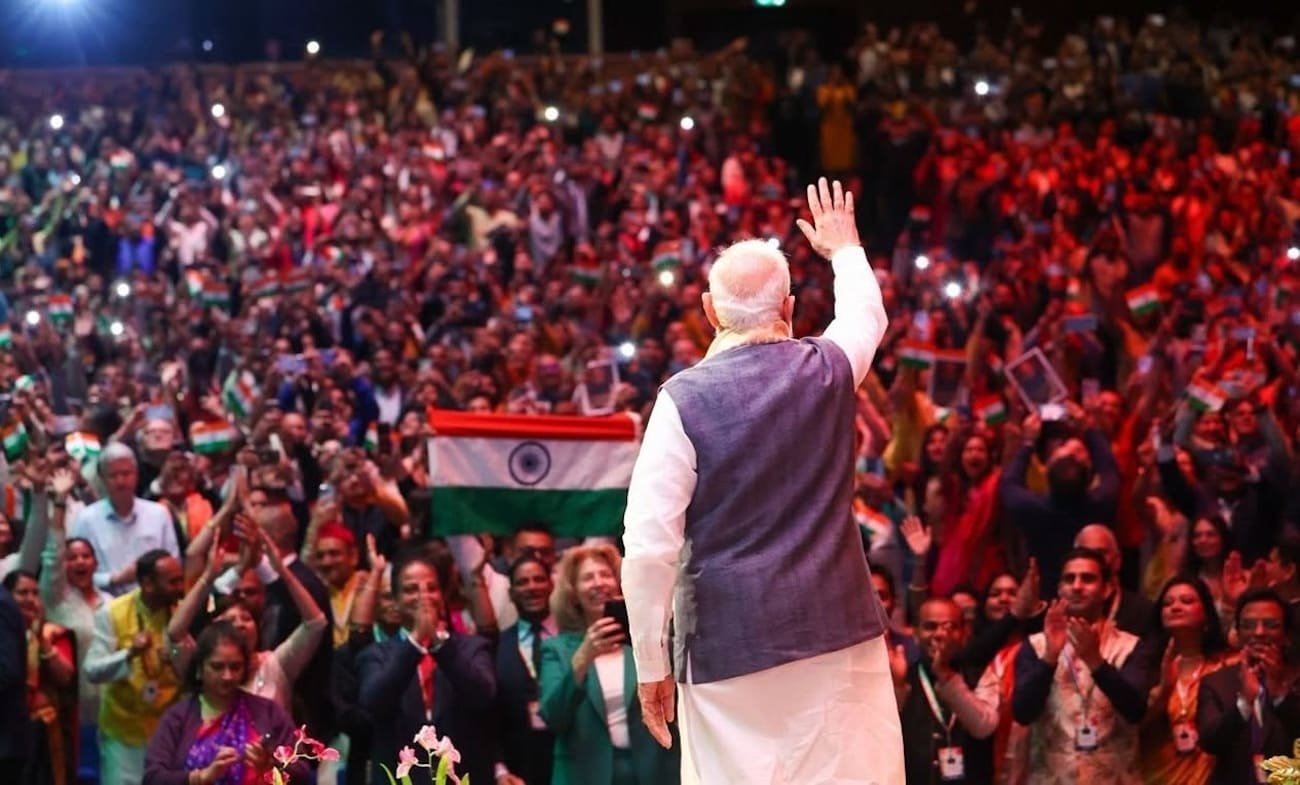
A nation can dominate headlines while quietly losing leverage. It can receive standing ovations while surrendering room for maneuver. The most striking feature of contemporary Indian diplomacy is not its activity but its marketing. Every meeting is presented as historic, every summit as transformational, every handshake as evidence of rising stature. Success is too often measured by optics rather than enduring outcomes.
For decades, India’s diplomatic tradition rested on a simple proposition: no external power should ever be entirely certain where India would stand until India itself decided. That ambiguity created influence.
For decades, India’s diplomatic tradition rested on a simple proposition: no external power should ever be entirely certain where India would stand until India itself decided. That ambiguity created influence. Today, many positions have become easier to predict. In West Asia, long-term equilibrium across divides — relationships patiently built over generations — risks being subordinated to shorter-term alignments. Relationships that once served as reservoirs of access and credibility are sometimes treated as assets that can be spent.
The consequences are subtle but real. A phone call returned less quickly. A concern taken less seriously. A warning heard with less urgency. A promise trusted less completely. Influence rarely vanishes dramatically; it erodes quietly until the moment it is needed most.
The same pattern appears elsewhere. India once possessed one of the world’s most valuable strategic assets: a reputation for independent judgment. Nations that disagreed with New Delhi still respected its capacity to reach conclusions that were genuinely its own. That reputation is harder to sustain when diplomacy appears preoccupied with managing perceptions.
The irony is that India’s greatest source of global influence may not be governmental at all. It is the Indian diaspora. Across the United States, Europe, the Gulf, Africa, and Asia, generations of Indians built reservoirs of trust, competence, and goodwill through professional achievement and institutional participation. They became scientists, physicians, entrepreneurs, academics, investors, governors, legislators, and innovators. Governments inherited that capital. They did not create most of it. Blurring the distinction between diplomatic accomplishment and diaspora achievement risks claiming as statecraft what was earned quietly over decades by individuals.
The ultimate measure of foreign policy is not attention. It is leverage. Not invitations. Not applause. Not headlines. Leverage.

Does a country possess more freedom of action than before? Can it protect its citizens more effectively? Can it disappoint powerful friends when necessary? Can it pursue its interests without seeking validation? Can it shape outcomes rather than merely participate in them?
Great powers are not distinguished by how frequently they are praised. They are distinguished by how difficult they are to pressure.
The tragedy of contemporary Indian foreign policy is not that it lacks ambition. The tragedy is that it sometimes mistakes performance for achievement — devoting extraordinary effort to the cover page while paying insufficient attention to what lies between the covers.
The republic that once accumulated strategic capital now risks spending it faster than it replenishes it. The republic that once prized independence increasingly celebrates visibility. The republic that once cultivated ambiguity increasingly advertises certainty.
None of this is irreversible. India possesses every ingredient required for diplomatic renewal: growing economic weight, expanding military capabilities, immense civilizational influence, and an unmatched diaspora. What is required is not a new strategy, but a return to an older discipline — measuring success not by how loudly victories are proclaimed, but by how much leverage they quietly create.
History is rarely kind to governments that confuse narrative with reality. Eventually, the ledger is opened. And when that moment arrives, nations discover whether they accumulated power — or merely applause.
Satish Jha, former Editor, Indian Express Group and The Times of India Group writes on geopolitics, international affairs, and development.
MODI’S FOREIGN POLICY HAS MISTAKEN VISIBILITY FOR INFLUENCE
The prime minister’s foreign policy, especially with respect to the United States, has been severely deficient in preparing deterrence.
Why is Trump so laudatory of Xi Jinping, even slavishly so? Because when Trump had thundered about imposing 100-200% tariffs, Xi quickly retaliated by declaring China’s export policy on rare earth minerals. Trump stopped dead in his tracks and capitulated pitifully.
Can anyone think of a single retaliatory move Modi’s India had for countering Trump’s bullying and imposition of crushing tariffs? There wasn’t any. Modi and his EAM, Dr. Jaishankar, were busy with press events in the previous eight years, declaring how the U.S. valued India’s friendship. Modi relied on the massive public relations events, such as holding hands with Trump in front of immense crowds.
Satish Jha’s opinion piece is clear-eyed about what nations really should strive for. Modi’s feckless approach has failed.