




Why Nithya Raman’s Campaign Failed to Catch Fire in the Los Angeles Mayoral Primary

- For Raman, the third-place finish raises questions about her future political trajectory. She retains her City Council seat, but her mayoral ambitions have been decisively rejected by Los Angeles voters.
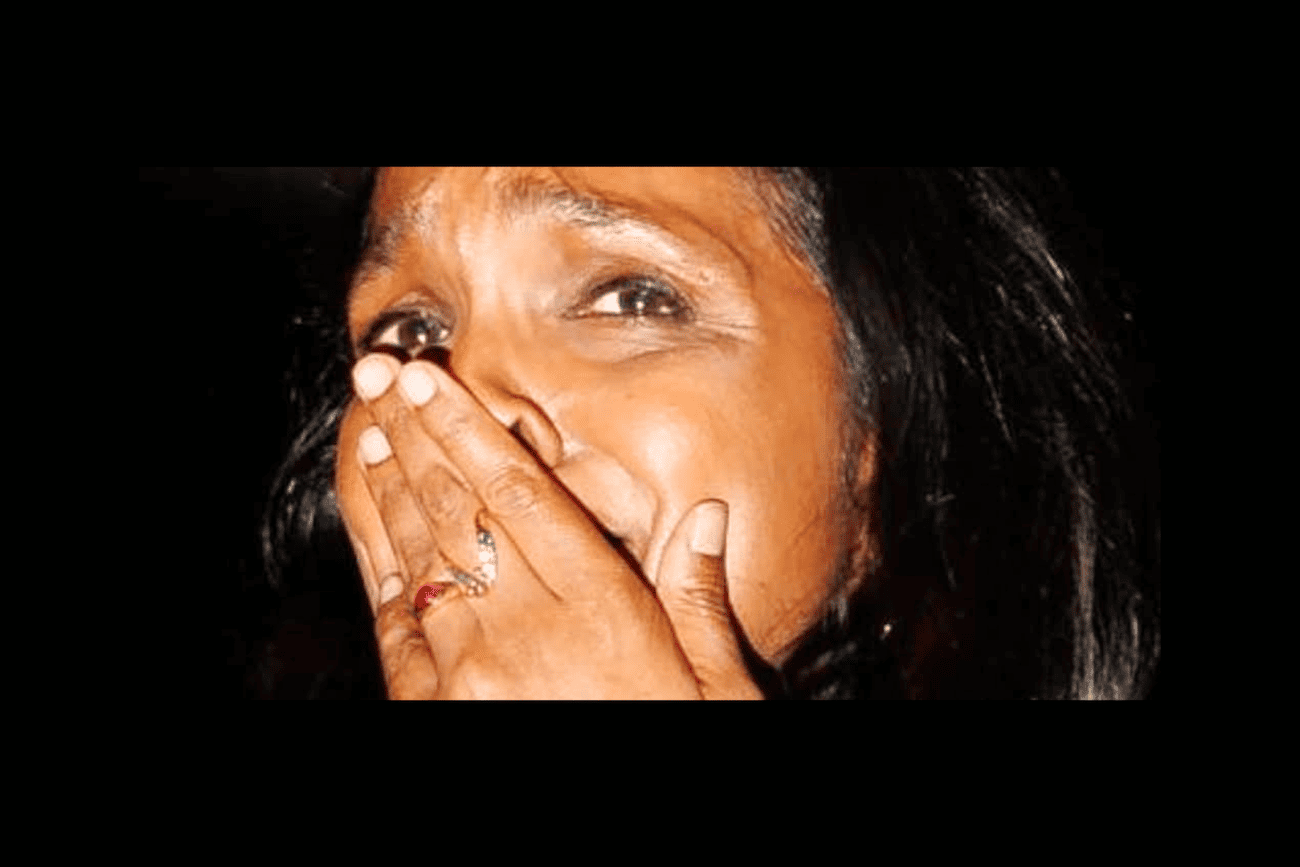

Nithya Raman’s high-stakes challenge to incumbent Mayor Karen Bass fell short on June 2, 2026, as the Los Angeles City Councilmember finished a distant third in the mayoral primary with 22% of the vote, failing to advance to November’s general election.
Raman received 110,848 votes, well behind Bass’s 172,720 votes (35%) and television personality Spencer Pratt’s 151,149 votes (30%), according to official voting results. Tech entrepreneur Adam Miller finished fourth with 4% of the vote, while housing advocate Rae Chen Huang received 3%.
The result marks a significant setback for the 44-year-old progressive councilwoman, who had entered the race just hours before the filing deadline in early February with hopes of repeating her 2020 upset victory over then-Councilmember David Ryu.
Election Night: Tears and Defiance
As the initial results poured in showing her trailing in third place, Raman addressed supporters at her election night party in the L.A. Arts District with visible emotion. According to multiple verified sources, she struggled to maintain her composure as she reflected on her campaign.
"I've been a candidate for something as long as you can remember, and you've had to live through it with me, and you've been so patient through all of it. Thank you," Raman said through tears on Tuesday, according to Townhall. "I hope you know that everything every person in this room is fighting for in this campaign has been about building a city that's worthy of you and every child in this city."
As she continued speaking, "her eyes watered as the results poured in," according to Yahoo News. She choked out the words as she addressed her supporters about the vision she had campaigned for.
While acknowledging the difficult results, Raman framed her campaign's message as threatening to "powerful forces." According to LAist, "Raman blamed a 'MAGA machine' for advancing a 'dark agenda' against her campaign's vision for a city that works for everyone. 'We believe that Angelenos were hungry for that vision, and we were right,' Raman said at her election night event. 'Here's the reality: That vision threatens some very powerful forces.'"
In her speech, Raman also praised a progressive vision for Los Angeles that included standing "up against ICE" and showing "up for our gay and" LGBTQ+ communities, according to the Daily Caller.
The emotional display contrasted sharply with her defiant messaging about the forces she believed were arrayed against her campaign. Despite the tears, Raman's statement refused to accept personal responsibility for the third-place finish, instead attributing her defeat to external political opposition.
Raman’s Mayoral Gamble
Raman’s entry into the race was described as “a last-minute challenge against incumbent Karen Bass just hours before the filing deadline,” according to Fox News. The move signaled “a high-stakes June primary against a close political ally,” despite Raman initially needing to gather signatures to qualify for the ballot.
At the time of her announcement, Raman stated: “I love this city so much and I think it needs a fighter. And I think I’ve demonstrated that I can be that fighter,” according to NBCLA. “And I hope the residents of Los Angeles will see that and cast their votes for me.”
“This is a city of extraordinary possibility, extraordinary,” she added. “But possibility only matters if our leadership is accountable for delivering it, and I’m ready to lead this city with seriousness, with accountability, urgency and ambition that is equal to this moment.”
However, her campaign struggled to gain traction against a crowded field in a nonpartisan race where a candidate must survive the initial vote split to advance to November.
The Debate That Didn’t Help
A May 6 mayoral debate proved particularly damaging to Raman’s campaign. According to Newsweek, Los Angeles Times columnist Gustavo Arellano described the debate as producing “two winners, one loser,” arguing that Raman “came off as inexperienced, touchy and unprepared.”
“Bass and Pratt repeatedly targeted Raman, scrutinizing her record,” according to Newsweek. Following the debate, polling markets shifted significantly against her.
According to Newsweek, “Following the bruising showdown on May 6, Polymarket, a blockchain-based prediction market where users trade on real-world outcomes using cryptocurrency, puts Kamala Harris-endorsed incumbent Karen Bass’ chances of winning the election at 45 percent, compared with 38 percent for City Councilmember Nithya Raman and 18 percent for television personality Spencer Pratt ahead of the June 2 primary.”
She could not appeal effectively to either progressives — who had censured her — or establishment Democrats who supported Bass. As a result, she found herself in political no-man’s-land.
However, these prediction market assessments did not translate into actual voter support, as Raman ultimately received less than a quarter of the primary vote.
Raman had built her political identity around being an outsider. As the Los Angeles Times noted in February, “Nithya Raman began her political career by defeating a well-funded incumbent with deep ties to the Democratic Party establishment.”
In 2020, Raman “became the first person to oust a sitting councilmember in 17 years, stunning the Los Angeles political establishment with her defeat of David Ryu,” according to the LA Times.
But by 2026, “after six years at City Hall, Raman is no longer an outsider. She has her own record, which is in many ways intertwined with the mayor’s, particularly on homelessness, an issue the onetime allies have worked closely together to remedy,” the LA Times reported.
Raman’s mayoral campaign hinged partly on criticism of Bass’s handling of homelessness, yet her own record on the issue was complicated. As the LA Times noted, “She has her own record, which is in many ways intertwined with the mayor’s, particularly on homelessness, an issue the onetime allies have worked closely together to remedy.”
This overlap in their records made it difficult for Raman to present herself as fundamentally different from Bass on the city’s most pressing issue.
The Democratic Socialist Tension
Raman had built her previous campaigns on backing from the Democratic Socialists of America Los Angeles chapter. However, that base had fractured by 2026. According to Fox News, “Raman was previously endorsed by the Democratic Socialists of America Los Angeles chapter during her 2020 campaign, but the group voted to censure her in 2024 over her acceptance of an endorsement from Democrats for Israel–Los Angeles and disagreements related to the war in Gaza.”
This censure represented a significant loss of grassroots support from a key constituency that had propelled her to victory six years earlier.

Another obstacle was the narrative of betrayal. According to the LA Times, “Bass helped Raman win reelection. Now Raman wants to unseat her. Some call it ‘a betrayal.'”
The Lack of Name Recognition
One of Raman’s fundamental challenges was insufficient name recognition beyond her district. According to the LA Times, “One of Raman’s challenges, as a council member representing Los Feliz and Silver Lake as well as parts of the San Fernando Valley, is to spread her name recognition citywide, with the June 2 primary election about two months away.”
With only four months between her February entry into the race and the June 2 primary, Raman simply did not have enough time to build the campaign infrastructure and name recognition needed to win a citywide race.
In March, a Loyola Marymount poll suggested Raman might actually be ahead. According to the LA Times, “City Councilmember Nithya Raman came out ahead of incumbent Karen Bass in a new poll on the Los Angeles mayor’s race, though the poll’s director cautioned that it did not give the whole picture.”
However, the poll’s methodology was questioned. The LA Times noted that “The Loyola Marymount poll of 370 registered Los Angeles voters was conducted from Feb. 11 to March 16. It did not include a choice for ‘undecided,’ while the other two polls showed that significant percentages of voters hadn’t made up their minds.”
This methodological issue — the exclusion of an “undecided” option — may have artificially inflated Raman’s numbers in that particular poll, creating false optimism about her electoral prospects.
Political Identity Crisis
The LA Times captured Raman’s fundamental challenge: “As a City Council member, Raman, whose previous campaigns were backed by Democratic Socialists of America Los Angeles, has sometimes walked a political tightrope, exasperating her progressive base on issues like policing.”
She could not appeal effectively to either progressives — who had censured her — or establishment Democrats who supported Bass. As a result, she found herself in political no-man’s-land.
Perhaps most remarkably, Raman was defeated by Spencer Pratt, a television personality with no prior political experience. Pratt’s second-place finish demonstrated that Bass faced a real challenge, but not from the progressive left — from an anti-establishment outsider who could position himself as fundamentally different from the incumbent.
According to FOX LA, the race was “an equally tense nonpartisan mayoral primary” where “incumbent Karen Bass fight[s] to defend her seat against reality TV star Spencer Pratt and progressive council member Nithya Raman.”
With Raman finishing third, Bass will face Pratt in the November general election. According to FOX LA, “This means party lines do not guarantee a spot in the fall; a candidate must survive the initial, crowded vote-split, which can occasionally result in two candidates from the identical party facing off against each other in November.”
For Raman, the third-place finish raises questions about her future political trajectory. She retains her City Council seat, but her mayoral ambitions have been decisively rejected by Los Angeles voters.