




The Lost Children: Indian Adoptees Confront Identity, Trauma, and the Cost of ‘Rescue’

- Indian children adopted and raised by white parents inhabit an uncomfortable space — aware of what adoption gave them, unwilling to pretend it cost nothing.


Are we mother and daughter in every lifetime? I hope not. I hope in another life I am never born / And she is never burdened with being a mother. Her pain would not bleed into mine / And I won’t spend a lifetime / Trying to heal what she couldn’t.
— Inherited Hunger, a poem by an Indian adoptee
The poem captures what statistics cannot: the lifelong ache of a child who grew up without roots, without connection to the past, without answers to the most basic human questions—Who am I? Where do I come from?
According to the United States Department of State, intercountry adoptees are 3.6 times more likely to die by suicide than non-adopted peers. For transgender adoptees, that weight is more than fourteen times heavier. Since 1999, more than 6,800 Indian children have been adopted by American families. These are not just statistics. Almost no social science research exists on what becomes of them.
We conducted extended interviews with several Indian adoptees living in the United States and Europe—mostly women, with two men, between the ages of twenty-five and fifty-five. They are professionals, many raising families of their own. But each carries, beneath the surface of a functional life, a wound the rescue stories never accounted for.
They call themselves Indian in spite of being asked to shed it. The Indian identity is what they have spent their lives trying to reclaim.
“India Never Left My Body”
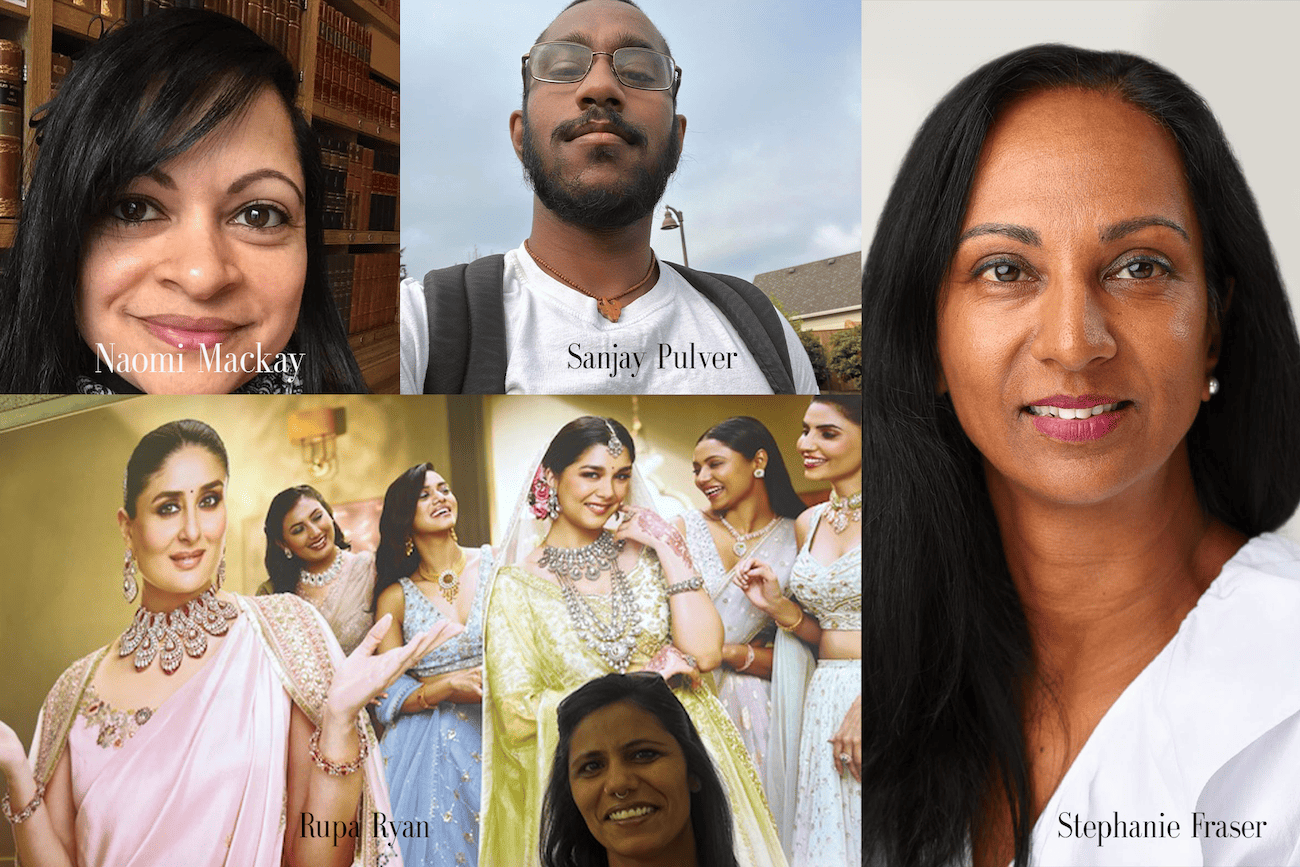
Rupa Ryan was two years old when she left India in 1985, adopted from the Green House orphanage in Patna and flown to Minneapolis. She traveled with a group of children from different parts of India—none familiar to her.
“I came to this country as Eileen Rupa Ryan,” she tells us. Her adoptive mother, a schoolteacher, wanted her name to reflect her new family. What disappeared quietly in that transition was everything else—language, lineage, memory.
The noisy, crowded orphanage was replaced by her mother’s quiet, contained apartment. “Even when my Aya—the founder of the orphanage—came to visit, my mother would say it was too much for me to be overstimulated,” Rupa recalls. Her world narrowed. Her mother’s introversion shaped her childhood: few outings, little exposure to the outside world, and almost no encouragement to explore what connected her to India.
“There’s a sadness that comes with adoption,” Rupa says. “I am totally at a loss about my lineage.”
Rupa grew up in a white household where India was rarely discussed. There were no Indian friends, no Indian food, no conversations about race. She remembers longing to see someone who looked like her.
As an adult, she began reclaiming pieces of what felt instinctively hers. She studied yoga and Kathak dance. She returned to India. “Even with 1.4 billion people,” she says, “India never left my body.”
“I Was Brainwashed Into Believing Indian People Were Evil”
Naomi Mackay, a 48-year-old adoptee now living in Glasgow, was adopted in 1979 by a farming couple in rural Sweden from the Christian Missionary Hospital in Ambala. They renamed her Anna. Only as an adult did she reclaim the name Naomi.
The rural landscape—isolated, silent, and overwhelmingly white—became the backdrop of a childhood marked by profound dislocation. Even her attempts to look at photographs from her early years were discouraged: “I recognized the people in the photos. They made me feel safe. But my parents put the album so high that I couldn’t reach it.”
Hindi was forbidden in her home. India was described as dirty and dangerous. “From a very young age,” she recalls, “I was brainwashed into believing Indian people were evil.”
By the age of five, she describes contemplating suicide. She remembers standing at train tracks trying to calculate the risk of survival. “What if I survived?” she asks. “That was the thing that stopped me.”
An uncle regularly told her to “go home to your own country,” remarks her parents dismissed as drunken jokes. “At school no one picked on me because I was so light-skinned,” she notes. “But at home, I felt unsafe.”
Naomi’s earliest memories of India are of being held, cuddled, full of laughter. “I remember being very poor,” she says, “but I was hugged a lot. I felt safe, cared for, and loved. After moving to Sweden, I don’t know if my adoptive parents ever hugged me.”
Her mother was inattentive to her physical well-being. Naomi recalls severe menstrual pain and bladder infections that were turned into jokes at family dinners. She was never taken to a doctor. Recently, she learned she has stage-four endometriosis, likely left untreated since adolescence. “I don’t know anything about my biological parents, but my adoption has stopped the family tree with me. That’s genocide.”
When asked why her parents adopted, Naomi situates her answer in political history. In the 1970s, Sweden was censured by the United Nations for racism. Adopting children from the Global South became “an easy way to combat that criticism.” India was accessible, inexpensive, and mediated through Christian organizations. “Brown babies were cheap,” Naomi says bluntly.
Her father told her after her mother’s death, “that he never wanted us. And he never wanted to adopt. And he certainly didn’t want children like us.”
Today, Naomi lives in Glasgow, writing a book and making a film about her adoption. She hopes “I want to tell the brutal truths about my adoption at the same time as people feel inspired.”
“Always the Racial Outlier”
Stephanie Fraser arrived on Long Island from Mother Teresa’s orphanage in Patna in 1977. She was three years old, and she had already been renamed twice before she boarded the plane. At the orphanage she had been called Goma. The nuns renamed her Sunita. Her first adoptive family renamed her Tiffany. When she was hit by one of their children and transferred to a second family, they renamed her again—this time Stephanie, after Princess Stéphanie of Monaco.
Her second adoptive family was celebrated in Newsday media as a model of transnational benevolence—they eventually adopted nine children, six internationally. Stephanie was the only Indian among five Korean siblings. Her mother brought her to modeling agencies, cultivating the image of an obedient, exotic daughter. Stephanie describes herself as a quiet, rule-following child—”seen but not heard.”
“My parents weren’t educated in anything Indian,” she says. “No Indian food, no Indian culture, no Indian friends. Nothing.” In adolescence, white classmates called her exotic and asked where she was really from. Among Indian peers, she felt equally out of place—too Americanized, unfamiliar with food, language, religion. At a Korean adoptee summer camp, she was the only Indian child among a hundred participants. “A dark-skinned person in the middle of this picture,” she says. “That image symbolizes my entire life—always the racial outlier.”
What these adoptees are building together is something the adoption system never provided: a community of people who share a specific experience and who have decided to stop waiting for the dominant culture to understand it.
Then, when Stephanie was thirteen, her eldest brother—twelve years her senior—sexually abused her. When she told her parents, their response was four words: “Never talk about this again.” The family maintained contact with their son. Stephanie withdrew. “In my head I couldn’t understand how they chose their blood son over their adopted daughter,” she says. “I always feel alone in this world of eight billion people. I have no blood connections other than my kids.”
She has spent decades trying to find what was taken from her before she even had words for it. In 2024, through DNA testing—the only tool available, since India bans genetic testing domestically—she traced a cousin in Kerala. It was one small thread back. “As an adoptee, I lost out on culture and language and music and food that I didn’t even know existed,” she says.
“I Just See a Person Who’s There”
Kris Rao was born in Pune in February 1985. For thirty-four years, he believed he was the biological child of his adoptive father—an Indian immigrant—and his white American mother.
As a child, he stood at the mirror and studied his face. Something didn’t fit. “I thought I was biracial, half white, half Indian,” he says. “I would look in the mirror a lot as a kid, because I couldn’t recognize myself.”
He was thirty-four when he learned the truth: both he and his older sister had been adopted from India. The disclosure came with a story his parents had never told. His adoptive mother had seen him at the orphanage when he was already assigned to a prospective family in Delhi. She refused to let go.
“My adoptive mother snatched me from this lady and said, ‘This one is mine. I’m taking this one,'” he recounts. “So the nurses said, ‘Okay, we’ll come up with a story to tell the family in Delhi. We’ll figure out the paperwork.'” He pauses. “I think about that every now and then. My life could have been so different if I were with a family in Delhi.”
Understanding does not give back what was withheld for three decades. “Even now, I don’t recognize myself,” he says. “It is a stranger I see in the mirror, because I don’t see a mother, a father, an uncle, an aunt, a sister, or a brother. I just see a person who’s there.”
“We Deal with This Grief on a Daily Basis”
Ungria Pandit’s paperwork says she was ten days old when she was adopted from the Shraddhanand Mahila Ashram in Bombay in 1982. At six months, she was flown to Buffalo, New York. She was the answer to years of failed attempts to conceive.
Then, not long after Ungria arrived, her mother gave birth to a daughter. The difference in how the two girls were treated was never hidden.
Ungria grew up hearing the refrains many adoptees describe: We chose you. We saved you. You came from nothing. Be grateful. She had learning disabilities—never diagnosed, never supported. She was threatened repeatedly with boarding school. Her biological sister was never scolded, never in trouble.
At nine years old, overwhelmed by yet another round of yelling about unfinished homework—while her sister, equally culpable, went unpunished—Ungria packed a book bag, took her bicycle, and began riding into town as rain started to fall. She left a note behind: I’m leaving, I think. She had no destination. She turned around. She came home soaked and shaking. Her mother did not ask what had happened.
An adoption counselor once explained to her the neurochemical disruption that occurs when an infant is separated from its mother at birth. “Adopted children are not just a puzzle piece you fit into a family and everything’s fine,” she says. “The disconnection with the biological mother permanently scars us. Even though the wound isn’t visible—just like mental health, depression, suicide—we still feel it. We deal with this grief on a daily basis.”
“My Biological Family Abandoned Me. Then My Adopted Family Did Too”

Rebekah Guntrum was born in Amendaram, India, and brought to South Carolina in December 1994. She was eventually raised in Illinois in a strict white evangelical household—her father a pastor. Rebekah was the youngest of three sisters, all adopted from India.
A Presbyterian Church of America leader held the infant Rebekah and proclaimed she had been “plucked from the fire.” India, she was told throughout her childhood, was spiritually depraved—a land of false gods destined for hell. She and her sisters were displayed at church services as living proof of Christian benevolence. “We would be shown off to other families in the church,” she recalls. “We often felt like objects.”
At seventeen, she began self-harming. She begged her parents for therapy. They responded with prayer, with secrecy, with silence. “My biological family abandoned me,” she says quietly, “and then I was abandoned a second time by my adopted family.”
Now thirty-one and living in Nebraska, Rebekah names something heard from nearly every adoptee: “We’re not fully Indian, but we’re also not fully American. We don’t look like the people around us in white communities. But when we go to India, we’re tourists in our own country.”
“It’s Like There’s This Huge Hole in My Heart”
Sanjay Pulver was born in Hyderabad in 1992. At thirteen months, he was brought to San Diego by white American Christian parents. In 1999, when Sanjay was seven, the orphanage was shut down and exposed as part of a child-trafficking scheme.
“We know from biology,” Sanjay says, “that removing an animal from its mother too early is the worst thing you can do.” The orphanage later revealed as fraudulent stole his roots. “It’s like there’s this huge hole in my heart.”
Racially, he inhabited a double exile. In white spaces, he was visibly marked as other. In Indian diasporic spaces—at a college Holi celebration where someone asked “Who’s your family?”—he had no answer that fit. “Too brown for white culture, too white for brown,” he says.
As he came into his transgender identity, amid escalating anti-trans legislation, what he waited for—and never received—was not a political statement. His parents never asked him “are you okay?”
Today, Sanjay supports transgender individuals recovering from surgery—offering the attunement he grew up without.
Building Community, Reclaiming Identity
For most of their childhoods, these adoptees were alone. Scattered across rural America and small-town Europe, often the only brown face in a school or neighborhood, they had no one who looked like them.
Something has shifted. Indian adoptees are finding each other—through organizations like the Indian Adoptee Network, through social media, through DNA testing. Stephanie, laid off in early 2024, began connecting with other adoptees through the Indian Adoptee Network that same year. What she found was not just community. It was recognition—people who did not need to be convinced that the loss was real, who did not ask her to be grateful before she was allowed to grieve.
Rupa found her way back through Kathak dance and yoga. She returned to India and stood among 1.4 billion people and felt, for the first time, that her body made sense. Naomi is writing a book and making a film. Rebekah is building community among Indian adoptees who grew up in evangelical households. Sanjay supports transgender individuals. Kris has written blogs and holds support groups.
What these adoptees are building together is something the adoption system never provided: a community of people who share a specific experience and who have decided to stop waiting for the dominant culture to understand it.
The structural barriers remain. India’s restrictions on genetic testing mean most adoptees receive only geographic tracing—not family matching. Records are incomplete, sealed, or destroyed.
These adoptees inhabit an uncomfortable space—aware of what adoption gave them, unwilling to pretend it cost nothing. They are not asking for the rescue narrative to be replaced with condemnation. They are asking for accountability. Guaranteed access to original birth records. Adoption-competent mental health care. Transparent oversight of agencies. Meaningful investment in family preservation, so that poverty alone does not function as a pipeline from Indian families to Western homes.
What they are asking for is not gratitude. It is recognition.
Recognition that adoption is not only a story of rescue, but also a story of separation. Recognition that identity cannot be erased and replaced without consequence.
When Rupa says, “India never left my body,” she is naming something deeper than nostalgia. She is asserting that origin matters—even when it has been silenced.
Annapurna Devi Pandey teaches Cultural Anthropology at the University of California, Santa Cruz. Hannah Deixler studies Psychology at the University of California, Santa Cruz.