




‘The FBI Director Is MIA’: Allegations of Excessive Drinking, and a Year of Mounting Questions for Kash Patel

- A bombshell investigation by The Atlantic, drawing on more than two dozen sources, portrays the nation's top law enforcement officer as erratic, frequently absent, and consumed by fear of losing his job. Patel has threatened to sue and calls the report fabricated.
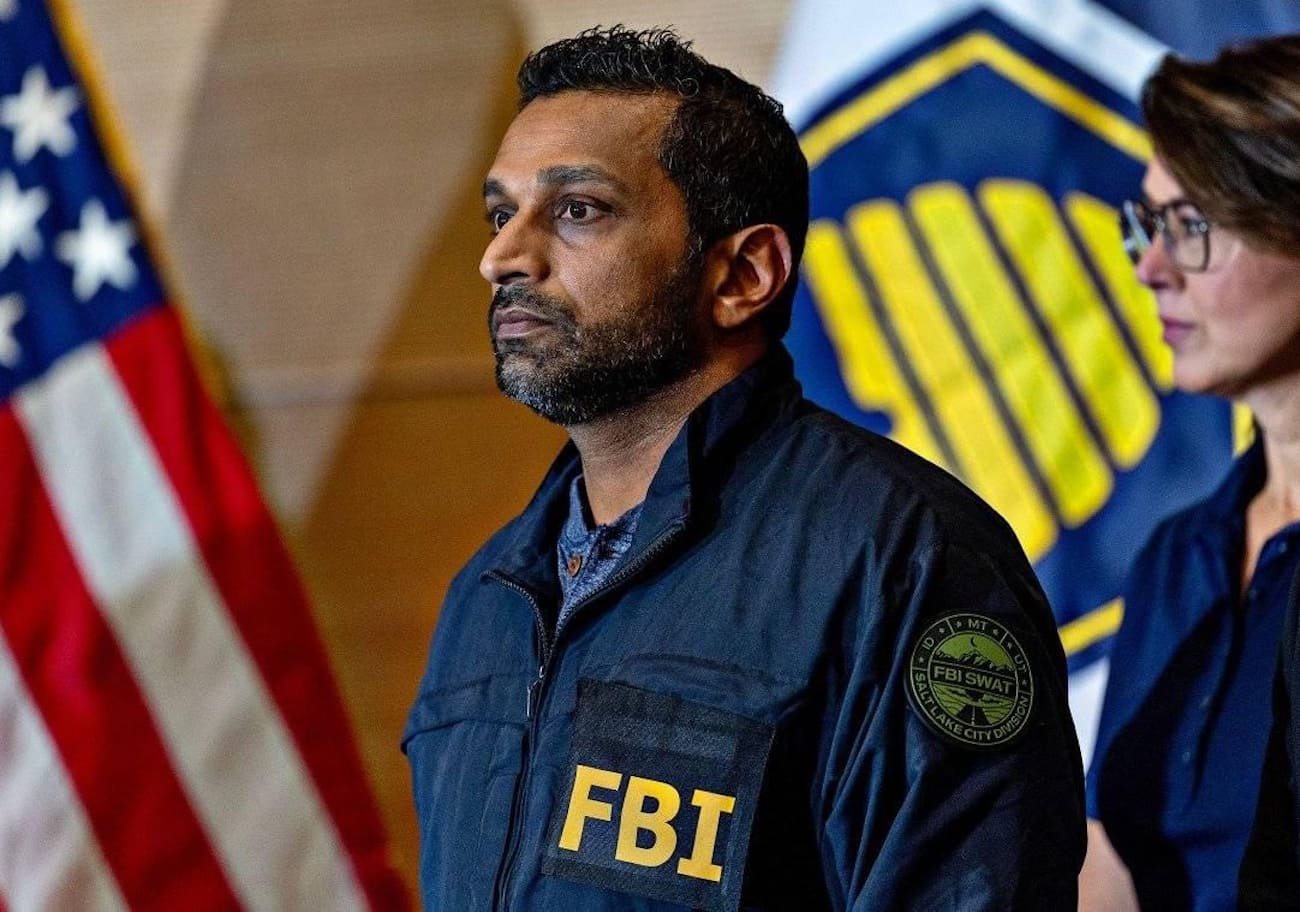

On the evening of Friday, April 17, 2026, The Atlantic published an investigation into FBI Director Kash Patel under the headline “The FBI Director Is MIA.” Within hours, the story — and the furious response it provoked — had consumed Washington.
The piece, written by award-winning staff writer Sarah Fitzpatrick, drew on interviews with more than two dozen people, including current and former FBI officials, congressional staff, hospitality workers, political operatives, and lobbyists. Speaking anonymously to discuss sensitive matters, they collectively painted a portrait, as The Atlantic described it, of a director whose tenure had become a management failure and whose personal behavior had become what sources called a national-security vulnerability.
Patel immediately and emphatically rejected every word of it, threatened to file a lawsuit, and went on the offensive across social media. By Saturday morning, the story had crystallized a months-long debate about who Kash Patel is, what he has done with the FBI, and whether the nation’s premier law enforcement agency is being led with the seriousness the job demands.
The Atlantic’s Allegations
At the center of The Atlantic’s investigation is a pattern of behavior that Fitzpatrick’s sources described as incompatible with the responsibilities of the nation’s top law enforcement officer.
On the question of alcohol, the reporting is specific and attributed to multiple sources. According to Fitzpatrick, six current and former officials familiar with Patel’s schedule told her that early in his tenure, meetings and briefings had to be pushed to later in the day because he had been drinking the night before. On multiple occasions over the past year, members of his security detail struggled to wake him because he appeared to be intoxicated, according to information that sources said had been supplied to Justice Department and White House officials, as Fox News summarized from The Atlantic’s account.
The Daily Beast, summarizing The Atlantic’s investigation, reported that at one point last year, a request was made for what is described as breaching equipment — the kind normally used by SWAT and hostage-rescue teams to rapidly enter a building — because Patel had been unreachable behind locked doors. Raw Story, also summarizing the investigation, reported that the White House had fielded calls from the bureau and from members of Congress asking who was in charge of the FBI during a period of confusion about Patel’s availability.
The report further described Patel as deeply worried about his own job security, particularly after Attorney General Pam Bondi’s removal from office on April 2. According to The Atlantic, the White House had already begun discussing potential successors if Patel were let go. Fitzpatrick wrote, as quoted by Fox News, that an FBI official told her that week that those inside the bureau were “all just waiting for the word” that Patel had been removed, and that a former official told The Atlantic’s Jonathan Lemire that Patel was “rightly paranoid.”
The article also described an incident in April 2026 in which Patel had difficulty logging into an internal FBI computer system due to a technical error. According to nine sources cited by The Atlantic, Patel interpreted the lockout as a sign that he had been fired by Trump, became alarmed, and began alerting aides that he believed his tenure had ended. The episode, The Atlantic’s sources said, exemplified what they described as erratic, suspicious behavior and a tendency to reach conclusions before the evidence warrants them.
Overall, The Atlantic characterized Patel’s conduct as reflecting a management failure, and said sources described him as frequently absent or unreachable in his capacity as FBI director.
A Record of Performance Concerns
The Atlantic’s investigation arrived in the context of a tenure that had already generated considerable scrutiny, documented across multiple news organizations.
In September 2025, Patel drew criticism from both parties over how he handled the manhunt following the killing of conservative commentator Charlie Kirk. According to Time magazine’s summary of events, Patel prematurely announced on social media that authorities had detained a suspect — a claim that proved premature and violated basic investigative protocols. Senator Dick Durbin, Democrat of Illinois, cited the episode at a subsequent FBI oversight hearing, saying Patel had violated one of the fundamentals of effective law enforcement: staying quiet and letting investigators do their work during critical stages.
A New York Times report in January 2026, as cited by AOL and other outlets, found that Patel’s own staff acknowledged he was uncomfortable with office meetings and preferred social events, soccer games, jet skiing, and helicopter tours.
In February 2026, Patel flew to Milan on a government aircraft during the Winter Olympics. Videos emerged showing him in the Team USA men’s hockey locker room, celebrating with players and drinking beer after the United States defeated Canada for the gold medal. The New York Times said the visit blurred the line between personal recreation and professional responsibility and cast doubt on the FBI’s stated justification for the trip, according to Wikipedia. The FBI maintained the travel was official business, planned months in advance, involving meetings with regional security partners. Former FBI agents told NPR they regarded the official meetings as window dressing for what was effectively a personal trip.
NPR’s Ryan Lucas, in a February 25 radio report, noted that concerns about Patel’s temperament and fitness for the role had grown within current and former FBI official circles in the wake of the Olympics episode.
The government jet controversy had already been building before Italy. House Judiciary Committee Democrats sent Patel a letter in December 2025, as CNN reported, accusing him of using government aircraft for personal trips including a Scottish golf outing, a hunting trip to Texas, and an overnight visit to Pennsylvania to watch his girlfriend, a country music singer, perform at a wrestling event. The irony was pointed: Patel had himself publicly criticized his predecessor Christopher Wray for flying on a government jet, saying on the Glenn Beck program in 2024 that Wray did not need a government-funded aircraft for vacations.
Patel himself did not wait to respond. Shortly after The Atlantic published, he posted on X that he would see the magazine and Fitzpatrick “in court,” describing the story as an example of what he called the “fake news.”
Senator Dick Durbin additionally told NPR that whistleblowers informed him Patel’s travel decisions had hampered FBI investigations, including a claim that investigators were unable to fly to Rhode Island following a shooting at Brown University because of constraints on the bureau’s aircraft. FBI spokesman Ben Williamson rejected that claim, saying Patel was in Florida visiting his parents at the time and there were no aircraft availability issues.
The White House and DOJ Defend Him
The administration’s response to The Atlantic’s investigation was swift and unambiguous.
White House press secretary Karoline Leavitt called Patel a “critical player on the Administration’s law and order team,” according to Time. Acting Attorney General Todd Blanche dismissed the reporting as an “anonymously sourced hit piece” that did not constitute journalism, while asserting that Patel had accomplished more in 14 months than the previous administration did in four years, as reported by The Hill.
The FBI’s own public affairs office was equally dismissive. Spokesman Benjamin Williamson sent an email to reporter Fitzpatrick before publication, as Patel later shared publicly, calling the story “one of the most absurd things I’ve ever read” and describing it as a collection of “comically fake rumors from disgruntled former employees,” according to Fox News. Williamson said on Friday that the article was “a compilation of pretty much every obviously fake rumor I’ve heard the last 14 months.”
Patel’s external communications strategist Erica Knight, who is not an FBI employee, said on X that the reported intoxication incidents had “happened exactly ZERO times” and called the allegations fabricated, as the Daily Beast reported.
The Atlantic’s editor-in-chief Jeffrey Goldberg, when contacted by Fox News, gave a four-word response: “We stand by our reporting.”
Patel Strikes Back
Patel himself did not wait to respond. On Friday night, shortly after The Atlantic published, he posted on X that he would see the magazine and Fitzpatrick “in court,” describing the story as an example of what he called the “fake news” and the “actual malice standard,” which he said was now “what some would call a legal lay up,” as The Hill.


His attorney, Jesse Binnall, posted what he said was the pre-publication letter he had sent to The Atlantic and Fitzpatrick warning against publication, describing the claims as “categorically false and defamatory,” according to the Daily Beast. “They published anyway,” Binnall wrote on X.
On Saturday morning, Patel posted again, this time in a more expansive tone. As The Hill reported, he wrote that the “only time I’ll ever actually be concerned about the hit piece lies you write about me will be when you stop,” adding that no amount of reporting would prevent the FBI from making America safe and pursuing criminals.
The decision to publish the full pre-publication legal letter was itself unusual and, as the Daily Beast observed, had the unintended effect of revealing additional allegations that had been presented to Patel’s team for response but did not appear in The Atlantic’s final published piece — including a description of Patel as a “threat to public safety” and a claim that his security detail had shut down the FBI’s internal gift shop so he could browse alone, and that he had complained the merchandise was not intimidating enough.
The Reporter Defends Her Work
Fitzpatrick appeared on MS NOW’s program “The Briefing,” hosted by Jen Psaki, on Friday evening, hours after the story published. She offered a direct defense of her sourcing and methods.
“I am a very careful, very diligent, award-winning investigative reporter with a history of award-winning work across multiple organizations,” she said, as quoted by The Hill. “I stand by every word of this reporting.”
She noted something that others had also observed: that neither the White House nor the Department of Justice, when given the allegations before publication, disputed the specifics. “We reached out for comment to the White House and to the Justice Department, neither of which disputed anything,” she said, as reported by The Hill.
She also addressed why sources felt compelled to speak at all, given the risks. “These are not the types of people who are willing to speak out outside of the FBI, especially right now, because Kash Patel is going after people with polygraphs in a way that has never happened at the Bureau,” she told Psaki. “So for it to be this level of alarm, this is people genuinely concerned that America is in danger as a result of this conduct.”
A Bureau Under Pressure
The controversy over Patel’s personal conduct unfolds against the backdrop of a broader transformation of the FBI under his direction. Patel has fired senior FBI agents, proposed moving the bureau’s operations partially to Nevada where he lives, sought a partnership with the UFC, and directed most field offices to report to branch directors rather than to the deputy director. Trump said in March that Patel had plans to relocate FBI headquarters to a former Department of Commerce building.
The National Association of Immigration Judges, as previously reported by WBUR in a separate context, noted that the Trump administration has systematically reshaped institutions across the federal government with loyalty-first appointments — a pattern that critics argue has extended to the FBI.
Whether Patel survives the latest storm remains an open question. According to The Atlantic’s account, as summarized by Raw Story, those inside the bureau are not so much asking if he will be let go, but when.
The lawsuit he has promised has not yet been filed.