




My Singlehood was My Mother’s Greatest Sorrow. Understanding This Type of Love Has Been My Life Project

- This Mother’s Day will be my first without her. I look back at how she navigated life amidst the chaos and uncertainties — by building the much-needed structure with intellectual and artistic pursuits.
Ya Devi Sarva Bhuteshu, Matru Roopena Samsthitha
Namastasyai, Namastasyai, Namastasyai Namoh Namah.
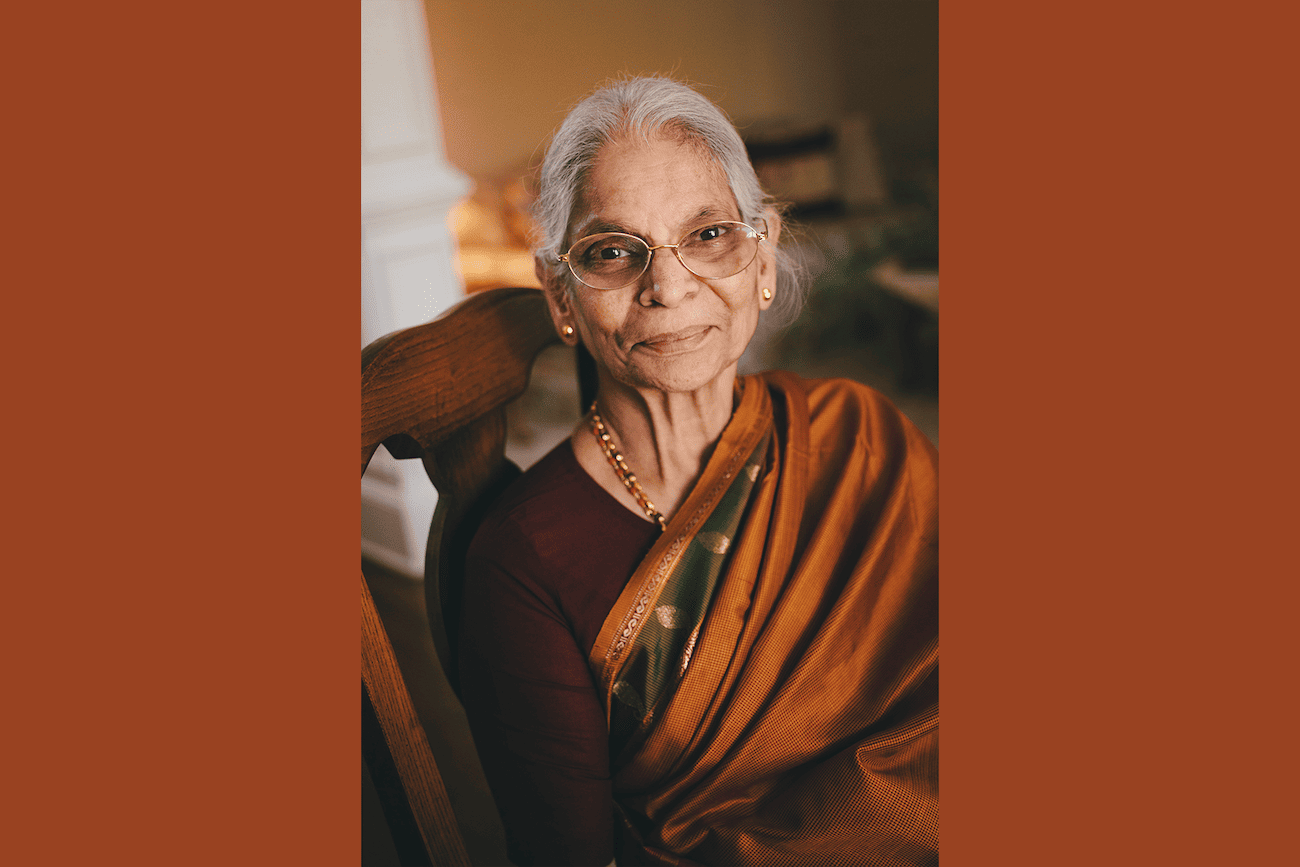
This is the first Mother’s Day that I would be marking without my mother. She reached the heavenly abode on December 8, 2025, at the age of 89. Deep down I find the very idea of marking one day in a year as Mother’s Day as a travesty, when every day, every minute is actually a Mother’s moment. But still, convention has allotted a day to celebrate Mother and Motherhood.
Every Mother’s Day, even before I manage to wish my amma, she would wish me a happy Mother’s Day, and in the past I would protest and remind her that I am not a mother, for I never even managed to clear the first step of marriage, and why she bothers to even remind me of this.
But my resistance to her wish created further drama. She would in an emotionally charged tone tell that my singlehood is her greatest sorrow and her unfinished task in life. Instead of being subjected to this drama, in later years I learned to just acknowledge her wishes with some indifference. In my view this was unnecessarily patronizing, but in my mother’s view it was a much-needed expression of love, guilt and sadness – all combined in one – and that was followed by a lecture on how motherhood is more than giving birth and it is about that feel of care.
So, I was her source of agony, and I was supposed to hear her out and reassure her. I never found a language to communicate the absurdity of this situation. In her view what she was communicating was a labor of love and I would say it is disempowering and her response was that is the only way she knows how to convey her innermost feeling. Understanding this type of love has been my life project and pleading with me to receive and recognize her feeling, however clumsy, was her life mission. Trying to make sense of each other’s modes of thinking and expression of love has been the evolving story of my relationship with amma.
Classical Texts and Music: Life Sustaining Nectar
First, about the most unambiguous and least complicated aspect about amma and my relationship with her. She truly lived up to her name – Saraswati – and pursued knowledge – be it Puranic or contemporary – with a great deal of passion and discipline. Despite numerous setbacks in her life, books and spiritual discourses were her most reliable companions. She sought them out as if they were her much needed sanctuary. After all, the etymology of Sahityam is Sahitam – meaning close companion.
When she would draw contrasts between slokas in Vyasa’s Bhagavatham and Telugu padyalu (poems) in Potana Bhagavatham, it was purely magical. Like the texts she was referring to, her language was mellifluous, and her recitation was simply astonishing – displaying her sharp memory and careful enunciation. She knew them by heart. Her eyes would light up, and she would demand that I appreciate the beauty of these slokas and padyams. Over the years, she has read and mastered so many classical texts and could draw and explain inner meaning in them. Ivy League education did not teach me to read, revere and internalize a text as my mother did. These books were her life saving nectar.
Life was simply sustained by books. Sangita and Sahitya characterize Goddess Saraswati, and my mother – Saraswati – embraced both. Compositions of Tyagaraja, Annamacharya and more importantly BhadrachalaRamadas were not something that she heard in concert halls or CD’s, but they were real to convey her love and agonies of life to her creator.
There was nothing muted about my mother’s personality. Singing compositions of Bhadrachala Ramadas was her way to make her case to God and it was a way to pick a quarrel with her Creator, and it was also a way to justify her pain. My mother must have done Ramayana Parayanam countless number of times. My family has been blessed by our ancestors with a Vigraham of Sri Rama along with Devi Sita and Hanuman and this Murti has been passed on, according to my grandmother for at least seven generations. Amma firmly believed that Prabhu Sri Rama’s grace pulled us out of many adversities.
Interesting people like my mother are not insipid; they are sharp, proud, susceptible and defiant. Her intelligence was exhilarating, but her emotional demands were exasperating.
It is difficult to list and explain my mother’s passion for innumerable classical texts. The holy month of Dhanur/Margazhi was very special to her. This month was dedicated for chanting Andal’s Tiruppavai. During this month, I would have no choice but listen to her explanation of each and every Pasuram. Any indifference on my part would infuriate her. I simply had to yield and listen to her attentively. The highlight of this month was Kudarai Vellam – a day when gopis enjoyed preparing Chakkara Pongal and eating with Krishna with practically ghee dripping up to their elbows. No one made Chakkara Pongal the way my mother made for this special day. She would select the best jaggery and liberally pour warm home-made ghee to prepare this dish. I would often tease her that she must have been an Iyengar Mami in her previous life, having such intense Andal Bhakti and preparing the most delicious Puliyodhara and Chakkara Pongal.
In an otherwise challenging life, books, music and religious discourses became her anchoring point. Amidst the chaos and uncertainties of life, she sought the much-needed structure in intellectual and artistic pursuits.
Amma’s American Kahani (Story)
My mother’s American Kahani began in 1981 because my father’s life story ended suddenly in 1977. At the time of my father’s demise, my mother was 40 years old, and I had just turned 20 and my sister and two brothers were younger. The suddenness of my father’s death shook all of us to the core. Future seemed uncertain and bleak. I was given a job as a clerk on compassionate grounds in Bank of Baroda where my father had worked. This income was inadequate to run a family. This reality of loss and a future that we could not envision shattered my mother’s confidence and many family members around her further crushed her self-esteem and hope, turning her into a very vulnerable woman.
To this day, I can never understand how one could shoot trenchant words at an already grieving woman. A life full of color, musical sounds and books – overnight became a blank page – and it took decades for my mother to fill that blank page with words and melody. My maternal uncle, from then on insisted on filing sponsorship papers so that we could immigrate to USA to rebuild our lives and fulfill the American dream. This was not at all an easy decision. My mother had never worked, and I was the only one who had just graduated from college. Immigrating to America was so risk-laden – it meant spending whatever little money we had to purchase airline tickets to New York. We had no idea what was in store for us in America and once the decision was made there wasn’t even the option of going back. But my uncle was relentless – and I say this with utmost gratitude and love – that no uncle could have brought in this kind of forceful love to ensure our future. And so, our American Kahani began in 1981.
Within few months after arriving in New York, my mother was given a job at a small privately run office that prepares tax returns and manages few apartment buildings. And so, at age 44, my mother was thrown into workforce – it was Baptism by Fire – to learn the intricacies of tax laws. But my amma learned and managed it all to keep the family financially afloat. Of course, all of us pitched in, but she made unbelievable progress. To navigate a working-class reality and pursue middle class aspirations was our American Kahani.
As we were slowly making every effort to settle down – tragedy struck – my maternal uncle and aunt who brought us to America – were murdered in 1988 (details of all that is beyond the scope of this essay), and the crime remained unsolved for close to 4 years and then the killer was apprehended. Those years was like living a Gothic Novel – haunted by a horrific crime and not knowing who and why such a crime was committed. This was shattering to all of us. America kept its promise of providing opportunities, but it came with the dark side of rampant crime. And so, once again life had to continue, trying to live with the pain and horror of a senseless crime.

These chapters in my mother’s life story tell that she had to learn to reinvent herself in every chapter in her life and still inject life forces into herself and everyone around her. This was no easy task, but she never gave up, although losing her brother – her support system – was an unbearable pain that she would often share with me, or rather we shared our joint pain together.
Motherhood: What a Challenge and How Humbling it is
I attribute my own personal growth through this complex relationship with my mother. There were frequent role reversals that brought out complex emotions and frustrations. Yes, we argued and quarreled a lot. We fought with each other and fought for each other. I could never tolerate unfair and unkind words hurled at her, and anytime she sensed that people were unduly judgmental about me, she would turn irate sometimes openly and sometimes silently. Even if I told her to ignore, she would lament and announce – I am a mother and my heart bleeds – and so I had to just let those emotions flow.
A single woman and a single mother do share many challenges; subjected to unnecessary belittlement and a feeling that what we do is a thankless job and still grin and bear it and pretend to be strong. Every time I fought with her, I would, when in reflective mood ponder about why I meditate on my father who died so young, when I need to make allowance for my mother’s shortcomings. After all, she had to face all the challenges of keeping the family together and fulfill her duties. When that truth dawned on me, I learned to understand her vulnerabilities and her minor foibles.
Interesting people like my mother are not insipid; they are sharp, proud, susceptible and defiant. Her intelligence was exhilarating, but her emotional demands were exasperating. As an academic, I have studied and taught every branch of feminism – Liberal, Marxist, Radical, French – but none contributed to my understanding of womanhood as my beloved amma did. Her life is not some abstract idea; it is real life drama. The bravery, the assertion, the pain and the perseverance – my mother handled all the wilderness of life – with skill, self-doubt and finally with conviction that she can explain her difficult choices to her creator. This lesson is priceless.
No matter how many times I snapped at her, she still kept asking if I ate and if I am doing fine. It is so humbling to be a mother. So many insults they take to shield their children. So many high expectations they have for their children. Towards the end with frequent falls and dementia setting in, she was nudging me to send her to a nursing home, but I resisted as much as I could, and she left for the heavenly abode with her pride and dignity intact. I know she is watching her children and grandchildren from the Assembly of Gods.
I am proud to be Saraswati Putri.
Dr. Lakshmi Bandlamudi is a Professor of Psychology at the City University of New York.