




‘The RSS is Not Like America’s Old Ku Klux Klan’: Visiting Hindu Leader Tells American Policymakers

- Dattatreya Hosabale’s talk at Hudson Institute in D.C. and Stanford University in California indicates that RSS is no longer in the shadows. It is ready to talk. Americans would do well to listen.
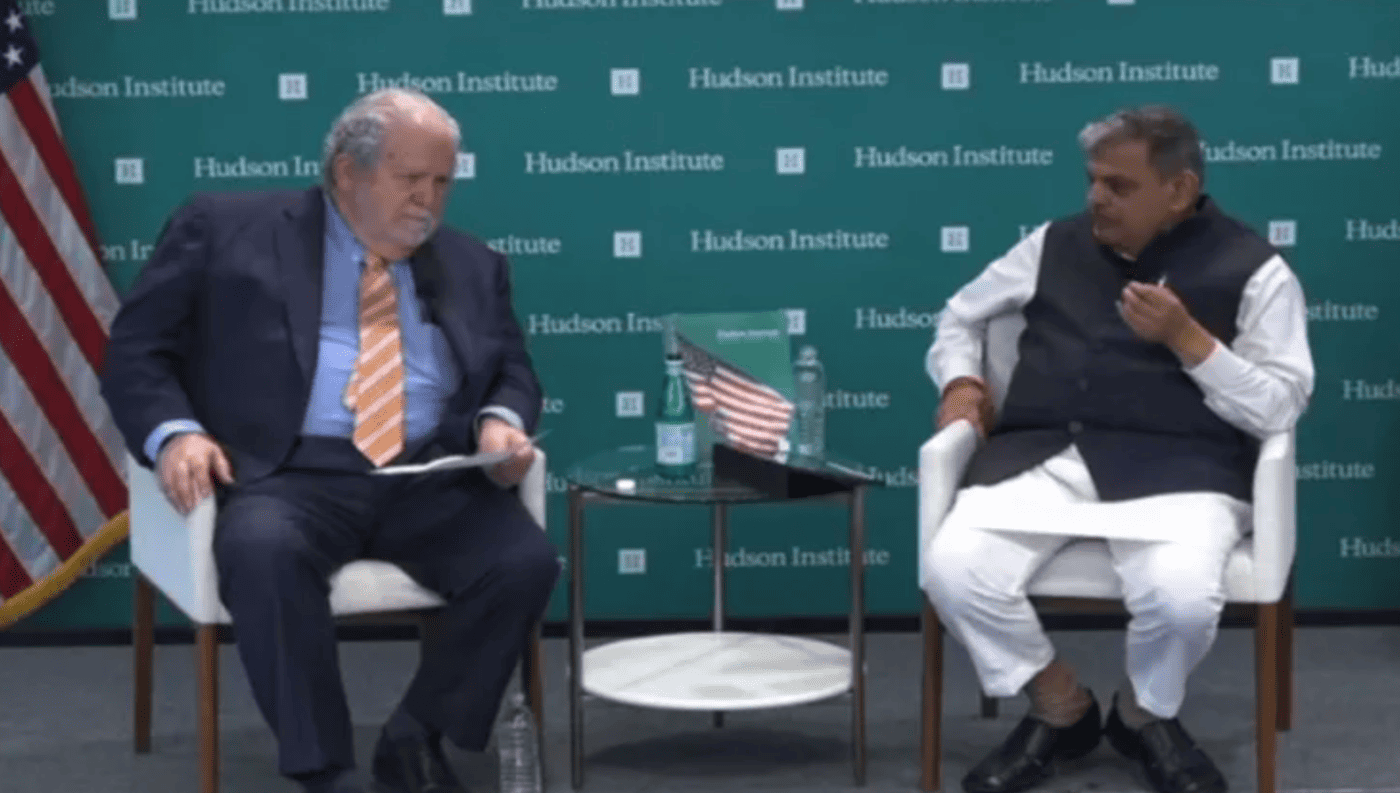

Dattatreya Hosabale, one of the top leaders of India’s Rashtriya Swayamsevak Sangh, or RSS, sat down for a talk just blocks from the White House on April 23, 2026. He spoke at the Hudson Institute to American experts and policymakers. For an organization that has usually worked quietly behind the scenes, this was a clear step forward. The RSS is now sharing its own story directly with people in the United States.
The Fireside Chat That Opened Eyes
Hosabale told the audience three straightforward points. First, the RSS is not like America’s old Ku Klux Klan. He added “Hindu philosophy and culture view the whole world as one family and do not endorse supremacy.” Second, Hindus have nothing to apologize for about their culture and history. Third, the strong link between the RSS and India’s ruling BJP party is real and cannot be ignored.
He also described the group’s everyday work: more than 83,000 daily neighborhood meetings called shakhas and 152,000 service projects that help people all over India. To him, being Hindu is about India’s ancient civilization and shared way of life, not just religion.
The talk was not only thoughtful, but it marked something new. A century-old Indian group with millions of volunteers was explaining itself in plain English, right in the heart of Washington.
What the RSS Really Is
Many Americans who follow India already know Prime Minister Narendra Modi and the BJP, the party that has won three straight national elections. The RSS is the large volunteer group that helped shape the BJP and trained leaders like Modi. It began 100 years ago as a way to build strong character, national pride, and community service among Hindus.
The RSS has watched years of stories in Western media that paint it as extreme or unfriendly to minorities. Hosabale said those old labels no longer match the facts.
Today the RSS runs the world’s largest volunteer network. Members meet every morning for simple exercises, songs, and discussions. They focus on discipline, helping neighbors, and keeping India’s cultural roots alive. It is not a political party. It is more like a giant community movement that works in schools, villages, disaster relief, and youth programs across the country.
Why the RSS Is Speaking Out Now
For most of its history, the RSS let the BJP handle politics and other groups speak for it overseas. That approach made sense when India was smaller on the world stage. But things have changed. India’s economy has grown fast—it is now the world’s fifth-largest. The United States and Japan see India as a vital partner in Asia for trade, technology, and security.
At the same time, the RSS has watched years of stories in Western media that paint it as extreme or unfriendly to minorities. Hosabale said those old labels no longer match the facts. With the BJP firmly in power and India becoming more important to America every year, the RSS decided it was time to step into the light and let people hear its side directly.
Reaching Out to Americans
Hosabale’s Washington visit was part of a wider effort. Days earlier, on April 17, he spoke at Stanford University alongside tech leaders and former U.S. officials about blending India’s ancient knowledge with modern science. Other RSS-connected leaders, such as Ram Madhav, have given talks at American conferences, explaining how India’s cultural pride fits with ideas of national strength that many conservatives here understand.
Hindu-American groups inspired by the values espoused by RSS have started organizations that are involved in community/volunteer work to help the society they live in. They organize hurricane relief, blood drives, and partnerships with police and fire departments. The message is simple: the RSS and its friends want to be good neighbors, both in India and in the United States.

Why Direct Talk Matters
Some people in the West still have questions about the RSS and its views on religion and society. That is fair—big ideas should be discussed openly. But shutting the door or relying only on second-hand reports does not help anyone understand modern India.
The RSS has real influence on the government that America wants as a close partner. Hearing its leaders explain their work in their own words gives Americans a clearer picture. It shows a movement built on service, discipline, and pride in India’s ancient civilization. For anyone curious about why India is rising so quickly and why the U.S.-India friendship is growing stronger, learning about the RSS is a smart place to start.
A Stronger Partnership Starts with Real Understanding
The United States and India share big goals: open trade, new technology, and a stable Asia. India’s 1.4 billion people and fast-growing economy make it a key friend for the future. The RSS has helped shape the strong, confident India that Americans now deal with every day.
By coming to Washington and speaking plainly, Hosabale invited Americans to judge the RSS for themselves. That kind of open conversation builds trust. It turns old labels into real knowledge. For readers who care about India and the future of U.S.-India ties, this is a good moment to learn more about one of the most important—and often misunderstood—groups in the world’s largest democracy. The RSS is no longer in the shadows. It is ready to talk. Americans would do well to listen.
Madhu Hebbar, an engineer, is an IIT graduate, living in the greater Los Angeles area. He is a practicing Hindu, and an avid reader, who is interested in Eastern philosophies and their general application to Western challenges. He is engaged in coaching youngsters interested in Hindu civilizational history, universal values and its modern-day relevance.
Glad to see the RSS leaders touring the US and talking about the world’s largest volunteer network. In the West, the anti-India cabal tries hard to paint the RSS as a Taliban or ISIS, which the RSS is absolutely not. Plus, the West’s constant fixation on oppression of minority religions like Christianity and Islam in India is a victimhood factory play and a missionary strategy and when the Catholic Church and Islamic WAQF owns most of the private land in India, and they each have hundreds of thousands of churches and mosques which run with zero interference from the State, unlike Hindu temples, and there is absolutely no minority faith refugee flow out of India, it’s time to reset that narrative,. Kudos to the RSS leadership.