




It’s Not Lionel Messi or Cristiano Ronaldo. Diego Maradona Remains Supreme in the Pantheon of Football

- A flawed divinity, and an anti-colonial icon whose legend stretches from the working-class neighborhoods of Buenos Aires to the passion-drenched streets of Kolkata.
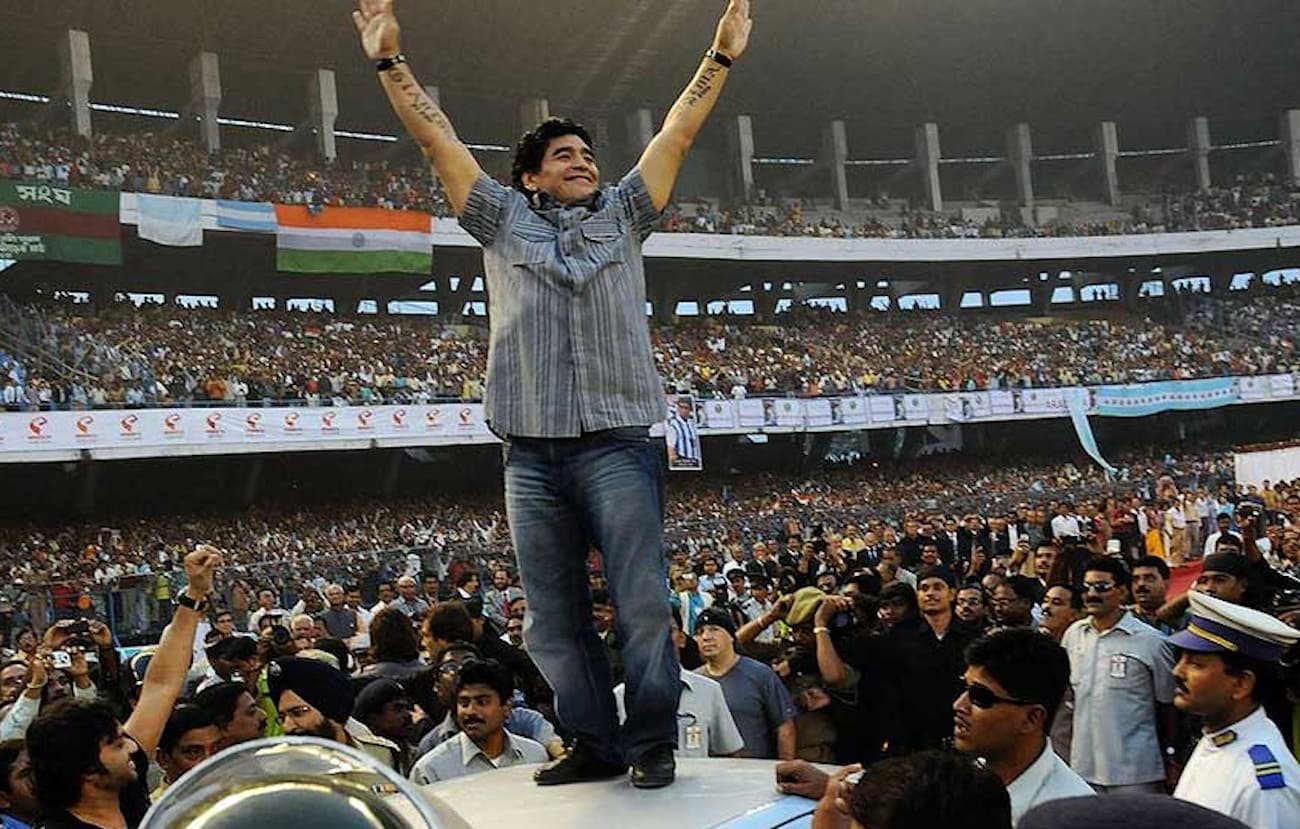

The debate over who reigns supreme in the pantheon of football often comes down to what a fan values more: the sustained, mathematical perfection of modern icons like Lionel Messi, the engineered athletic brand of Cristiano Ronaldo, or the sheer, mythic impact of Diego Armando Maradona. While numbers, commercial portfolios, and trophy tallies favor modern superstars, Maradona stands alone in the history of global sport. He was never just a football player—he was a cultural archetype, a political flashpoint, a flawed divinity, and an anti-colonial icon whose legend stretches from the working-class neighborhoods of Buenos Aires to the passion-drenched streets of Kolkata.
1. The Archetype of the Working-Class Hero
To understand the divinity assigned to Maradona, one must look to his origins in Fiorito, a sprawling, impoverished shantytown on the outskirts of Buenos Aires.
In Argentine culture, there exists a deeply cherished national myth: the pibe—the clever, street-smart child of the slums who uses quick wit, daring improvisation, and technical artistry to outsmart larger, wealthier, and more privileged opponents. Maradona was the ultimate living realization of that myth.
When he played, it was never just athletics; it was class warfare on grass. Whether dragging Boca Juniors to glory or taking Napoli—an impoverished Southern Italian club routinely disrespected by the wealthy industrial powerhouses of the North—to their first-ever Serie A titles, Maradona gave an unyielding voice and pride to the disenfranchised. He played with a fierce, uncompromising chip on his shoulder that resonated with anyone who felt pushed to the margins.
2. The Modern Icon Spectrum: Cult vs. Commercial Empire
The evolution of football superstars over the past half-century highlights a profound shift in how greatness is packaged, monetized, and consumed. To place Maradona alongside modern giants like Lionel Messi and Cristiano Ronaldo (CR7) is to contrast raw, chaotic authenticity against high-stakes corporate professionalism.
| Athlete | Primary Archetype | Commercial Model | Core Legacy |
| Diego Maradona | The Anti-Establishment Hero | Emotional equity over sponsorship; rejected corporate control | Mythic devotion, cultural revolution |
| Lionel Messi | The Product & Humble Genius | High corporate trust (Apple, Adidas) built on quiet perfection | Unmatched career efficiency, trophies |
| Cristiano Ronaldo | The Engineered Enterprise | Massive self-built “CR7” empire (Nike lifetime, luxury, social media dominance) | Peak athletic discipline, commercial scale |
Maradona vs. Messi: Emotional Divinity vs. Flawless Excellence
While Lionel Messi is universally lauded as perhaps the most complete footballer ever to play the game, his public persona is engineered for reliability and quiet humility. Messi rarely gives controversial interviews or takes political stances; his brand sells consistency, performance, and trust.
Maradona, by contrast, was an explosion of raw humanity. Where Messi brought home the 2022 World Cup through technical precision and staggering statistical output, Maradona won the 1986 World Cup through sheer force of personality and artistic defiance. Messi inspires global admiration; Maradona inspires religious cult devotion.
Maradona vs. CR7 & Modern Stars: The “Anti-Brand” vs. The Corporate Empire
Cristiano Ronaldo represents the absolute pinnacle of the modern sports personality as a commercial conglomerate. Through his global “CR7” branding, lifetime sportswear deals, and meticulously managed social media presence, Ronaldo sells an aspirational lifestyle of relentless work ethic and perfection.
On his maiden visit, over 100,000 fans lined the streets from the airport to his hotel in the middle of the night just to catch a glimpse of him. Tens of thousands packed the Salt Lake Stadium simply to watch Maradona juggle a ball, dance, and blow kisses to the crowd.
Where modern stars like Ronaldo and David Beckham transformed athlete branding into a multi-hundred-million-dollar playbook, Maradona actively resisted corporate control. He rejected polished media guidelines, called out FIFA executives for corruption, and frequently aligned himself with political causes that alienated corporate sponsors.
Modern stars build scale and revenue through flawless image management; Maradona built immortal cultural devotion by refusing to hide his flaws.
3. The 1986 World Cup: War, Catharsis, and the Twin Goals
The climax of Maradona’s footballing and mythic career occurred on June 22, 1986, at the Azteca Stadium in Mexico City during the World Cup quarter-final between Argentina and England.
The match was played just four years after the Falklands War (La Guerra de las Malvinas), a bitter 74-day conflict that claimed the lives of 649 Argentine soldiers—many of whom were young conscripts the same age as the players on the pitch. While politicians urged calm, the match served as an emotional pressure cooker for an Argentine nation still grieving military defeat and economic turmoil.
In ninety extraordinary minutes, Maradona encapsulated the complete duality of his genius:
- The “Hand of God”: Six minutes into the second half, Maradona jumped against British goalkeeper Peter Shilton—who towered eight inches over him—and slyly punched the ball into the net with his left fist. The referee missed the infraction. To the English, it was blatant cheating; to Argentines, it was the ultimate display of viveza criolla (native cunning). In the context of the war, outsmarting a global empire felt like poetic, covert justice. As Maradona famously declared, it was scored “a little with the head of Maradona and a little with the hand of God.”
- The “Goal of the Century”: Just four minutes later, Maradona executed a moment of pure, unblemished brilliance. Receiving the ball in his own half, he turned and dribbled past five English outfield players and the goalkeeper to score.
That four-minute sequence presented both sides of the legend: the street-smart rogue taking revenge, followed by the untouchable genius demonstrating undeniable superiority.
4. Radical Left Politics & Global South Iconography
Unlike modern, corporate-trained athletes who carefully curate neutral personal brands, Maradona wore his radical political beliefs openly. He was a staunch critic of Western imperialism, FIFA’s corporate hierarchy, and capitalist excess.
Sporting a tattoo of Che Guevara on his arm and Fidel Castro on his leg, Maradona forged deep personal friendships with Latin American left-wing leaders including Castro, Hugo Chávez, and Evo Morales. He positioned himself as an ally of the Global South, using his platform to challenge established global powers.

5. The Kolkata Connection: Football’s Spiritual Sister City
Perhaps nowhere outside Latin America and Naples is Maradona’s mythos felt more acutely than in Kolkata, the cultural and footballing heartland of India. The deep, almost spiritual connection between Maradona and Kolkata stands as one of global sports culture’s most unique phenomena.
The 1986 TV Boom & Anti-Colonial Resonance
Kolkata’s love affair with Maradona exploded during the 1986 World Cup, which coincided with the widespread arrival of color television in Indian households. For a region with a rich history of anti-colonial resistance and decades of left-leaning politics, watching a short, defiant man single-handedly dismantle England carried profound symbolic weight. Kolkata did not merely adopt Argentina as its second national team; it elevated Maradona to the status of a folk hero who had humbled the former colonial empire.
Pilgrimages to the East (2008 & 2017)
Maradona visited Kolkata twice, and on both occasions, the city treated him like a visiting monarch:
- 2008: On his maiden visit, over 100,000 fans lined the streets from the airport to his hotel in the middle of the night just to catch a glimpse of him. Tens of thousands packed the Salt Lake Stadium simply to watch him juggle a ball, dance, and blow kisses to the crowd.
- 2017: Maradona returned to unveil a 12-foot bronze statue of himself holding the 1986 World Cup trophy in Lake Town. During the visit, he played an exhibition match alongside cricket icon Sachin Tendulkar, demonstrating that in Bengal, Maradona was the rare foreign figure who could share the stage with India’s biggest icons.
For the people of Kolkata, Maradona was never a distant TV star; he was a kindred spirit—passionate, politically charged, chaotic, and fiercely loyal to the working class.
6. The Enduring Legacy: The Flawed God
What ultimately separates Diego Maradona from almost every other sporting figure in history is his raw, unvarnished humanity. He was not a sterile icon of athletic perfection or a calculated marketing tool; he suffered from publicly documented addictions, made profound personal errors, fell from grace, and celebrated victories with unbridled passion.
In the end, fans from the murals of La Boca in Buenos Aires to the street corner shrines of Kolkata did not revere Maradona despite his flaws—they revered him because of them. He was a human being who carried the hopes, anger, and dreams of millions, playing the game with the soul of a mortal and the artistry of a god.
Amy Ghosh is a Los Angeles-based Attorney at Law, specializing in Immigration Law, Family Law, and Employment Law, among others. She can be reached at: amygesq@gmail.com.