




Charge and Punishment: The Case of Umar Khalid Inverted the Moral Grammar of Justice

- Khalid, a student of Jawaharlal Nehru University, has been imprisoned for over five years without a trial, thanks to a law under which the presumption of innocence is not merely weakened; it is structurally reversed.
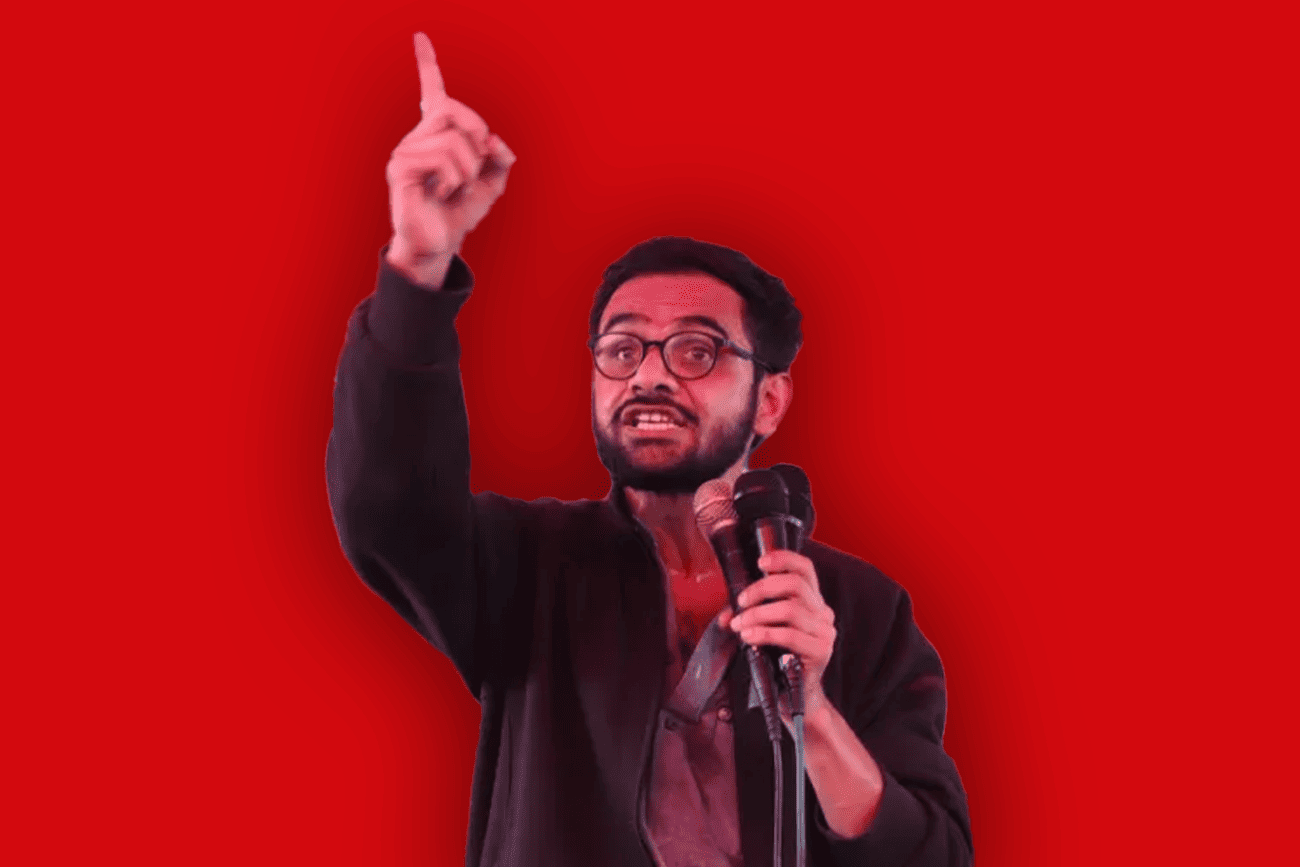

Every democracy faces a moment when it must look at itself without illusion. India’s moment arrives in the quiet, unending wait of a man who has not yet been tried but has already been punished. Umar Khalid, once a doctoral student immersed in the arguments and anxieties of a restless campus, has been sitting in a prison cell for over five years under a law that allows the state to imprison first and justify later.
His case is not simply about one individual or one set of allegations. It is about the architecture of a legal regime that has inverted the moral grammar of justice. It is about a democracy that has allowed a colonial logic of suspicion and pre‑emptive repression to survive long after the empire that created it vanished. And it is about the slow, almost imperceptible erosion of the idea that liberty is the default condition of a citizen, not a privilege to be granted by the state.
Khalid’s ordeal began with accusations of participating in a “larger conspiracy” behind the 2020 Delhi riots, a phrase that has become a kind of elastic net in modern policing. It can stretch to include speeches, associations, WhatsApp messages, and even the act of being present in the wrong narrative at the wrong time. The state invoked the Unlawful Activities (Prevention) Act, a law originally crafted to combat terrorism but now used in ways that blur the line between dissent and danger.
Under this law, the presumption of innocence is not merely weakened; it is structurally reversed. Bail becomes nearly impossible unless the accused can demonstrate that the prosecution’s case is prima facie false. That standard effectively requires the defense to conduct the trial before the trial. The result is a system where the process itself becomes the punishment, where years of incarceration precede any judicial determination of guilt, and where the accused is left to wait while the machinery of justice moves at a pace that seems almost designed to exhaust hope.
What makes Khalid’s case emblematic is not its uniqueness but its familiarity. UAPA cases across the country follow a similar pattern: sweeping allegations, voluminous chargesheets, endless adjournments, and trials that recede into the distance like a mirage. The prosecution faces no consequence for delay. The judiciary, often overwhelmed and cautious in matters framed as national security, rarely intervenes decisively. And the accused, caught in the gap between accusation and adjudication, becomes a symbol of a deeper structural failure.
In this sense, Khalid’s imprisonment is not an aberration; it is the logical outcome of a law that treats liberty as a risk rather than a right.
To understand how such a law survives in a democracy, one must look beyond the text of the statute to the psychology of nations. Democracies often expand state power in moments of fear. The United States passed the Patriot Act after 9/11. The United Kingdom strengthened anti‑terror laws during the Troubles. France invoked emergency powers after the 2015 attacks. In each case, the expansion of state authority was justified as temporary, exceptional, necessary.
Yet the history of such laws shows that once enacted, they rarely shrink. The extraordinary becomes ordinary. The exception becomes precedent. And the powers designed for the margins of governance migrate to its center.
India’s case is shaped by an additional layer: the inheritance of colonial legal frameworks that privileged state security over individual liberty. The logic of preventive detention, the suspicion of political mobilization, the broad definitions of “unlawful activity” — these are not new inventions but continuities. Post‑Independence governments of every ideology have found such laws useful. They offer a way to signal toughness, manage unrest, and control narratives.
When a democracy begins to tolerate prolonged incarceration without trial, it signals a shift in its moral center. The presumption of innocence becomes a ceremonial phrase rather than a living principle.
But the deeper reason for their endurance lies in public psychology. National security laws survive because they appear to target “others” — extremists, radicals, separatists. The majority believes it will never be affected. It is only when someone like Umar Khalid, a student activist, is charged under a terror law that the boundaries blur and the implications become impossible to ignore.
The danger of such laws is not only that they can be misused but that they normalize a vision of citizenship in which dissent is suspect and delay is acceptable. When a democracy begins to tolerate prolonged incarceration without trial, it signals a shift in its moral center. The presumption of innocence becomes a ceremonial phrase rather than a living principle. The judiciary becomes a distant horizon rather than an active guardian. And the citizen becomes vulnerable not because of guilt but because of accusation.
The question, then, is not merely whether UAPA has been misapplied in particular cases but whether a democracy can sustain a law that structurally undermines its own constitutional commitments. Repealing or reforming such a law requires more than outrage. It requires political will, judicial clarity, and public engagement.
Parliament can amend the law to restore normal bail standards, narrow definitions, and impose strict timelines for trials. The Supreme Court can reinterpret vague provisions, reaffirm the presumption of innocence, and mandate time‑bound proceedings. Civil society can document patterns of misuse, mobilize public opinion, and shift the political incentives that sustain such laws. International human rights bodies can highlight systemic issues, adding pressure on the state to align its practices with global norms.
Yet the greatest obstacle is inertia. Laws that expand state power rarely shrink without sustained effort. Democracies often drift into illiberalism not through dramatic ruptures but through gradual accommodations — a delay here, an exception there, a silence that becomes habit. The challenge is not only to change the law but to change the culture that allows such laws to flourish.

If India is to ensure that no citizen endures what Umar Khalid has endured, it must undertake structural reforms that go beyond UAPA. Bail must be restored as a fundamental right, not a privilege contingent on the mood of the prosecution. Trials must be time‑bound, with clear consequences for delay. Independent oversight mechanisms must review all charges filed under national security laws to prevent frivolous or politically motivated cases.
Officials who misuse such laws must face penalties, for without accountability, reform becomes cosmetic. The right to protest must be protected through clear legal guidelines that distinguish dissent from violence. Legal aid must be strengthened so that the accused are not left defenseless against the weight of the state. And the media must be held to ethical standards that prevent trial by insinuation.
These reforms are not radical. They are foundational. They restore the balance between state power and individual liberty — a balance that defines the moral legitimacy of any democracy.
The question is whether India is willing to undertake them. Democracies are judged not by how they treat the powerful but by how they treat the powerless. And in that judgment, the measure is simple: does the law serve justice, or does it serve itself?
Umar Khalid’s ordeal is a warning. It is also an opportunity. It forces the nation to confront the gap between its constitutional ideals and its legal realities. It demands a reckoning with the quiet violence of delay, the normalization of suspicion, and the ease with which liberty can be suspended in the name of security.
The future of Indian democracy will not be determined by elections alone but by whether it can reclaim the principle that no citizen — regardless of belief, identity, or ideology — can be deprived of liberty without due process. The choice is stark, and the moment is now.
Satish Jha co-founded India’s national Hindi daily Jansatta for the Indian Express Group and was Editor of the national newsweekly Dinamaan of The Times of India Group. He has held CXO roles in Fortune 100 companies in Switzerland and the United States and has been an early-stage investor in around 50 U.S. startups. He led One Laptop per Child (OLPC) in India and currently serves on the board of the Vidyabharati Foundation of America, which supports over 14,000 schools educating 3.5 million students across India. He also chairs Ashraya, which supports about 27,000 students through its One Tablet per Child initiative.