




Festival Beyond Celluloid: Cannes has a Way of Compressing the World Into a Few Square Miles

- I arrived thinking I would watch films. I left realizing that the Cannes Film Festival is just as much about the people, ideas, and unexpected conversations that happen between the screenings.
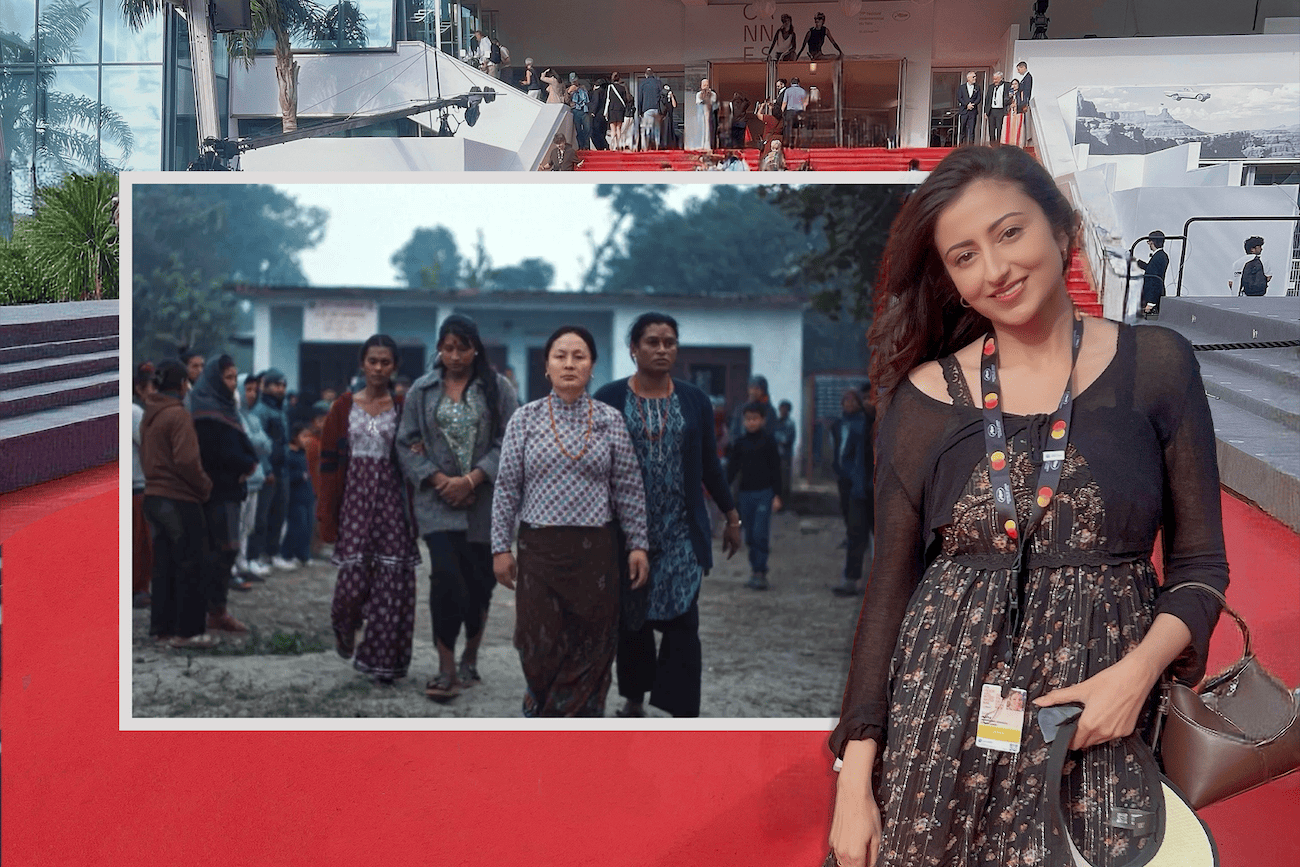

Every morning, filmmakers, producers, dreamers, and veterans walk the same streets. They queue for screenings, rush between meetings, share coffees, exchange business cards, and for ten days live inside a strange ecosystem where cinema feels both impossibly grand and deeply human.
The beauty of Cannes lies not only in its films but also in its setting. Against the backdrop of the French Riviera, the festival becomes a world of cinema, creativity, and possibility. From glamorous red carpets and bustling pavilions to packed screenings and industry events, every corner of the city seems immersed in film culture.
One of the most fascinating aspects for me was the Marché du Film, where countries showcased their film industries and professionals gathered to buy, sell, finance, and distribute movies. Deals were being negotiated everywhere, from exhibition halls and hotel lobbies to yachts anchored along the coast.
Yet despite this shared love for film, people attended Cannes for very different reasons. The festival attracts directors, producers, actors, screenwriters, distributors, sales agents, financiers, festival programmers, journalists, critics, investors, and film enthusiasts.
My purpose was a little different.
I came to meet fellow creatives, discover inspiring stories, and find people worth writing about. There was certainly no shortage of inspiration. I allowed the days to unfold with only a loose structure. Usually, I would book one or two films through the festival app and then let curiosity guide the rest of my schedule.
One thing that struck me throughout the festival was the strong Indian presence, not just from India itself, but across the wider South Asian community. Across screenings, pavilions, networking events, and market discussions, Indian filmmakers, producers, actors, and entrepreneurs were highly visible.
South Asian Presence
Some notable achievements from the region this year included:
• Abinash Bikram Shah’s “Elephants in the Fog” winning the Jury Prize in Un Certain Regard, becoming the first Nepali film to receive a major award at Cannes.
• Mehar Malhotra’s “Shadows of the Moonless Nights” being selected for La Cinef, Cannes’ prestigious competition for film school filmmakers.
• The restored Malayalam classic “Amma Ariyan” premiering in Cannes Classics, highlighting India’s contribution to film preservation.
• Acclaimed Indian filmmaker Payal Kapadia serving as President of the Critics’ Week Jury, a significant honor for Indian cinema.
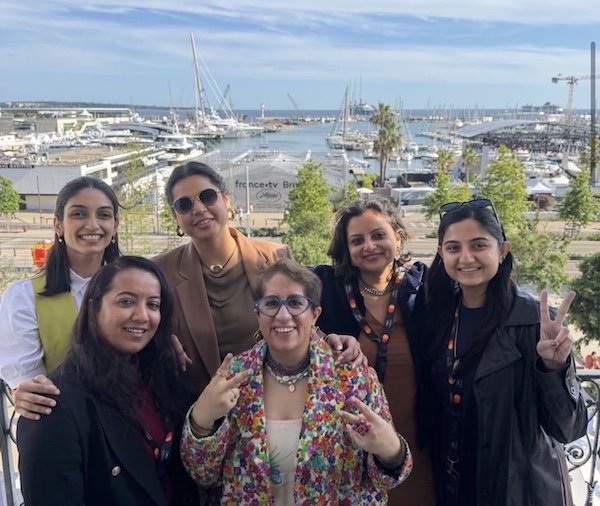
Amid this growing South Asian presence, I came across the newly formed Women in Film India (WIF India) chapter, led by Oscar-winning producer Guneet Monga Kapoor, a non-profit is dedicated to advancing gender equity in the Indian film industry. I had the opportunity to meet the four inspiring women selected for the Cannes delegation thos year: Archana Borhade, Suruchi Sharma, Jasmin Singh, and Molshri Singh. Through WIF India’s scholarship initiatives, they participated in the Producers’ Network and impACT Lab at the Marché du Film, gaining access to mentorship, workshops, and global industry connections.
Over the course of the festival, our paths crossed repeatedly in pavilions and at networking events. Curious about what they would carry home from the experience, I asked them what conversations and moments had stayed with them most.
Their answers revealed a side of Cannes that rarely makes the headlines.
Beyond the premieres, Cannes is a place where perspectives shift, friendships are formed, and filmmakers begin to imagine new possibilities.
For Suruchi, the experience was defined by conversation. “The Cannes experience was centered around many, many conversations,” she says.
As part of the impACT Lab mentoring cohort, she found herself immersed in discussions about film producing, creativity, and culture with participants from around the world. Yet one encounter stood out from the rest.
A fellow attendee showed her a photograph of the camp where he was staying because he could not afford a hotel room.
The moment surprised her. Amid the glamour and prestige associated with Cannes, it was a reminder that every filmmaker arrives carrying a different reality. The exchange stayed with her not because it was dramatic, but because it quietly expanded her understanding of the people around her.
Despite this shared love for film, people attended Cannes for very different reasons. The festival attracts directors, producers, actors, screenwriters, distributors, sales agents, financiers, festival programmers, journalists, critics, investors, and film enthusiasts.
That sense of discovery surfaced in a different way for Jasmin. Rather than a single conversation, she found herself drawn to a larger realization about the global film industry.
“There’s a system to the international co-production ecosystem that can be studied, understood, and navigated, “she remarked.
For many emerging filmmakers, international financing and co-production can feel intimidating, even inaccessible. Somewhere between the meetings and networking events, that uncertainty began to dissolve.
“Once you begin to understand how it works, you can carve out a unique and independent path for your film, turning an overwhelming process into actionable steps, especially when you don’t know where to begin.”
Where Jasmin found clarity, Archana found connection.
Finding Connections
Having received the Producers’ Network Scholarship from Women in Film India, she attended the Producers’ Network Breakfasts each morning, where producers, creatives, and representatives from different countries gathered to explore opportunities for collaboration.
On her very first morning, she met Angela, an American producer-director. The two bonded instantly over their shared love of genre thrillers.
Over the following days, they coordinated meetings, shared lunches, exchanged stories about filmmaking struggles, compared notes from the Producers’ Network, and affectionately began referring to each other as “soul-sisters.”
On the final day, sitting by the beach, they made a pinky promise to be part of each other’s future films.


“It was her honesty, her ambition and her ‘never say die’ spirit,” Archana says, “that made this connection memorable to me.”
Listening to their stories, I was struck by how often Cannes is described as a place of opportunity, yet what people remember most are the human moments. A conversation. A realization. A friendship.
The experience also left a mark on how they think about their creative work.
For Suruchi, the impACT Lab became a space for reflection and growth.
And then, of course, there were the films.
Suruchi counts among her most memorable experiences was witnessing Ken Loach’s presence and speech ahead of a screening of “Land and Freedom.” Sometimes, seeing a filmmaker whose work has shaped generations can be as powerful as watching the film itself.
Jasmin’s standout screening was “Club Kid,” which she caught toward the end of the festival after it had already emerged as one of the market’s breakout titles.
“The energy in the room was intoxicating,” she recalls.
Anyone who has attended a festival knows that feeling, the rare electricity and emotional awareness that passes through a theatre when an audience collectively senses it is witnessing something special.
For Archana, the most emotional screening was “Elephants in the Fog,” directed by her friend Abinash Bikram Shah.
The film follows the trials and tribulations of Nepal’s Kinnar community through the eyes of its protagonist, Pirati. Years earlier, Archana had read the screenplay during the Film Independent Global Media Makers Residency in Los Angeles.
“To see those words come to life onscreen with such power and poignancy made me tear up, especially at the end.”
Watching the film’s journey from script to screen felt deeply personal, made all the more meaningful by its recognition with the Un Certain Regard Jury Prize.
Taken together, these reflections paint a portrait of Cannes that extends far beyond the red carpet.
I arrived thinking I would watch films. I left realizing that Cannes is just as much about the people, ideas, and unexpected conversations that happen between the screenings. I left with the reminder that cinema is not only built from stories, but from the people who carry them, shape them, and gather together to tell them.
Dr. Abha Soni is a young physician new to the Bay Area, who specializes in diagnosing skin diseases. Outside of work, she finds joy in sharing stories about her experiences and attending social and cultural events. She is also passionate about food, beauty/skincare, and travel blogging. Her artistic sensibilities find expression through visual art, music, and singing, which enrich her multifaceted life beyond medicine.