




My Very Own Friendsgiving: How American Thanksgiving Seamlessly Merges into Sikh Tradition of Seva

- To me, the Gurdwara is a kind of Friendsgiving throughout the year. It is a place where people come together, share food, serve one another, and remember that we are all equal.
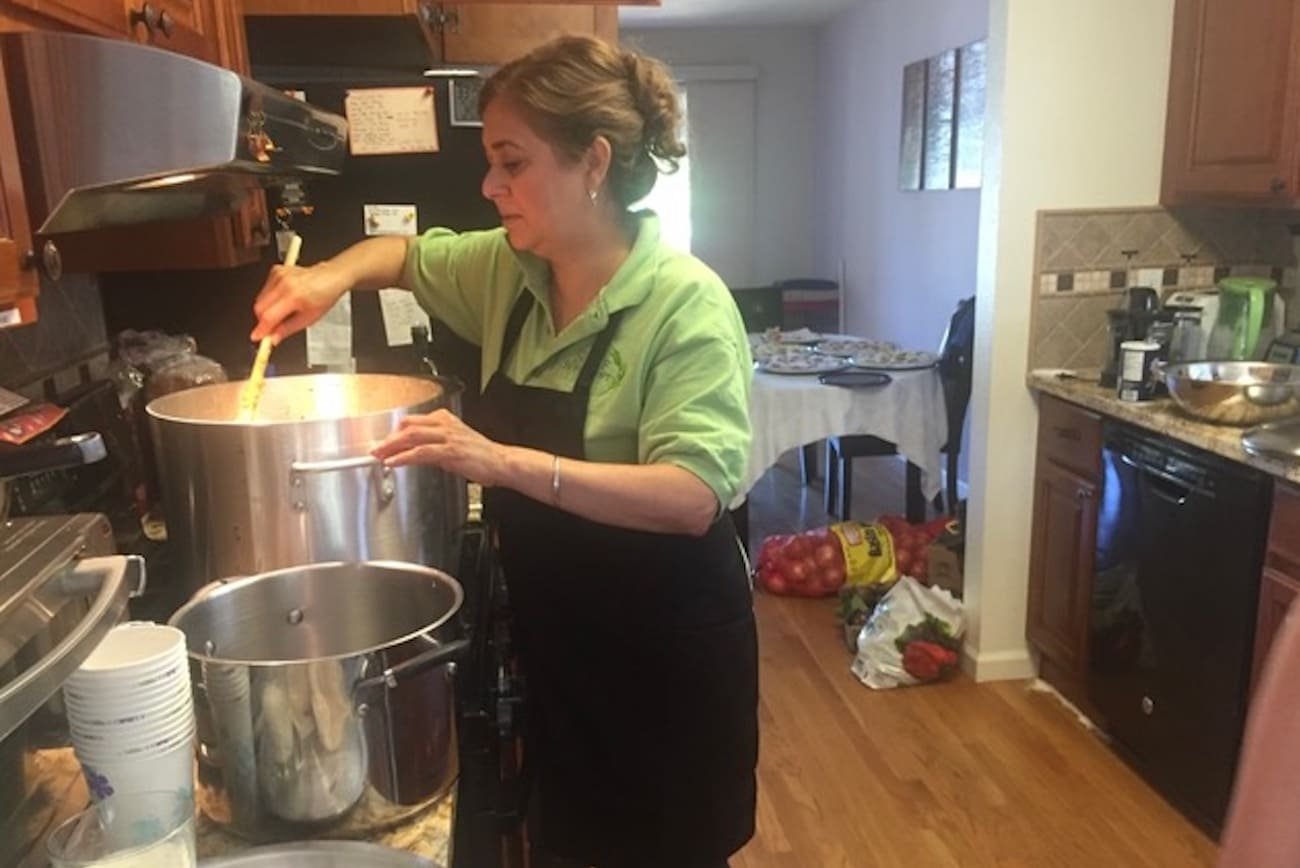

I have always believed that Thanksgiving should not be limited to one day. For me, every day can be a day of giving, sharing, and serving others. That belief comes from the Sikh faith I was raised in, where seva, or selfless service, was taught by my parents. It is something I’ve instilled in my children, too. My own Thanksgiving story began in an unexpected place: my salon.
Through my clients, I began learning about Thanksgiving and the traditions surrounding it. Over the years, these kind and generous women shared their traditional family recipes with me. In the 1990’s, Margaret was one of the first people to teach me how to bake a turkey. You would never guess, but she showed me how to cook it in two brown grocery bags, and she recommended recipes that from Libby’s canned pumpkin filling. I added extra ground cloves, ground ginger, ground cinnamon, and ground nutmeg and let the mix sit overnight to be baked the next day, per my client’s Nanette’s suggestion. It worked like a charm and the spices just bloomed in the pie — we even ate leftover slices for breakfast. Other clients, including Margo, Karen, and Kim, shared recipes, tips, and their own family traditions for making gravy, stuffing, and casseroles. They welcomed my family into their celebrations, and I learned by watching, asking questions, and trying things myself.
Then I began passing what I had learned to other South Asian families.
Many immigrant families were far from their relatives. Some had only recently arrived in America and had never heard of Thanksgiving, let alone prepare a traditional meal. Others, like my own, had no family nearby and might otherwise have spent the holiday alone. I wanted them to experience the warmth of gathering around a table and to feel that this holiday could belong to them, too.
I taught South Asian families I had befriended how to prepare turkey in an oven bag, make stuffing, bake pumpkin pies, prepare green bean casserole, and make candied yams. For some, like Vimi and her young family, it was their first time using an oven to prepare a whole turkey.
My children became little kitchen helpers. They loved making pumpkin and pecan pies, and before long they became so good at it that they could help prepare them almost independently. One Thanksgiving, we prepared dinner for 25 members of Aruna’s extended Tamil family. I was working long hours at the salon the night before, and my young daughter came through and baked nine pies all by herself! My mother made a masala-style turkey, bringing her own touch to the tradition. I remember the excitement of preparing so much food and seeing everyone come together.
I had been sharing food and serving people long before the word Friendsgiving became popular. And in many ways, this was something I had been doing all my life, because of how I was raised. Back home, my mother’s kitchen fed everyone, one could not leave our house without eating home-cooked food.
Through my family friend Dan’s East Palo Alto-based nonprofit, Self-Sufficient Life, we organized a large Friendsgiving gathering with food grown from raised beds in his backyard plot. In America, My family also helped serve a free Thanksgiving meal at the former Bowlmor in Cupertino for those in need. We arrived early to set up the buffet stations and served everyone first, sitting down to eat afterwards.
To understand why these gatherings mean so much to me, it helps to understand seva. A concept found in South Asian tradition, in Sikhi, seva means selfless service. It is not something we do for recognition, photographs, followers, or praise. It is a way of living. We learn to serve without expecting anything in return. One of the most beautiful expressions of this teaching is langar, the community kitchen at a Gurdwara, a Sikh place of worship. The tradition is associated with Guru Nanak Dev Ji, the founder of the Sikh faith, and was developed as an institution of equality and shared responsibility. Everyone is welcome to eat, regardless of religion, caste, background, wealth, or social standing. People sit together on the floor and share the same food. A king and a laborer are served as equals. Even an Emperor of the time, Akhbar, was seated with common people for a shared meal.
When my family visits the Gurdwara, we don’t think of ourselves simply as visitors arriving to eat. We look for ways to participate. We wash our hands, help in the kitchen, serve, clean, and do whatever is needed. First thing, my son would start emptying the trash; myself and my daughter would go into the kitchen and make rotis. I have seen truck drivers and other hardworking people arrive after long days of work, bringing flour, sugar, fruit, or other contributions and joining the community in seva.
The kitchen is run through the time, effort, and generosity of volunteers. People prepare food, wash dishes, sweep floors, clean, and serve. Many Sikhs work throughout the week and still give their time at the Gurdwara. The work is not beneath anyone. It is part of the practice. Even seniors citizens in retirement schedule a day to come and give their service.
To me, the Gurdwara is a kind of Friendsgiving throughout the year. It is a place where people come together, share food, serve one another, and remember that we are all equal. At many Gurdwaras, langar is served every day. It is not a once-a-year occasion.
There are also small acts of respect that matter. We take only the food we can eat, avoid wasting it, and return our used plates to the sink for washing. We do not need to turn every act of service into a photograph or a social media post. The focus should be on the people, the food, and the spirit of seva.
Over the years, I would learn that there is much more to the history of these traditions than most are comfortable acknowledging. There is something South Asians can learn from this history, just as there is something we can share with others.
I have sometimes seen social media videos that present a Gurdwara as a place to get something for nothing. That troubles me when the spirit of the place is left out. Langar is freely offered to everyone, but those of us who are able can also ask ourselves how we might contribute: by volunteering, helping in the kitchen, donating food or money, or simply treating the space and its traditions with respect.
I also want South Asian readers, especially younger generations, to understand that Sikhi carries a deep history of sacrifice. For me, a Gurdwara is a place to become humble, grounded, and more aware of others. It is a place to reflect, seek forgiveness, and recognize that we are part of something larger than ourselves. Visitors should come from egolessness and leave with a sense of inner peace.
Learning the Deeper Story of Thanksgiving
I came to this country and learned the culture from the wonderful women I met in my salon. As I learned more about Thanksgiving, I also began learning about the history that is often left out of the familiar story.
The 1621 harvest gathering in Plymouth involved the Wampanoag people and English colonists. It is often presented as a simple, peaceful meal between two groups who came together in friendship. The historical record is much more complicated. The Wampanoag were an established people with their own government, culture, knowledge, and relationship with the land. They had practiced harvest ceremonies and seasonal traditions of giving thanks for thousands of years before the English settlers arrived.
The Wampanoag shared knowledge and resources with the colonists, and the two groups entered into a political alliance. But the cooperation did not lead to lasting peace. In the years that followed, colonization brought warfare, dispossession, loss of land and political independence, and devastating changes to Indigenous communities.
I find myself thinking about this history whenever I prepare a Friendsgiving meal. The people who extended help and shared their knowledge were not simply characters in a cheerful holiday story. They were a nation whose land and way of life would suffer enormously through colonization.
I also want to be careful not to speak for all indigenous people. Native nations are distinct, and their perspectives on Thanksgiving vary. Some Indigenous families gather and give thanks in their own ways. Others observe the day as a time of mourning and remembrance. Their voices and histories deserve to be heard directly, rather than reduced to a familiar story about Pilgrims and generic “Indians.”


November is Native American Heritage Month, and the day after Thanksgiving is recognized as Native American Heritage Day. These dates offer an opportunity to learn about Indigenous history, recognize the living communities and cultures that continue today, and listen to Native people telling their own stories. There is a connection here between Sikh and Indigenous traditions that I find meaningful, although I would never claim that are the same. Both remind us that gratitude can be expressed through our relationship with the land, the food we receive, the people around us, and teach us to give without expecting a reward. These traditions deserve to be understood on their own terms, while allowing us to recognize the values that can bring people together.
Over the years, I would learn that there is much more to the history of these traditions than most are comfortable acknowledging. There is something South Asians can learn from this history, just as there is something we can share with others.
When we are guests at someone’s home, we should arrive with appreciation, offer to help, respect the traditions of the household, and avoid treating generosity as an entitlement. The same applies when we visit a Gurdwara. We should understand the spirit of the place, follow its customs, and recognize the volunteers who give their time to prepare and serve the food.
We can also learn to be better guests on the land where we live. That means acknowledging whose homeland we are on, learning the history of the indigenous nation connected to our area, and supporting the communities whose stories have too often been overlooked.
I believe there should be enough food for everyone if we respect the people who grow it, value farmers fairly, care for our water and land, and build communities that help one another. Food should not be wasted while people go hungry. A shared meal should remind us of our responsibility, not just our good fortune.
I have been doing this since the 1990s, and I continue to share my time, effort, and resources with people in my community. Sometimes that means cooking and delivering food for others. Sometimes it means teaching a family how to bake its first turkey. Sometimes it means making sandwiches for someone who is hungry or helping in a Gurdwara kitchen.
The photographs from these gatherings show the food and the people who came together. Perhaps that is why the word Friendsgiving feels so familiar to me. The idea is not new in my life. Friends, neighbors, newcomers, and people who might otherwise be alone have always had a place at my table.
I am grateful to the salon clients who taught me, to the families who welcomed my family into their homes, to my children who learned to bake beside me, and to everyone who has shared a meal and a moment of friendship. I also remain grateful to the Indigenous peoples whose histories and traditions deserve far more recognition than they have received.
In Sikhi, we are taught to serve. We are taught to share. We are taught to see the dignity of every human being. That is the Friendsgiving I believe in and will humbly continue the tradition as being a teacher for others.
Tanya Momi is a Bay-Area based artist, author, entrepreneur, and actor/producer. Her latest book, “Daughter of a Refugee,” is available now on Amazon in print and e-book formats.