




A Chutney Parade at the Santa Barbara Gathering Drew the Multi-Flavored Odia Identity Out Into the Open

- Odias in California have introduced this retreat fifty years ago, where members share common space for three days to celebrate Odia culture through food, dance, music and storytelling,
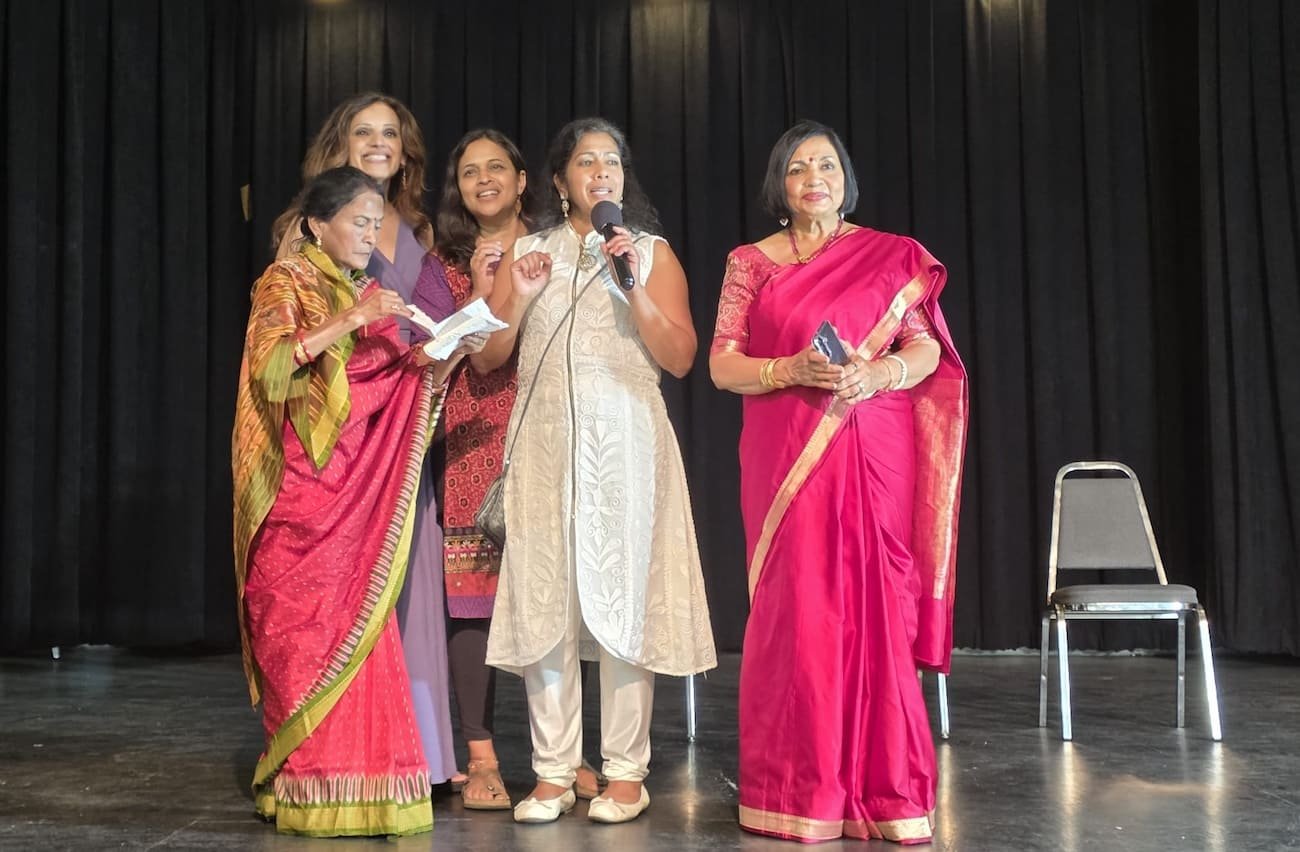

I just got back from a three-day California Odia Retreat, held at the University of California, Santa Barbara campus over the Aug 28th weekend. 2026 marked its 50th anniversary, as it began in 1976 with four to five families. Some of the original participants drove nearly 250 miles to join this year’s celebration. On the closing Monday, I saw a dozen seniors in their 70s and 80s lingering at the breakfast hall — chit-chatting, taking photos, hugging each other, visibly sad to part ways.
There are about 100,000 Odia Americans among the 5.5 million people of Indian origin in the United States. The Odias in California have introduced this retreat, where members share a common space for three days to celebrate their Odia culture through food, dance, music, storytelling, and just hanging out.
I joined this annual ritual after I moved to the Bay Area in 1989. Now it takes place during the Labor Day weekend every two years. The first generation, who came to this country in the 1960s and ’70s, will tell you that organizing this retreat and taking part in it is not work but passion and joy; their happiness comes from watching the community grow, from watching the younger ones, the third generation, join in.
Those who arrived in the 1990s are still, in some ways, occasional participants, arriving after the foundation was already set. They feel accepted, included, encouraged to come. And now the second generation—the adult children of the founders—are bringing their own children, trying to instill in them the values and sense of community they were handed when they were young.
This year, chutney making became the unlikely center of it all. Two of the organizers — themselves seniors, Kasturee Mohapatra and Kabita Mishra — introduced a chutney parade, a friendly competition inviting all three generations to make chutney. I thought I would watch and enjoy. Our son Akash was coming with his wife and their almost-three-year-old, Sena. He had volunteered to enter the competition but opted out after arriving late to the retreat. My friend Nita Panda, from Southern California, was in charge, and she reached out to many of us — so I became a skeptical participant in the chutney mela.
A Childhood in Chutney
I grew up eating chutneys as a condiment for every meal. My vivid memory is of hot summer days, fresh green mangoes picked from the orchard of the Secondary Board High School compound next to our house in Cuttack. When the sun sat directly overhead and an afternoon nap was impossible, especially with sweat running down my body like a stream, I would jump the low fence into the school grounds and get to work, sometimes enticing a lone neighborhood young man to climb up and shake down the sour green ones. I’d fill my dress pockets and walk home chewing on the freshest of them.
While the house slept under the loud whir of the ceiling fan, I would peel and cut the mangoes lengthwise, remove the tender white pit, and lay them on the flat stone mortar — the sila, then smash them with the stone roller, the pata, adding salt from a little coconut shell on the kitchen shelf and green chilies from the morning’s haul at Chhatra Bazar, the vegetable market. I made a feast of that chutney every time, a summer ritual that has stayed fresh in my mind ever since — the aroma of green mango, the hot sting of chili on my fingers, my mouth dripping with its hot, savory taste.
On rainy days, there were no green mangoes. My mother would roast okra, ridge gourd, or tomatoes, then mix them with peeled shallots, roasted red chili, and dried mango or tamarind to make a chutney that made an ordinary meal special. I later learned this chutney was the staple of the women of the house. Since they ate last, there was often no vegetable curry left for their turn, so they made this roast, still smoking from the freshly burned coal in the wood stove, and relished it with rice. Even after eating with my father and brothers, I would join my mother just for the taste of her chutney.
In winter, when fresh vegetables were abundant, the varieties of chutney multiplied — coriander, mint, tomato, wood apple — each one marking the season as surely as the calendar did.
This year, chutney making became the unlikely center of it all. Two of the organizers — themselves seniors, Kasturee Mohapatra and Kabita Mishra — introduced a chutney parade, a friendly competition inviting all three generations to make chutney.
This year, the chutney parade drew the whole of Odia identity out into the open, in as many tastes and flavors as there were jars on the table.
Friday: Pakhala
We arrived on Friday — a hundred and thirty-three of us, including thirty children under sixteen — filling the housing complex at Lot 65 on the UC Santa Barbara campus. Friday evening’s welcome was pakhala: rice steeped in fresh water, yogurt, lemon, and salt, served the way it has always been served, alongside fish fry, chingudi (prawn), saaga (spinach), potato fry, and bharta — that particular Odia alchemy of potato, dried fried lentil balls, chili, and pickle, mashed together until it becomes its own dish entirely. Pakhala remains the marker of Odia identity. It is the meal you eat when you want to taste 1976 and this year in the same bite.
Saturday Morning: Twenty-Five Jars
Saturday began with a bhajan (devotional song) by a group of avid singers at 7 am. After breakfast, the chutney entries were set out on an L-shaped table in the community hall, under a banner that read We are family, yeh, we are here — bringing all of us under one roof, one identity and one tradition.
Nita Panda, a veteran of the retreat, had announced the idea weeks earlier: a medley of chutneys showcasing people’s culinary skills, childhood memories, and creative endeavors. She recruited seniors and second-generation members alike as judges and reached out to many of us — including the younger generation, especially our adult children — to enter.
Twenty-five glass jars lined the table, with a couple of lidded glass bowls standing among them, like a few of us Odias who never liked rules. Reading the table was its own kind of genealogy. Dried mango chutney arrived from a couple visiting from India. Beside it sat their son’s entry — plum and tomato, a chutney no grandmother in Cuttack ever made, invented by a man raising his own children in Northern California, who had taken his parents’ method and pointed it at whatever fruit grew near him instead. A second-generation cook who had spent years in Japan brought fish chutney, pungent and particular — the kind of dish you either grew up eating, or didn’t. And then the long middle of the table: mint, coriander, tomato, scarlet gourd, red bell pepper, chutney after chutney in the familiar register — mine among them, a red bell pepper and tomato chutney sitting there like one more sentence in a language everyone at that table was still, in their own way, learning to speak.
Nita and the organizers had one rule: no handwriting on the labels, in case someone recognized it. So each jar got a printed tag instead, a number standing in for a name, an attempt, for one afternoon, to let the chutney speak before the family did. I was tag number 6, and they gave me the number with my name attached, lest I forget it was mine.
Around ten that morning, the five judges bent over the jars with their scorecards, tasting and writing, tasting and writing, while the rest of the hall moved on to the day’s other business.
The Rest of the Day
My friend Reina Haque — a second-generation daughter, wife, mother, besides a full-time medical career — and I had asked for time that morning to open a conversation of our own: about family, gender roles, duty, and self-care, about what three generations of Odia women had each been expected to carry, quietly, without ever being asked whether they wanted to. It sparked a lively exchange between generations, opening up facets of experience none of us had said aloud before. That will be another write-up.
By afternoon we were at Goleta Beach — pizza and salad on paper plates, children running everywhere. Sena, my almost-three-year-old grandson, eyed the Brewer’s Blackbirds warily as they closed in on the pizza crusts and cookie crumbs piling up in the trash baskets. Some of us walked the wharf; the younger crowd went wine tasting; the rest hit the pool.
By evening, the community hall in downtown Santa Barbara had turned into something out of another decade and another country. I wore a black-and-silver check sari with my traditional jewelry; around me, sari after sari, salwar kameez after salwar kameez, kurta after kurta — fifty years of families dressed the way their parents had dressed, for a fiftieth-anniversary photograph they hadn’t yet imagined taking. Little girls in their beautiful lehengas, salwar kameez, and dupattas ready to perform on the stage. Dinner came from a Bangladeshi restaurant in LA — jackfruit, saag paneer, chicken — laid out beside rice and dal cooked fresh in the hall’s own kitchen, two kinds of care on the same table.
The Announcement
Only after all of it — after the beach, after the sari, after the last plate was cleared — did the winner’s announcement come.
The judges came up to the stage together: Anjalika Pattnaik and Gopa Pattnaik, first-generation women from San Jose and San Diego, and behind them Anita, Millie, and Sarina, three second-generation doctors still chatting about what they were going to say.
I wasn’t watching the stage. I was mid-conversation with a group of young women at their first retreat, listening to how they’d found their way here through Deba Mohapatra and his wife, Kasturee. Around us, the hall had that particular restlessness of a party winding down — someone stacking chairs, someone else still holding a plate. It was Dr. Anjalika Pattnaik’s voice that pulled me back into the room. Something in her tone. “Number six.”
For a second the number meant nothing. Then it meant everything. It was me.
I could not believe my ears. With so many entries, I hadn’t let myself expect a chance — it was a clear surprise. But my childhood memory came alive all at once: red bell pepper and tomato, the easy modern base, topped with a seasoning of typical Odia-style mustard, curry leaves, dry chili, and hing. That must have been what gave it away — not the ingredients, but the tempering.
Second and third prize went to two second-generation Odias for mint chutney and cilantro chutney — flavors that belonged, unmistakably, to a different kitchen than mine — no less real Odia food for it.
Full Circle
I jumped for joy. My childhood memory of chutney had come full circle. Akash in the crowd congratulated me. His wife, Anna, told him, “I can see where your taste and interest in chutney come from.” He sent a photo to the family WhatsApp group, with the caption, “Bou (mother) won first place in the chutney competition. Blind tasting of 40 entrants, so no way Papa could’ve stuffed the ballot box.”
Annapurna Devi Pandey taught Cultural Anthropology at the University of California, Santa Cruz.