




Om Malik, 1966–2026: The Man From Delhi Who Taught Silicon Valley How to See Itself

- The founder of GigaOm, co-founder of the South Asian Journalists Association, and one of the internet's earliest and most consequential technology voices died June 24 at Stanford Hospital after a long struggle with his heart. He was 59.
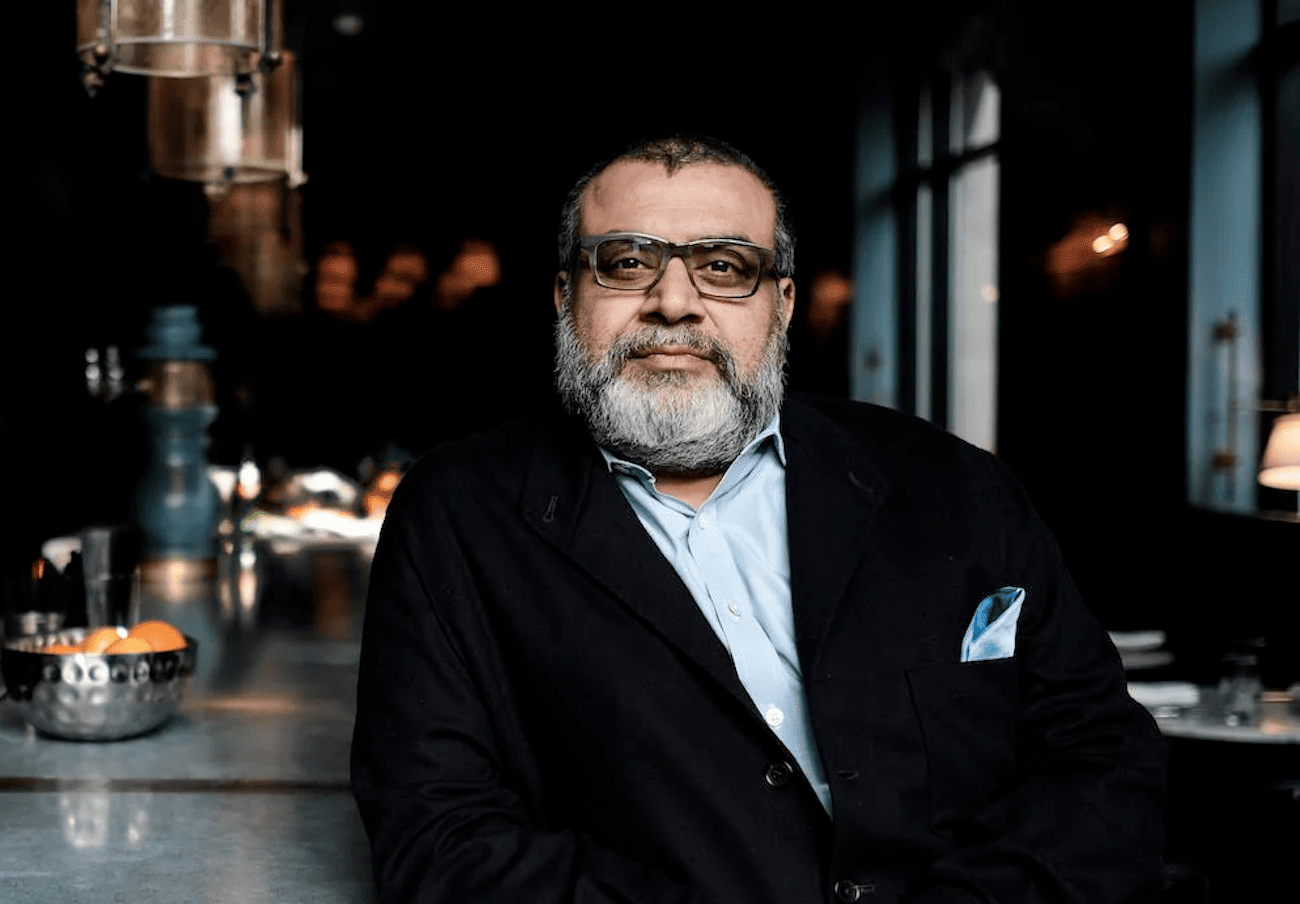

Om Malik arrived in New York City in 1993 with no job, no contacts, and a few freelance assignments. His full name was Om Prakash Malik, and he had spent the previous years writing about music and movies for Indian magazines — bylines that a young Sree Sreenivasan, then a Columbia journalism professor, had noticed in the pages of India’s top English newspapers before the two men ever met. When they finally did meet, in New York, Sreenivasan was surprised: the prolific byline belonged to someone just four years older than himself, who had attended the same college in Delhi — St. Stephen’s — and who, in the months after his arrival in the United States, had taken a job selling suitcases across the street from Yankee Stadium in the Bronx. He would work all day, then cross the street and watch the Yankees from the upper deck, as the New York Times documented in its account of his life.
Om Malik passed away on June 24, 2026, at Stanford Hospital after a long health journey with his heart. He was surrounded by family and friends. He was 59 years old, having been born on September 29, 1966, in New Delhi, India.
By the time of his death, the man who had once sold luggage in the Bronx to pay his rent had been called, by the New York Times in its obituary, the journalist “whose blog shaped how Silicon Valley saw itself.” He had founded one of the internet era’s most influential technology publications, become a sought-after venture capitalist, written for The New Yorker, Wired, Fast Company, and The Wall Street Journal, and built a community of South Asian journalists in America that grew from twenty people to more than a thousand. He had also, along the way, suffered a heart attack at 41, recovered, and spent the final years of his life writing with renewed focus about the technology he had spent three decades chronicling.
Delhi to New York: A Chemistry Degree and a Typewriter
Om Malik was born and raised in Delhi, India, where he earned his undergraduate degree in chemistry from St. Stephen’s College. St. Stephen’s, founded in 1881 under British colonial auspices, is one of India’s most prestigious liberal arts institutions, known for producing writers, diplomats, and public intellectuals — an unusual destination for someone who would become a technology journalist, but a formative one for a mind drawn to ideas across disciplines.
His early career was in Indian journalism — lifestyle and culture writing for Delhi-based publications. As Wikipedia documented, he worked with VP Fun, which he described as India’s version of Tiger Beat, and with Newsmen Features, where he specialized in lifestyle articles. He moved to London in 1992 and then through parts of Eastern Europe before arriving in New York in 1993.
The suitcase-selling period was brief. He wrote for a string of publications aimed at the Indian American community and founded Desiparty.com, an entertainment website. The first of those community publications was India Abroad — then the most important newspaper serving the Indian diaspora in the United States — where he worked as a reporter before landing at Forbes.
From India Abroad to Forbes: The South Asian Journalism Ecosystem He Built
The transition from India Abroad to Forbes was a significant one — a move from the ethnic press to mainstream American business journalism — but Malik did not leave his South Asian institutional commitments behind when he made it.
In February 1994, along with Sreenivasan, Dilip Massand, and M.K. Srinivasan, Malik co-founded the South Asian Journalists Association — SAJA. They figured there were 20 or so South Asian journalists in the United States at the time. Many years later, they stopped counting at 1,000.
SAJA, which remains active today, became the primary professional organization for South Asian journalists in North America — a networking and advocacy body that has supported generations of journalists from India, Pakistan, Bangladesh, Sri Lanka, and the wider diaspora in building mainstream careers at American publications. Malik remained genuinely proud of it. For SAJA’s 20th anniversary, he wrote: “Looking back, I am really proud of SAJA and the role it plays in the modern media. Here is to a whole new generation of journalists and looking forward to celebrating their achievements every day!”
Also in 1994, he launched DesiParty.com, an events site for South Asian immigrants. In 1995 he helped launch the now-defunct magazine Masala, and its website Masala.com, a South Asian portal. The three initiatives — SAJA, DesiParty.com, and Masala — together constituted an early attempt to build a South Asian cultural and professional infrastructure in the United States, years before the internet had provided the tools to make such efforts genuinely scalable. Malik was building community before community-building was a marketing concept.
Forbes, Forbes.com, and the Pivot to Technology
At Forbes, Malik made a professional pivot that would define the rest of his life. He had arrived as a general reporter, but the telecommunications sector — then in the early stages of what would become the broadband revolution — captured his imagination, and he quickly became one of the more astute chroniclers of its economics and politics.
Eventually he began writing about telecommunications for Forbes, and in 1997 became one of the founding staff members of Forbes.com, the magazine’s first venture into technology coverage. The Forbes.com team, led by David Churbuck, was building something genuinely new — a daily-publishing digital presence for a major business magazine at a moment when most of the industry was still skeptical that the internet required serious journalistic attention. Malik, already convinced that the web was the future, threw himself into the work.
In the Digital Riptide oral history project — a Harvard and Columbia joint initiative documenting the transition of journalism to the digital age — Malik reflected on his thinking in those years. “The more time I spent at Forbes, the more convinced I was that it was the future,” he said. “Even though I left Forbes and worked for Red Herring and later for Business 2.0, I always felt that the web was the way to go, even for Red Herring. I always felt that print just was going to go away, even from the very early days.”
In an article for The New Yorker in 2016, he declared that Silicon Valley’s biggest failing was “not poor marketing of its products, or follow-through on promises, but, rather, the distinct lack of empathy for those whose lives are disturbed by its technological wizardry.”
He left Forbes.com in 1999 to try investment banking briefly — a detour he quickly regretted. “When banks like H and Q and Venture Funds start hiring journalists to do investments, you know you’re at a market top,” he said in the same Digital Riptide interview. “I was miserable. I didn’t really like working there, mostly because I wasn’t working with people who were changing the world.” He called journalist Jason Pontin at Red Herring and returned to writing within eight months. He later joined Business 2.0, moving to San Francisco in 2000.
GigaOm: A Blog That Became a Movement
On October 26, 2001 — a few weeks after the September 11 attacks and just as the dot-com bubble was fully deflating — Malik published his first post on a personal blog he called GigaOM. He had been writing emails to friends about topics — mobile internet, social media, broadband economics — that his magazine employers didn’t want. He had started archiving those emails on a Blogger page. “I might have found my art form, right?” he said in a 2016 interview with the Techies website. “It was not traditional journalism, it was not writing news. It was a little bit of opinion. I think my whole past was building up to me being a blogger.”
What followed was one of the more remarkable acts of institution-building in American journalism history. GigaOm grew from a one-person blog into a media company and research firm with seed funding from True Ventures. At its peak, as Talking Biz News reported, GigaOm had 6.4 million monthly visitors. The New York University journalism professor Jay Rosen described it as “a website at the intersection of business, technology, and digital media, built around the tech moxy, analytical gifts and entrepreneurial spirit of Om Malik,” as Wikipedia documented.
The editorial achievements were considerable. Malik sparked some of the earliest coverage of the mid-2000s social media boom, including one of the first full profiles on Twitter in 2006, the same year it launched. He was an early champion of Slack, the workplace messaging service. He hired Katie Fehrenbacher as GigaOm’s first employee after she sat across from him at a Battery Street Starbucks asking for help finding a job at Business 2.0. As Fehrenbacher recalled, instead he said he was starting something new and invited her to join GigaOm on the spot. She spent the next nine years working alongside him.
The TechCrunch writer Alexia Tsotsis offered perhaps the most resonant tribute to GigaOm’s influence in a 2013 profile, as The Desk documented. “As weird as it sounds, a common dictum around TechCrunch is, write every post thinking that Om is your audience,” Tsotsis wrote.
Kara Swisher — who would herself become one of the defining voices in technology journalism — placed him in the founding lineage of the independent tech media tradition. When Malik left GigaOm in 2013, Swisher wrote: “While Om has not been my only touchstone in the critical department of hey-kids-let’s-put-on-a-show-that’s-all-ours — hello, Walt! — there is no question that his launch of Gigaom back then was one of the major watershed moments of my career. I remember sitting in my office at the Wall Street Journal and thinking: Wait. What?”
GigaOm closed in March 2015 due to financial difficulties, as Talking Biz News and Wikipedia both documented. The collapse was painful — the company had expanded aggressively, hiring staff and building a research arm that its revenue could not ultimately sustain. Its assets were acquired by Knowingly Corporation in May 2015. Paul Kedrosky, a publisher and blogger who had watched the GigaOm era closely, captured the structural tension in a comment the Times preserved. “The trouble with a personal brand is, you’re yoked to a machine,” Kedrosky said. “You feel huge pressure to not just do a lot, but to do a lot with your name on it. You have pressure to not just be the CEO, but at the same time to write, and to do it all on a shoestring. Put it all together, and it’s a recipe for stress through the roof.”
The Heart, the Camera, and the Return to Writing
Malik’s body had been sending him warnings for years. In December 2007, Malik suffered a heart attack at age 41, caused, he said, by smoking, alcohol, and a fatty diet. He walked into the hospital himself the night it happened. The episode changed how he lived — he quit smoking, changed his diet, and began to treat his health with a seriousness he had previously not brought to it. But the cardiac journey that began that night would eventually take his life nearly two decades later.
In the years after GigaOm, he pursued two passions with renewed intensity: writing and photography. His personal website, Om.co — a blog in the original sense, intimate and personal and written in airports, cafes, the back seats of cabs, and by the side of the road when inspiration struck, as he described it in a 2024 interview — became a sustained meditation on technology, life, memory, and the act of seeing. He wrote for The New Yorker, Wired, Fast Company, and The Wall Street Journal in these years. In an article for The New Yorker in 2016, he declared that Silicon Valley’s biggest failing was “not poor marketing of its products, or follow-through on promises, but, rather, the distinct lack of empathy for those whose lives are disturbed by its technological wizardry.” The observation — that the industry he had spent twenty years celebrating had developed a disregard for its human consequences — reflected the most mature and searching phase of his intellectual life.
The Tributes: A Valley Mourns
Sriram Krishnan, former Senior White House Policy Advisor on AI, said he was “in shock” by the news of Malik’s death.
Former Infosys CEO Vishal Sikka wrote on X: “My friend Om is no more. In a time of incessant fakery, he was a rare and authentic voice, in some ways a reminder of what Silicon Valley used to be like and can still be.”
Bloomberg journalist Emily Chang wrote: “When I first landed in Silicon Valley, Om Malik helped shape the journalist I became. He taught me not just to cover companies, but to understand the people behind them, question the hype, and never lose sight of the bigger picture.”
True Ventures, which had backed GigaOm from its earliest days and with which Malik served as a venture partner, published a statement that captured the breadth of what it was mourning. “It is with profound sadness that we share the news of Om Malik’s passing,” the firm wrote. “Om was a brilliant founder, an amazing teammate and partner at True, a prolific writer, a gifted photographer, and a sage and valuable advisor to so many in the technology ecosystem.”
Sree Sreenivasan, his SAJA co-founder and friend of more than thirty years, noted that the New York Times had given him “a long obit” with the headline “Om Malik, Whose Blog Shaped How Silicon Valley Saw Itself, Dies at 59” — a recognition that, Sreenivasan noted, confirmed what those who knew him had understood for decades: “To say that Om changed the way journalists cover tech would be an understatement.”
Om Malik never married or had children. He is survived by his family in India and the vast, informal community of writers, founders, investors, and readers whose professional lives he shaped with a generosity that every tribute published in the days after his death found occasion to mention.
He sold suitcases in the Bronx so he could watch the Yankees and keep writing. He never really stopped doing either.