




Searching for the Man for All Seasons: Rahul Gandhi Has Found the People. Can He Find the Politics?

- The Nehru-Gandhi family scion has spent the last decade dismantling a proposition that was built around him: that he was an incapable dynast. But dismantling an opponent's narrative is not the same as constructing an alternative.
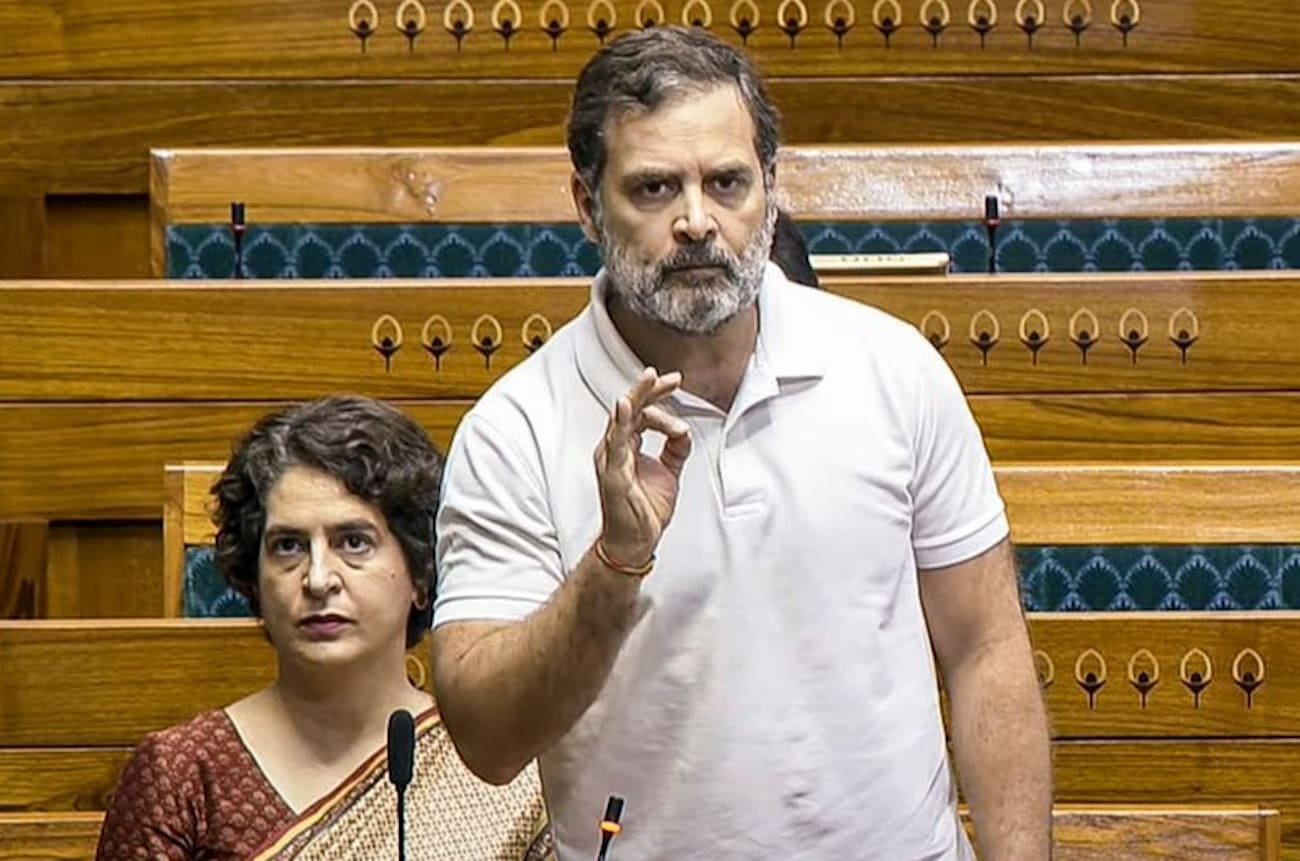

Rahul Gandhi has come a long way since 2014. That much is no longer in dispute. The interesting question is not what happened to him. It is what he does with what happened to him.
For years he lost elections, lost the Congress presidency after the 2019 defeat, and became the easiest political caricature in the country. Narendra Modi called him “Pappu,” and the name stuck.
The BJP and the wider Modi ecosystem turned him into a national joke. Social media did the rest. He was the entitled prince, the reluctant politician, the dynast, the man who had inherited a party and a surname but apparently had no idea what to do with either.
Every time Priyanka Gandhi Vadra was praised for her poise or communication, the comparison worked against him. He seemed the less accomplished sibling, the more awkward politician, the man perpetually trying to prove he belonged in politics.
Then came the Bharat Jodo Yatra.
The transformation was not instantaneous, and it would be wrong to reduce it to clothes, beard, or the ability to walk long distances. But the physical journey altered the political image. Rahul Gandhi deliberately abandoned much of the protected, distant appearance associated with the Nehru-Gandhi heir. He walked among people. He stopped behaving like someone merely campaigning and began looking like someone willing to spend time in other people’s lives. The second yatra widened that effort from south-to-north to east-to-west. The Congress did gain electorally in constituencies along the routes, although it would be simplistic to claim that the yatras alone caused those gains.
There was something else happening. Rahul became curious in public. He learned to cut hair, repair shoes and cycles, and cook. He met people who would never ordinarily have entered the orbit of a politician of his background. He returned to some of them. The details mattered because they contradicted the old image. The point was not that repairing a bicycle makes somebody a better politician. It was that the man presented as inaccessible began making accessibility part of his politics.
The public also began seeing another side of him: physically disciplined, interested in martial arts, comfortable with a different sort of masculinity than the one his opponents had constructed for him. His parliamentary interventions acquired a different seriousness. The “Pappu” caricature did not disappear, but it no longer explained the whole man.
Then came 2024 and the political arithmetic changed.
The BJP won 240 Lok Sabha seats, down from 303 in 2019, and therefore needed its NDA partners to form the government. Congress rose from 52 seats to 99. Rahul Gandhi became Leader of the Opposition, a constitutional position that had eluded the Congress for a decade. That altered the setting in which he operated. He was no longer simply the leader of the principal opposition party trying to get attention. He had a recognized institutional position from which to confront the government.
And Rahul used it.
His politics since then has been built around a fairly clear cluster of themes: the Constitution, institutional independence, electoral rolls, the Election Commission, caste representation, unemployment, examination leaks, concentration of economic power and the condition of young Indians. The “vote chori” campaign, in which he has accused the Election Commission of electoral wrongdoing and alleged collusion with the BJP, has become one of his central political attacks. These are allegations by Rahul Gandhi and the Congress, not established court findings. But politically they have given the Opposition a vocabulary around which it can organize.
The Election Commission controversy has now acquired another dimension. The dispute over the Special Intensive Revision of electoral rolls, which began in Bihar and has expanded, has become a major confrontation between the Commission and Opposition parties. The Indian Express reported this week that two Election Commissioners, Sukhbir Singh Sandhu and Vivek Joshi, had recorded objections on 14 occasions over actions associated with the revision exercise, including allegations concerning additions and deletions from electoral rolls. Those objections and the interpretations placed on them remain part of an active political and institutional dispute.
That matters because Rahul’s politics has gradually shifted from a politics of personality to a politics of institutions. Whether one accepts his interpretation of the institutions or not, the argument has moved beyond “Modi is bad.” It is about how power is exercised, who controls institutions, who gets represented and whether the rules of political competition remain credible.
This is also where his political evolution becomes more complicated. Rahul Gandhi has become considerably better at being an opposition leader. The question is whether he is acquiring the credentials needed to become a leader of government.
Those are not the same thing.
Being in opposition rewards confrontation. Government requires prioritization. Opposition politics lets one collect grievances: price rises, jobs, education, medical costs, paper leaks, farmers, caste representation, institutional decline, monopolization. Government must decide which of these become policy, which are affordable, which can be implemented, which require legislation, which require state governments to cooperate, and which have to wait.
Rahul has become an effective collector of public grievances. He is yet to show if he can turn them into a coherent political proposition.
The NEET episode is revealing in this respect. The 2026 examination crisis produced a student mobilization that grew far beyond a conventional opposition campaign. The satirical Cockroach Janta Party became a vehicle for youth anger, and the agitation eventually contributed to political pressure that culminated in Education Minister Dharmendra Pradhan’s resignation.
There is an irony here which Rahul cannot ignore.
It took him years, two national yatras, and enormous personal effort to reach a point where young people began to see him as someone speaking for them. A group of students, operating outside the established party system, turned one issue into a movement and forced a minister out within weeks.
Rahul has already done the difficult personal work of changing how he is seen. The remaining work is harder because Rahul cannot do it alone. It requires a party, an alliance and a program.
The comparison is unfair if taken literally. The Congress is a national political party with governments, MPs, MLAs, offices, committees and a century-old institutional history. A student movement is not. But politically the comparison is revealing because it exposes the difference between visibility and organization.
Rahul has visibility. Congress still has an organization problem.
The party knows this. Its own leaders have acknowledged that the Congress election machinery remains far behind the BJP’s. The media has reported that the party is attempting organizational restructuring ahead of 2029, including changes in state units and the AICC, with Rahul Gandhi favoring younger leadership in some areas.
This is where the next phase of Rahul Gandhi’s politics will be decided. In the states.
Uttar Pradesh is the immediate test. The Congress and Samajwadi Party are trying to keep their 2024 alliance together for the 2027 Assembly election. Congress wants to rebuild its own organization rather than remain permanently dependent on the SP machinery. Rahul still needs Akhilesh’s organization in Uttar Pradesh.
But if Congress is to become a serious national alternative by 2029, it cannot remain merely an electoral passenger in the states where another opposition party is stronger. It needs allies and it needs its own machinery. Those two requirements pull in different directions. Uttar Pradesh will therefore test whether Rahul understands the difference between alliance politics and organizational dependency.
Karnataka and Telangana present another. Congress has governments in both Karnataka and Telangana, and their performance will inevitably feed into the national argument about whether Congress can govern rather than merely oppose. Kerala has just demonstrated another side of the problem: Congress had to navigate an intense leadership contest before choosing V.D. Satheesan as chief minister after its electoral victory because the First Family still retains the vestiges of the feudal “high command” system of imposing settlements.
Rahul perhaps understands that a national party cannot be run permanently as an extension of one man’s, or one family’s, public persona. If everything finally comes back to Rahul, he becomes indispensable but the organization remains weak. If he distributes authority without building accountability or without the family shedding its feudalism, the old Congress returns. The real organizational challenge is somewhere in between: strong central direction, but strong state leaders; political discipline, but internal competition; a national narrative, but local candidates who can actually win.


The INDIA bloc complicates it further.
Rahul may increasingly look like the most natural national face of the opposition, particularly because the Congress is the only opposition party with a genuinely nationwide historical footprint. But that does not mean Mamata Banerjee, M.K. Stalin, Akhilesh Yadav or other regional leaders will subordinate their political interests to him. Nor should they. Their parties have their own states, voters and ambitions. And then there is the Left; what is left of it is still the most powerful index of secularism and anti-communalism.
The INDIA experiment was always built on a paradox: it needed a national centre of gravity while being composed of parties whose survival depends on maintaining their own regional identities.
Rahul’s challenge, then, is not to “lead INDIA” in the conventional sense. It is to make himself useful to it.
That is a different kind of leadership. At present, that larger synthesis is still incomplete.
His economic politics, in particular, remains less developed in the public imagination than his institutional politics. He has spoken repeatedly about inequality, monopolization, unemployment and representation. He has also made caste census central to his social-justice argument, describing it as an “X-ray” of India and connecting it with representation of OBCs, Dalits and Adivasis. More recently, however, his public emphasis has shifted increasingly toward education, examination irregularities, and youth unemployment.
The question is not whether these issues are legitimate. They plainly are. The question is what lies behind them.
What is Rahul Gandhi’s economic model? What would he do differently on manufacturing, trade, technology, taxation, labour, agriculture, health and education? What does he want the Indian state to do, and what does he want private capital to do? What is his position on India’s relationship with China, the United States and the Gulf? What would his government do in its first hundred days that is not simply reversing something the Modi government did?
This is where the Modi comparison becomes unavoidable. Modi’s great political achievement was not merely winning elections. He created a political language in which the leader, the government, development, nationalism, welfare and aspiration could be presented as one proposition. The BJP’s organization then carried that proposition into booths and constituencies.
Rahul has spent the last decade dismantling a proposition that was built around him: that he was an incapable dynast. He has largely succeeded in making that proposition less convincing. But dismantling an opponent’s narrative is not the same as constructing an alternative.
And that is why 2027 matters more to Rahul Gandhi than 2029.
There is another danger. Rahul can become too comfortable as the permanent opposition voice.
Rahul has already done the difficult personal work of changing how he is seen. The remaining work is harder because Rahul cannot do it alone. It requires a party, an alliance and a program.
A leader can be the people’s voice and still remain only the Opposition. To become the alternative, he has to show how power will be organized, exercised and shared. That is the question hanging over Rahul Gandhi now. He has spent twelve years proving that the man called Pappu was not the whole story. The next three have to establish what the rest of the story is now.
V.V.P. Sharma is a senior journalist and commentator based in New Delhi. This opinion was first published on the author’s Facebook.