




Nickle and Dimed in AI Age: How Veena Dubal Figured Out Uber, Lyft, DoorDash Extract Maximum Labor at Minimum Cost

- A South Asian American professor of law and legal anthropologist who began her career representing taxi drivers and Muslim Americans in civil rights cases has produced the concept that now drives labor policy debates across the United States, Europe, and beyond: algorithmic wage discrimination.
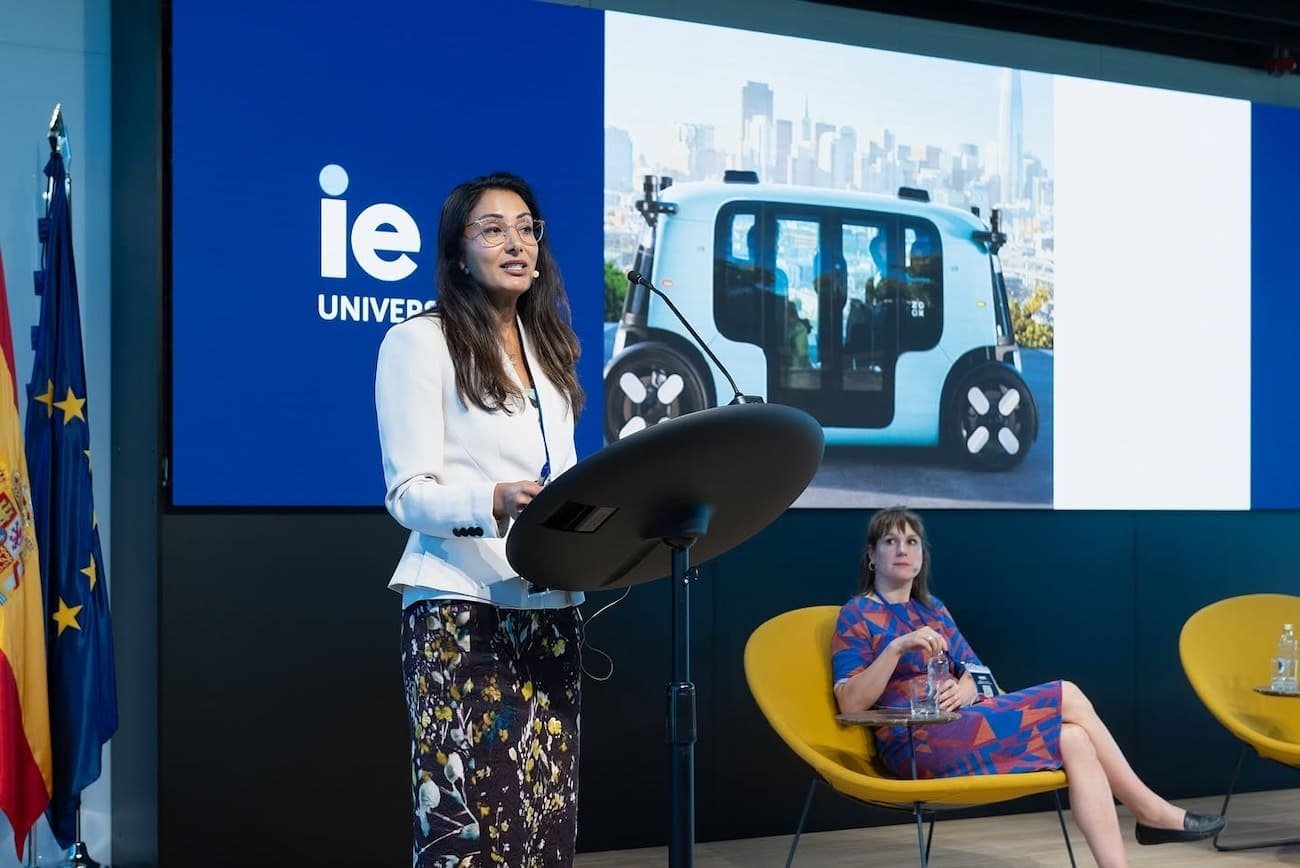

In January 2023, a 55-page paper appeared on SSRN — the Social Science Research Network, where academics post working drafts before formal publication — under the title “On Algorithmic Wage Discrimination.” Its author was Veena Dubal, a professor of law at the University of California, Irvine. Its argument was, in retrospect, disarmingly precise: that Uber, Lyft, DoorDash, and their peers were not simply paying workers variable rates in response to supply and demand, as the companies consistently claimed, but were using granular data about individual workers’ behavior, psychology, and financial circumstances to offer personalized, unpredictable wages deliberately designed to extract maximum labor at minimum cost.
Drawing on a multi-year, first-of-its-kind ethnographic study of organizing on-demand workers, the paper examined what Dubal described as “the historical rupture in wage calculation, coordination, and distribution arising from the logic of informational capitalism: the use of granular data to produce unpredictable, variable, and personalized hourly pay.”
The paper was subsequently published in the Columbia Law Review — one of the most prestigious law journals in the United States — and cited almost immediately by the Consumer Financial Protection Bureau, state legislatures across the country, and regulatory bodies in Europe. Her research has been cited internationally in legal decisions, including by the California Supreme Court. TechCrunch called her “an unlikely star in the tech world.” WIRED used the same phrase. She was not a household name. But her idea was becoming one.
The concept of algorithmic wage discrimination — the term Dubal coined and defined — is now a fixture of labor policy debates that extend far beyond the gig economy where she first identified it. As Dubal herself has described it, algorithmic wage discrimination involves “the use of granular data to produce unpredictable, variable, and personalized hourly pay.” And when these algorithms are not disclosed, they are referred to as “black box” algorithms, as they cannot be directly scrutinized. The phenomenon, she has argued, is rapidly spreading from ride-hail and food delivery into the labor economy broadly — into warehouses, hospitals, and call centers — wherever employers have sufficient data about workers to personalize the terms they offer.
Stanford, Berkeley, and the Asian Law Caucus
Dubal’s biography before she became a scholar of algorithmic capitalism is itself a study in the particular intellectual formation of a South Asian American woman who came to law through a commitment to justice rather than a commitment to its formal institutions.
She studied international relations and feminist studies at Stanford University and graduated with honors in 2003. The double major — international relations combined with feminist studies — captures, in its combination of the structural and the political, the analytical sensibility that would define her subsequent career.
After Stanford, she enrolled at UC Berkeley School of Law, where she completed her Juris Doctor in 200. Law school, for Dubal, was not a separation from activism. While in law school, Dubal was a community activist focused on anti-war campaigns. She was a part of the Alliance of South Asians Taking Action.
After completing her JD, she won a Fulbright scholarship and spent 2007 to 2008 in India — a fellowship that the Law and Society Association documented alongside a separate recognition, the Fulbright Critical Language Enhancement Award for Hindi/Urdu, confirming that her engagement with the subcontinent was both scholarly and linguistic. The Fulbright year in India is the most direct biographical marker of her South Asian heritage and her ongoing connection to the region.
On returning from India, she became a Berkeley Law Foundation Fellow and public interest attorney at the Asian Law Caucus — the San Francisco-based legal advocacy organization that has served low-income Asian American communities since 1972 — where she worked until December 2012. At the Asian Law Caucus, she founded a taxi worker project and represented Muslim Americans in civil rights cases. The two strands of that work — immigrant labor and civil rights — are the threads that have run continuously through her career ever since.
Dubal’s biography before she became a scholar of algorithmic capitalism is itself a study in the particular intellectual formation of a South Asian American woman who came to law through a commitment to justice rather than a commitment to its formal institutions.
The taxi worker project was not merely a legal service delivery operation. It was, as she has described it, the origin of her scholarly project. The drivers she represented — many of them South Asian and Middle Eastern immigrants, working the San Francisco taxi industry during the years of its collapse and the simultaneous rise of Uber — were living inside a set of legal and economic transformations that she understood, from the inside of client relationships, demanded the tools of legal scholarship to fully comprehend and challenge.
Dubal earned a PhD in Jurisprudence and Social Policy at UC Berkeley in 2014. Her doctoral research used historical and ethnographic methodologies to study San Francisco taxi workers. Her dissertation, “Wage Slave or Entrepreneur?: Contesting the Dualism of Legal Worker Identities,” was subsequently published in the California Law Review as a landmark article, according to the Law and Society Association member spotlight.
After completing her doctorate, she held a post-doctoral fellowship at Stanford University — returning, as a scholar, to the institution where she had studied as an undergraduate — before joining the faculty of UC Hastings College of the Law in 2015. She subsequently moved to the University of California, Irvine School of Law, where she is now a full Professor of Law.
She describes her time outside academia as spent “teaching, researching, and organizing with gig workers and faculty (in many cases, faculty ARE gig workers), as well as parenting my three young children. Sometimes I get to read for fun! And I enjoy translating my academic research into public writing.”
The South Asian Immigrant Worker as the Subject of Scholarship
The demographic reality of Dubal’s research subjects — the San Francisco taxi drivers she represented at the Asian Law Caucus and studied in her doctoral work — is not incidental to her scholarly identity. San Francisco’s taxi industry, particularly in the 2000s, was dominated by South Asian and Middle Eastern immigrant drivers, many of them Sikh, Muslim, and Hindu men from India, Pakistan, Bangladesh, and Ethiopia. These were the people whose working lives Dubal documented in a decade of ethnographic fieldwork.
Her book manuscript presents a theoretical reappraisal of how low-income immigrant and racial minority workers experience and respond to shifting technologies and regulatory regimes. The manuscript draws upon a decade of interdisciplinary ethnographic research on taxi and ride-hail regulations and worker organizing and advocacy in San Francisco.
The connection between her own South Asian background and her scholarly subjects is one she has not emphasized in a biographical sense — her published work focuses on labor law and technology rather than identity — but the institutional choices she made, from the Alliance of South Asians Taking Action at Berkeley to the Asian Law Caucus, place her firmly within the tradition of South Asian American public interest law and scholarship that uses formal legal training in the service of immigrant and minority communities.
The South Asian Bar Association of Northern California recognized this connection explicitly: it awarded her its Public Interest Attorney of the Year Award in 2009, as the Law and Society Association member spotlight documented.
The Work That Reached the World: Proposition 22, Algorithmic Wages, and the California Supreme Court
Dubal’s most consequential policy engagement has been her sustained analysis of California’s Proposition 22 — the 2020 ballot measure, funded primarily by Uber, Lyft, DoorDash, and Instacart, that classified gig workers as independent contractors rather than employees, exempting the companies from California’s AB 5 law that had required them to provide employee benefits.
Dubal said that if Proposition 22 was allowed to stand, companies would double down on efforts to legalize the business model “all over the world, not just in other states.” She was proved correct: the Proposition 22 model has since been pursued by gig companies in countries from the United Kingdom to Australia to India.
Her research shaped the legal proceedings around both AB 5 and Proposition 22. The California Supreme Court, in its subsequent rulings, cited her scholarship directly — a form of legal impact that most academic law professors never achieve, as the AAUP announcement confirmed. Her argument that wage floors set by regulation could be rendered ineffective by the algorithmic wage systems underneath them — that knowing the average wage concealed the discriminatory structure of how individual wages were set — moved into regulatory thinking at both the state and federal level.
The Consumer Financial Protection Bureau’s citation of her algorithmic wage discrimination work in its own regulatory guidance represented a direct translation of academic scholarship into federal policy — an uncommon achievement that reflects both the quality of the research and the timeliness of its intervention.
As she has argued in public-facing writing for the Washington Center for Equitable Growth: “The American dream — however fraught and unreachable for many — is directly under attack. In this moment of income insecurity for most U.S. workers, legislators across the aisle should be motivated to write laws at both the federal and state level to address the problems endemic to the algorithmic wage-setting systems that power inequitable surveillance pay practices.”
The AAUP Appointment: Faculty as Gig Workers
In 2024, Dubal added a new and significant institutional role to her scholarly career. She was appointed general counsel of the American Association of University Professors — the national organization that has defended academic freedom and faculty rights since 1915 — for a renewable term ending in 2026.
The appointment is telling in its alignment with her scholarly preoccupations. The AAUP’s most urgent contemporary concerns — the erosion of tenure, the proliferation of contingent academic appointments, the use of short-term contracts to discipline faculty who challenge institutional power — are, at their structural core, the same phenomena she has spent her career studying in the gig economy. She has noted, with characteristic precision, that “in many cases, faculty ARE gig workers.”
AAUP President Todd Wolfson described the appointment with directness: “Veena has led the fight to expand the rights of all workers, including workers in the gig economy. Given her track record as a powerful advocate, the AAUP is lucky to have her as part of our team in this critical moment for higher education.”
The appointment placed Dubal at the center of the higher education freedom debates that exploded into national prominence during the Trump administration’s second term — as universities from Harvard to Columbia faced funding threats, federal investigations, and political pressure over academic content and faculty expression. Her dual role — as a tenured law professor and as the legal officer of the organization most responsible for defending faculty rights nationally — made her one of the most strategically positioned academic advocates in the country.
The Scholarship: A Body of Work That Spans Methodologies
Dubal’s published scholarship spans legal doctrine, social science ethnography, and public-facing commentary in ways that are unusual in legal academia.
Her most widely cited work is the Columbia Law Review article “Algorithmic Wage Discrimination,” published in 2023, which at 63 pages represents the fullest technical statement of the concept she introduced to legal and policy discourse. The Yale Law Journal Forum published “Data Laws at Work,” a more compressed intervention on regulatory approaches to data in the workplace. The California Law Review published “Wage Slave or Entrepreneur?: Contesting the Dualism of Legal Worker Identities” — her doctoral dissertation recast as legal scholarship — in 2017, as the Law and Society Association member spotlight documented.
Her popular press writing has appeared in The New York Times, The Washington Post, The Wall Street Journal, The Los Angeles Times, Slate, Fast Company, Common Dreams, and many other outlets, translating her technical arguments about wage algorithms and labor law into accessible arguments for the broader public. The LPE Project, the leading online forum for law and political economy scholarship, has published her work on regulatory violence and the taxi-to-Uber transition.
She has won the Colloquium on Scholarship in Employment and Labor Law’s Michael Zimmer Memorial Award in 2019, as the Law and Society Association documented — a peer recognition from the academic community most directly engaged with labor law scholarship.
The Book in Progress
The work that Dubal has described in multiple biographical contexts as her primary long-term scholarly project is a book manuscript drawing on a decade of ethnographic research. The manuscript presents a theoretical reappraisal of how low-income immigrant and racial minority workers experience and respond to shifting technologies and regulatory regimes, drawing upon a decade of interdisciplinary ethnographic research on taxi and ride-hail regulations and worker organizing and advocacy in San Francisco.
The book’s working title — documented in earlier biographical materials as “Driving Freedom: Neoliberal Mutations in a Taxi to Uber Economy” — frames its argument precisely: that the gig economy’s discourse of worker freedom is the contemporary iteration of a longer history in which the language of liberation has been used to produce more sophisticated forms of labor subjugation. The San Francisco taxi industry, across its leasing system, its medallion commodification, and its eventual displacement by Uber, serves as the longitudinal case study through which that argument is built.
It is, in the most literal sense, the book she has been working toward since she represented her first taxi driver client at the Asian Law Caucus. The decade of fieldwork that produced “On Algorithmic Wage Discrimination” will produce, in the book’s completion, the fullest account of what it means to work in San Francisco’s transformed mobility economy — and what that transformation tells us about where all of labor is headed.