




As Pakistan Goes to Bat for Its Military Command, Imran Khan’s Former Cricketing Colleagues Field for His Survival

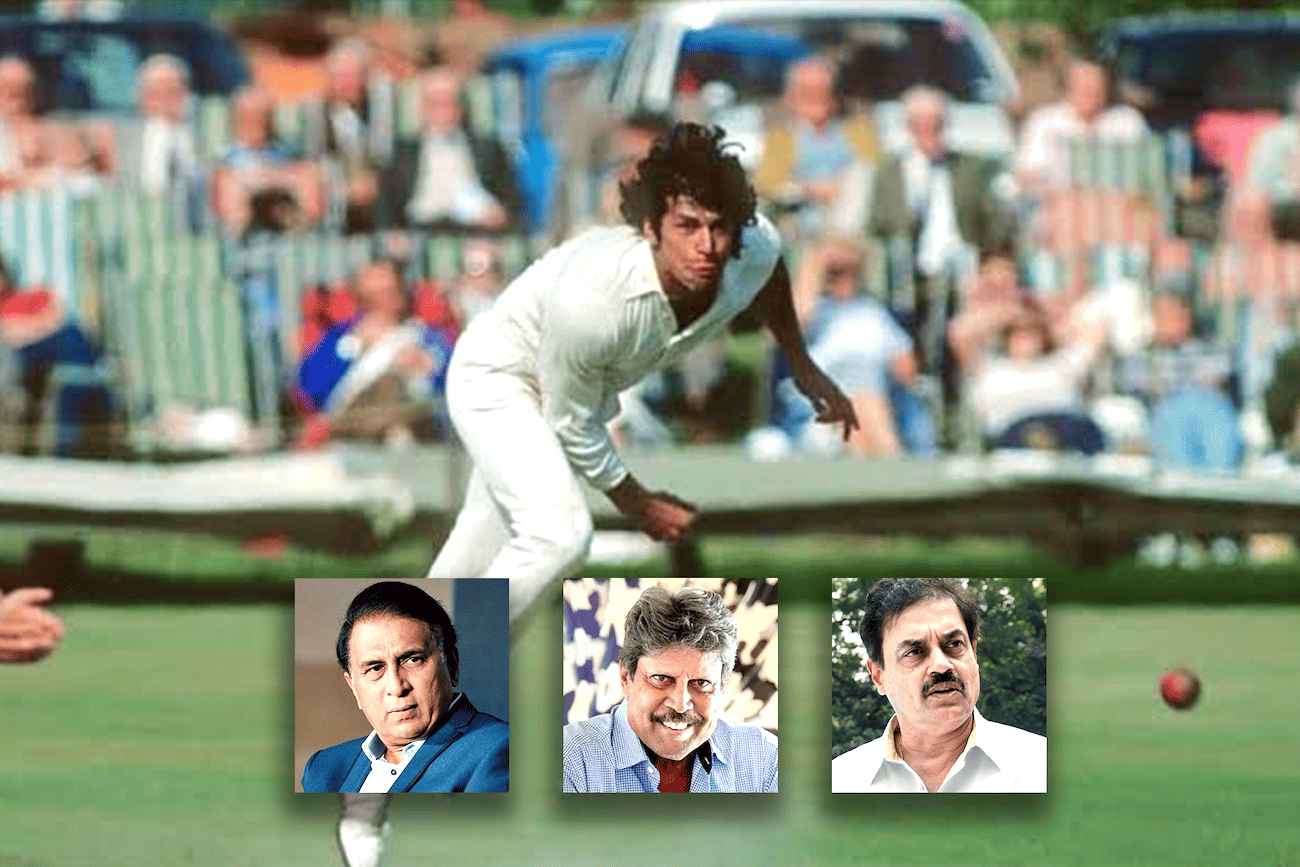
- More than 20 retired cricketers, including Sunil Gavaskar, Kapil Dev, and Dilip Vengsarkar, wrote to Pakistan Prime Minister pleading for humane treatment of Khan. What happened at Lord’s Test last week shows that taking a stand might help.

Sky Sports had an interview ready for the lunch break on Thursday, the opening day of the second Test. Michael Atherton had sat down with Sulaiman and Kasim Khan, who said they fear for the life of their father, Imran. The Pakistan Cricket Board objected before it aired and is understood to have warned that its players might not come back out after the break. Sky held the segment, then ran all eighteen minutes. Pakistan took the field.
So for about an hour, a Test match at Lord’s was worth less to the PCB than a slot in someone else’s television schedule. The fixture, the sponsors, the rankings, the spectacle of a forfeit at the most photographed ground in the sport — all of it went onto the scale against two men in their twenties talking about their father, and for a while the scale wobbled.
Governments that expect to win arguments don’t make that calculation. Pakistan’s establishment has spent three years winning this particular argument at home, where it owns the referee, and ran headlong into the discovery that St John’s Wood is under different management.
I should declare an interest, since it explains why I have followed Imran Khan for forty years, in cricket and then in politics. I spent my teens copying his bowling action, badly, on matting, in the country that was supposed to hate everything he stood for. It gives me no special insight. It does mean I know what I am looking at.
A Constitution Rewritten in a Fortnight
Imran Khan has been in Adiala Jail since August 2023, serving fourteen years in the £190 million corruption case, with another seventeen added last December over state gifts. His party puts the number of cases filed against him in the hundreds. The UN Working Group on Arbitrary Detention called the detention arbitrary and politically motivated back in 2024. The UN Special Rapporteur on Torture has described thirty-three months of near-total solitary confinement under continuous camera surveillance. Amnesty reports that he and his wife have been denied regular access to counsel since December and that he went eight months without a family visit. His lawyers say a blocked retinal vein in his right eye was left untreated long enough to cost him most of the sight in it.
The government denies all of it and says he has had more than nine hundred visits from relatives, lawyers, and doctors since 2023.
Leave the competing claims where they are and take the one episode where the record is clean. On August 18 the Supreme Court ordered him moved to Shifa International, a private hospital, for examination by a board that was to include his own doctors and his sister, Dr. Uzma Khan. The government challenged the order. He was taken to a state facility instead, declared medically fit, and returned to his cell. His party has filed for contempt.
Whether Imran Khan is guilty of anything will not be settled by his admirers or his enemies, and certainly not by me. Whether an order from the country’s highest court produces an outcome is a different question, and it got answered this month, on the least political matter available, in the negative.
The answer had been arranged in advance. Parliament passed the 27th Amendment last November in a matter of days. It created the office of Chief of Defence Forces, held by the army chief, carrying command of all three services and of the division that runs the nuclear arsenal. It granted lifetime immunity from prosecution to anyone of five-star rank, a rank held by exactly one man: Field Marshal Asim Munir, promoted after last year’s four-day war with India. Removing a CDF now requires two-thirds of parliament. Removing a prime minister requires a simple majority. The same amendment stood up a Federal Constitutional Court and pared back the Supreme Court’s reach. A week ago parliament passed the Defence Forces of Pakistan Act during an opposition walkout, fitting the statutory plumbing to all of it.
Cricket has been here before. Basil D’Oliveira was left out of England’s 1968 party for South Africa because his skin made him inconvenient, the 1970 tour was cancelled, and the game shut South Africa out for twenty-one years. Cricket did not end apartheid. It made apartheid expensive.
An army chief now sits above the courts, above the elected prime minister, and beyond prosecution, by written law rather than by coup. The people who arranged that spent Thursday lunchtime trying to keep it off Sky Sports.
The Silence Where the Leverage Is
Washington has no complaint to file. Munir has been received at the White House, has made repeated trips there, and was called a statesman by the vice president for his work on the Iran channel. Pakistan has offered critical minerals, counterterrorism cooperation, and, in January, a memorandum with an affiliate of the Trump family’s World Liberty Financial to explore its dollar-pegged stablecoin for cross-border payments. Nobody signs that paperwork in the morning and raises prison conditions in Rawalpindi after lunch.
Which leaves the job to a group of retired cricketers. Fourteen of them wrote to Prime Minister Shehbaz Sharif in February and got nothing back. Twenty-one wrote again last week — Clive Lloyd, Allan Border, both Chappells, Brearley, Gower, Atherton, Hussain, Cook, Strauss, Steve Waugh, Gilchrist, Ranatunga, Belinda Clark. Sunil Gavaskar, Kapil Dev, and Dilip Vengsarkar signed as well. Greg Chappell, who organized both letters and has known Imran since they played against each other, told a podcast this week that his old opponent is not allowed books, sits in the dark for most of the day, and has spent three years in absolute isolation.
No Pakistani signed either letter.
The absence measures something precisely. Ramiz Raja won a World Cup under Imran and was handed the PCB chairmanship by him. Asked about him on a podcast this week, Raja said his old captain was in isolation and holding up, and then spent a day being called spineless by strangers on the internet. Raja has to go home to Lahore. Gavaskar doesn’t. The gap between what an Indian batsman may say about a Pakistani prisoner and what a Pakistani one may say measures the law, not the men.
Then on Friday, Pat Cummins posted. He was adding his support to Chappell and the former captains, he wrote, and hoped the court-ordered assessment would be allowed to run its course, that family visits would continue, and that Imran Khan would be treated with the dignity anyone deserves.
Every other name on that list has finished playing. Retired men are risking their comfort and their invitations. Cummins captains Australia in two formats, answers to a board with commercial relationships across the cricketing world, and will be asked to tour Pakistan again. I have written before about why he is my favorite current captain for reasons that have little to do with cricket. This is one of them.
A Word to the Satisfied


A certain kind of Indian reads all this over morning tea with a quiet sense of vindication. I’d rather he didn’t. A nuclear arsenal under the operational command of one officer with lifetime immunity and no civilian brake is a bad development for Delhi on any honest reading. Munir’s baton came out of a confrontation with India, and the confrontation was the ladder he climbed. An army that needs external crises to justify its constitutional position will keep manufacturing them, and the production line points east.
Imran was no democrat in office either. Journalists were harassed while he governed, opponents were prosecuted, and the establishment he denounces from prison is the one that helped install him. His premiership will not carry the weight his supporters keep loading onto it, and the captains never asked it to.
What a Game Can Do
Cricket has been here before, and handled it better than most sports manage. Basil D’Oliveira was left out of England’s 1968 party for South Africa because his skin made him inconvenient, the 1970 tour was cancelled, and the game shut South Africa out for twenty-one years. Cricket did not end apartheid. It made apartheid expensive in a currency white South Africa could feel, and the memoirs from that period keep circling back to the tours that never came.
Nothing that muscular is on offer now. Twenty-one pensioners and one serving captain have no sanction to impose and no tour to cancel. What they have is the one asset Pakistan still guards jealously. It took the better part of a decade of lobbying to get international cricket back onto Pakistani grounds after 2009, and the country has spent enormous political capital persuading the world that it is a normal cricketing nation again. Thursday at Lord’s showed how tender that nerve is. A board does not threaten to keep its players in the pavilion over an interview unless somebody senior thinks the picture matters.
There is a case for saying athletes should stay in their lane, and the PCB retired it on Thursday by treating eighteen minutes of cricket broadcasting as an affair of state.
The three requests in the letter would cost Pakistan nothing it can name out loud. Let the medical board sit. Let the family visits happen. Give the man whatever the doctors say he needs. If the government does any of it, the credit goes to a few dozen former players with no offices, no sanctions, and no leverage beyond a shared reputation and the willingness to spend it — who between them got a nuclear-armed state to comply with its own supreme court on the smallest possible question.
That would be a very small victory. It would also be the most any institution has managed in three years, and every one of them had more power to work with.
Ganpy Nataraj is an entrepreneur, author of “TEXIT – A Star Alone” (thriller) and short stories. He is a moody writer writing “stuff” — Politics, Movies, Music, Sports, Satire, Food, etc.