




How Students Employed a Clever Mix of Cutting-Edge Technologies To Stay Connected and Humbled Modi Government

- Even before heading into the geofenced protest zones, CJP activists meticulously prepared their digital devices.
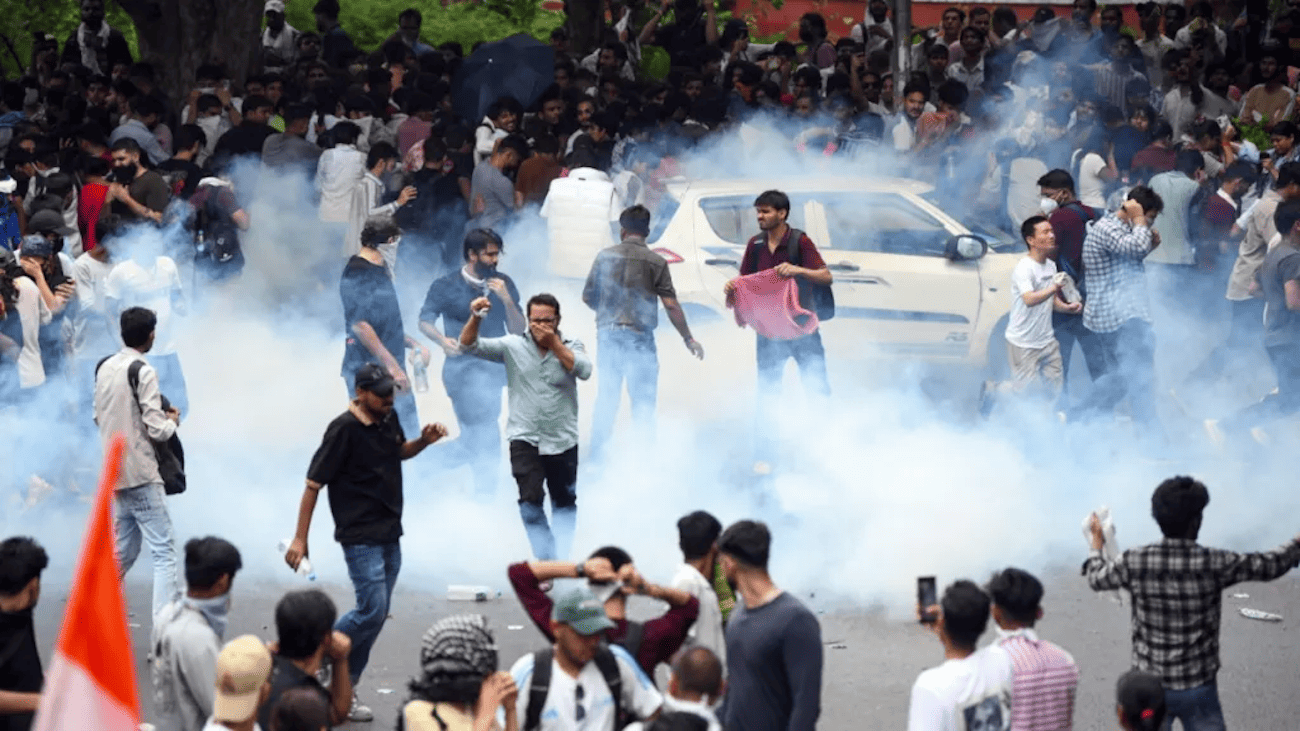

What we witnessed in India the last month with the NEET protests led by the CJP, is nothing less of a watershed moment in our country’s history. The birthplace of Gandhi’s nonviolent movement, has sadly and long forgotten the true spirit of fighting for fundamental rights, has now been restored by a generation of youth in full glory.
As a staunch believer that young people need to be an active part of any democracy, and age limits have to be in place for politicians, so this is a euphoria and almost a dream come true.
The incredible factor of the protests is the real power of a GenZ mindset. They resorted to humor, sang national anthem and other patriotic songs to protect themselves from police brutality and mainly stood their ground firmly to get their demands met. Food was sent to them from all over the country, we witnessed a united country cutting across religion, caste or even political party barriers.
What I found as the most important stand out in this event, was the careful technology planning by the youngsters, who expected a disruption of Internet by the government, and had circumvented the problem way ahead.
Look, the cause was a real household issue for parents and students who are frustrated by the exam system, and appealed to a broader population across the country, no doubts about it. But it would have been very hard to keep the public informed about the protest, mobilize resources and have the momentum going on with constant flow of information to the world at large.
Also, we all noticed that the mainstream media did not pick up the story for a long time, so this event could be easily erased from the public memory and could have joined the many other failed revolts in a matter of weeks.
So, these youngsters used social media fully as a parallel source of news.
To me, the end results of this protest is more than an older established political system vs a younger generation of voters who want a change.
Here’s how a clever mix of cutting-edge technologies were used to stay connected.
- Pre-Downloaded Viral Toolkits
Even before heading into the geofenced protest zones, CJP activists meticulously prepared their digital devices. Protesters shared viral “survival hacks” on social media instructing everyone to download offline Google Maps or Maps.me coordinates of central Delhi. This kept thousands of marching students from getting lost or boxed in by police barricades when cellular service died.
- Bluetooth Mesh Networks
When mobile data and Wi-Fi networks were completely cut off around Jantar Mantar, demonstrators bypassed traditional cell towers entirely. Protesters relied heavily on Bitchat (a decentralized Bluetooth messaging app) and alternative tools like Briar. Unlike WhatsApp, Signal, and Telegram that rely on mobile data or Wi-Fi, the offline messaging apps use Bluetooth Low Energy (BLE), a wireless technology built into almost every modern smartphone.

How it works is that, a user’s phone connects directly to nearby phones, which then relay encrypted text messages to the next phone. By hopping across the dense crowd, a message could travel for hundreds of meters with zero internet connection, data, or phone numbers. This creates a “mesh network”. In this setup, every smartphone acts as a relay, allowing messages to “hop” from one device to another until they reach the intended recipient.
When more people using the app are present in the same area, the network becomes larger and the communication range increases. Since the messages move directly between devices instead of passing through the internet, these apps can continue working even during internet shutdowns or when there is no cellular coverage. However, they work best over short distances and in areas where enough users are connected to the same mesh network.
- Scheduled Broadcasts:
To maintain an active online presence despite on-site blackouts, student journalists inside the crowd handed physical memory cards and recorded videos to runners outside the geofenced zone. These runners quickly uploaded the footage onto Instagram and X once they re-established a cell signal.
To me, the end results of this protest is more than an older established political system vs a younger generation of voters who want a change. This is a real challenge for the current establishment to handle a GenZ techie and social media savvy crowd who communicate in a non-traditional way. They are definitely a powerful force to reckon with. And, ignoring or wishing them away is only to make matters worse.
Jayashree Srikanth lived in the United States for 16 years, then moved to Bangalore with her husband and two daughters. She is a proud homeschooler of a neurodiverse young adult, who now has a successful art career, has won several awards including carrying the torch for the Rio Paralympics, in 2015. Her younger daughter graduated from UCLA and is now working for a healthcare startup in Chicago, IL.