




Sir Garfield Sobers, 1936–2026: The Cricketing World Mourns ‘the Greatest Allrounder of All Time’

- For Indian cricket fans, the statistics of Sobers's record against their team require no embellishment and admit no comfort. Sobers played 18 Test matches against India, scoring 1,920 runs at an average of 83.5, with eight centuries and seven fifties.
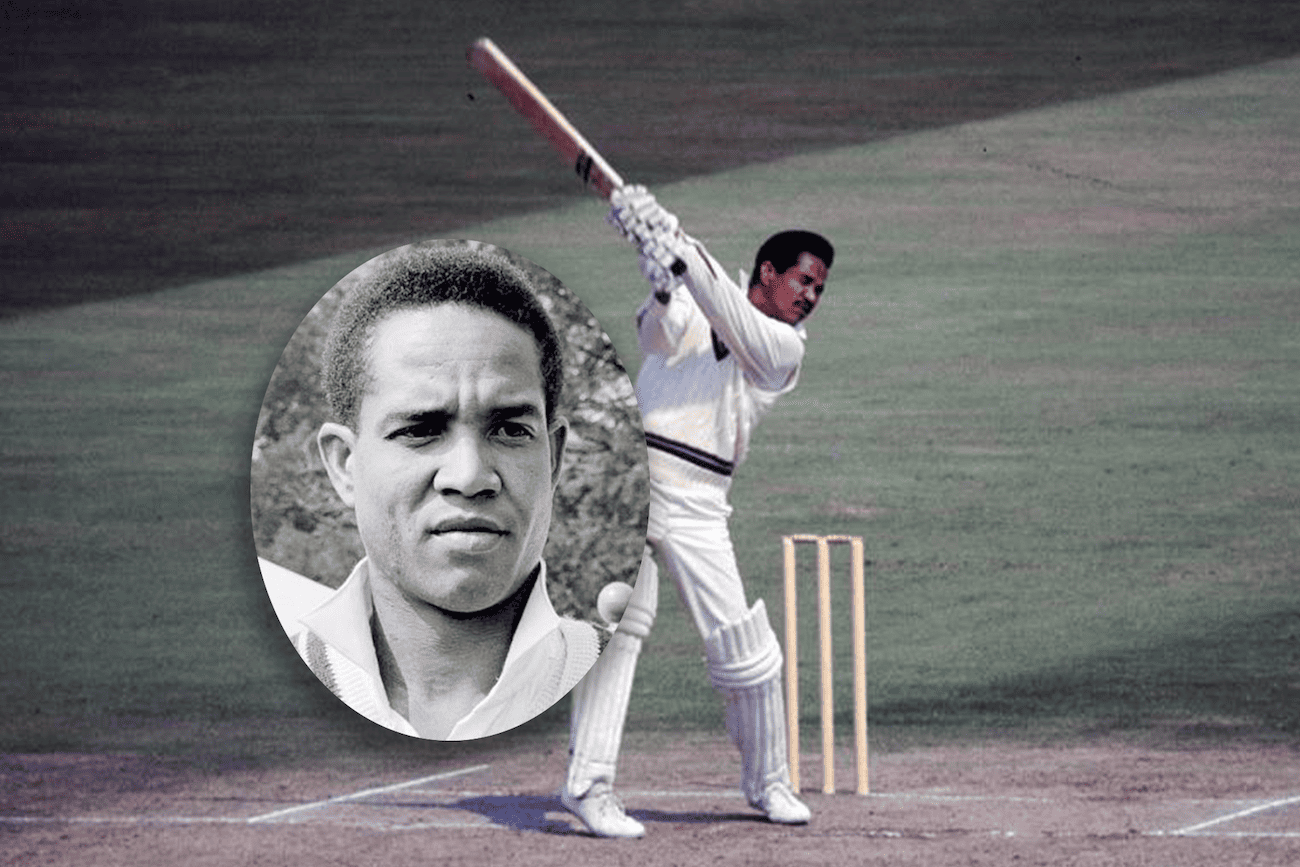

The man Don Bradman called cricket’s greatest allrounder, who set a world record at 21 and hit six sixes in an over at 31, died at his home in Barbados on the morning of July 17, eleven days before his 90th birthday. He was cricket’s most complete player — and against India, the most devastating opponent the country ever faced.
He was born with an extra finger on each hand. It did not slow him down.
Garfield St. Aubrun Sobers — Sir Garry to the cricketing world, and to the people of Barbados, The Right Excellent, a National Hero — died at his home in Highgate, St. Michael, Barbados, on Friday, July 17, 2026. He was 89 years old, just eleven days shy of his 90th birthday. His son Daniel, who was at his side, confirmed the death. West Indies Cricket announced it without providing a cause. Daniel Sobers described his father’s final hours with a quiet dignity that captured something essential about the man. “His breathing had increased and we had him on oxygen. I couldn’t believe how powerful he is; he just refused to go. This morning his rate of breaths had increased, and it came to a point where it couldn’t increase anymore and he let go and he passed peacefully and he is now with Jackie, his other half in heaven,” he told the Jamaica Observer.
With those words, cricket lost the player who — by the consensus of every serious authority the sport has produced — was its greatest allrounder, and, in the judgment of many, its greatest practitioner of any kind.
From a Wooden House in Bridgetown to a World Record at 21
Garfield St. Aubrun Sobers was born on July 28, 1936, in Bridgetown, Barbados. He was raised in a one-story wooden house in a poor family. When he was five, his father, a merchant seaman, went down with a ship sunk by a German submarine during the Second World War — one of the early losses that would shape a character defined, those who knew him always said, by a fundamental refusal to be defeated.
He discovered cricket, as Barbadian boys have always discovered it, on the streets and beaches of his neighborhood. By thirteen, he was exhibiting exceptional bowling skills. By sixteen, he had been selected by the Barbados Cricket Board to play against the touring team from India — his first-class debut, in 1953, as a spinner. He took seven wickets in the match, as the Canberra Times documented in its statistical account of his career. Two first-class matches later, he played his first Test — against England in Kingston, Jamaica, in March 1954. He was 17 years old, the second-youngest player ever to represent the West Indies in international cricket.
He played as a bowler in that debut and took four wickets. He would spend the next two decades ensuring no one ever needed to be reminded that he could bat.
The moment that announced him to the world arrived in 1958. On a tour of Pakistan, at Sabina Park — Sobers was 21 years old — he walked to the crease and spent 614 minutes assembling an innings of 365 not out, his maiden Test century, a world record for the highest individual Test score. There were no sixes in the innings, as Sky Sports noted. There was no hurry, no recklessness, no crowd-pleasing excess. Just the most ruthless accumulation of runs that cricket had ever witnessed from a man barely old enough to vote. The record stood for 36 years, until a fellow West Indian — Brian Lara — surpassed it in Antigua in 1994. Sobers was present to watch him do it. The record still stands sixth on the all-time list.
The Complete Cricketer: Bat, Ball, and the Field
What separated Sobers from every other great player who has ever lived was not any single skill but the combination of skills he brought to each of cricket’s three disciplines — batting, bowling, and fielding — at a level that would have guaranteed his Test selection had he possessed only one of them.
As ESPN Cricinfo’s profile documented, he had an elegant yet powerful batting style, with all the shots, and a superb off-side game. As a bowler he was remarkable, bowling two styles of spin — left-arm orthodox and wristspin — while also operating as a fine fast-medium opening bowler. His catching close to the wicket may have been equalled, Cricinfo noted, but never surpassed. And he was a brilliant fielder anywhere.
In 93 Test matches played between March 1954 and April 1974, Sobers scored 8,032 runs at an average of 57.78, with 26 centuries and 30 half-centuries, according to the Deccan Herald and multiple other sources. He took 235 wickets at 34.03 and held 109 catches. He captained the West Indies on 39 occasions. He played 85 consecutive Test matches — a record of endurance. He was the first player in Test history to score more than 8,000 runs, and one of only five allrounders in Test history to score more than 5,000 runs and take more than 200 wickets, as the Canberra Times noted.
He was, said Wisden Cricketers’ Almanack in its assessment of the 20th century, one of the five greatest cricketers who had ever played the game — alongside Don Bradman, Jack Hobbs, Viv Richards, and Shane Warne. Among those five, Bradman — universally acknowledged as the finest batsman who ever lived — reserved his highest esteem for the man from Barbados. Before his own death in 2001, Bradman called Sobers cricket’s greatest allrounder.
His 1966 English summer — the year England hosted the FIFA World Cup and celebrated while Sobers all but single-handedly dismantled their cricket team — produced 722 runs, 20 wickets, and 10 catches across a five-Test series, as his official website documented. The English press called him King Cricket. It was not a hyperbole. It was a description.
Six Sixes in an Over: A Single Over That Rewrote History
If 365 not out was the proof of his batting genius, a single over bowled by a Welsh left-arm spinner named Malcolm Nash on August 31, 1968, at St. Helen’s ground in Swansea was the proof of his power.
Sobers was captaining Nottinghamshire in a County Championship match against Glamorgan when Nash came on to bowl. What followed is the most celebrated single over in the history of cricket. Sobers hit six deliveries for six — the first player ever to do so in any professional match. The fifth ball was caught by a fielder who then stepped over the boundary rope, turning a catch into another six. The sixth sailed out of the ground entirely. All six were dispatched with what witnesses described as an almost casual authority — not slogging, but timing of a quality that made the shots look preordained, as his official website documented.
Malcolm Nash spent the rest of his life accepting that he was part of cricket history in a way he had not planned.
The Captain: Brilliant, Generous, and Once Too Generous
Sobers took on the West Indies captaincy in 1965 and held it until 1972, leading the team 39 times. His captaincy record — nine wins, ten losses, twenty draws — does not fully capture the quality of his leadership in the field, where his tactical intelligence and personal example were widely admired.
He is remembered, however, for one decision that haunted him: a declaration in Port-of-Spain in 1968 against England that set the visitors a target achievable in the time remaining, and which England — led by Colin Cowdrey and then Jeff Jones in a famous last-wicket stand — reached with three minutes to spare. The West Indies lost the series. Sobers accepted responsibility without deflection. As ESPN Cricinfo noted in its profile, he was an enterprising captain — at times perhaps too enterprising. It was the kind of honest accounting of his own record that characterized his public persona throughout his life.
His connection to Indian cricket began before his Test career, at the very first-class match he ever played: his debut for Barbados in 1953 came against the Indian touring side, and he took seven wickets in the match.
Against India: 1,920 Runs at 83.5 — a Decimation Across Generations
For Indian cricket fans, the statistics of Sobers’s record against their team require no embellishment and admit no comfort.
Sobers played 18 Test matches against India, scoring 1,920 runs at an average of 83.5, with eight centuries and seven fifties, according to Sportskeeda’s documented account of his record against Indian opposition. The average of 83.5 is exceptional even by his own extraordinary general standards — nearly 26 runs higher than his career average of 57.78 — and places India in the uncomfortable category of opponents who brought out something extra in him.
His connection to Indian cricket began before his Test career, at the very first-class match he ever played: his debut for Barbados in 1953 came against the Indian touring side, and he took seven wickets in the match, as the Canberra Times documented. The touring Indians were the first serious opposition he ever faced. They remained, across a career spanning two decades, among those he handled most comprehensively.

The series records bear out the pattern. In the 1961-62 West Indies home series against India — a 5-0 whitewash — Sobers scored 424 runs and took 23 wickets, as Wikipedia’s documented account of that series showed. In the 1966-67 West Indies tour of India, he captained the tourists to a 2-0 series victory. Across all their encounters, as Sportskeeda noted, only Sunil Gavaskar has scored more centuries in India-West Indies Tests than Sobers did — a metric that places him in the company of the single greatest Indian batsman of the pre-Tendulkar era.
He was, in the assessment of those who watched both men, an opponent whose ball from any angle, or bat from any delivery, was capable of producing something that defied what you thought you understood about what cricket could be.
Tributes from a Subcontinent That Felt His Genius Most Keenly
The tributes that poured in from across the subcontinent were among the most heartfelt responses from anywhere in the cricketing world.
Sunil Gavaskar — the first batsman in Test history to score 10,000 runs, and the man who played against Sobers across multiple series and therefore understood his genius from the most intimate and uncomfortable vantage point — was among the first to respond. He penned a personal note and posted it on social media. “It is with an incredibly heavy heart that I hear the news of the passing of the greatest of them all, Sir Garfield Sobers,” Gavaskar wrote, as Social News XYZ and ProKerala both documented. “For anyone who loves this beautiful game, Sir Garry wasn’t just a cricketer; he was the ultimate standard of what a cricketer could be.” He ended with a sentence that said everything he felt needed to be said: “Rest in peace, Sir Garry. There will never, ever be another like you.”
Ravi Shastri — the former India captain and longtime head coach of the national team, a man whose own batting style was shaped in part by watching West Indian cricket at its peak — offered a tribute that was as personal as any published on Friday. “To the greatest cricketer of my lifetime. Just watching era and contribution bar none. My hero. My inspiration. God bless your soul Sir Gary,” Shastri wrote on X, as Asianet Newsable reported. The deployment of the word “hero” was not rhetorical. Shastri’s generation of Indian cricketers grew up watching Sobers the way their children grew up watching Sachin Tendulkar.
Yuvraj Singh occupies a singular place in the tributes from India — because he is the only Indian player who knows, from the inside, what it felt like to do what Sobers did. In the 2007 ICC World Twenty20, Yuvraj became the first player at the international level to hit six sixes in a single over, off Stuart Broad of England — emulating the feat Sobers had first achieved in 1968 at Swansea. “The first man to hit six sixes in an over, Sir Garfield Sobers, showed the world that there were no limits to greatness,” Yuvraj wrote. His tribute carried the particular resonance of one who had stood, for one over in Stuart, South Africa, in the same place Sobers had stood and felt the same overwhelming certainty that the ball would go exactly where he intended.
Harbhajan Singh — the off-spinner and former India stalwart who now serves as a Rajya Sabha Member of Parliament — was direct and emotional. “The cricket world has lost one of its brightest gems. Sir Garry Sobers was more than a legend — he was the very definition of greatness, inspiring generations with his extraordinary talent and humility. His legacy will live on forever in the hearts of cricket lovers across the globe. Rest in peace, Sir Garry Sobers. You will never be forgotten,” he wrote on X, as IANS and The Hawk both reported.
The most linguistically striking tribute came from former India all-rounder and current commentator Irfan Pathan, who delivered his assessment in Hindi — a choice that reflected how completely Sobers’s greatness had penetrated Indian cricket culture beyond the English-speaking elite. Translated from Hindi, as Asianet Newsable published it, Pathan’s tribute read: “The word ‘all-rounder’ is used for many people. But this word was created for Sir Garfield Sobers. Fast bowling, spin bowling, left-handed poetic batting. Six sixes in an over, 365 not out at just 23 years of age. Way ahead of his time. If he were in this IPL era, he would have been the most expensive player, without a doubt. Cricket has lost its most complete player.”
After Cricket: Knight, National Hero, Hall of Famer
Queen Elizabeth II knighted Sobers in 1975 for services to cricket. In 1998, Barbados named him one of its eleven National Heroes — the Right Excellent Sir Garfield Sobers — a designation that places him alongside the country’s founders, social reformers, and independence leaders in the formal pantheon of Barbadian history. In 2009, he was inducted into the ICC Cricket Hall of Fame.
A bronze statue of him stands outside Kensington Oval, the Test ground in Bridgetown where his career began. He lived his retirement in Barbados, remaining a visible and generous presence in the cricket world, traveling to watch matches, contributing to charitable causes, and accepting with good humor the continuous stream of visitors, journalists, and former players who came to pay their respects to the man who had, by general agreement, done more with a cricket bat and ball than anyone who came before or after him.
Cricket will not see his like again. The sport’s most authoritative voices have been saying so, with increasing certainty, for sixty years. The death of the man himself makes the statement, at last, definitive.